
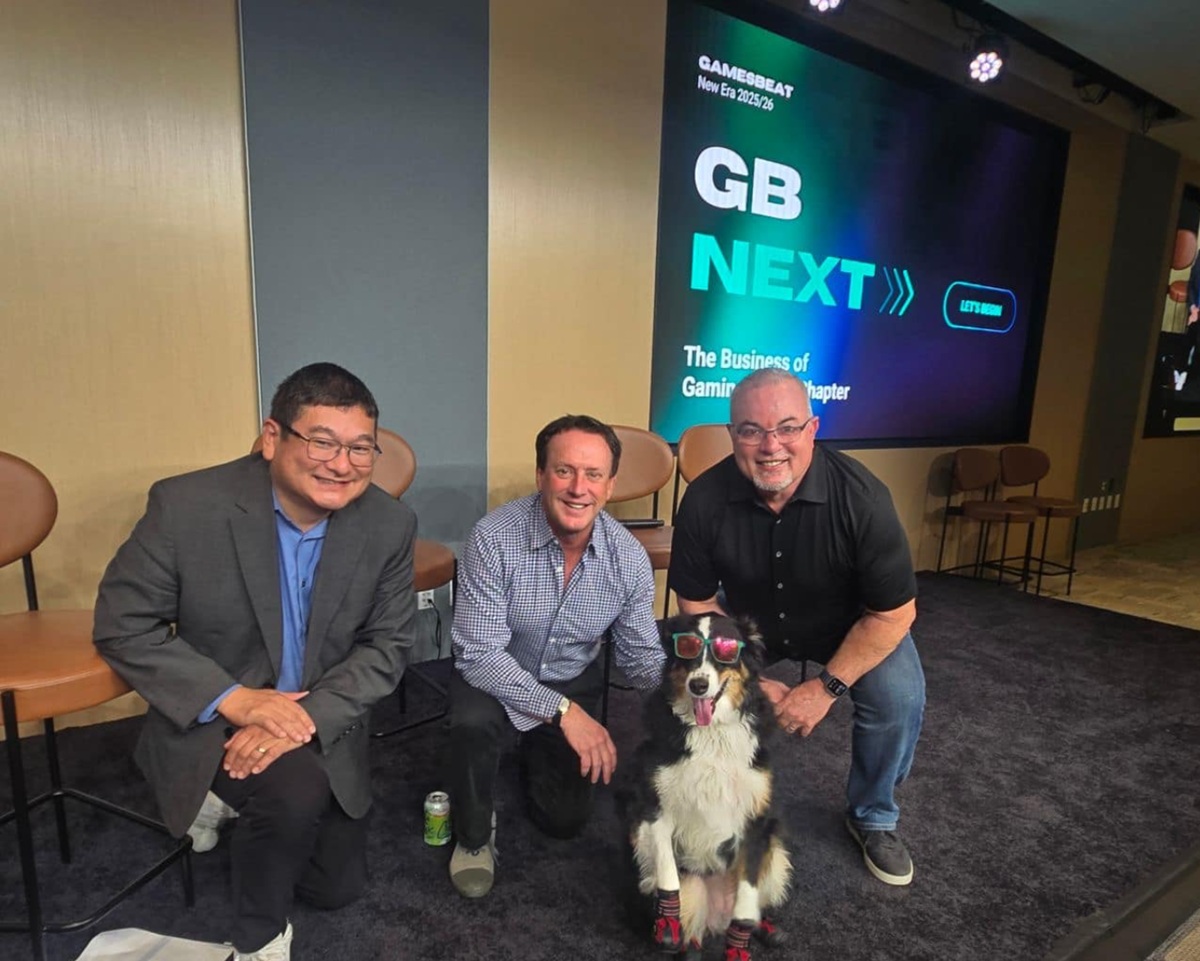
At GamesBeat Next, I moderated a session entitled The Long View: What Decades of Games Can Teach Us About the Future.
It featured a couple of speakers with decades of experience in the gaming business. They were Ron Scott, senior vice president of strategic business partnerships at Xsolla; and Rob Dyer, chief operating officer at Capcom USA. We preferred to think of ourselves as veterans, uniquely qualified to talk about things that happened long ago. We used that knowledge to analyze things like the new hardware cycle with Steam Machines and whether Microsoft will stay in the hardware business.
Our task was to take the long view of gaming at a time when the short-term view seems so unpredictable. We discused the trends, cycles and strategies that have stood the test of time and how to zig when the others zag.
I started the discussion with an example of Nvidia. Back in the 1990s, when I was starting out at both tech and game writing, the 3D graphics cycle. Silicon Graphics supercomputers pioneered this technology and brought us the dinosaurs of Jurassic Park.
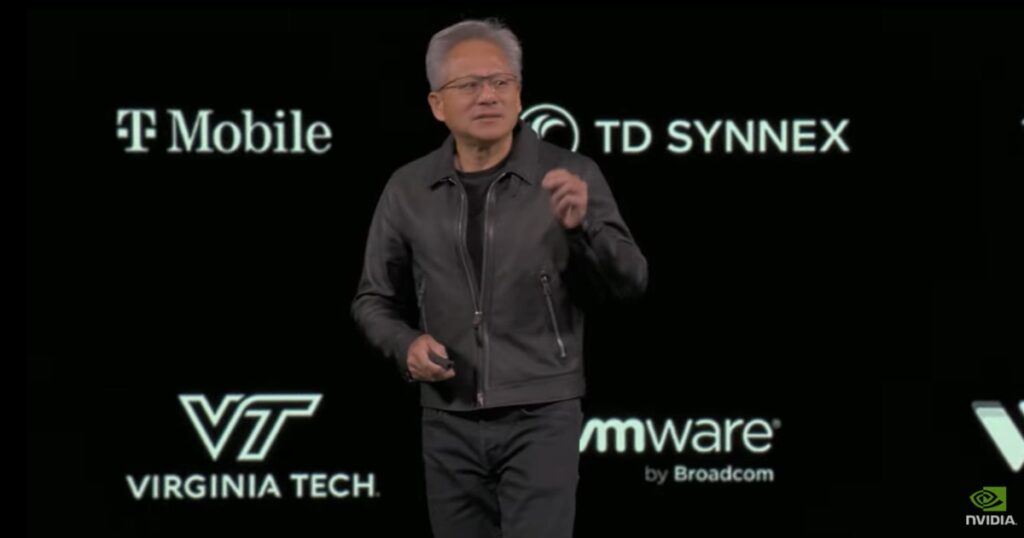
But with time, that technology, driven by Moore’s Law and advances in semiconductors, came down to the PC. There were perhaps 80 different funded 3D graphics chip makers that arose during that time. A few decades later, three are left: Nvidia, AMD and Intel. And Nvidia’s market value, sometimes the largest in the world, is $4.53 trillion. I happened to write the first story on them.
This kind of cycle happens in almost every industry. Sometimes the cycles are a lot faster than that, and you can apply them to gaming. We’re in the midst of an AI in games cycle now. Before that, the overhyped cycles included the blockchain, the metaverse, augmented reality, virtual reality, esports and more. Toward the end of the cycle, only 5% or maybe 1% of them survive and they make or break the category. With MOBAs, multiplayer online battle arenas, we saw every major company invest. But the survivors include only Riot Games’ League of Legends and Valve’s Dota 2. There were also cycles for toys-to-life, with almost nobody surviving, as Disney, Warner Bros., and even Activision all succumbed to the cycle burning out. The same goes for the Guitar Hero games.
Dyer said he has been in the business since 1994, starting with Crystal Dynamics.
“I can remember when Jensen Wong came into our building in Palo Alto, begging us to make a game that he could put on his chip at that time in order to show off his graphics chip that he was trying to get done,” Dyer said. “And he ended up hiring away our chief scientist, Dave Kirk. Jensen, well done.”
He saw multiple cycles at Crystal Dynamics and sold the company to Eidos. He moved on to Crave, SVG, Sony PlayStation and eventually landed at Capcom USA. He has been there for seven years and still enjoys it.
Scott is currently at Xsolla and also started in the mid-1990s. He worked on packaged goods at Activision, Square North America, Crave Entertainment, Warner Bros. Interactive, 505 Games and then moved to Xsolla.
Asked about these cycles, Scott said, “The highlight is our business is cyclical. It doesn’t go straight up, it doesn’t go down for very long. It builds and then kind of fades and then builds again. And that’s at a micro level, as far as I can see it, as well as a macro level.”
When he first started, things were driven by chip cycles and 3D accelerator advances on the PC. Then the consoles started and the console platform cycles took over. They would drive revenue for game consoles and then shrink as the consoles aged. Scott saw different kinds of software cycles ensue, like casual games and mobile games. There were also “environmental cycles” like COVID-19 hitting in 2020 and lasting until May 2023, or three years and four months.
Now we’re back to growth, new brands, new ideas and creativity. Then you get sequels and consolidation. At a certain point, the companies overshoot and hire way to many people and build too many teams. The layoffs start, and then the seeds of creativity start a new cycle again, Scott said.
I noted that there are other kinds of cycles that affect games, like the investment cycle. New entrants come into the business.
“We’re in a Saudi cycle now, right?” I said, noting that Saudi Arabia’s Public Investment Fund has led a pending $55 billion acquisition of Electronic Arts, which started out in 1982.
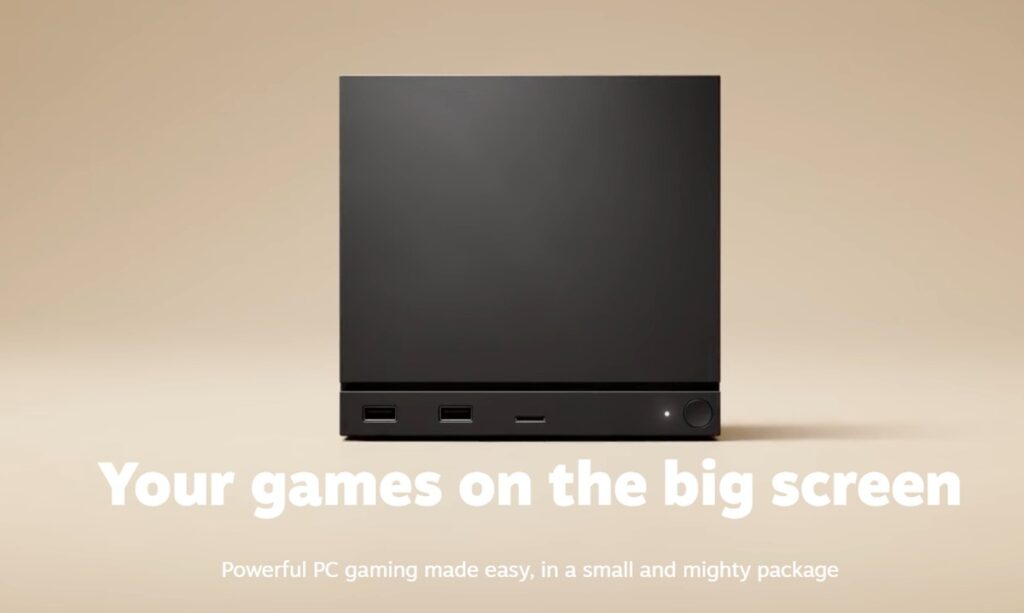
Dyer said, “I’ll bring up something that just happened recently, like yesterday. So if you look back to 2001 this month, Dreamcast ceased to exist. Two months later, Xbox launched. Yesterday, we had a massive announcement [with Valve’s announcement of its 2026 products including a new Steam Machine, a Steam controller, and a Steam Frame VR headset]. I hope people understand how seismic that announcement was with regards to what’s happening on the Steam Machine.”
He said he is a firm believer in the PC, and Valve’s role in pushing it forward over time.
“Dean was suggesting that in this cycle, what was old is new again, and what is now clearly the lead platform for just about every triple-A right now is the PC. Now that wasn’t the case a year ago or three years ago. It was PS5. So you’re watching right now, in real time, this next cycle.”
He said, “And the geniuses up in Seattle have, and I’m talking about the guys in that Valve studio, have said, we’re going to zig when everybody else is zagging. We believe in hardware, whether or not they’re making it or not. That’s not important, but you’re seeing them go all in on where the PC is, and it’s going to be incredibly exciting.”
Dyer added, “I think Gamestop was a little premature in saying the hardware wars were over. I think they just started up again. I think it’s going to be freaking game on, and it’s going to be a lot of fun for all of us that are making games right now that are covering it. It’s going to be a very, very interesting mid-cycle right now for PlayStation. Giddy up.”
I brought up the question about whether Microsoft would stay in the hardware business, as many people in games have been publicly wondering.
Scott said that there have been other times when strategic planners have been pulling their hair out trying to figure out where to make a big bet.
“I think the ecosystem is a key driver as well. So they might be going back to the PC as it’s a viable way. Whether it’s cloud-based, or it’s Roblox, or it’s the Xbox ecosystem, it’s more about getting people in, paying predictable monthly fees at different levels, depending on how many services that you want,” Scott said. “Then it’s going to be about potentially launching games like that just feed the beast. And if you’re an ecosystem owner, [you will see] a lot of growth, because people are going to be contributing to your success.”
He said developers that will be making content that will fill the holes in those ecosystems, and then hopefully, this direct-to-consumer thing that we’re doing is the other half of the business to go direct to their users. And that will lead to margin enhancement.
Dyer interjected, “I’m going to disagree, to disagree with that. I think that the platform is still king. That’s what’s going to be driving innovation, particularly from big studios. The Saudis are buying major players there, not because of ecosystem, but because they have a leadership position on whether it’s mobile or console or PC, for that matter.”
Dyer said, “So I’m of the mind that will continue to be cyclically driven. That next cycle might not include Microsoft. I think what they’re trying to do is divest themselves from being a hardware company. Microsoft’s not a hardware company or software company, and so whether they license this out, what they’re doing with their handheld, depending upon how they’re going to look at a console in the future.”
And he said, “Look, it’s been a slog for them, no question about it. They’ve had their ups and their downs so but I’m a firm, firm believer that we are not done with in-house consoles. Steam/Valve just showed that they’re a believer in that as well. This is not going to go away after the PS5. It’s going to continue. And I think definitely, for my duration in this industry, we will have a central piece of hardware in each of our living rooms. And again, it’s going to be platform-driven, not so much ecosystem-driven.”
I noted that in past cycles, the consoles started out at high prices and then the prices were driven down to as low as $100. The original PlayStation got down as low as $80, making the gaming market accessible to so many people. The Wii and the Switch also brought low prices to consumers. But in this past cycle, after the supply chain was crippled by the pandemic and Moore’s Law slowed down, those cost reductions stopped. People have had to buy at higher prices for a long cycle. I also wondered what happened with the hype cycles and the backlash cycles, like with blockchain and the metaverse.
Scott noted that to get funding at one point, developers had to say they were working on a blockchain gaming project. Otherwise, he said, “You were sent to the bottom of the stack.”
People tried to execute something with blockchain that could have been done with just another digital currency in the game.
“You have to wait for all of that to wash through the system, and it can leave a little bad taste in everybody’s mouth, but at the bottom, there are actually people that are trying to use these tools strategically. That’s hard. It takes time to figure it out, but it can still be viable down the road, just not at the astronomical levels,” Scott said.
It’s still possible those working on the diminished hype technologies could still succeed.
“In the last three years we’ve had metaverse, crypto, VR — whatever you want to call it, all of them started quickly. AR and cloud. They ended slowly. We’re always going to have these interesting cycles. I think the new one now is AI. How are we going to incorporate it? What’s going to happen with regards to game development?”
He said, “I’m still waiting for that off the shelf. Aha, moment from Unity or Epic or Microsoft that’s going to all of a sudden make games easier to develop, and we’re going to have that reduction in cost of making a game. It hasn’t happened. Candidly, I don’t see it happening.”
Dyer added, “All AI is going to do is make our games better because you’re going to be able to put more content into it. Your NPCs are going to have value. Your dialogue, your thinking about how to develop a game is going to be better. But every year, for the last four years, when we’ve gone to GDC, we have a different [idea of] what’s going to drive the industry and what’s going to happen, and three of those four so far have petered out and gone the way of the dodo.”

And he said, “So my sense is that we will continue to have these inflections inside of our cycles. They’ll continue to pop up. We’ll get the interested VCs to come and fund it. And to me, Ron’s point, you’ll have to include that in your pitch. And whether there’s any value in it or not, who knows. But I think that, Dean, it’s still going to happen. It’ll be out there. I’m just curious, after AI, what that next one will be.”
I noted that a few years ago there were nine talks on blockchain games. And at this one, there were none. In May, there were seven AI sessions and this one has about six.
Scott said that, as an industry, game people are early adopters, optimistic, and go after new technology pretty hard. Kinect came to mind, Scott said.
“We had some successes. I know when I was with 505 Games, we put out a Zumba game that did really well. It was number one, but overall it wasn’t success. But damn did people try a lot of things behind that innovation, and hopefully, with AI, you know, we’re doing a lot of efficiency, cost savings, amplification of manpower. But hopefully we aren’t so reticent that we don’t go after exploring the true gameplay experience changes that it could drive. Because I think it would be a missed opportunity for us to be too slow to adopt it.”
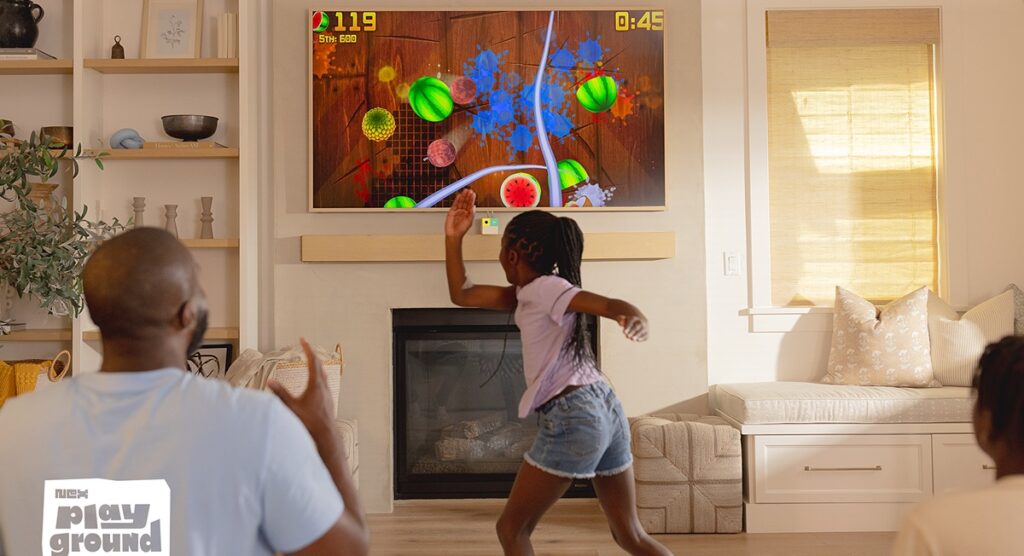
I noted there was also the counter-cyclical strategy to think about. Motion gaming had its run with the Nintendo Wii at its peak. After than, motion-based games declined. But in counter-cyclical thinking, Nex launched its Nex Playground motion-gaming console where it’s a tiny box with a camera and no controller at all. Now it’s selling for a lower price and it will be in more than 5,000 stores this holiday season.
“They zigged when everybody else zagged away from motion gaming. So sometimes it’s actually very good to be all by yourself doing something,” I said.
Dyer said, “And by the way, if you have, if you haven’t seen that console, go check it out. It’s a great piece of kit. I saw it at Gamescom and it’s really interesting, with smart folks behind it. It’s a really cool concept.”
Scott weighed in saying that this has been Nintendo’s strategy. When Sony and Microsoft go one way, Nintendo comes up with something unique that is very targeted at its game fans. They reap the rewards, as long as the whole industry doesn’t “zig together.”
Regarding AI, I said, “AI also feels different, like it’s just not a normal thing. It’s not a normal cycle. This is something that’s never happened before.”
Dyer said, “I see people that I normally wouldn’t conjecture to be early adopters, actually using AI and figuring out how to put it into game development fairly early. A very famous game developer runs a studio down south. I asked him. I said, ‘Look, man, what? What are you doing with AI? He said, ‘Look, my cube mate is chat GPT.'”
Dyer added, “The fact of the matter is, AI will have a permanence in our industry. And again, I very confident that we’re going to see an off-the-shelf application from one of the big engine developers that’s going to say, ‘Here’s what we’re going to do to help shorten your development cycle. And it’s going to be that aha moment for everybody in this room, in this building in our industry, to go, okay, got it. Here we go.'”
For AI to truly succeed, it needs to provide wonderful gameplay experiences, Dyer said.
“We’ve talked about the things that have driven the cycles, and laid it out in terms of platforms, but it was really the new gaming experiences that they brought, or the new gaming occasions that were added that got the momentum going and got people interested in getting and reinvigorated the category. And I certainly think AI can do that if it reaches even a partial piece of its potential. And I know they’re kind of downgrading the AI bubble, but if it even gets half of what we’re talking about, that’s going to make a major impact on our industry.”

He added, “That’s why I’m saying that the catalyst for the next cycle of growth is kind of sitting there right in front of us, which makes me feel more confident that we will come through this positively, and be back on a growth track shortly.”
I noted that the money cycles have changed. We had the creation of a lot of VC game firms before and during the pandemic as indoor play rose when people couldn’t go outside. After the pandemic subsided, games suffered as people went back to other activities. And then the funding started to dry up for game startups.
Dyer said, “Look, I think that we’re going to have another opportunity for what happened at Eidos. For those old enough to remember, we had the classic roll-up. A bunch of companies got bought. Rolled up. They had a centralized HR, centralized finance, centralized biz dev, and we had studios all the way back with Ion Storm and any number of other companies. Crystal Dynamics bought a bunch of companies, publicly traded, had some success, ended up getting sold when it wasn’t so successful.”
He added, “e’ve seen a subsequent deal [maker] called Embracer Group. They did the same thing. Did not centralize operations. I think it’s going to be a classic Harvard Business School study on what didn’t work. It’s been reported and talked about what didn’t happen there. But they tried to do the roll up, but they didn’t centralize things. And so their cost structure stayed too high and they couldn’t [execute].”
Dyer thinks with Saudis buying EA or acquiring Scopely as their hub, they could lead another roll-up with any number of great studios.
“There’s a lot of great double-A, triple-A devs out there that could be integrated into a big roll-up, or somebody separate from that, and I think there is money interested in this space, in order to facilitate a roll-up like that, assuming that they’re able to centralize a lot of these back office functions that happen inside of companies,” Dyer said. “I’m a big believer in that. I think we will see that over the course of the next three or four years, primarily because the money has stopped going back into funding all these games.”
On our last topic, Scott noted that he believes governments go through cycles when it comes to embracing and encouraging gaming ecosystems in emerging markets. He noted how Xsolla is spending a lot of time in the Middle East and flying to Dubai. He has also visited Vietnam and is looking into places like Africa and India. The question is how to kickstart things with accelerators or training so that the locals can pick up the baton.
In the next 10 years, Scott sees governments supporting gaming in emerging markets. And Dyer said he thinks the Valve announcement is huge and he’s a big blieve in the PC market.