
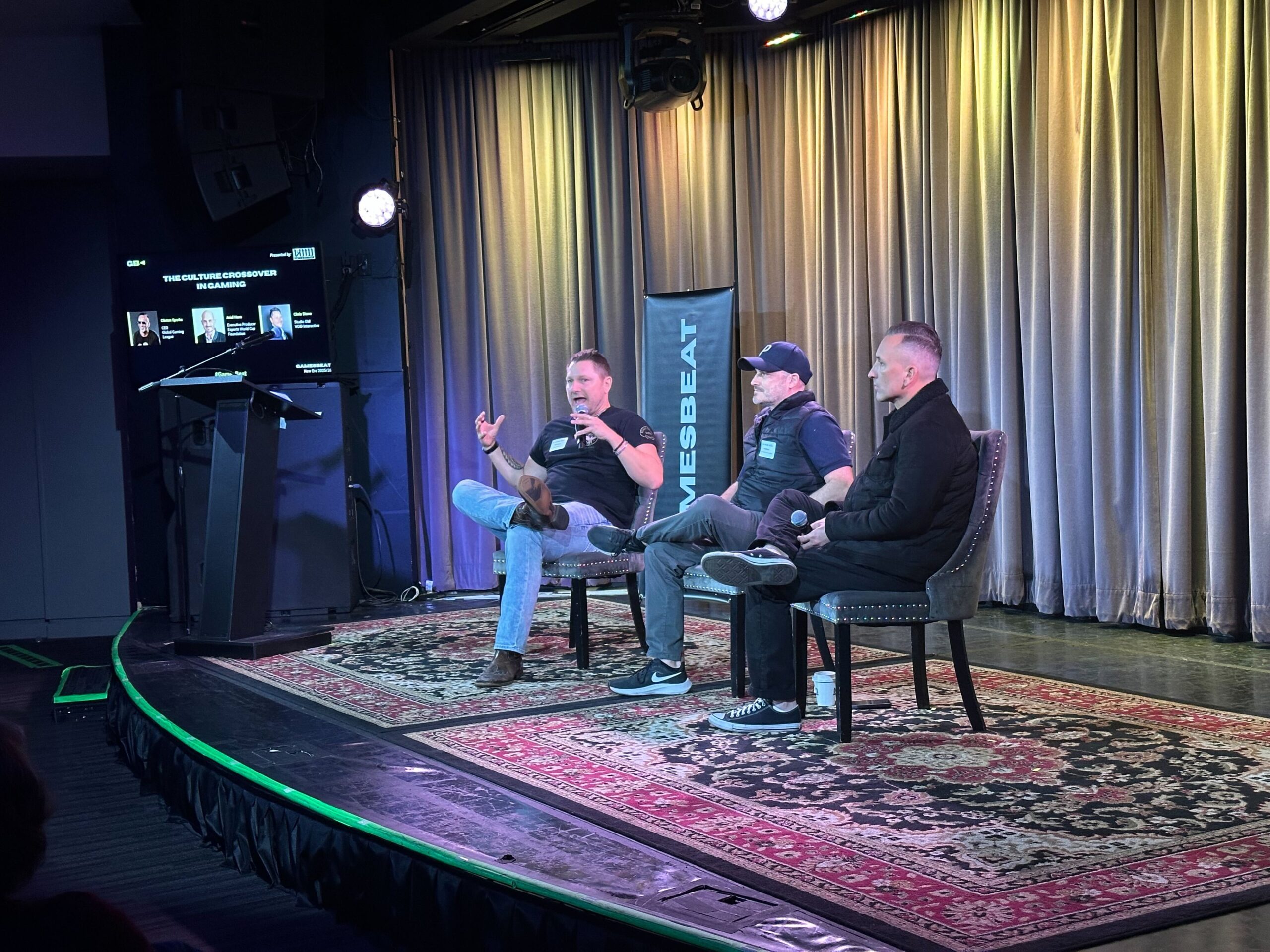
When Clinton Sparks was on the phone with Mark Wahlberg, he remembers asking the actor what he knew about gaming. Wahlberg said his kids play, but only for a couple hours a week. Sparks then asked how Wahlberg would have felt if his parents had limited his time making music in the same way.
“I’m listening,” Sparks recalled Wahlberg saying. And that was the point. Gaming is more mainstream than ever, yet there’s still a noticeable divide between gaming and esports and the broader worlds of music, fashion, film, and pop culture. Even with massive global audiences, the gaming mainstream crossover still hasn’t fully happened.
That tension set the stage for the GamesBeat Insider Series: Hollywood & Games – The Culture Crossover in Gaming. Global Gaming League CEO Clinton Sparks and Esports World Cup Foundation executive producer Ariel Horn joined moderator Chris Stone, general manager at VOID Interactive — which sponsored the panel — for a candid conversation about how gaming and popular culture intersect and where the gap remains.
A connection that has to be authentic
Gaming has reached record-breaking heights, but it still lacks the density of household names found in other entertainment sectors. That challenge anchored much of the discussion and underscored why the gaming mainstream crossover has been slower than expected.
“If you want to grow past your target market, you have to learn how to target a new market. That’s the problem,” Sparks said. “You go to these conferences and hear people saying ‘why don’t people understand us,’ and that’s not the problem. The problem is you don’t know how to market yourself beyond that.”
Sparks stressed that authenticity is essential when pushing gaming outside its bubble. Paid celebrity partnerships aren’t enough if the connection isn’t real. He recalled how members of FaZe Clan initially dismissed him as a “washed-up DJ.”
“Gaming is what hip-hop used to be thirty years ago,” Sparks said, noting that you have to understand and participate in gaming culture in order to elevate it. “You can’t stand for culture if you’ve never stood in culture.”
From Henry Cavill to Jamie Lee Curtis, celebrities are gamers
Earlier in the conversation, Stone asked when gaming would truly break through into mainstream culture. Horn, who helped build one of gaming’s most visible global brands, “League of Legends,” argued that we may already be witnessing the gaming mainstream crossover from a different angle.
“Some of the biggest celebrities in the world want to meet Faker, who’s arguably the biggest celebrity in the world,” Horn said. “That shows you where the power is.”
Horn added that gaming is already mainstream for many demographics. It’s widely accepted globally, even if its cultural visibility doesn’t always match what major publishers expect.
“We’ve seen a trend of more and more celebrities being gamers,” he said. “I think, among more and more demographics, gaming is accepted as mainstream.”
Bridging the gap between gaming and entertainment
A recurring theme was that, despite gaming’s wide acceptance, a significant disconnect still exists between gaming leaders and adjacent industries like music and entertainment. Each side recognizes the other’s scale and cultural influence, but they often lack the structure and relationships to collaborate effectively—one of the bottlenecks preventing a full gaming mainstream crossover.
That’s the divide initiatives like the Global Gaming League and the Esports World Cup hope to close and the mission Sparks and others in the space are driving forward. Through platforms like Hollywood & Games, they aim to build the cultural bridges that will finally bring gaming into the broader mainstream conversation.