
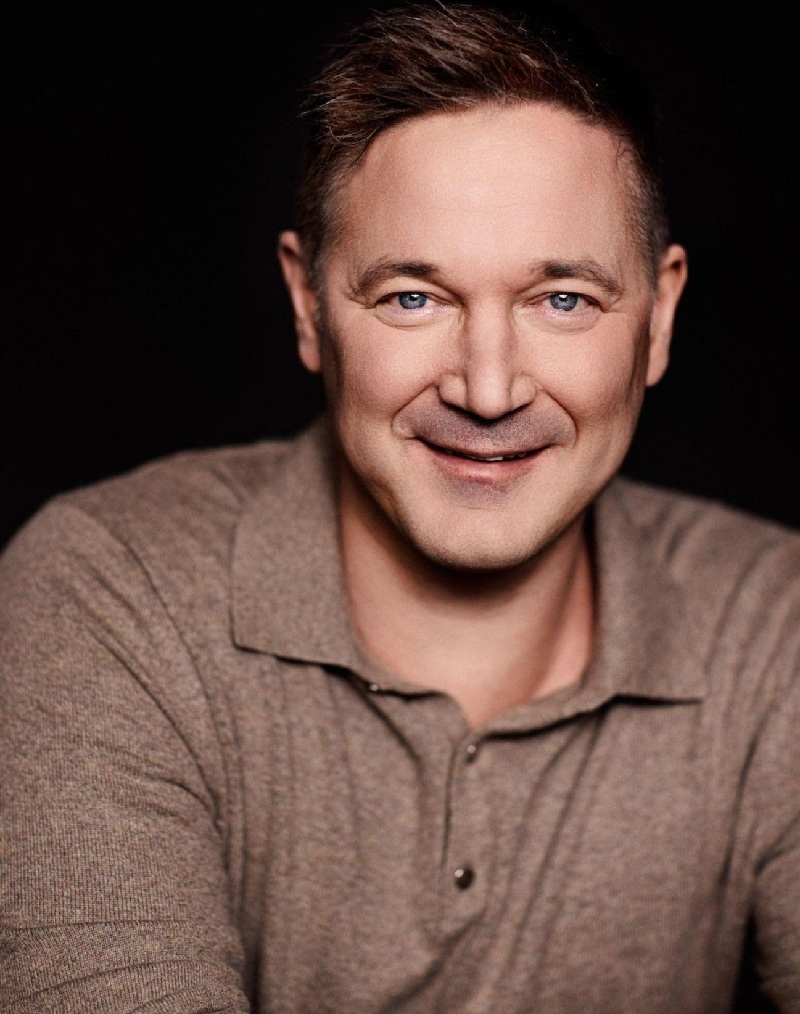
Ilkka Paananen, CEO of Supercell, will be awarded the BAFTA Fellowship, the arts charity’s highest honour, for his contribution to the gaming arts.
BAFTA (British Academy of Film and Television) recognized the Finnish gaming entrepreneur for his outstanding and long-standing contribution to the games industry.
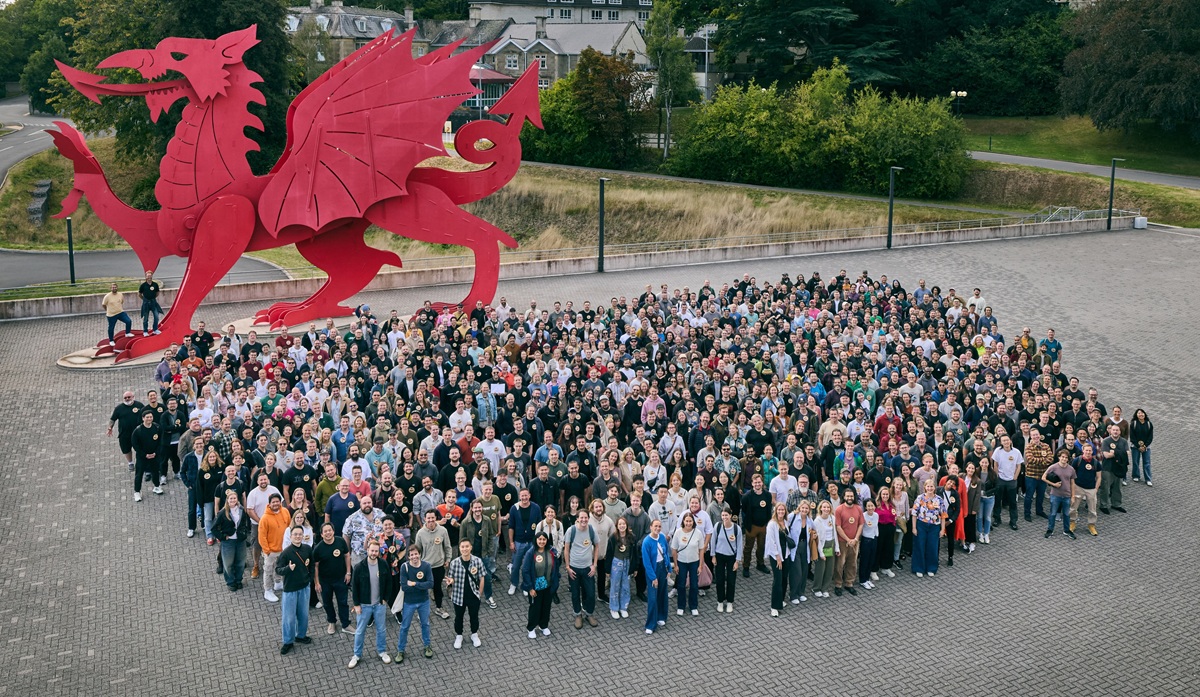
Paananen is best known for cofounding and leading Supercell, the mobile games powerhouse behind global blockbusters including Clash of Clans, Clash Royale, Hay Day, and Brawl Stars. Those games have generated $13.58 billion to date. I interviewed Paananen about the award and he was humble as usual, and he said it was an honor for the 900 or so people on the Supercell team.
The Fellowship will be presented at the BAFTA Games Awards with Google Play on Friday 17 April, at the Southbank Centre’s Queen Elizabeth Hall, London, and streamed on Twitch and YouTube. The Fellowship elebrates exceptional individuals who have driven innovation, creativity, and positive change in the screen arts, including games, over the course of their career.
Credited with building one of the most successful mobile games companies, Paananen cofounded Supercell in 2010 (after celebrating its 15th anniversary in 2025). Under his leadership, Supercell’s innovative “small team” philosophy has produced iconic mobile blockbusters including Clash of Clans, Clash Royale, and Brawl Stars.
The company is known for its strong culture of trust, open communication and effective collaboration with partners. Across the years, and despite industry challenges, Supercell has thrived with handheld hits and bold investment in new games.
In a statement, Paananen said, “Receiving the BAFTA Fellowship is an incredible honour. Looking at the names of previous Fellows, I see so many of my personal heroes – people whose work has inspired me and who I continue to look up to. Being included in their company is something I never could have imagined. Throughout my career, I have been extremely fortunate. But my greatest fortune, by far, has been the privilege of working with amazingly talented and passionate game developers over the past 25 years. They are the ones who create the magic. This award truly belongs to each and every one of them.”
Jane Millichip, CEO of BAFTA, said in a statement, “It is a real privilege to honour Ilkka with the BAFTA Fellowship this year. A visionary leader in games, he has built a globally influential company while championing creative collaboration and trust at every level. His deep respect and commitment to nurturing emerging talent and his ongoing support for young people reflect the very best of BAFTA’s values. We are delighted to celebrate his exceptional contribution to the industry and look forward to presenting him with this honour at this year’s BAFTA Games Awards with Google Play.”
Beyond Supercell, Paananen supports emerging founders as an investor and mentor through his organization, Illusian. He co-founded the Ilkka Paananen Foundation in 2015 to advance social and mental well-being among children, young people, and families – promoting equal opportunities for fulfilling lives regardless of background. These initiatives bridge technology and non-profits, backing impactful projects such as social impact measurement tools, responsible AI-driven mental health support for young people, and educational games that build essential social skills.
Fellows previously honoured for their work in games include Yoko Shimomura, Shuhei Yoshida, Siobhan Reddy, Hideo Kojima, Tim Schafer, John Carmack and more.
The BAFTA Games Awards with Google Play is part of the London Games Festival (April 13 to April 19) and marks a significant milestone in the international awards calendar. The Games Awards are supported by headline sponsor Google Play and official partners: EE, Epic Games, PlayStation, AGM and Games London.
Here’s an edited transcript of our interview.
GamesBeat: Congratulations on the fellowship here.
Ilkka Paananen: Thanks very much. I’m very honored, and very humbled.
GamesBeat: When you accept the award, do you get a chance to talk? Is there a particular subject on your mind?
Paananen: The first thing to say is it feels a bit weird to accept the award. Instead of just me standing there and accepting the award, there should probably be tens if not hundreds of people. The greatest luck in my life has been that for some reason–from my first company Sumea to Digital Chocolate and now Supercell, I’ve had the incredible luck and privilege to work with amazing creative people. None of these big hit games Supercell has released have been my ideas. I haven’t had much to do with the games themselves. It’s the game developers. It’s somewhat awkward to be up there accepting the award. What I want to say, and what I want to feel like, is that I’m their voice and accepting it on their behalf. That’s the number one thing to realize.
Games are all about being lucky enough to work with the best creative people. Then you also have to be lucky in other respects as well. So much about being in games is this thing where somehow you put out exactly the right type of game at the right time. We’ve had a lot of this type of luck at Supercell. The teams have worked super hard, but there are many other teams that work just as hard, and they’ve never been blessed with the luck and timing that we’ve had many times. Maybe that’s the other feeling. Being grateful for being so lucky.
GamesBeat: It feels like a great sign of progress that a mobile game company’s leader can get this award, too.
Paananen: That’s the other thing. We started Supercell back in 2010. We raised quite a lot of capital, and we had a very senior team. Lots of people asked us why we weren’t developing “real” games. Why were we working on free-to-play mobile games? It’s great to see mobile games being recognized this way. Obviously we aren’t the only ones. So many people have worked so hard in mobile. Maybe in another way I can represent the mobile industry at large as well.
GamesBeat: How do you look back on some of Supercell’s history? What are the biggest moments that have gotten you here, 16 years later?
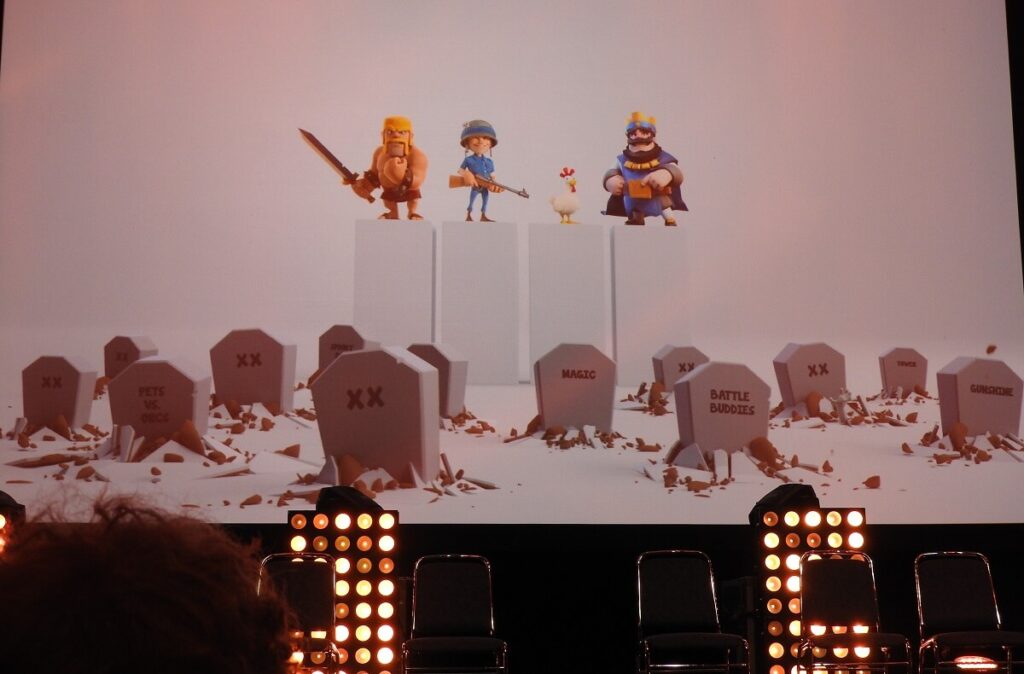
Paananen: There’s been plenty of those moments. Obviously when we founded the company and raised those first rounds of financing. That enabled us to hire the key people, to convince them to join us. Many of those key moments have somehow related to failures. Our first game, Gunshine on Facebook, didn’t work out. In fact, thank God it didn’t work out, because that made us look into mobile and tablets. There are many moments like that. At that moment, it felt like a failure, but looking back, it was actually something that led us to much bigger success.
It goes without saying, the summer of 2012 when we first released Hay Day, and just a few months later Clash of Clans, that was an incredible moment. Later we had Boom Beach and Clash Royale and Brawl Stars. Not just the moments when we released those games, but the resurgence of both Brawl and Royale. Brawl two years ago and Royale last year. Those have been incredible moments. You have a game that was released many years ago, and all of a sudden it experiences incredible growth because of something the team has done.
That’s something that’s maybe overlooked in this industry. Of course we look up to the people who create these games, and for very good reason, because creating new games is incredibly hard. But at the same time, we should also respect the people who have joined these games much later on and figured out something new and innovative. The games become better and find this second or third or fourth life.
GamesBeat: I remember when you wrote about how you realized you could make games with small teams, but you needed to have large teams after they became successful to keep them going.
Paananen: Of course, we should emphasize what “large” means in a Supercell context. Many companies would think that’s still pretty small. You’re talking about a bit fewer than 100 people. Compared to many other teams in the industry, that would still be seen as small. But it’s large for us.
There have been many moments during the 16 years of Supercell, and also the 10 years going back through my experience at Digital Chocolate–there’s a realization that what got us here isn’t going to get us where we want to go in the future. Recognizing those moments, and not just recognizing, but acting on them, is one of the keys in our industry.
GamesBeat: I liked what you said in your latest annual message, that you believe the best games haven’t been created yet.
Paananen: Absolutely. If you believe the best games have already been created, you should be doing something else. To me, what’s so exciting about this industry, and why I’m so excited about Supercell, is that I believe the opportunity is bigger today than it’s ever been. It makes sense if you think about it. There are more devices, and better devices than ever. We know a lot more about mobile games. As I wrote in my blog, I feel that we’re only scratching the surface of the potential in the market.

GamesBeat: In the last few years it’s been tough for game companies. We’ve seen lots of layoffs and lots of failures. How do you find that your message around celebrating failure is being received out there? Are you the only ones who still do that, celebrating the effort that went into a failed game?
Paananen: It’s hard to speak for others. I don’t know what others do. But for us, that’s one of the most important parts of our culture. I fundamentally believe that unless you almost encourage people to fail–maybe you don’t encourage people to fail as such, but you encourage people to take big risks. By definition, that leads to failures. But if you don’t do that, how could you ever put out any of these outlier hits?
The biggest outlier hits our industry has seen, from Minecraft to something like Clash Royale or Pokemon Go, have been games that nobody saw coming. It wasn’t obvious from the beginning. They were something very, very different from the time they were released. It’s very easy to connect the dots looking back later on and say that this was obviously going to be a hit game, but it’s not obvious in the beginning.
Often these hits can even be controversial. With Clash Royale, I remember when we were developing the game, lots of people–even some people internally at Supercell questioned whether it made sense to do this kind of real time PvP game. Those types of games hadn’t been done on mobile before. With Brawl a lot of people questioned the virtual joystick at the time. It didn’t look like a Supercell game, and it definitely didn’t play like other mobile games at the time. But these are the types of things we need. We need that courage to take the industry to the next growth phase.
GamesBeat: Do you think that Supercell has ever learned from other companies out there about things like design and gameplay?
Paananen: Absolutely. We’re super aware that the industry is full of extremely smart people. Amazing teams wherever you look. What’s interesting is that great teams can come from anywhere, from China to Istanbul to Pakistan. And obviously the U.S. and so many countries in Europe and so on. We try to keep an open mind to learn and play games from everyone else. We try to learn from the best.
GamesBeat: You’ve always been interested in funding ideas outside the company. You’ve invested in startups. How much activity is happening there today? Is that on the rise, or are you doing less of that?
Paananen: It’s been quite an important pillar for us. It’s the best way for us to learn. I like to think it’s a two-way street, that the companies and studios we’ve invested in – there are more than 20 by now – have also learned quite a bit from us. What’s happened over the last few years is we’ve almost built this little community of like-minded game developers around us. We do events together. A few times a year we get everyone together, all the founders of the studios and key people, and we talk about games. We compare notes on all kinds of trends and share what we’ve learned, both from successes and failures, very openly.
I often talk about this philosophy we have here in the Helsinki game development community. One of the pillars of why the community has been so successful is this belief that everyone shares, which is that if one studio is successful, it benefits everyone in the community. A rising tide lifts all boats, that type of thing. Because people truly believe that, they’re very open to share what they know with everyone else. That’s how the whole community gets stronger. Every member of the community gets stronger. We’ve tried to replicate that in the Supercell investee community.
GamesBeat: Have you ever considered reviving a game that failed in the past, but might work now?
Paananen: Absolutely. Actually quite a few times. Obviously it’s not exactly the same game, but we’ve always tried to draw ideas from our “failed” games. There can be many great things in any game, any failed game. It’s not like the entire game is always a failure. Maybe certain aspects of it didn’t work out. These days, what we like to think about these “killed” or “failed” games–instead of using the word “failure,” we try to think of them more like experiments, like you would do in science. In science you start with your hypothesis and test it out. The hypothesis is true or false, but you don’t talk about success or failure. Whether it’s true or false it doesn’t matter, because in either case you’ve learned something new. That’s how you should think about it.
GamesBeat: It was interesting that you observed the way Blizzard made games and the way they celebrated failure. In this new generation of leadership where they are now, though, they really aren’t able to fail. They no longer have that ability to take 10 ideas and have one work. It seems like they have to make hits every time, or there are difficult consequences. Do you think that’s something that can last, this appreciation for learning from failure?
Paananen: In our case I absolutely believe it. For Supercell to continue to be successful, that almost has to last. That’s why it’s such an integral part of our culture. If you look at our culture memo and the presentations we’ve done about culture, it’s one of the key pillars. We talk about ambition and risk-taking, but an integral part of that is this idea of failure and everything that’s great about failing.
GamesBeat: If you think about those best games that haven’t been made yet, do you think there are any particular characteristics they’re going to have?
Paananen: Well, I wish I knew. If there’s any characteristic they’ll have, they’re going to be something unexpected, something no one will see coming. Maybe that’s the thing. Anything I already know and could tell you right now would be too obvious. It has to be something that you just don’t see coming.
GamesBeat: Some of the most interesting thinking I’ve seen so far this year was from Matthew Ball and his slide deck again. It was a bit scary to read that the growth of the western game developers and publishers has really amounted to zero in the last year. We’ve seen growth in Roblox, growth in China, and growth in the big platforms, but if you back all those out, you get zero growth. He argues that this is important to look at in the context of the attention war. Players’ time is a difficult thing to get now when so many other industries that are sort of game-like have taken off – YouTube, TikTok, OnlyFans, prediction markets, online gambling. All these things are more like addictions than they are fun. Gaming, which is mostly offering fun, is starting to face real competition from the addiction side. It makes some people pessimistic about the future. How would you look at that war for attention?
Paananen: It’s very much in line with what I wrote in the blog. He’s right. Games have never faced such intense competition from other forms of media, entertainment, and these other activities. I don’t know what to call them, what you just mentioned. But I think he’s right.
There’s only one thing we can do about it, which is make better games. We have to make games that are more fun. We need to make games that are new, novel experiences. If you think about all the external factors that are coming in, new technologies, AI everything, this should be a golden age of innovation for games. We just need to grasp the opportunity. We need to be bold and create and develop the craziest ideas we have. One of those will become that new outlier hit, or hopefully several of them. That will enable games to compete for attention.
But I think he’s absolutely right. If you think about how many choices consumers have these days for entertaining them with just their mobile phones, the difference between today and, say, 2011 when Supercell got started, it’s incredible. It’s two different worlds.
GamesBeat: The way to get back to that higher growth we’ve seen in past years–I’m not sure I see it, other than simply creating better games.
Paananen: That’s it. It’s that simple, and it’s that hard. We’re here to entertain people. We just need to get better at it.

GamesBeat: The consolidation of the industry has gotten to a point that I never expected. It seems like there are fewer and fewer independents, especially on the corporate side of things. But we still have a lot of good indie studios providing a lot of originality and creative new IP. What do you think about that structure that’s formed in the industry? Do we eventually go the way of Hollywood, even more extreme consolidation?
Paananen: There are certain economies of scale that favor incumbents, companies at a certain scale. Supercell definitely falls in that camp. But on the other hand there are these counterforces, these waves that smaller startups can ride on. AI is an obvious example. If you think about the world today, even compared to one or two years ago, a very short period of time–there really hasn’t been a time like this at which a very small team can build incredibly rich experiences, amazing games. It doesn’t take 100 people to do that anymore. The number can be very small.
I don’t personally buy the argument that it’s over for smaller studios or startups. I actually feel like the opportunity is pretty big for them. For incumbents like Supercell, if we play our cards right–obviously we’re blessed with relatively small teams that can move fast. We have incredible people who are very quick at adopting the latest technologies, whether it’s AI or anything else. But we’re trying to complement that with some external initiatives. We’re running AI labs in Helsinki, Tokyo, and San Francisco. We have our Spark program for new teams, which is also open for external applicants. We’re trying to mix the benefits of scale that Supercell has – our player base, our amazing community of creators – with some fresh thinking from the outside. We’re trying to create the best of these two worlds.
GamesBeat: I always thought it was interesting how the game industry led the way in technology in the past, whether it was CD-ROM or DVD and so on. It feels like, in the last three big waves of investment, that creative people in games have rejected technology advances, and gamers have as well, especially in the west. Blockchain, metaverse, and AI have been very unpopular. I don’t know whether this is a good thing, this pushback from creative people, or whether it’s a sign that the game industry is no longer embracing new technology.
Paananen: It could be a bit of both. Many game people are very thoughtful people. They consider things like AI from many different perspectives, and rightfully so. But then on the other hand–how we, for example, think about AI is that when it’s used right, it gives human creators superpowers they didn’t have before. If it’s used right it absolutely should result in much better games. I guess I’m more on the positive side of that.
GamesBeat: Is there anything else on your mind that you think will make its way into your speech?
Paananen: We’ve touched on most of what I was going to talk about. It’s all about people and culture, and I think it’s only going to be more so in the age of AI. This culture of creativity, and the failure that comes with it. Seeing failure as a necessary part of the creative process. The people aspect–it’s this gratefulness about being so lucky to work with the very best creative minds in the world. I do want to share an optimistic message. I think that’s a bit of what the world needs right now.
GamesBeat: Is Supercell still around 750 people now, or are you beyond that number?
Paananen: I think we’re about 900 people now. We can get you the exact figures, but a little over 900.
GamesBeat: If there’s a way for young people to break into the industry now, is there any advice you’d have for them?
Paananen: Build your first game and put it out there. That’s by far the best advice. It’s all about starting the journey. The sooner you start the journey, the sooner you start learning. That’s the most important thing.