
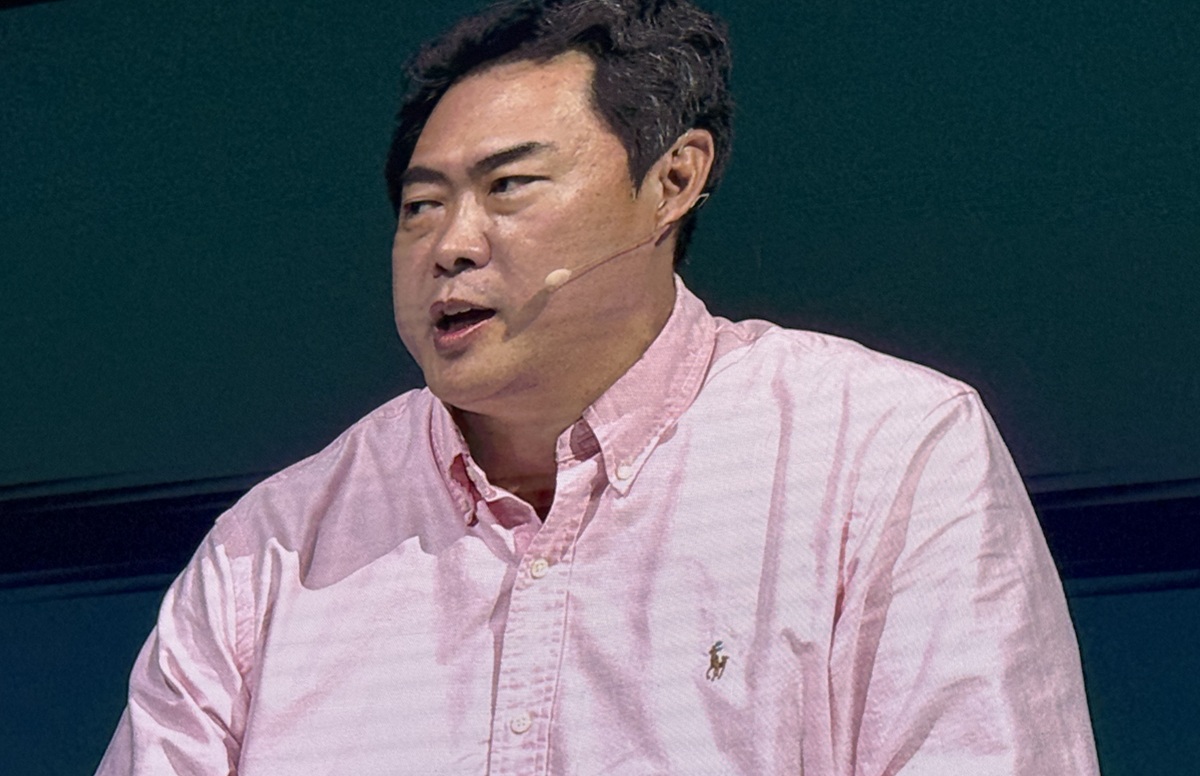
Hideaki Nishino, president and CEO of Sony Interactive Entertainment, said in a keynote talk at the Tokyo Game Show that the company will be a unified commerce platform.
The Sony PlayStation Store will become a unified commerce experience for fans with hardware, digital subscription, game and merchandise sales.
“We are also continuing efforts to create world-class commerce experiences with significant investment around AI scaling our growth. We have continued to push the boundaries of play with the PlayStation Store. We continue to deepen engagement and enhance experiences. We want to continue to be the best place to play,” said Nishino, speaking through a translator.
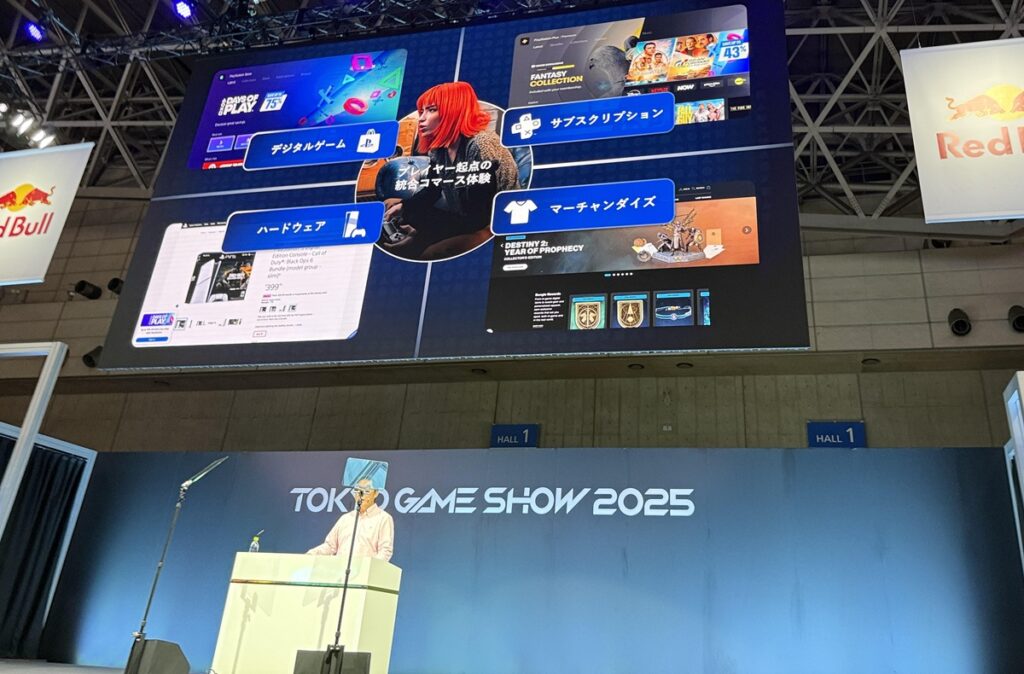
Nishino said, “We are witnessing a major change in the content landscape.”
While free-to-play games drove much of the growth in the past decade, Nishino said premium games have returned to the top driver in the PlayStation 5 generation. Beyond that, the store sales are roughly equally split between free-to-play and pay-to-play.
Nishino said Sony is using AI-driven pricing strategies and developing a more accurate forecasting system for game sales.
“We remain committed to being the best place to publish,” he said, noting the company has more than 4,000 game developers.
In 2024, the top 53% of revenues came from blockbuster games that were in the top 10, but the remaining 47% in revenue comes from 12,000 titles in the rest of the catalog.
Sony has widened the reach of the store to emerging markets like India and Argentina, which are growing at faster rates than established markets like the U.S. and Japan. Sony can cater to various regional needs with its store. The company has also grown its purchasing platforms, including enabling mobile payments such as Apple Pay for the purchase of PlayStation 5 games.
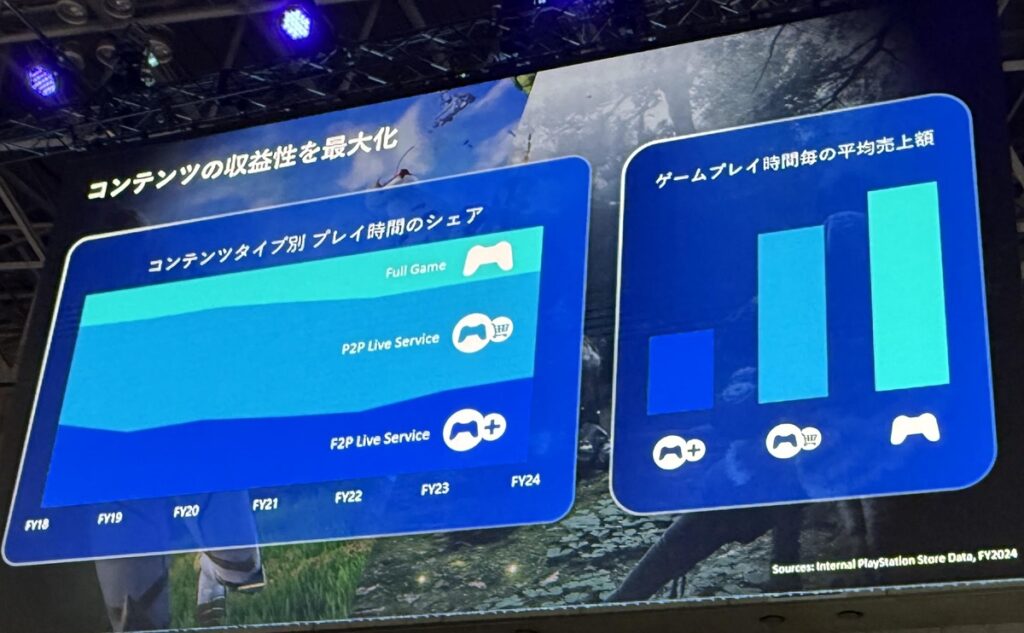
He also said that monetization models are powered by use of data.
“We are enhancing the player experience and maximizing opportunities for developers to reach players worldwide, Nishino said.
He noted, “Since the very beginning, Japanese publishers have been crucial to PlayStation’s success. We are confident they will remain essential in the years ahead. We will be a global destination for amazing Japanese content.”
PlayStation Store history
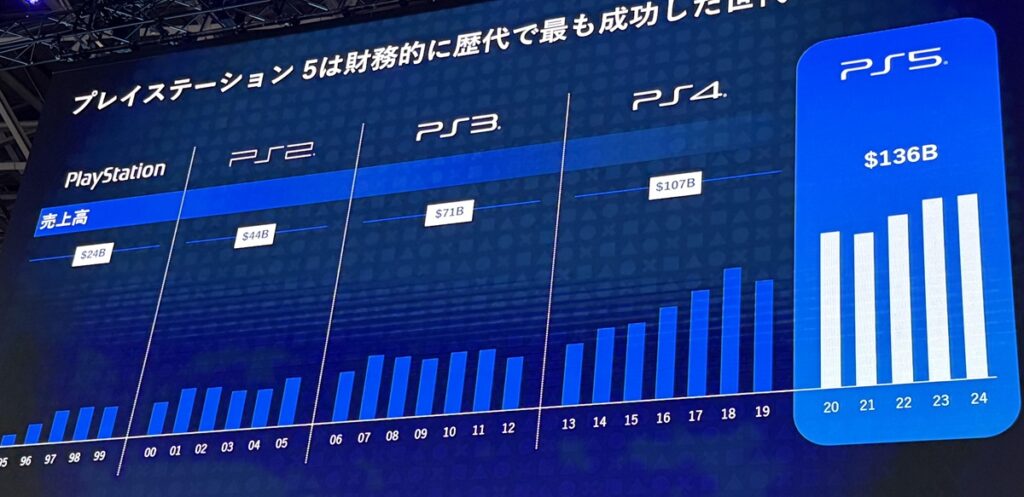
Nishino marked how Sony has evolved through five generations of game consoles since the PlayStation debuted in 1994. The PS 2 came out in 2000, the PS 3 in 2006,the PS 4 in 2013 and the PS 5 in 2020. This month marks the 30th anniversary of the launch of the original console in North America and Europe.
ens. last dec 3, marked 30th anniv of origin console launch in Japan. this month 30 years since debut in north am and Europe. we did a video. Sony said three decades ago that a gaming console cannot succeed without compelling content.
“We still believe in that original tagline and it is one of our driving beliefs today,” Nishino said.
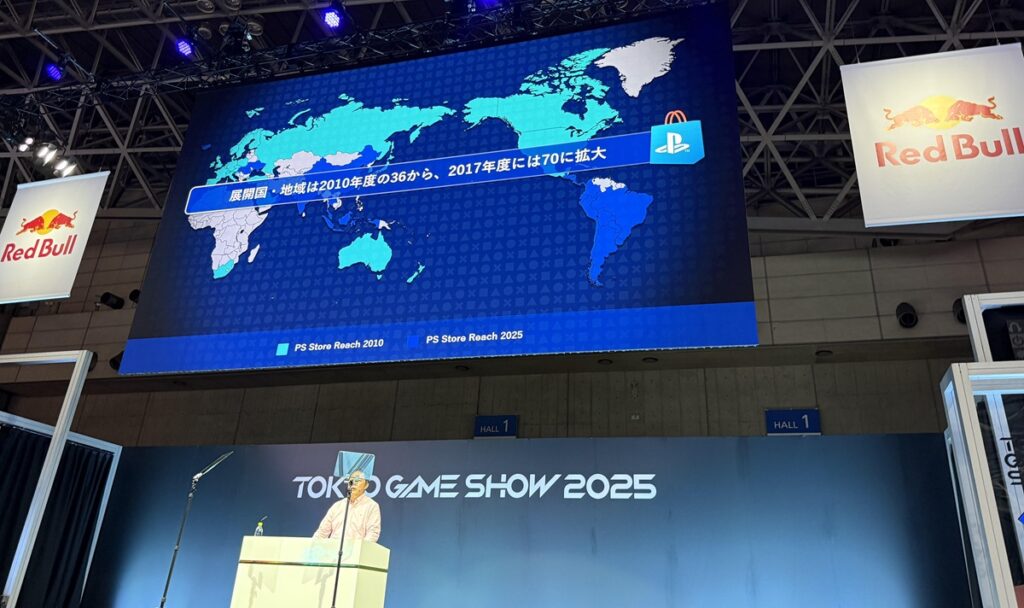
With 4.67 trillion yen in sales to date, PS 5 has been the most successful generation so far in revenues.
Over time, Nishino said Sony’s strategy has always been holistic, combining hardware, software, commerce and the player’s experience. To date, the company has 12,000 games, 4,000 developers and 123 million active players.
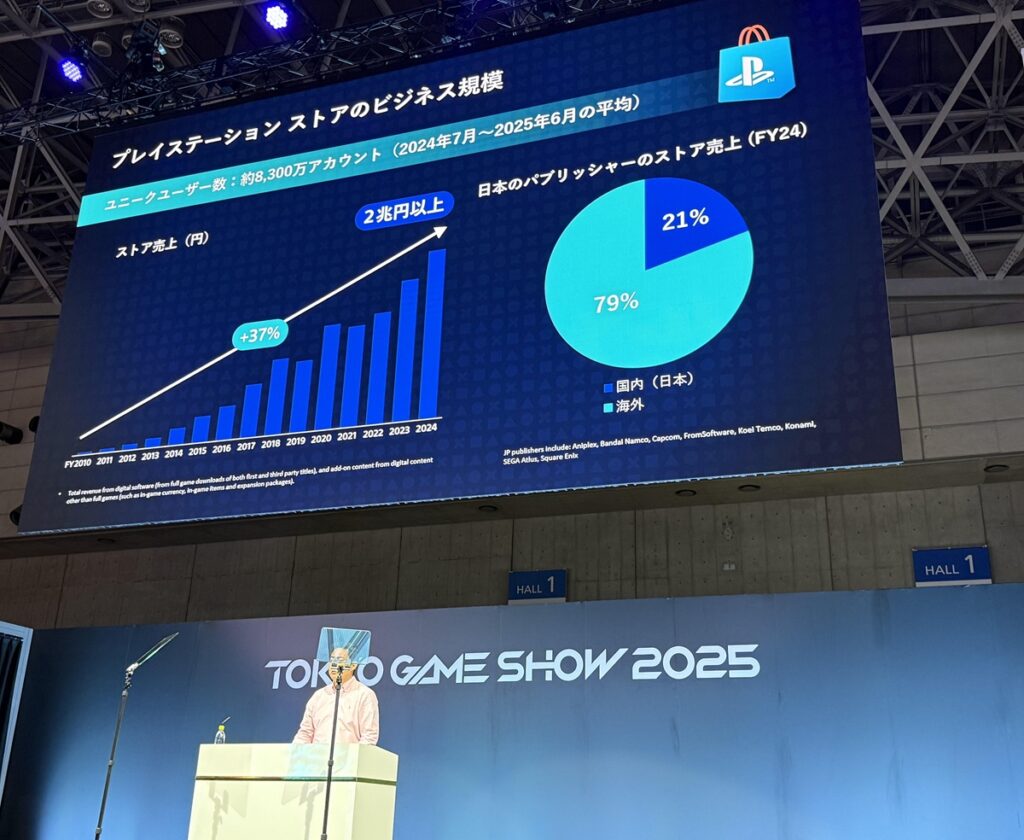
Sony first launched the PlayStation Store 19 years ago on August 11, 2006, ahead of the PlayStation 3 launch. It was modest at first, but it has since grown to two trillion yen in revenue, with 83 million unique accounts accessing the store each month.
On Christmas Day, 2006, the peak was 60 transactions per minute. Now the rate is 250 times higher at 16,000 transactions per minute. Japanese sales are about 21% of the PS Store sales now, with 79% coming from beyond Japan.
Nishino noted the humble roots that online sales have come from. In the PS 2 generation, Sony launched an expansion bay with an Ethernet adapter. Mobile date rates were 14.4 KBPS and 9.6 KBPS. PS 3 could not handle background downloads while playing a game until 2007. Ethernet speeds became routine and hit all players as of the PS 4 generation in the 2013 time frame.
Sony eventually started its Sony Network Entertainment business in 2010 and debuted its PlayStation Plus subscriptions that year. From that time onward, sales grew 30% a year on the subscriptions. By 2016, Sony combined its Sony Computer Entertainment and Sony Network Entertainment divisions, removing bottlenecks for cooperation.