
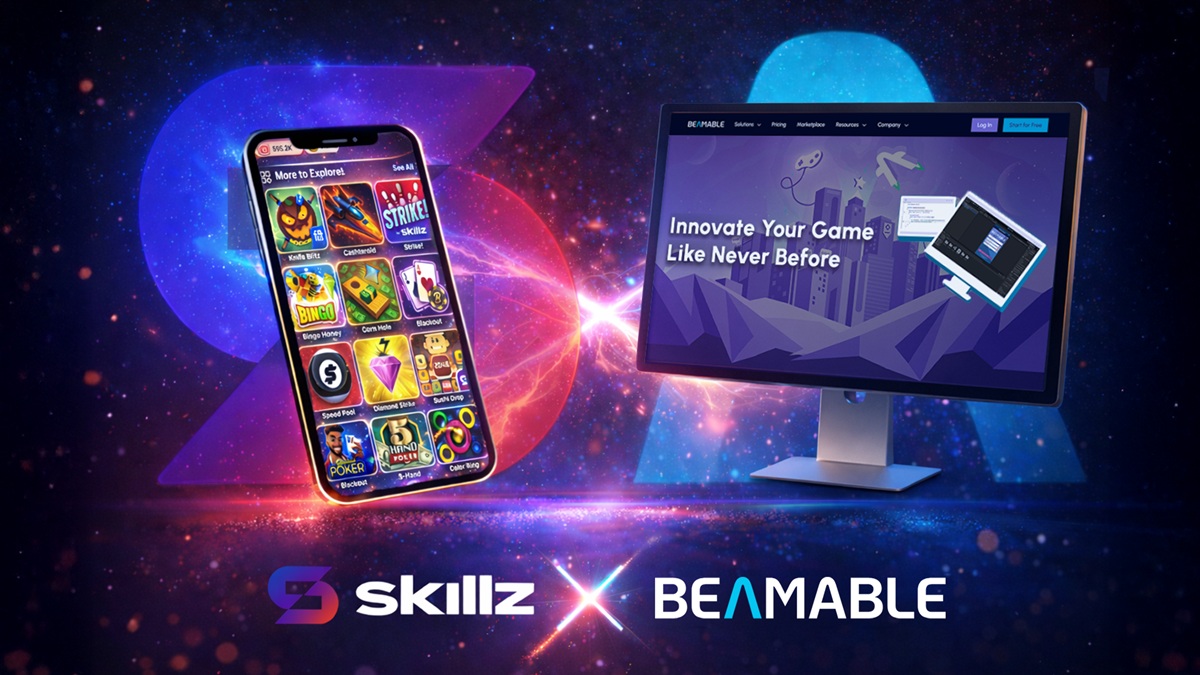
Skillz, the mobile game skill-gaming platform, announced that it has acquired certain assets of Beamable, a modern game backend and LiveOps platform purpose- built for scalable, live-service games.
The acquisition represents a step forward in Skillz’s long-term platform strategy, expanding the capabilities available to developers building on the Skillz ecosystem. By integrating Beamable’s backend services, microservices architecture, and LiveOps tooling into the Skillz platform, Skillz is advancing its vision of a unified offering that helps teams build, operate, and monetize games more effectively while reducing technical complexity and accelerating time-to-market. The price of the deal wasn’t disclosed.
“Skillz has always been focused on empowering developers to build successful, competitive games at scale,” said Andrew Paradise, CEO and founder of Skillz. “With Beamable’s technology, we’re extending that mission by bringing modern backend services, meta-game systems, LiveOps capabilities, and AI-native tooling into the Skillz platform. This acquisition gives developers more flexibility, more control, and more ways to engage players while leveraging the trusted competition, payments, and integrity systems already built into Skillz.”
Beamable is known for its developer-friendly backend platform, offering features such as identity management, microservices, LiveOps tooling, analytics, and content management — all designed to integrate seamlessly with popular game engines. These capabilities complement Skillz’s existing strengths in real-money competition, matchmaking, payments, loyalty, and player identity.
“Beamable was built to help game developers focus on creativity instead of infrastructure,” said Jon Radoff, CEO of Beamable. “By joining Skillz, we’re combining modern backend and LiveOps technology with the strongest competition and monetization rails in the industry. This creates a single platform where developers can build richer games, operate them efficiently, and monetize more effectively—at a scale that’s difficult to achieve with standalone services.”
What This Means for Developers Today
For developers, the integration of Beamable’s technology into the Skillz platform will:
● Provide access to advanced backend and LiveOps services alongside Skillz’s
competition, payments, and identity systems
● Enable richer meta-game systems, live events, progression, and content updates
without building custom infrastructure
● Reduce reliance on third-party backend providers and hyperscaler lock-in
● Support both real-money (RMG) and non-RMG experiences across the Skillz funnel
● Accelerate development timelines while improving scalability and operational efficiency
● Launch new AI-native products for the developer community.
Skillz origins

Paradise started Skillz in 2012 with cofounder Casey Chafkin. They focused on a mobile esports game platform, and they grew it into a competitive mobile gaming platform where players competed for real prizes. Players prospered based on their skill, and so Skillz focused on skill-based gaming.
Developers used Skillz in a B2B context, adding tournaments, matchmaking and monetization to their games. Instead of relying on in-app purchases, developers earned revenue from entry fees players paid to join competitions. And they shared revenue from Skillz’s prize-based ecosystem. Skillz made money by taking a cut of entry fees and prize pools. Skillz developed anti-fraud systems, did fair matchmaking and made sure players won based on skill, not chance.
In 2020, Skillz went public through a SPAC, or special purpose acquisition company. In the third quarter, Skillz reported a net loss of $17.4 million on revenues of $27.4 million. Paradise said he was encouraged by Skillz’s growth over the past few quarters.
Skillz also fought a couple of high-profile legal battles. It alleged patent-infringement against rival AviaGames, winning a $42.9 million damage award. It accused AviaGames of copying Skillz’s patented systems and using bots to rig matches against human players.
And in 2025, Skillz sued Papaya Gaming with similar fraud allegations. Skillz won an important ruling in that case when a federal judge denied Papaya Gaming’s attempt to dismiss the fraud allegations against it.
In 2010, Radoff started Disruptor Beam as a narrative-driven, community-centric online game maker that licensed entertainment franchises like Game of Thrones, Star Trek and The Walking Dead.
In the late 2010s, Radoff focused on Disruptor Beam’s internal tech stack and spun Beamable out as a separate company, one focused on making tools for game developers such as a live game services platform and backend infrastructure.
I’ve known both Paradise and Radoff for more than a decade and have followed their fortunes with interest. During the pandemic, I frequently joined Radoff’s Game Industry Cocktail Hour to talk about games on the Clubhouse audio platform. Radoff had a knack for understanding tech like cryptocurrency, blockchain and AI.
“You’ve been following us for years, and even when I was running a game studio,” Radoff said. “So I’m just taking it to the next level here and having a new chapter at Beamable, where we can just access a lot more scale and get in front of a lot more game developers and deeper into our mission. The live services business is not easy. It’s a trust business. Scale is important, and Skillz helps us get to that, so I’m excited about it.”
Why the deal makes sense

Skillz has acquired a few businesses before. One was Aarki, an ad tech demand-side platform, which lets advertisers buy ads automatically. Skillz paid $150 million in cash and stock in 2021 for Aarki. It’s grown and now Skillz is like a two-horse show. And with Beamable, Paradise said the company is moving into three distinct businesses.
Now Skillz will focus on providing B2B skill-based gaming SDKs and using Beamable for backend technology and live ops.
“This really helps us offer even more to developers. Now we’ll be able to deliver a modern backend, full-stack live ops capabilities, and we can really not just help developers monetize games, but really operate and build better games,” Paradise said. “That’s really where Beamable will go. It’ll be a technology stack for game developers to build, operate, and monetize games.”
The Beamable tools will increase the overall offerings for developers. Beamable charges a fee for its software-as-a-service live ops platform.
“We have traditionally offered a pretty rigid skill gaming SDK,” Paradise said. “At the last GDC, we announced our open API SDK, which really enables developers to kind of pick and choose from the total skill gaming. platform.”
The devs wanted more customized experiences, and Skillz will have more of those at its GDC offering this year.
“Now we have three different things that are offered to the developer. One is the kind of free-to-use revenue share business, which is the rigid SDK. The second is this open SDK model that we announced last year. And the third is the SaaS offering for LiveOps,” Paradise said.
Skillz SDK Roadmap and GDC 2026

The combined platform roadmap will be introduced as part of Skillz’s upcoming SDK
enhancements, with select details to be shared ahead of the Game Developers Conference (GDC) in March 2026. These enhancements will reflect a phased integration of Beamable’s technology and Skillz SDK, giving developers a clear path to adopt new capabilities over time.
Skillz plans to work closely with developers to ensure a smooth transition and to incorporate feedback as Beamable’s services are integrated into the platform.
Skillz is a leading mobile games platform dedicated to bringing out the best in everyone through competition. The Skillz platform offers developers the potential to build multi-million-dollar franchises by enabling social competition in their games. Leveraging its patented technology, Skillz hosts billions of tournaments for millions of mobile players worldwide, with the goal of building the home of competition for all.
Beamable has more than 100 solid game developers using its LiveOps, and there are perhaps 10,000 that have tried out the SDK and are in various stages of adoption. Paradise said he has known Radoff for over a decade.
“We’re expecting healthy growth for all three businesses,” Paradise said. “With Beamable, we’re looking forward to an AI-first vision of the future.”
“I knew Andrew for quite some time, even before the Beamable business. I was running our game studio, Disruptor Beam, where we worked on Game of Thrones and Star Trek games. I got to know him over that time and we stayed in touch,” Radoff said.
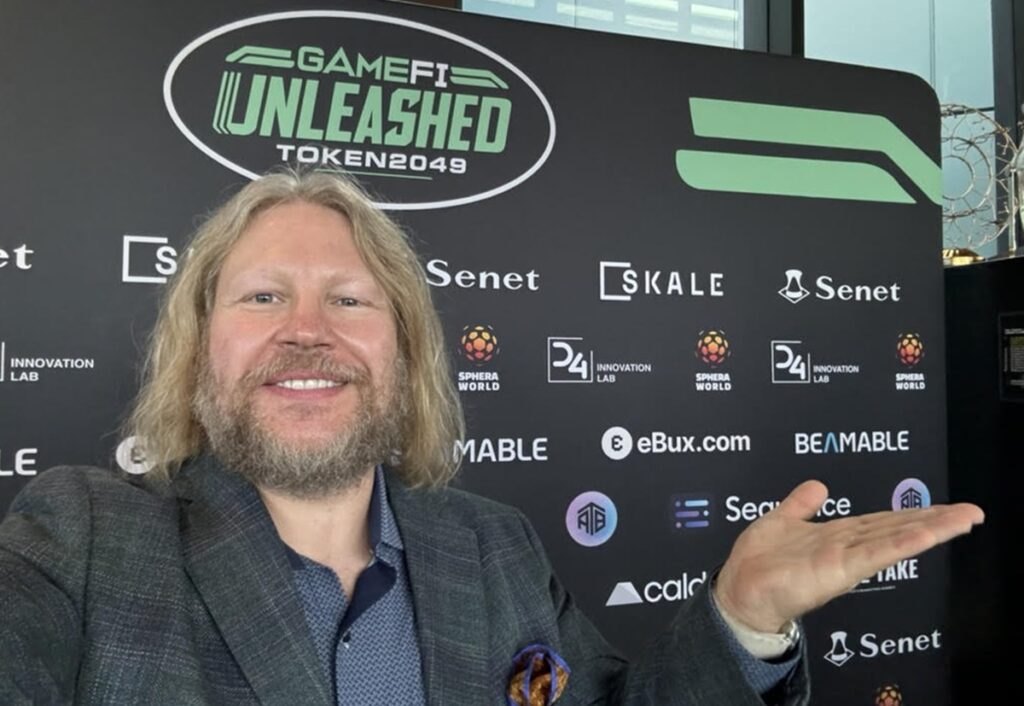
They reconnected through a common customer. Then they started conversations that led to the deal. Radoff said the businesses are complementary. He noted Beamable has a live services technology backend for game developers who want to build live games and have an operating infrastructure that they can use to drive more engagement, monetize and update content.
“It’s all the things that you have to do to operate a modern game,” Radoff said. “So it’s complementary to the existing things that Skillz does.”
Radoff saw how it would make sense to combine the monetization tech in Skillz, the user acquisition tech of Aarki, and the live services infrastructure of Beamable. Beamable has a core of about 20 people. It focused on a blockchain DePin strategy for a time, and it still works with some of those developers today, like Mythical. But the focus is on supporting all kinds of developers, Radoff said, regardless of their business models.
Among the developers who have shipped with Beamable, the company had three million players in a month playing games on the platform. Over time, Beamable has raised about $25 million.
“This complementary nature of the two companies helps us expand the overall size of the funnel for us, as Skillz has access to a lot of game developers that we are not currently talking to,” Radoff said. “We have everything from pretty large publishers to small ones.”