
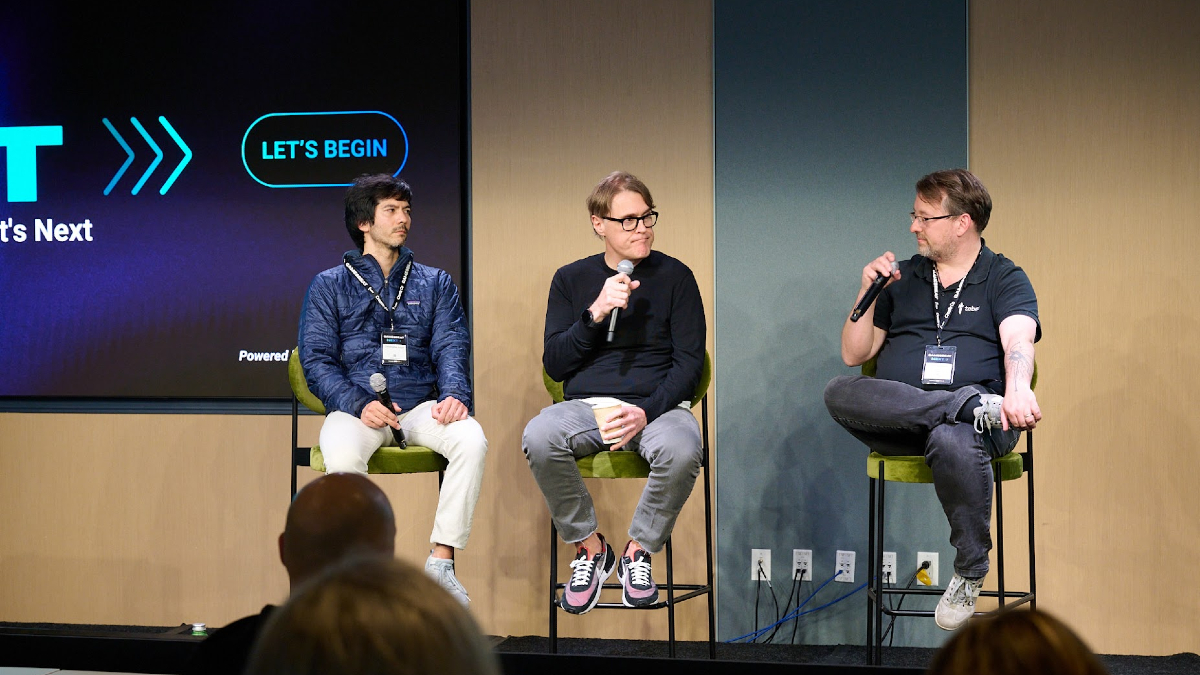
At GamesBeat Next 2026 in San Francisco, industry leaders discussed how the changing games publishing landscape is giving independent studios more control over how they bring their games to market.
As traditional publishing deals become harder to secure, a more modular approach is emerging, allowing developers to access specialist services without committing to conventional publishing agreements.
Moderated by Christopher Anjos, the panel featured Adam Orth, the chief executive officer of Midwest Games, and Liam Wiltshire, the vice president and general manager at Tebex, which sponsored GamesBeat Next.
During the panel Orth described Midwest Games as a modern, modular publisher that helps developers access exactly the services they need, rather than charging for an all-encompassing publishing package.
“We really do lean into the word modular, and we help people bring their games to market with exactly what they need without charging them for the things that they don’t,” Orth said.
Wiltshire stated that studios can manage much of the traditional publishing process themselves, while bringing in external experts for areas such as marketing, PR, community management and monetization. The distinction is that developers can retain ownership of the process without having to build every capability in-house.
Orth said the shift toward shadow publishing is already reflected in the kinds of requests Midwest Games receives. Rather than seeking millions in funding, more developers are self-funding their projects and approaching the company for specific support, such as marketing, release management and social strategy. He revealed that shadow publishing now accounts for around 75% of Midwest Games’ business.
A major theme of the discussion was the importance of building an audience early. Wiltshire emphasized community development as one of the most valuable things a studio can do before approaching a potential publishing partner.
“Build a community. Like, build a community. Build a community. Build a community,” Wiltshire emphasized, pointing to Reforge, a game from 4J Studios, as an example of a studio building user-generated content into its development process.
By allowing players to create and share their own creations, Reforge has been able to establish an engaged player and creator community ahead of release. Wiltshire also highlighted Hytale, whose existing community helped support its return and early access launch. With Tebex handling payments and other direct-to-consumer infrastructure, the game reportedly generated enough revenue to secure its development for the next five years.
The panelists also questioned the industry’s reliance on Steam wishlists as a measure of commercial potential. Wiltshire argued that a smaller but genuinely engaged audience can be more valuable than a much larger collection of passive registrations.
“I would take genuinely a game with 2,000 really engaged community members that are producing content, are sharing it, are sharing things on socials, are engaging in the showcase, whatever, over a game that has 100,000 wishlists,” he said.
The conversation also touched on the risks of building communities in an era where AI tools make it easier to replicate game concepts. Orth acknowledged that protecting creative ideas while sharing them publicly is becoming increasingly difficult, while Wiltshire suggested that an invested community could become part of a game’s competitive advantage.
Looking ahead, both speakers were optimistic about the opportunities for smaller studios. Wiltshire predicted a shift towards smaller teams creating games for more focused audiences, while Orth argued that developers have more independence than the traditional publishing model suggests.
“It’ll sound weird coming from a publisher, but the developers have all the power now. They really truly do,” Orth said.
Ultimately, the panel argued that success doesn’t have to mean selling millions of copies. Smaller teams can build sustainable businesses by finding their audience, generating enough revenue to continue development and retaining the freedom to make the games they want. As Orth put it, two people making a game don’t need a billion-copy success to support their lifestyle and build their next project.