
A deep bench

Longano, a 20-year game veteran who helped launch World of Warcraft, has built a strong team. Nelson was at IGN for a decade and stayed on after Fox acquired it. Then she helped build the sales organization at Twitch. Last year, she left Twitch to join Scuti. Jim Veevaert is senior adviser. He previously worked building games at Vivendi, Valve, Microsoft, IGT, and Zynga. And Jamy Nigri, the head of business development, previously worked at PUBG, Wargaming, and Jagex.
Nelson said the team is trying to integrate Scuti into the top titles from a variety of publishers and developers. Scuti has 16 employees and it is privately funded.
There are rivals out there, such as Salad, which rewards gamers with a currency they can use to buy goods in a store in exchange for allowing Salad to use their computing power to mine for cryptocurrency.
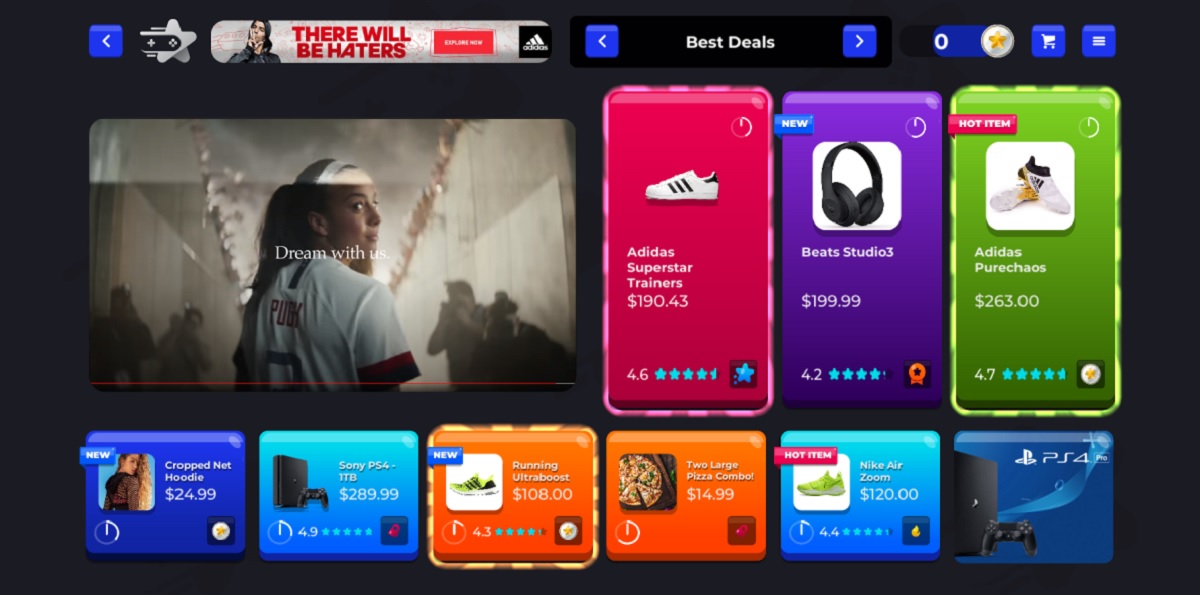
Longano said that his company insists that anyone selling goods in a store must provide gamers with rewards and also sell goods at the same price that it sells them for elsewhere.
“Vendors must provide gamer rewards if they want to be listed in our store,” Longano said.
Players opt-in for the Scuti marketplace, and they customize the brands and products for what they want to be in the store. So they won’t be served products that are irrelevant to them, Nelson said.