
RedOctane Games, a music rhythm gaming company that started the Guitar Hero craze, is back as a new game studio.
Today marks the official launch of RedOctane Games, a small but passionate studio founded by veterans of the rhythm game world, alongside exceptional new-generation developers, creators, and community leaders from the global rhythm gaming scene.
But RedOctane isn’t flying solo. It is part of the Fellowship Entertainment, which is the new name of Embracer Group. Lee Guinchard, COO and president of Fellowship Entertainment, filled me in on what’s been happening in an exclusive interview. The plan, by the way, is not to find all of that money that went into Guitar Hero and set it on fire.
In fact, they started with a new brand name, CRKD, and made a faux gaming guitar with Gibson. That has gotten a good reception, and it attracted more talent from the RedOctane and the Guitar Hero community. And so now the studio is working on a game.
Music games came and went in a brief era when original RedOctane teamed up with Activision and kickstarted the market with Guitar Hero. Electronic Arts teamed up with Harmonix and entered the market with Rock Band. They slugged it out for a while and eventually, mainstream players tired of the genre. The market got oversaturated, and music gaming has been haphazard ever since.
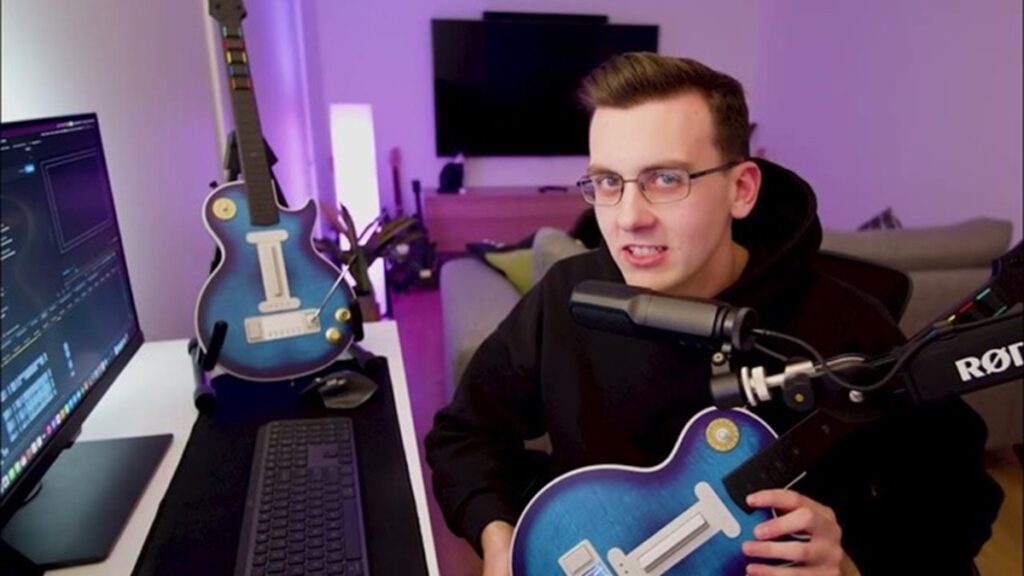
Guitar Hero as a brand is fallow, but it’s owned by Activision Blizzard, which is now part of Microsoft. But Embracer picked up the RedOctane brand in its acquisitions and has now started a small studio under executive Lee Guinchard, who is also in charge of The Lord of the Rings license at Fellowship Entertainment.
In our interview, Guinchard said RedOctane’s ambition is to bring back music rhythm games as a viable genre. And given his role at Fellowship, he can make it happen.
“It will not be called Guitar Hero. It will have its own name. The game will, of course, have guitars in it. But it won’t just be a clone of Guitar Hero,” Guinchard said.
The new studio started from conversations that Guinchard had with Brian Bright, Tim Clark and John Devecka. Lore Hero, a podcast, captured some of the comeback story.
“We schemed, got excited, and probably overthought a bunch of things. We asked: how
could we do this differently? How should we do it? Should we even attempt to do it?,” Guinchard said. “Brian was still tinkering with rhythm games and pointed out the Clone Hero community and a newer game called [Yet Another Rhythm Game] YARG. That set us off down a rabbit hole. We did our research, kept meeting, and kept thinking.”
Exploring the possibilities
In addition to running the Middle-earth franchise, Guinchard also has an incubation group where he looks explored various gaming segments.
The team looked at the Middle-earth community and saw how much it loved things like live-action role-playing festivals.
“I spent a long time in the last few years in the Middle-earth community, and I saw just how crazy it is,” he said.
It reminded him of people who are playing community games such as Clone Hero. He reached out to the community, which included Alec Castillo, the youngest Guitar Hero World Champion. He won a championship in 2010.
“He’s still doing this as a living. So we started to play a little bit,” Guinchard said.
So then they decided to reconnect with Gibson and bring out a guitar under the CRKD brand.
“We announced it properly in February, and it just took off. It just went absolutely crazy,” Guinchard said.
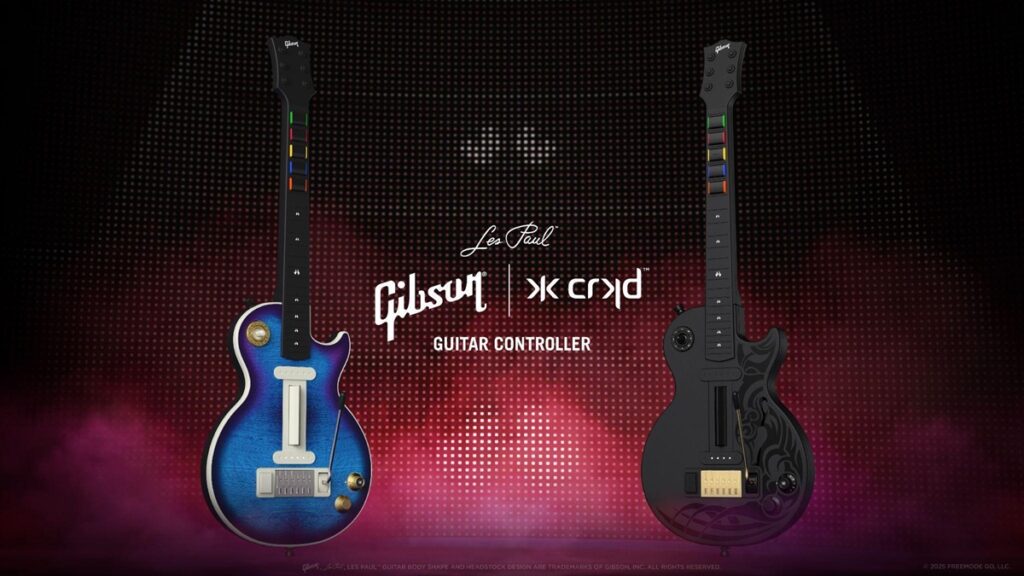
Last week, the CRKD brand announced that the CRKD Gibson Les Paul Guitar Controller range, has begun shipping globally to customers, starting with the Multi-Platform Black Tribal Encore Edition and Blueberry Burst PRO Edition controllers.
Announced in February this year, the announcement of a new, premium music controller set the rhythm music gaming community ablaze with excitement, the result of a landmark collaboration with Gibson, the world’s most iconic guitar brand, designed and engineered by many of the original RedOctane team, behind the legendary Guitar Hero game and controllers.
The new Les Paul Guitar Controller range has been designed to redefine the music game controller for modern gamers, honoring the past but forging a new path for the future via a host of innovative features, groundbreaking technology, seamless connectivity, and impressive customization options.
“The community folks are in the last throes of the development of the guitar to refine it,” Guinchard said. “And through that process, the question came up, ‘What would a modern game look like in this genre?'”
The team focused on that challenge next, and Guinchard got in touch with young people who created Yet Another Rhythm Game, which was an underground game. He asked if they wanted to work on a commercial game. And they joined up to help.
Just start by making a guitar
Guinchard pushed them to make prototypes. As studios started shutting down, economic headwinds hit Embracer and the company had to abandon the idea for a new game.
Then Clark said something that changed everything, “There’s clearly still an audience.
Fans still love these games. Just start by making a guitar.”
Then the team did that, prototyping a new guitar controller.
“One of the first challenges we tackled was the strum bar, and the headaches we all remembered from the old days,” Guinchard said.
They got it to work, starting with a Hall Effect strum bar. That was the seed. The group started a new brand, CRKD, to appeal to young gamers and faux guitar fans. They announced the Nitro Deck guitar in the summer of 2023, and CRKD was live. The next stop was the Fortnite Festival in late 2023. They pushed ahead with the plans for the guitar, and questions kept arising around whether a new game made sense.
Then PDP launched Riffmaster, and while that’s a different path, it gave the group a very
useful signal: people were still buying rhythm gaming hardware. They recruited people from the community around rhythm games to join them.
Recruited by Guinchard, Simon Ebejer joined the group and it gained more momentum, as he was a guitarist and a respected production leader, having shipped Diablo IV at Blizzard. He agreed to join as studio head.
Guinchard said the game won’t bear the name Guitar Hero, DJ Hero, Guitar Freaks or Rockband. This is something new.
Starting over
From the reception for the faux guitar and the other rhythm games, the small group found that the die-hard Guitar Hero and RedOctane community had never really died.
And now, based in the unlikely place of Livermore, California, a fresh beat is about to drop in the world of music rhythm games.
RedOctane Games is focused solely on advancing the rhythm game genre combining the past with the future and being driven forward hand in hand with this well-established and respected community of gamers. The team has been busy in pre-production over recent months and has now officially entered production on its debut rhythm-based title, which is expected to be announced later this year.
Heading up the studio is Ebejer, a seasoned games industry leader who was the production director on several Guitar Hero titles during his time at Neversoft. He later became studio head at Vicarious Visions and VP of Operations at Blizzard Entertainment, where he played a pivotal role in the organization and delivery of Diablo IV.
“Rhythm games are about more than just gameplay they’re about feel, flow, and connection to the music and to each other,” said Ebejer, head of studio, in a statement. “RedOctane Games is our way of giving back to a genre that means so much
to us, while pushing it forward in new and exciting directions.”
The original Red Octane
The RedOctane Games team includes creators and developers who helped create and scale Guitar Hero and DJ Hero nearly two decades ago, as well as proven emerging development talent and community leaders from across today’s rhythm gaming space. The studio is being built with the community from the ground up, ensuring that players are part of the creative journey from day one.
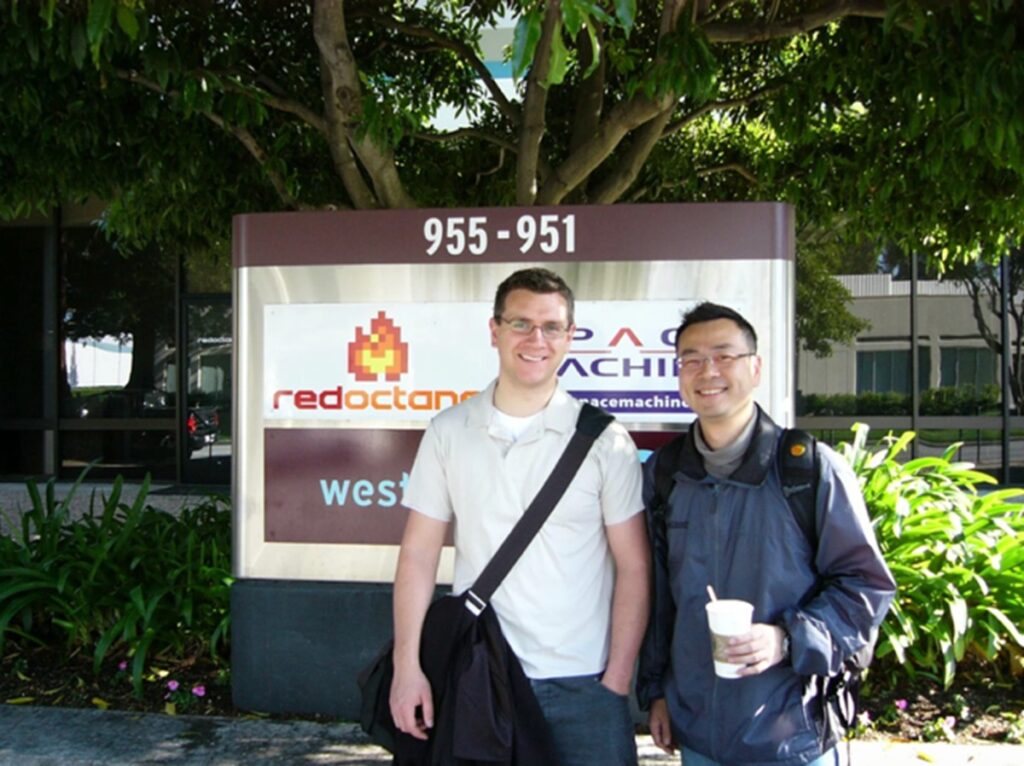
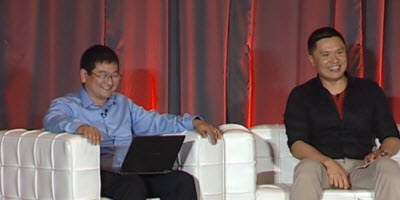
In addition, brothers Charles and Kai Huang, founders of RedOctane, will join a special advisory board for the company.
“Before we wanted to go through with it, we wanted to bring [Charles and Kai] in too. They’ve got a lot of experience as well. Actually, Charles met a lot of these younglings as well, and he said, ‘I think we can do this again,'” Guinchard said.
Charles and Kai were the original founders of the Guitar Hero franchise back in 2005, having partnered with Harmonix Music Systems to launch the groundbreaking title that helped define a generation of rhythm gaming. Their involvement brings deep heritage and insight to the studio’s future direction.
The brothers sold RedOctane to Activision in 2006 for $99.9 million. In 2010, Activision shut down RedOctane as a division, effectively retiring Guitar Hero as a company. Activision tried for a revival in 2015, but it didn’t succeed.
But now it’s a new era. Charles Huang said in a message to GamesBeat, “It’s been gratifying to see people still playing this genre of games almost 20 years later.”
A focus on community
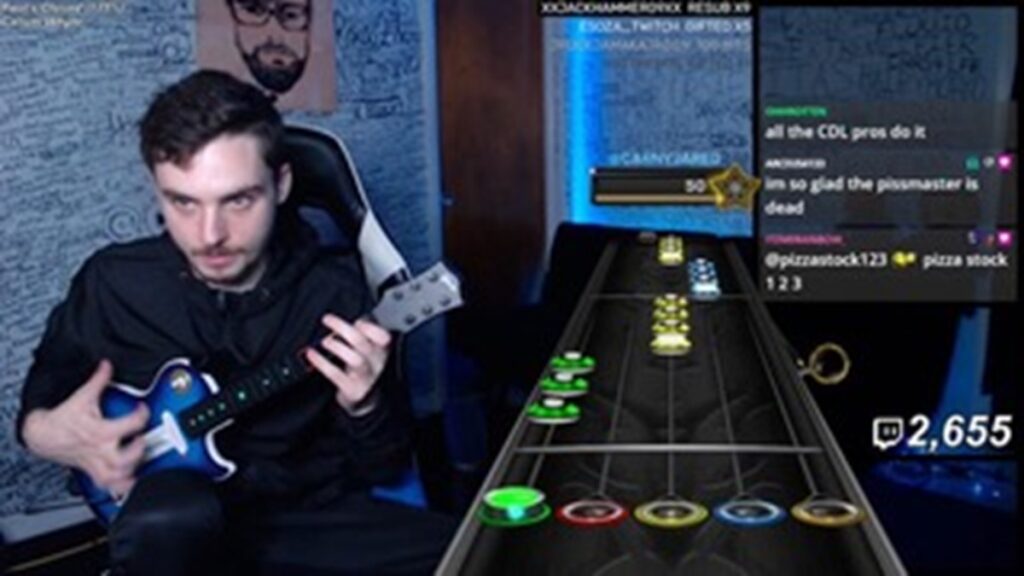
With community-built development at its core and a strong foundation of technical and creative talent, RedOctane Games is ready to deliver the next evolution in rhythm gaming.
As part of Fellowship Entertainment, RedOctane Games won’t be lacking for resources. It’s part of a major game company that owns game franchises such as Kingdom Come: Deliverance, Metro, Darksiders, Killing Floor, Dead Island, Champions Online and Agents of Mayhem.
It also owns Dark Horse Comics and the transmedia IP Middle-earth Enterprises, which has the rights to Tolkien’s works like The Lord of the Rings. All told, Fellowship Entertainment owned 16 studios, and now it’s 17.
Meanwhile, Epic Games acquired Harmonix a couple of years ago, and they did launch the Fortnite Festival. But we’ll see if there is anything else cooking.
The RedOctane Games title will likely be announced this year and it could come out in 2026, perhaps in the holidays.
The team how has 10 people and it may expand to 15 or 20. The team is spread out, but Livermore is the central office.
After seeing the rebirth of game companies like Acclaim Entertainment and now RedOctane, I feel like old game companies never die. They just fade away … and get rebooted.