
Platforms have become a core element of the gaming ecosystem — but not everyone is happy about their growing power.
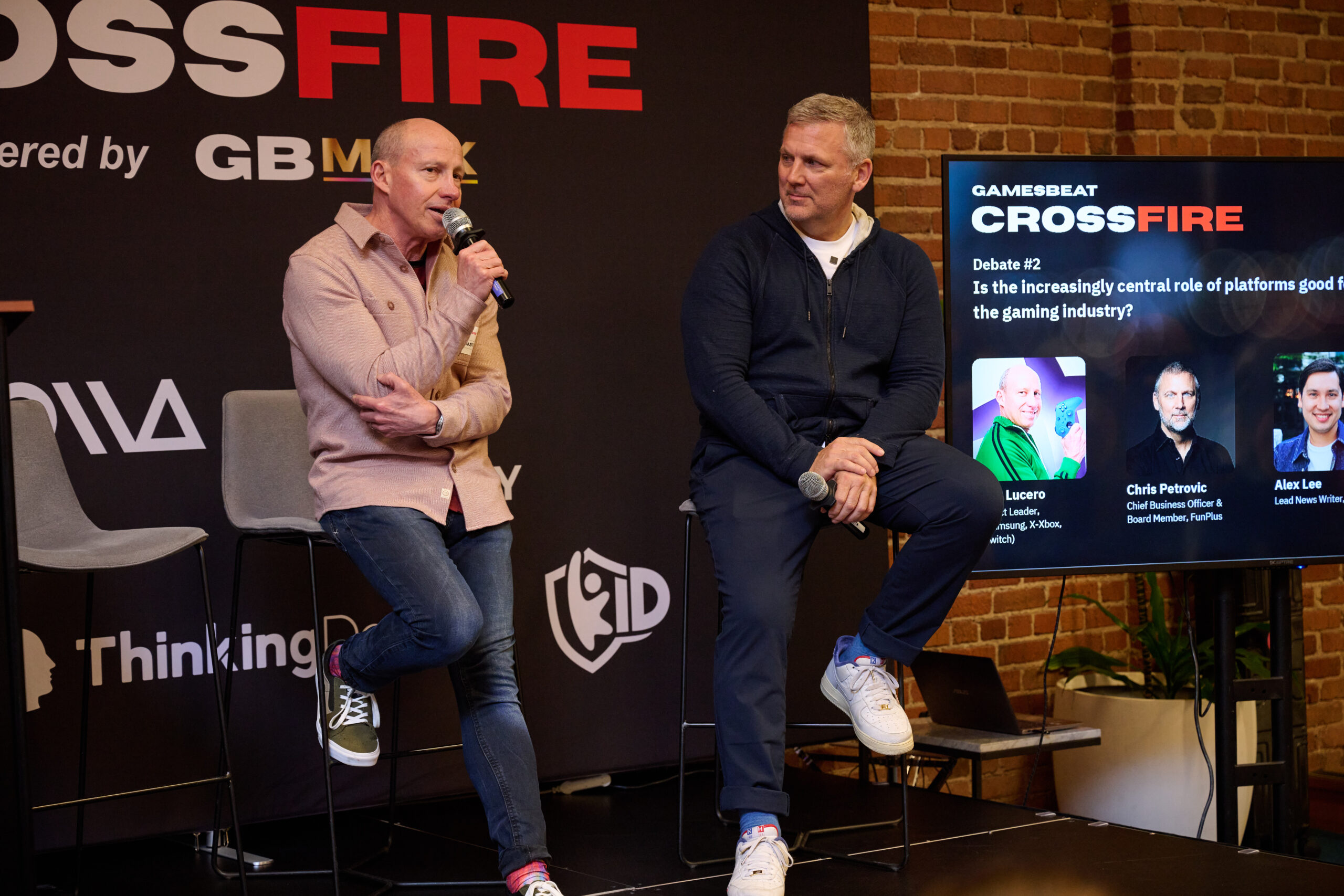
The ever-evolving relationship between platforms and game makers was the core focus of a debate at GamesBeat Crossfire, our event in San Francisco on March 10 during the week of GDC Festival of Gaming. Over 500 industry leaders attended the event to observe or participate in a series of debates — including a debate on the balance of power between platforms and game makers featuring FunPlus chief business officer Chris Petrovic and Mike Lucero, a longtime gaming product leader with experience across Xbox, Twitch and Samsung.
The debate was moderated by GamesBeat lead news writer Alexander Lee — AKA yours truly. I kicked it off by defining platforms as any digital service that allows a game maker to share and monetize their content with an audience, then turned the discussion over to Lucero, who pointed out that mounting competition between platforms themselves helps keep their offerings fair and equitable for game makers who are finding themselves with more platform partner options than ever.
“I’ve had the pleasure of talking to quite a few platform folks, just in the last few days and at this reception, and there is a lot of competition when it comes to the platform — nobody is taking it for granted,” he said. “And, by the way, DTC is a very viable alternative.”
Petrovic was much more skeptical of the value provided by platforms. Although he acknowledged that they are a necessary part of the ecosystem at this stage, he pointed out that the current standard benchmark of 30 percent of every dollar generated by a game going to the platform was “way too high.”
“As developers, the chatter that I hear, if we were to wave a magic wand and come up with a number that we thought was fair, 15 percent feels fair, as a starting point,” Petrovic said. “And, as you notice with Apple and with Google, and the recent forced concessions that they’ve had to make in their legal settlements, they are doing everything that they can to preserve as much as possible.”
Brendan Greene, who spoke on a fireside chat with Dean Takahashi earlier in the evening, also flagged platform overreach as a significant challenge in his talk, highlighting developers’ mounting frustration over platforms’ growing influence in the space.
“It’s the internet,” he said. “It has to be built as an open platform, or you get AOL.”