
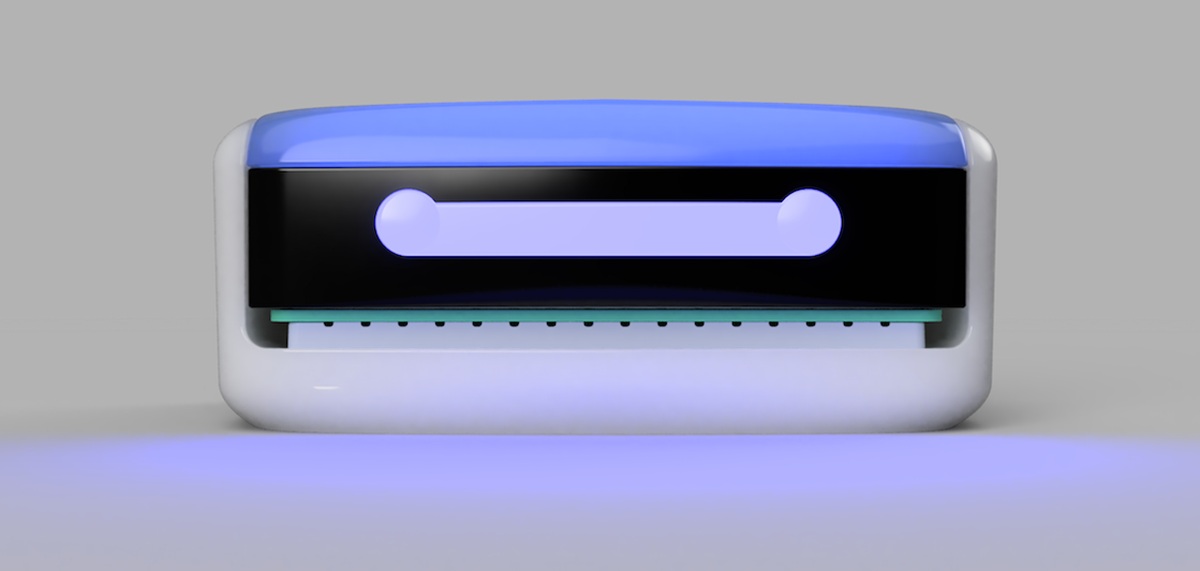
OVR Technology, a pioneer in digital scent technology, has partnered with indie game maker Little Buffalo Studios to make a game that you can smell.
Little Buffalo Games is going to use OVR’s Omara tech in a 2026 game, Akiiwan: Survival, a chill survival adventure.
The game will be enhanced with the unique immersion experience from the first of its kind Omara Scent Display. Little Buffalo leads a bold collective of 26 pioneering game developers looking to expand digital storytelling into the next frontier with scent — with 14 games in active development leading up to the Omara’s launch in 2026.
“Our mission is to make gaming experiences feel more memorable and impactful with the power of scent, and we’re excited to work with the Jeremy Nelson and the Little Buffalo Studios team to add this layer of realism and emotional connection to Akiiwan: Survival,” said Colin Giblin, vice president of OVR, in a statement. “The Omara scent display is a breakthrough device that will enable game developers to enaage with their audience in a whole new way.”
It might be hard to get a peripheral into the market with such an unusual gaming premise. But one thing is for sure. Making a game for your sense of smell will definitely stand out from the 18,000 games that hit Steam every year.
“That idea of immersion has just always been something interesting, and this sense of smell seems like something that should exist. This has been engineered to be the best, smallest, most portable, most sort of efficient way to do this,” said Dave Stiller, CEO of OVR, in an interview with GamesBeat.
Jeremy Daniel Nelson, founder of Little Buffalo Studios, met with OVR at the PAX East show, where the company launched a play test. They connected on the idea of the smells of nature and how the tech and the game content could mix well.
“That’s when the conversation started,” Nelson said. “We’re making what I like to call a relaxing survival game. I don’t call it cozy, because there’s still challenge to it, but it is really immersive, and it was really about leaning into what it really means to live off the land.”
He added, “Our design for the game was always to make it feel like the memory of a really great forest. It’s not about every leaf. It’s about that feeling and that emotion. Like a smell could trigger something else in memory. Like music in songs, our emotions are very much tied to our senses.”
How the Omara Works
I caught up with the founders of OVR — Sam Wisniewski and Dave Stiller — at Gamescom in Germany back in August and got a briefing on the technology.
They noted that our sense of smell evolved with the unique power to evoke vivid emotions and memories. As scent molecules enter our nasal passages, they bind to olfactory receptors located in the roof of the nose and relay electrical signals across our sensory neurons and directly into our brain.
Unlike other senses like sight, sound, and touch, which have to pass through the thalamus first, olfactory signals take a direct route to the limbic system – the region heavily involved in processing emotion and memory.
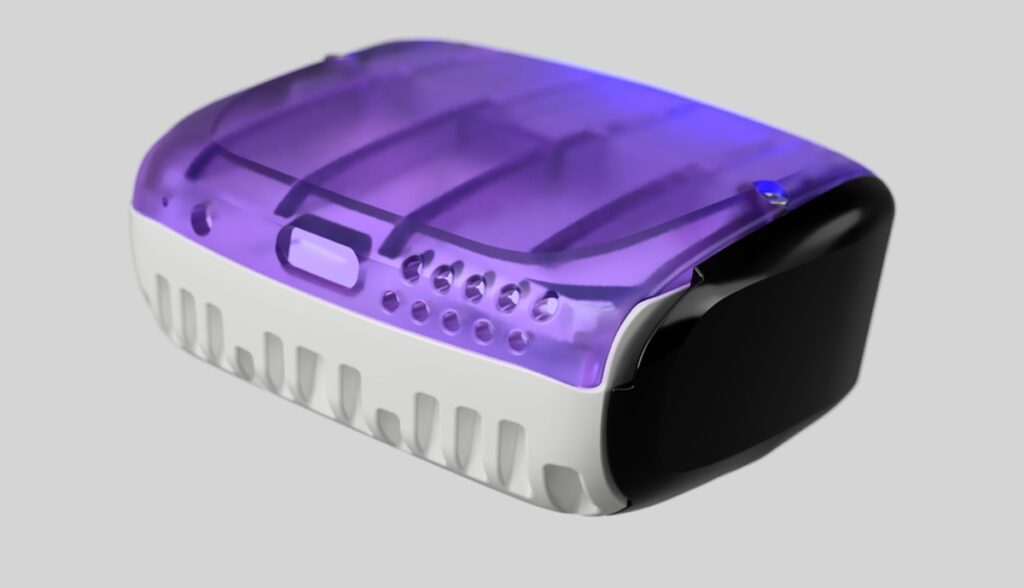
The Omara device leverages this process with tight control over the amount of scent molecules for each in-game queue, and delivers them with an unprecedented level of accuracy and speed, then clears them instantly to avoid lingering distractions, creating the ideal environment for gamers to feel maximum immersion and realism.
OVR wants to open a new chapter for game developers, giving them the tools to craft more emotionally resonant stories and unforgettable adventures, from heart-pounding moments to joyful discoveries across every genre and platform — scent now becomes part of the narrative. This is made possible by OVR’s Unreal and Unity plug-ins, which enable the Omara to display scents based on a player’s interactions within a game.
The company said that the Akiiwan Survival game is just the beginning. OVR is already partnering with leading game studios to integrate the Omara into upcoming titles gamers will see soon. It’s not clear yet how much the device will cost.
Origins
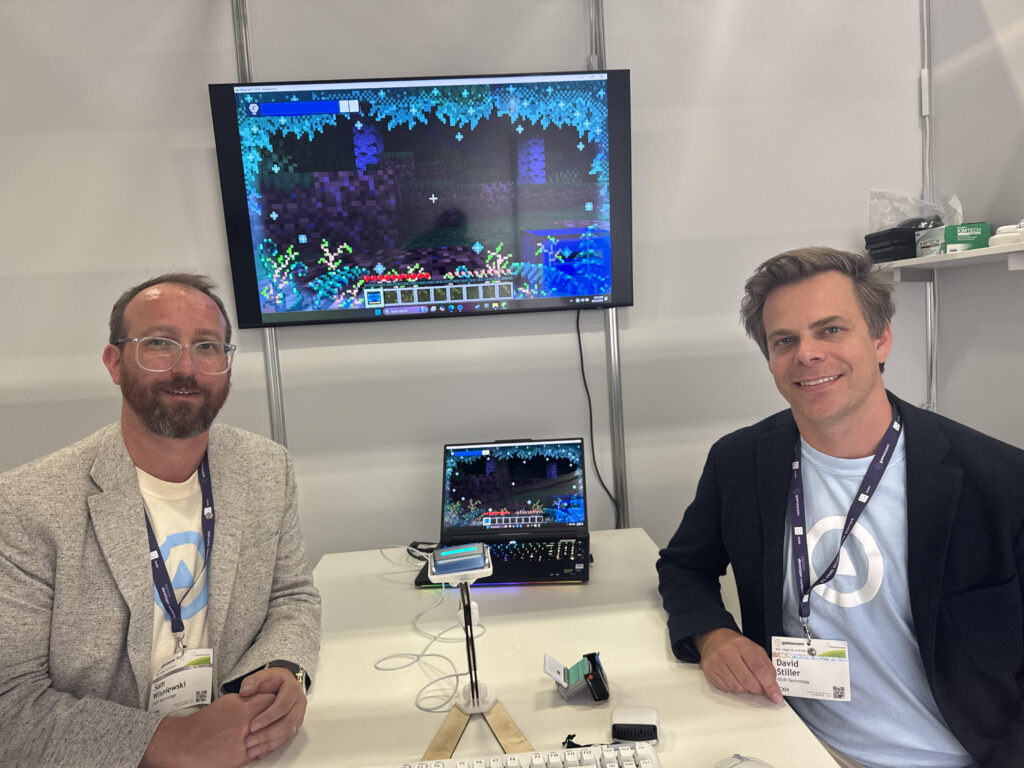
OVR Technology was founded in 2017 in Vermont to advance the human experience through the intersection of technology, product design, and the art and science of olfaction, with the mission to create a whole new era for digital immersion through scent.
The team, led by digital scent industry veteran, Sam Wisniewski and CEO Dave Stiller, is made up of leading experts (neuroscientists, engineers, designers) in digital scent technology who have cracked the code to finally bring this experience to gamers in a fresh, accessible, and meaningful way – with a strong focus on enabling multisensory, spatial, and action based opportunities for game developers.
“One of our mottos is ‘digital scent done right,'” Wisniewski said. “We respect that scent is tricky, and so we’re really working hard to do it right based on feedback and learnings. So the scent overlays the visual UI overlay you see.”
Lead by a team that has worked for PlayStation, Ubisoft, Netflix and others, we create visually stunning games rooted in crafting, exploration and survival. The company’s first title, Akiiwan: Survival, is a chill survival game with a talking campfire. It was funded for production in late 2022 with more than a $1 million budget. It will launch in mid 2026.
Jeremy Daniel Nelson, the game producer who founded Little Buffalo in 2021, spent his career working in mobile, XR, VR and AR, and prior to that, he did eight years as a commercial documentary TV producer and director, working for Discovery, History, VICE and others.
In addition to videogame design and production, he is also an award winning interactive exhibit designer, with a museum-offshoot of Akiiwan: Survival winning the prestigious 2024 Unity for Humanity prize from Unity 3D.
The meeting discussed the development and launch of OMara, a personal scent technology device for gaming. OMara, which integrates with Unity and Unreal plugins, offers 16 distinct scents and aims to enhance gaming experiences by creating immersive, scent-based interactions. The device, which lasts 60 hours on a single cartridge, uses precise control to release and dissipate scents quickly.
It targets developers to integrate scent into their games, offering a simple API similar to sound integration. The team emphasized the importance of scent in creating emotional connections and proposed potential uses like scent retraining and accessibility features.
In games, the scents could be associated with being near certain spaces inside the game.

“You could also think about the idea of characters or avatars having their own scent as they move through the space. That scent becomes a consistent piece of a storyline. So as you are emotionally connecting with a character in a game, the scent is also becoming tied to it, and it can bring it back that emotion and elicit that emotion in both the game and other places,” Stiller said.
“We think there are a lot of areas where we love scent to exist, but focusing on the game and allowing developers to be storytellers through the process, getting them into a creative tool,” Stiller said. “We can think about it from the idea of creating these emotional connections to items, creating more presence in the space, but also thinking creatively around scent game mechanics.”
He added, “We have best practices. But ultimately, it is a tool for them to decide how to use it.”
Making progress

The company leaders told me that the Omara will lead to a leap forward in interactive storytelling by adding emotional depth and maximum realism – making gaming experiences feel more memorable and impactful. Wisniewski believes “scent is the new frontier for visual storytelling.”
They believe the device will work with platforms like the PC, mobile and gaming consoles. It’s integrated with Unity and Unreal plugins. The company has patents related to electromechanical and piezoelectric activation. And it can trigger sensory experiences via Bluetooth.
During our meeting in August, the company showed a mod of Minecraft to demonstrate the different controls and scent experiences. I don’t have a great sense of smell, but they showed off various floral, smoky and barnyard scents.
“We started the company around just the importance of scent,” said Wisniewski in our interview.
His background is in flavor and fragrance business and operations.
“It’s really kind of around that exploration of how important scent is and how we experience the world. It has a direct link into memory and emotion and how that creates new experiences, and it influences cognition and behavior,” Wisniewski said. “So we started the idea of really looking at the digital world and knowing that scent is still missing, and that’s a huge gap in how we’re creating new memories and new exciting experiences.”
Their initial idea focused on the virtual reality space. They were building a device that was strictly for health and wellness and immersive experiences, but they decided to create something that was more accessible and could work with PC, mobile and other platforms.
So they redesigned it as a modular device that could work as a kind of appliance. They’ve been at it for seven years. And they’re excited to launch into the commercial market soon.
They noted that back in 1906, a theater owner, Samuel Roxy Rothafel, introduced scent to a movie by releasing rose oil during a newsreel screening. That even predated sound in movies. Various folks have tried to launch digital scent tech. During the Delta Airlines CEO’s keynote at The Sphere in Las Vegas, the venue released a smell of food when a Door Dash motorcyclist came up on stage.
“We’re carrying this torch into gaming where we feel like it’s actually great, maybe the best media for scent because of the way you interact in the world, as opposed to just being a passive role,” said Stiller in our interview.
The tech behind it
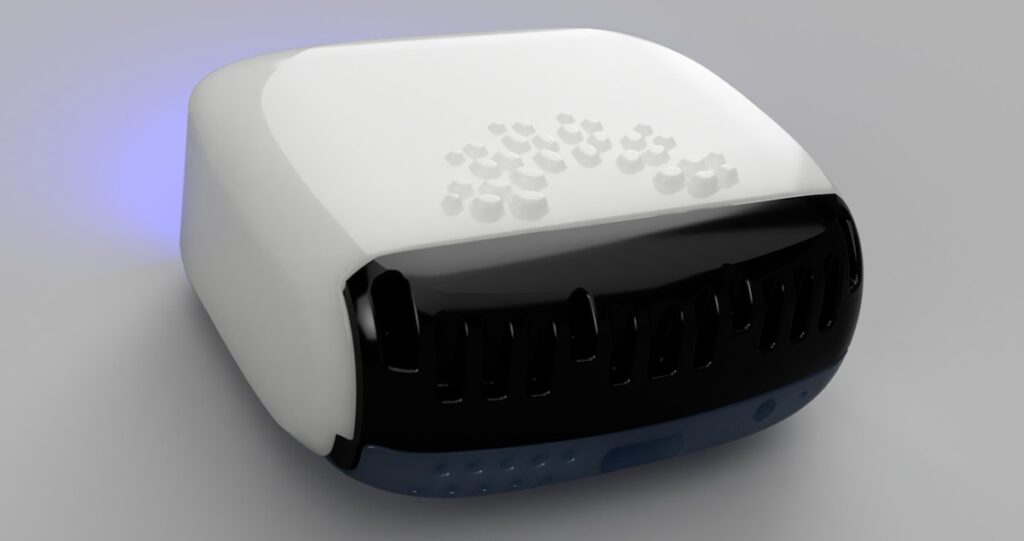
The company focused on creating a personal scent technology, one that only you could smell as you were playing a game.
“One of the problems that’s always existed in scent media is not the introduction of scent but ensuring that it goes away quickly, because what you want to have is a scent experience and another scent experience that’s discrete without them mixing,” Wisniewski said.
The team is focused on releasing the right amount of molecules into the space so you experience it, but then you breathe it away.
“It’s really around the precision of the control of what we’re releasing into the air,” Wisniewski said.
Rather than try to proliferate a scent through a large space, they’re focused just on the game player.
“The sense can be triggered either simultaneously, so you have your own device, but really it’s about you having that individual and quick experience,” Wisniewski said.
It integrates as an API, and also integrates through Unity and Unreal plugins. There are 16 channels with distinct scents. They include smells like citrus, flowers, charcoal, barnyard,. There are no heating elements or moving parts.
“We pass air over these fragrances. You can think about it like a sponge, which has been lightly dosed with oil and all the scents are in conformity with the international flavor and fragrance association,” said Wisniewski.
“The scent itself is a physical component, and the air takes those scent molecules and delivers it to the person. So it’s the way we can send the signal through the plugins and the interface via Bluetooth. The sweet spot is about 20 centimeters from you nose,” he added.