
Thanks to the AI boom, Nvidia reported stellar results for its fourth fiscal quarter today, with revenues topping expectations.
Nvidia reported $68.1 billion in revenues for the fourth fiscal quarter ended January 25, up 73% from a year ago and up 20% from the previous quarter.
Analysts expected Nvidia’s expected revenue would be $66.23 billion for the quarter and $1.54 earnings per share. Nvidia beat both of those numbers and its forecast is also above expectations for the first fiscal quarter.
Nvidia’s closing market capitalization was $4.76 trillion before the earnings announcement. In after hours trading, the stock is up 2.71% to $200.95 a share.
For fiscal 2026, revenue was $215.9 billion, up 65% from a year ago. For the quarter, GAAP and non-GAAP gross margins were 75.0% and 75.2%, respectively. For fiscal 2026, GAAP and non-GAAP gross margins were 71.1% and 71.3%, respectively.
For the quarter, GAAP and non-GAAP earnings per diluted share were $1.76 and $1.62, respectively. For fiscal 2026, GAAP and non-GAAP earnings per diluted share were $4.90 and $4.77, respectively.
“Computing demand is growing exponentially — the agentic AI inflection point has arrived. Grace Blackwell with NVLink is the king of inference today — delivering an order-of-magnitude lower cost per token — and Vera Rubin will extend that leadership even further,” said Jensen Huang, CEO of Nvidia, in a statement. “Enterprise adoption of agents is skyrocketing. Our customers are racing to invest in AI compute — the factories powering the AI industrial revolution and their future growth.”
Asked about the potential for capital expenditure growth at this time, Huang said in the earnings call that the exponential growth of agentic AI makes him confident that the spending will happen because it’s so compelling.
“I am certain we have reached the inflection point,” Huang said in the analyst call. “Computing has changed.”
The $300 billion to $400 billion in computing investment has now translated into the need to generate AI tokens and that fuels AI infrastructure and spending.
He also said, “The demand for tokens has gone completely exponential. Our strategy is to deliver an AI infrastructure every single year.”
This year, he said Nvidia is deliver six new chips with Vera Rubin.

The growth is being driven by the AI demand boom and how that’s fueling sales for Nvidia’s AI chips in its Data Center division. Nvidia’s AI chips, born from the parallel computing in its gaming graphics chips, are the heart of AI infrastructure.
Huang said in the past that Nvidia had visibility into $500 billion in AI chip sales related to AI infrastructure.
The current driver of sales are the Blackwell-based systems, but Nvidia is expecting to launch its Vera Rubin-based chips this year that are 10 times more efficient than the prior generation.
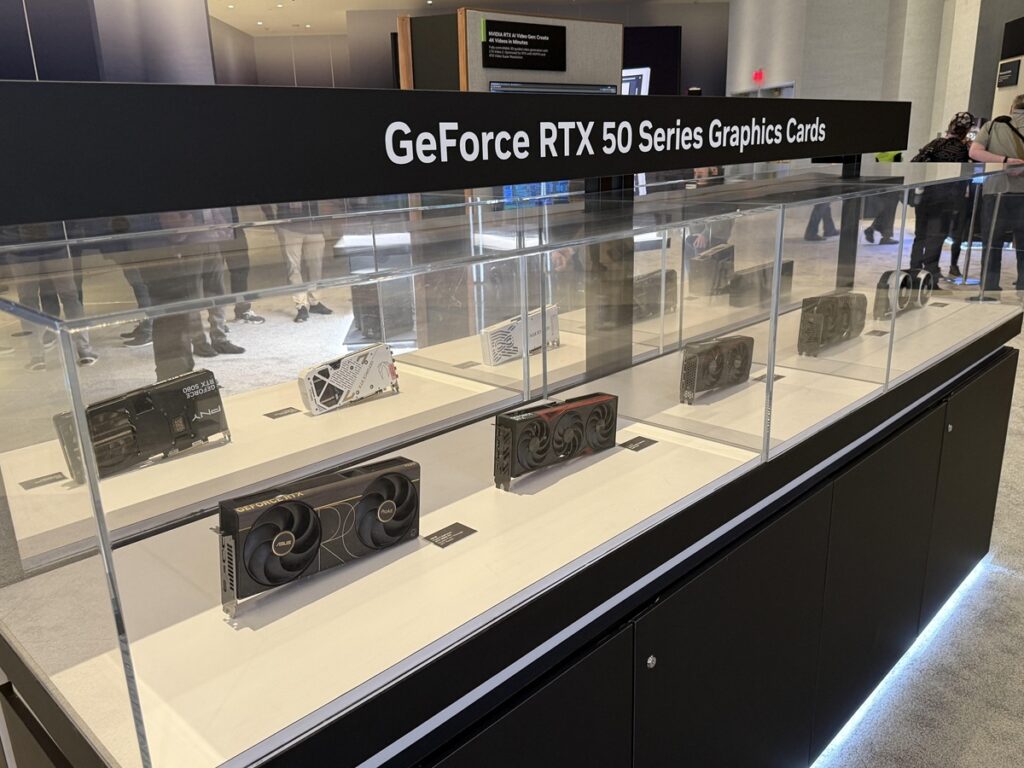
Gaming demand has also been strong with high demand for Nvidia’s GeForce RTX 50-series graphics cards, but some of that demand has been hurt by a shortage of memory chips, which are in high demand because of the AI boom.
Nvidia also has big business with hyperscaler cloud companies, AI inference and training, networking and sovereign AI projects, where governments build national AI compute infrastructure to make sure they control their own data.
One of the drags on sales is the U.S. government’s export restrictions on sales to China. Nvidia sells its H20 chips to China, which are not its high-end chips, and it is seeking permission to sell chips like its H200 chips as well.
Reuters reported that China’s DeepSeek startup was able to test its latest version of its large language model on Nvidia’s high-end Blackwell chips — which is prohibited under the export controls. Nvidia declined comment on that.
For the first fiscal quarter, analysts expect Nvidia’s revenues to be $72 billion and earnings per share of $1.68.
Nvidia said that its outlook for the first quarter of fiscal 2027 is as follows:
- Revenue is expected to be $78.0 billion, plus or minus 2%. NVIDIA is not assuming any Data Center compute revenue from China in its outlook.
- GAAP and non-GAAP gross margins are expected to be 74.9% and 75.0%, respectively, plus or minus 50 basis points, inclusive of a 0.1% impact from stock-based compensation expense.
- GAAP and non-GAAP operating expenses are expected to be approximately $7.7 billion and $7.5 billion, respectively, inclusive of $1.9 billion of stock-based compensation expense.
Highlights
Data Center
- Fourth-quarter revenue was a record $62.3 billion, up 22% from the previous quarter and up 75% from a year ago, driven by the major platform shifts — accelerated computing and AI. Full-year revenue rose 68% to a record $193.7 billion.
- Unveiled the Nvidia Rubin platform, comprising six new chips to deliver up to a 10x reduction in inference token cost, compared with the NVIDIA Blackwell platform; cloud providers Amazon Web Services (AWS), Google Cloud, Microsoft Azure and Oracle Cloud Infrastructure will be among the first to deploy Vera Rubin-based instances.
Gaming and AI PC
- Fourth-quarter Gaming revenue was $3.7 billion, up 47% from a year ago, driven by strong Blackwell demand, and down 13% from the previous quarter as channel inventory naturally moderated following a season of strong holiday demand. Full-year revenue rose 41% to a record $16.0 billion.
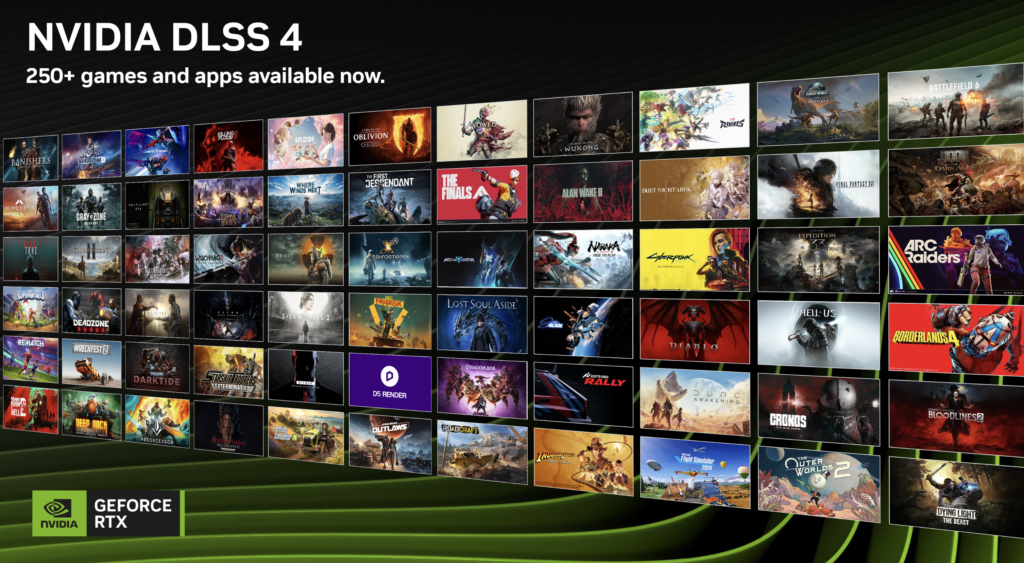
- Announced Nvidia DLSS 4.5, delivering major AI-powered advances in graphics quality.
- Launched Nvidia G-SYNC Pulsar, extending the ultimate gaming display platform with new levels of motion clarity in esports.
- Advanced Nvidia RTX AI performance and adoption, delivering up to 35% faster large language model inference in leading AI PC frameworks and up to 3x performance in AI-generated visuals.
Professional Visualization
- Fourth-quarter revenue was $1.3 billion, up 74% from the previous quarter and up 159% from a year ago, driven by exceptional demand for Blackwell. Full-year revenue rose 70% to a record $3.2 billion.
- Launched the Nvidia RTX PRO 5000 72GB Blackwell GPU to power larger models and agentic workflows.
- Expanded global availability of Nvidia DGX Spark for the latest open models and delivered updates for improved performance.
Automotive and Robotics
- Fourth-quarter Automotive revenue was $604 million, up 2% from the previous quarter and up 6% from a year ago, driven by continued adoption of Nvidia’s self-driving platforms. Full-year revenue rose 39% to a record $2.3 billion.
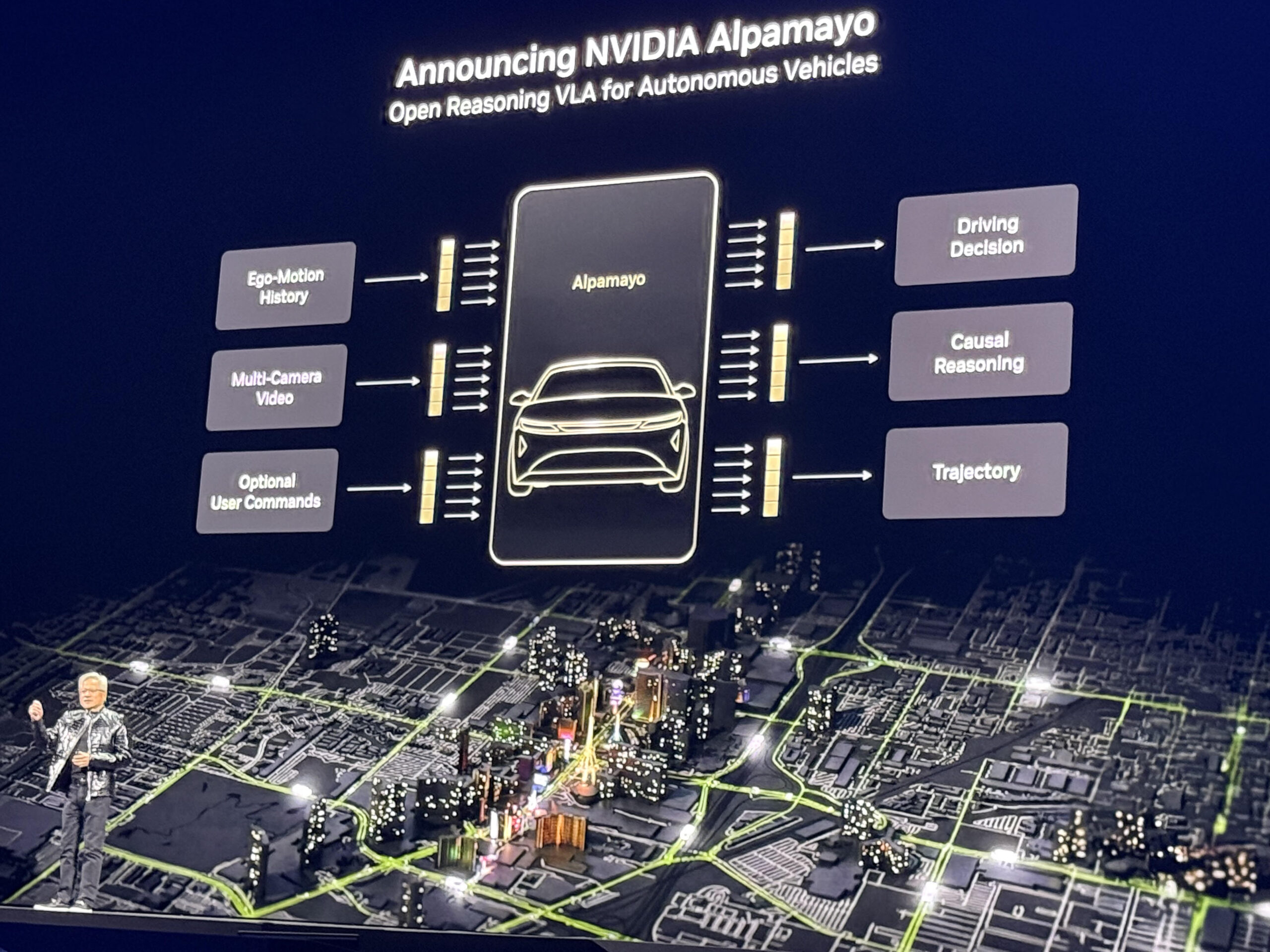
- Unveiled the Nvidia Alpamayo family of open AI models, simulation tools and datasets designed to accelerate the next era of safe, reasoning‑based autonomous vehicle (AV) development.