
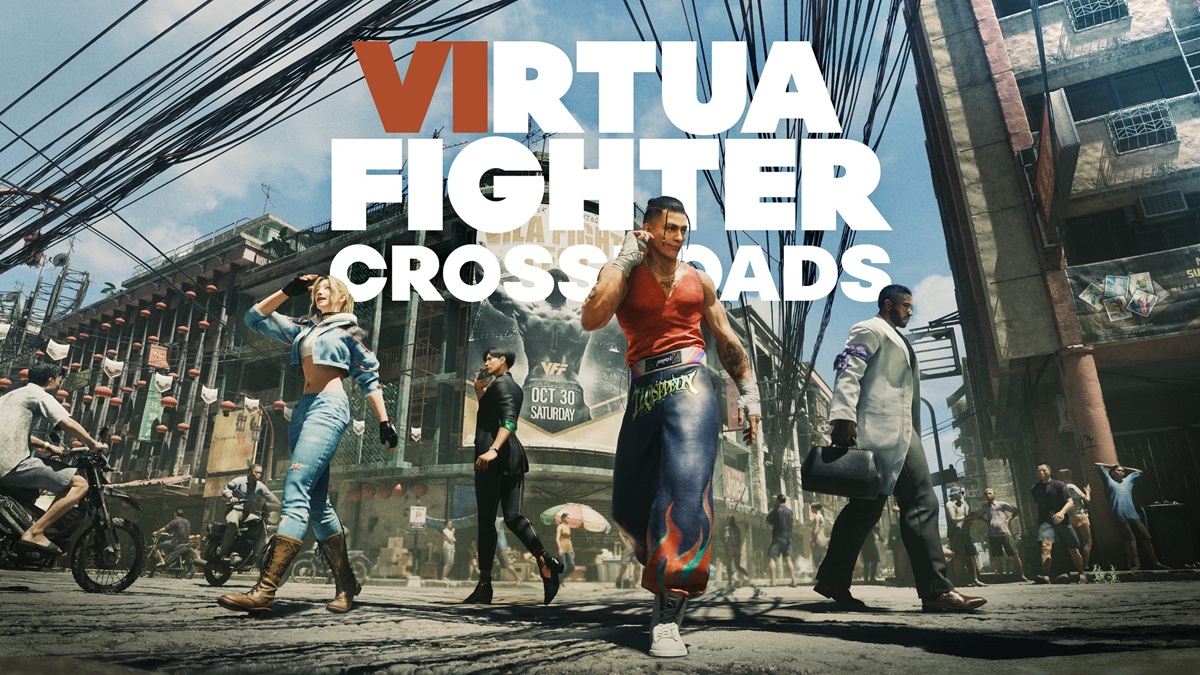
About 30 years ago, an investment from Japanese game company Sega saved Nvidia. Now the companies are teaming up again as Sega has agreed to bring its legendary games to Nvidia’s RTX Spark computers.
Those games include the newest upcoming title, Virtua Fighter Crossroads.
Back in 1996, Sega provided $5 million in emergency funding to Sega as Nvidia was about to run out of cash. Jensen Huang, CEO of Nvidia, remembered that and spoke about it many times, saying that without that money, Nvidia would not have survived long enough to create some of its critical early products, the Riva 128 graphics chips and the GeForce graphics programming unit (GPU) products that put it on the path to where it is today — both a rare surviving graphics chip giant and the undisputed king of AI chips.
In the mid-1990s, Sega had hired Nvidia to make the graphics chip for the Dreamcast game console. Nvidia worked on it but it could not meet Sega’s performance requirements. By 1996, which was Nvidia’s third year, the company had failed with Dreamcast and had no deliverable product, revenue or runway.
Without a final contract payment, Nvidia would have to go out of business, Huang told Sega. Instead of refusing payment, Sega CEO Shoichiro Irimajiri decided to approve the payment because he liked Huang and converted the payment into an equity investment. That money kept Nvidia alive long enough to pivot to PC gaming graphics and launch the Rival 128 in 1997 and later the GeForce 256 in 1999. When Nvidia went public in 1999, Sega cashed out its shares for around $15 million, or triple its investment. If Sega held on to the shares, they would have been worth over hundreds of billions of dollars today.
Deepu Talla, vice president of robotics and Edge AI at Nvidia, brought up that storied partnership in a press briefing about the news.
“The rest is history. So the first revolution happened with the Nvidia NV1 graphics card with the first Sega Virtua Fighter, and today, all of Sega’s games are coming to RTX Spark, and RTX Spark is this new PC invention that happened for the first time in 30 years,” Talla said. “Jensen announced this last month at Computex. It’s the first agentic AI PC, and all these agentic AI games from Sega are coming to RTX Spark.”.
RTX Spark is a PC, but Tall also said it’s “a complete reinvention of the PC for the first time in 30 years.” He said it is completely RTX Spark and he noted that on Windows, all the applications that have been available in the Windows ecosystem run on RTX product.
And he said a lot of the workloads using Nvidia GPUs are games.
“So this is a gaming platform,” Talla said.
The RTX Spark is what Nvidia calls a “superchip,” a hybrid of both CPU and GPU architecture designed specifically for local AI agents, creative workloads and gaming. It’s a new PC platform Nvidia announced in May. The machines run Windows and they’re powered by a 1-petaflop Nvidia superchip that fuses a 20-core Grace CPU with a Blackwell-based RTX GPU using NVLink-C2C networking.
It enables 120 billion parameter large language models (LLMs), 12K video editing, 90GB 3D scene rendering and triple-A gaming at 1440p at 100 frames per second, with full RTX, DLSS, Reflex and G-Sync.
The machines are coming in slim laptops and small desktop PCs from Asus, Dell, HP, Lenovo, Microsoft Surface, MSI, Acer and Gigabyte. The design is meant to enable massive local AI workloads and heavy-duty video editing for creator workflows.
Nvidia will also bring future Sega titles to RTX Spark, which is targeted for slim Windows laptops and compact desktop PCs.
Announced from the heart of Akihabara, a global gaming technology hub, at the original Sega Akihabara Arcade (now GiGO Akihabara 3), Virtua Fighter Crossroads coming to RTX Spark reinforces the companies’ commitment to innovation and shows a glimpse of the future of gaming on a new era of Windows PCs designed for personal agents, AI, creating and gaming.
On location in Akihabara, Huang joined Sega CEO Haruki Satomi; Sega chief operating officer Shuji Utsumi; Yu Suzuki, creator of Virtua Fighter; and former Sega President Shoichiro Irimajiri, at the birthplace of countless arcade memories to celebrate the milestone.
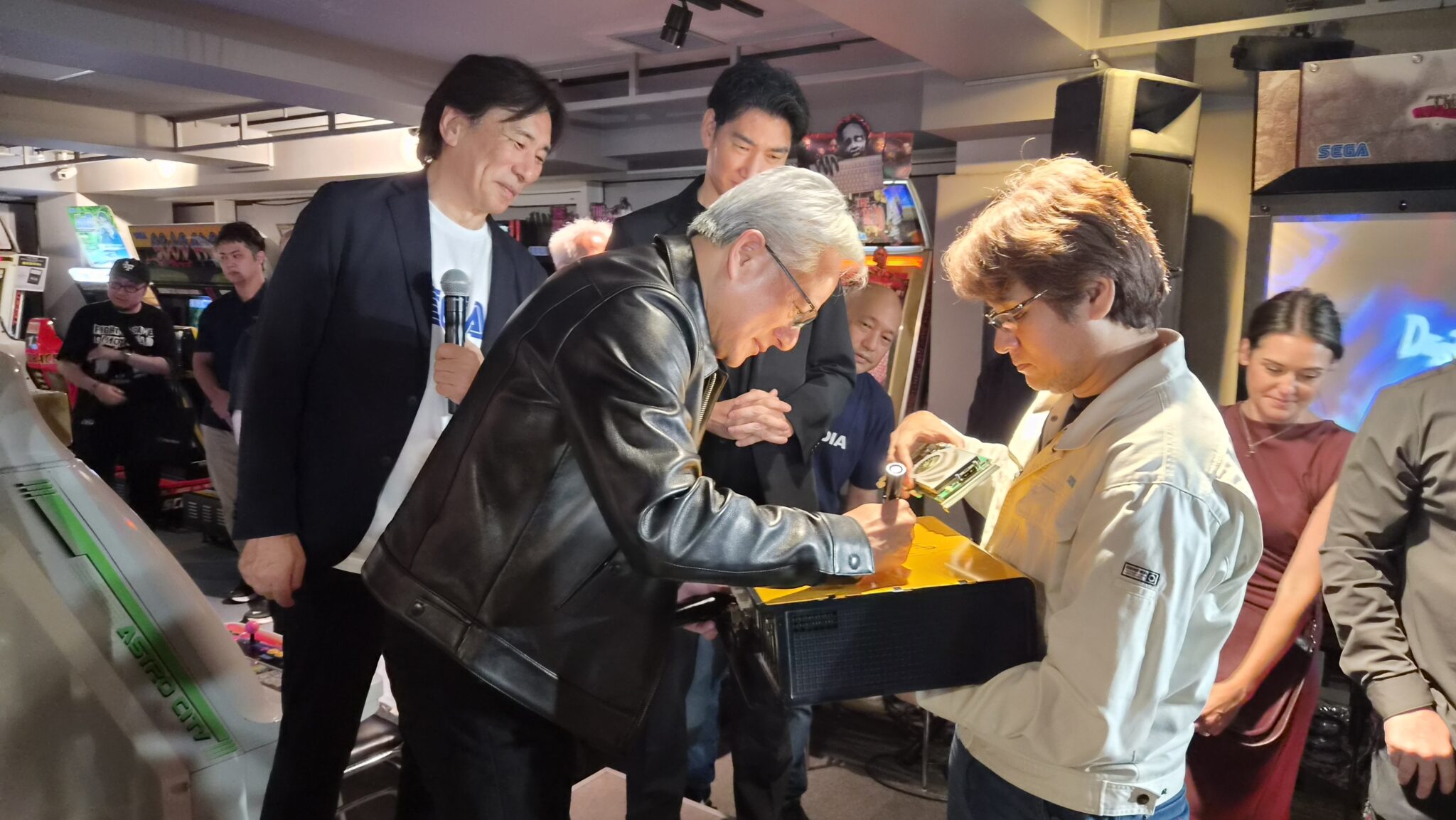
They showcased how technology partnerships can evolve across generations of hardware and software, connecting the gaming industry’s heritage with its future.
The expanding Nvidia RTX Spark ecosystem — including Sega and other industry leaders — will offer gamers new experiences harnessing Nvidia ray tracing, DLSS and AI technologies, while preserving and celebrating the iconic franchises they know and love.