
Intel reported its strongest data center revenue growth in 15 in years, helping meet targets in the third quarter, but its weak comments about its Q4 forecast led to a 23% drop in its after-hours stock price.
Intel reported $16.51 billion in revenue for the third quarter ended September 30 today, up 21% from a year earlier. Adjusted earnings per share (EPS) was 52 cents, up from 23 cents a year ago, That beam consensus estimates of 39 cents a share and $16.44 billion in revenue.
Intel’s leaders noted they see a PC slowdown continuing at least through the first half of 2027.
“Our Q3 results demonstrate improving execution, meaningful progress expanding supply and continued advancement of our process technology,” said Lip-Bu Tan, Intel CEO, in a statement. “Despite near-term headwinds across the PC industry, demand for our CPUs remains robust, reinforcing our confidence in the long-term growth opportunities for our business. Our immediate priority is to unlock additional supply to meet extraordinary demand for our Xeon family, while strengthening our product portfolio and roadmap. We are moving with urgency and focus to capitalize on these opportunities to deliver sustainable growth and long-term shareholder value.”
“We delivered another solid quarter. Revenue, gross margin and earnings per share exceeded guidance, including our strongest data center revenue growth in 15 years,” said David Zinsner, Intel CFO, in a statement. “Looking ahead, we see the PC slowdown continuing at least through the first half of next year, but we remain optimistic about the opportunities across our broader portfolio, and we will continue making disciplined investments in capacity and working capital to increase supply and support future growth.”
In the third quarter, the company generated $5.1 billion in cash from operations. During the quarter, Intel completed a $23 billion public equity offering to support future growth opportunities.
“The successful completion of our equity offering in August provided us with the necessary
financial resources to capture the growth ahead. I am very pleased to add new sovereign funds
and long-term growth investors in addition to our existing shareholders,” Tan said. “We are deploying this capital quickly and prudently. We expect CapEx and purchase commitments for key components to increase significantly over the next several quarters. I want to thank our substrate, memory, foundry and equipment suppliers for their strong partnership and collaboration as we work together to expand supply and support growing demand.”
It also announced plans to acquire Classiq, combining its quantum software synthesis platform with Intel’s spin-qubit manufacturing and software expertise to create a full-stack quantum computing platform.
During the quarter, Intel also announced plans for a multiyear collaboration with Oracle intended to expand Intel Xeon-based computing on Oracle Cloud Infrastructure (OCI), which is expected to span current and future Intel Xeon platforms, including planned OCI X14 offerings powered by Intel’s next-generation server processor code-named Diamond Rapids.
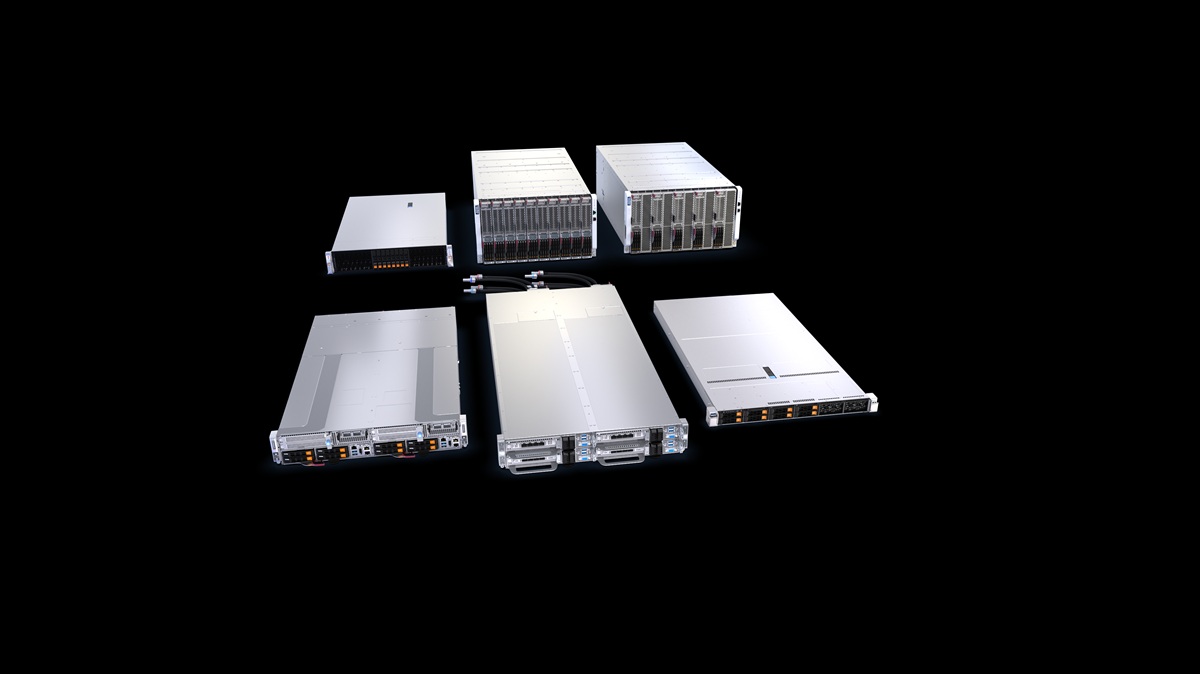
It also shared new technical details on the Intel GPU D-series, formerly code-named Crescent Island, introduced new Intel Xeon-based rack designs and highlighted open software and ecosystem innovations at OCP Global Summit 2026. Intel also demonstrated day-0 support for Meta’s Muse Spark Open, which has been tested and is running on the upcoming Intel GPU D-series and Intel Xeon platforms.
And it showcased three architectures for Agentic AI and Enterprise-scale workloads at Hot Chips 2026: next-generation Intel Xeon code-named Diamond Rapids for high-performance orchestration, Intel GPU D-series for efficient inference, and Intel Core Series 3 for intelligent client and edge computing.
Intel also talked about its momentum with its foundry business, where it makes chips for other companies. It released the Intel 14A 0.9 process design kit (PDK) in October. And it announced a collaboration with Lens Technology, combining Intel’s advanced packaging expertise with Lens Technology’s precision glass processing capabilities to enable advanced semiconductor packaging for the AI era.
The company also appointed Dean Jarnac as executive vice president and chief sales officer, leading Intel’s global sales organization and strengthening customer relationships and go-to-market execution across the company’s product portfolio.
For Q4, Intel forecast revenues of $15 billion to $16 billion, lower than the current quarter. Gross profit margin was expected to be 37.1% GAAP and 38% non-GAAP. Earnings per share are expected to be 10 cents a share on a GAAP basis and 25 cents a share non-GAAP.
In an analyst call, Tan said, “The demand environment in Q3 was more balanced than previous quarters. Strong momentum in (data center AI chips) DCAI drove upside and enabled the strongest revenue growth for the segment in 15 years. This was partially offset by weakness in (Client Computing and Physical AI Group) CCPG driven by industry-wide impacts from higher memory prices and limited IT budgets.”
He added, “The industry continues to navigate one of the most significant supply shortages in history, driven by the unprecedented demand for Super Intelligence. Against this backdrop, I am pleased by the progress we made growing our server supply in Q3, I am mindful about the ongoing challenges we face in the future quarters to keep pace with server demand.”
He said the Granite Rapids on Intel 3 has become one of the fastest ramping server
products. Clearwater Forest, the first Intel 18A server product, is shipping for revenue, and
demand for 2027 is significant, especially in CPU-dense Agentic rack-scale infrastructure.
“Diamond Rapids, our first Intel 18A-P server product, is sampling and on track to ramp in 2027, with strong interest for inference and agentic workloads,” he said.
The bad news
But Tan also highlighted the bad news.
“I also want to acknowledge headwinds limiting our progress to meet this extremely high AI driven demand,” Tan said. “First, Intel 3 yield and cycle time continue to improve, but I am demanding significant execution from the team. Second, even as our Intel 3 wafer output ramps quickly an industry wide shortage of advanced organic substrates for our EMIB packaging is also impacting our ability to scale output. Finally, earlier this month, an unfortunate and tragic accident led to an extended shutdown in our Israel factory. While the teams have worked quickly to address the situation, it will impact our Q4 10nm server shipments.”
The future
Purpose-built silicon remains Intel’s fastest growing business segment, tripling over the last 3 years and poised to triple again over the next few years, he said.
“We see further growth opportunities with both existing and new potential customers, including AI labs, and are expanding our IP portfolio to meet the needs of a wider array of customers,” Tan said.
In client PC chips, Tan said that in recent weeks, “Our customers began signaling a PC slowdown based on memory prices and availability. Year-to-date system end-point prices have
increased significantly placing additional pressure on already limited IT budgets.”
He added, “The pace of the PC correction has accelerated over the last 2 months, as our OEM partners are aggressively managing inventory to match the softer sell thru. We expect the current environment to persist until memory availability and prices begin to normalize.”
While the next few quarters will be challenging for the PC market, the roadmap continues to
strengthen and Tan said the long-term outlook remains positive.
“We have successfully ramped Panther Lake on Intel 18A and demand for Wildcat Lake is outstripping supply,” he said. “Nova Lake, our first Intel 18A-P client product, is tracking ahead of schedule, with design wins expected to be twice those of Panther Lake at launch. We look forward to sharing more at CES in January.”
Regarding the future, Tan said, “I have always emphasized that rebuilding Intel is going to be a multiyear journey, and I remain firmly committed to making it happen. We are only a year and a half into this journey. We have made enormous strides in these 18 months, including a dramatic re-sizing of our workforce, eliminating middle management and bureaucracy, streamlining our executive ranks and establishing an almost entirely new leadership team. We have instilled once again an engineering centric culture, streamlined our product portfolio, and put in place a more competitive roadmap for Intel Products and Intel Foundry. We still have much more to do.”
He added, “The resurgence in demand for CPUs is a meaningful tailwind for us along our transformation journey. Increasingly, energy efficiency is becoming the most important metric for the AI infrastructure build-out. While GPUs are great at “thinking tasks”, deterministic CPUs are far more efficient at “finding” tasks. While a GPU reasoning query can run as high as multiple watt-hours of energy, a single CPU-based query could cost only joules of energy.”