
Johnny Galvatron has an entertainer’s name and he’s had an entertainer’s career.
He was a young rockstar and toured with his Aussie band The Galvatrons, which blended glam‑rock, synth‑rock, and 1980s soundtrack aesthetics. He made short films and wrote novels. Then he decided to make a video game.
He taught himself how to do it and, after six years, he was able to ship The Artful Escape in 2022 via publisher Annapurna. The musical adventure game was infused with the music of heavy metal guitars. And it was a whimsical, psychedelic coming of age story from a creative mind.
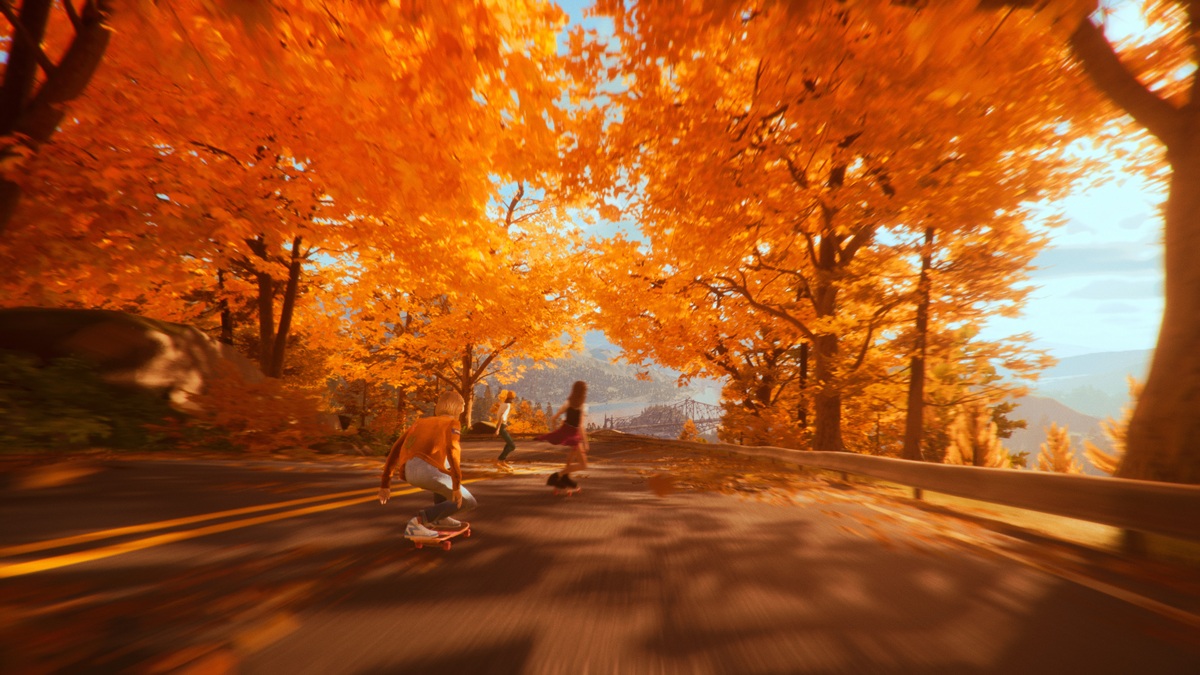
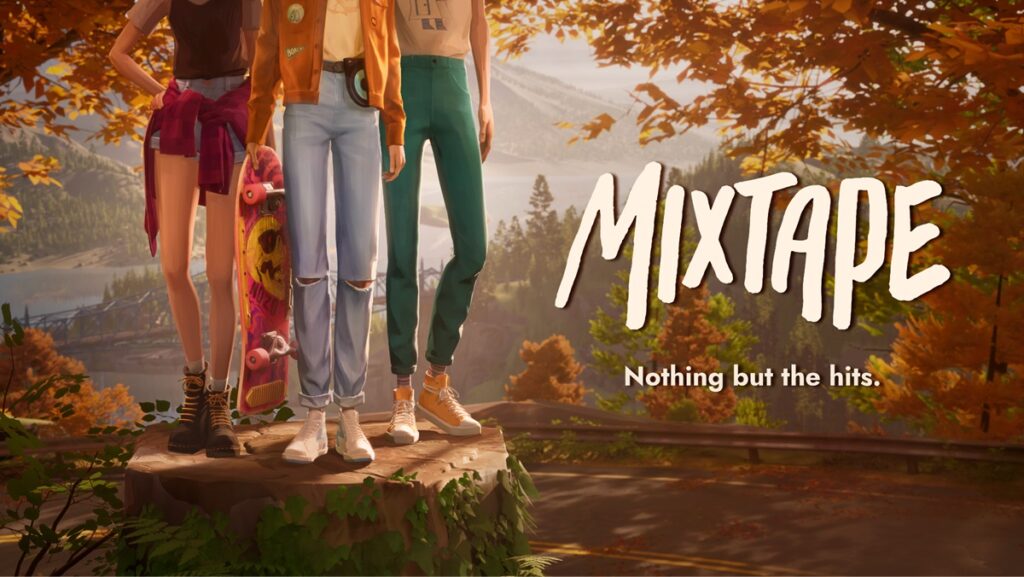
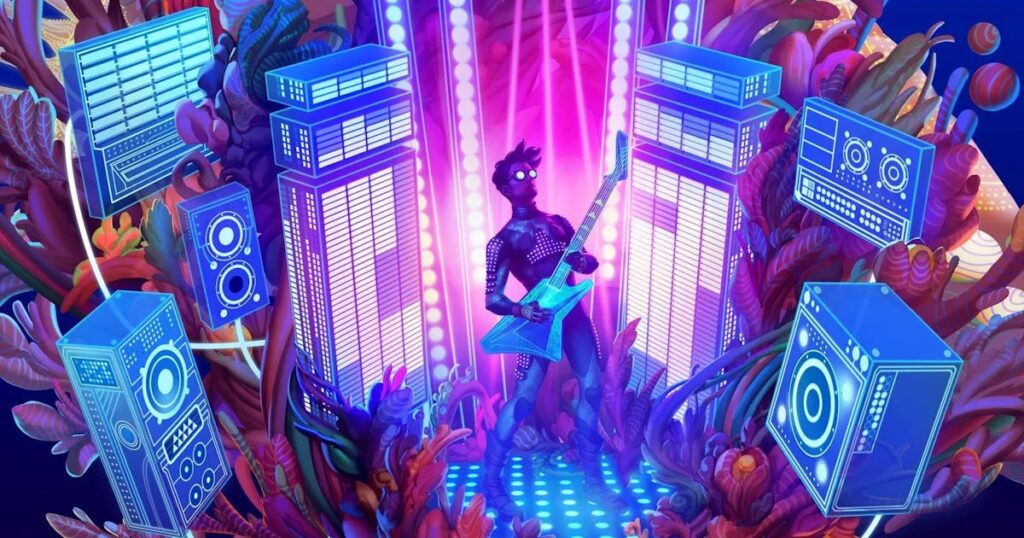
For the past few years, Galvatron has been working on a new game, Mixtape, for Annapurna again, along with his company, Beethoven and Dinosaur. The game is a nostalgic look back at the era when friends made mixtapes for each other to share their taste in music. Back in the day, mixtapes were our lives.
It’s another coming-of-age music game that starts with a trio of teenagers on their last day together before they separate and head off on their own adventures after high school. In a talk at the recent Dice Summit, he talked about a music-first approach to games, where he created music before working on the game itself.
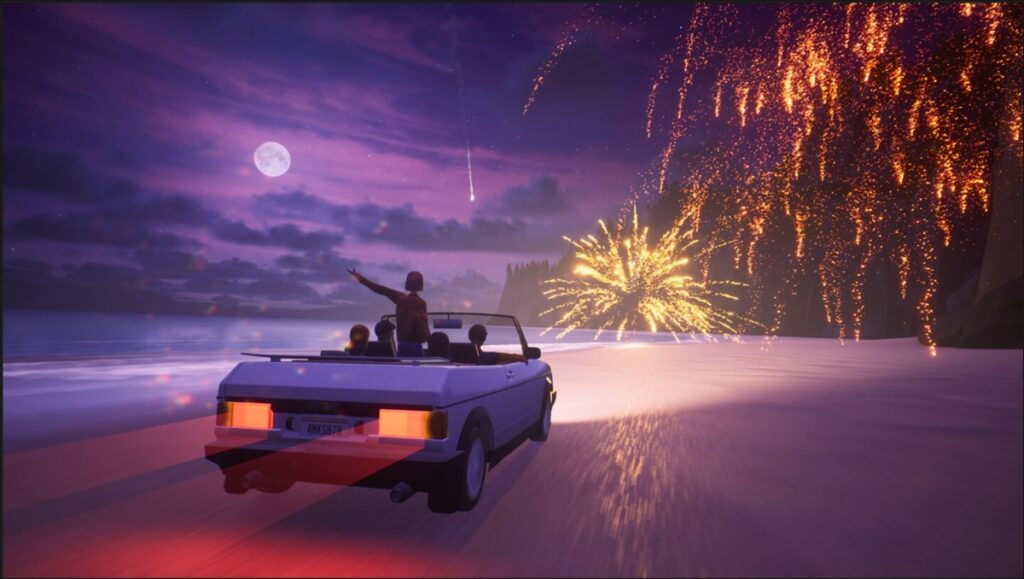
When I tried the demo last year, I laughed at the scene when two teens kiss and you have to take control of their tongues and make sure they are appropriately mixing together. That part was hilarious and made me feel like I really needed to play the rest of the game. It’s coming sometime this year, but we don’t know when yet.
It features music from Devo, Roxy Music, Lush, The Smashing Pumpkins, Iggy Pop, Siouxsie and the Banshees, Joy Division, the Cure and many more. You get to play through a mixtape of memories, set to the soundtrack of a generation.
I spoke with Galvatron at Dice about his talk, which focused on character arcs. He talked about how they’re used in film and what makes it hard to do them in interactive media.
“There’s a million combinations, both brilliant and tragic, but there are three kind of main arcs. He used the example of Apollo Creed from the Rocky and Creed films, going from a cocky champion to a wise mentor and friend of Rocky. More often, there are characters who never change and then the characters around them change, like in Forrest Gump. Some stories like Black Swan or Taxi Driver have a negative change arc.
Then Galvatron dwelled on the Richard Drefuss character in Steven Spielberg’s Close Encounters of the Third Kind, a film about contact with aliens. What Galvatron loved about it was the story where Spielberg worked with John Williams first and Williams came up with a legendary opening for the music. All the time during his talk, Galvatron used video and music to accent his points.
Galvatron observed that players are not the same as characters in games. He noted, “The player is someone who arrives in the world not to observe but to alter and to influence. When they arrive, they are assured the superiority of their moral compass. They’re imbued with a certain detachment from the world and from the character. And for many of us, there’s a cultural literacy that allows us to see the repeating patterns and stories.”
He added, “The same weight of death may not apply to a player. In a game, in a novel, a character is at the whim of the author. They could die forever, or as a protagonist, the game will almost certainly succeed the player. Unlike the character, the player comes into the story with no flaws, no doubt, and they are fully confident in their moral hierarchy and their ability to change the world.”
He diverted away from that topic to note that 3% of players do evil deeds the first time they play a game, according to Obsidian.
“Here’s where the player and the character arc clash. As soon as the player sees there is something wrong with the world, they will attempt to correct it, and this includes the flaws of the protagonist,” he said. “Now it’s time for the passiona quote of the day, the traditional positive change arc is problematic. When the player has agency, players negate a character’s flaws, they’ll just instantly, through no growth or catharsis or dramatic revelation, fix the character. And if they’re not allowed to fix the character, if they’re forced to experience tragedy that they cannot change, that can be even worse.”
Galvatron made a joke about Hideo Kojima and seeing Phil Spencer look at him as he was shooting a picture. Then, after he walked off the Dice stage, Galvatron saw Spencer. Whatever happened between them, I think it made Spencer decide to retire. I’m not sure of the point of the talk, and I think it had something to do with flat arc characters. But I don’t remember the point. I just remember Galvatron as an excessively creative person.
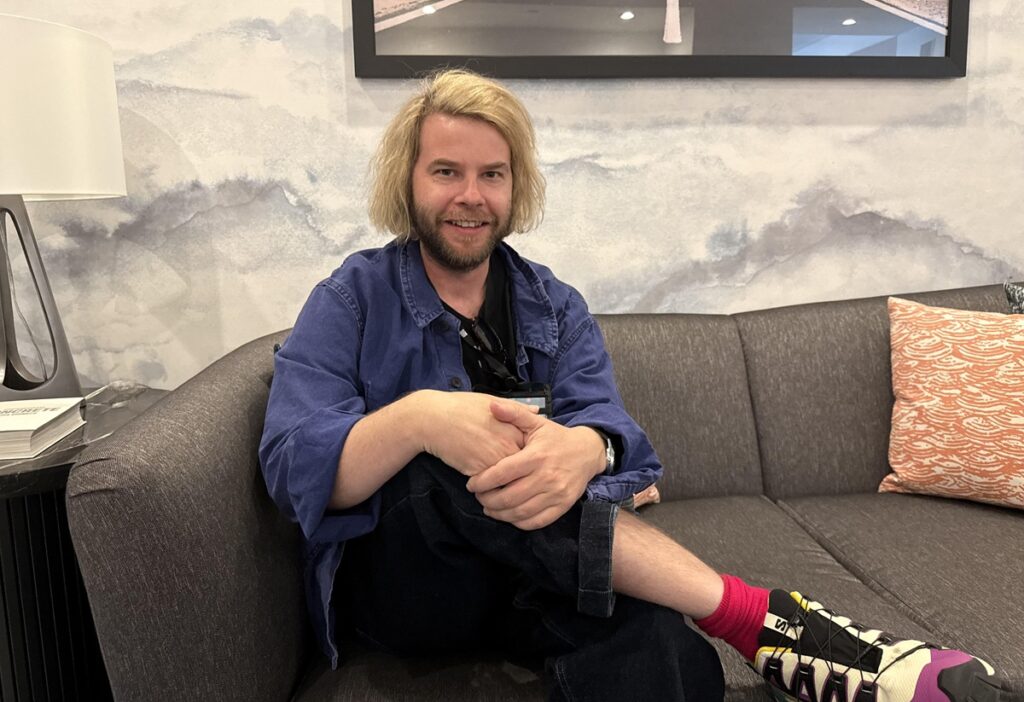
I did record the interview we did in a hotel suite upstairs, as well as the video I shot of him there. Here’s an edited transcript of our interview as well as the video.
Johnny Galvatron: What was terrifying is I did that Phil Spencer joke, and then I walked straight out the back. Phil was there watching it on the monitor.
GamesBeat: How did some of that get started? How did you bring your thoughts together for that talk?
Galvatron: I never think I really want to get out there for an hour. There was this opportunity to do a 20-minute micro-talk where I could just go nuts for 20 minutes and yell about the weird character arc in Close Encounters of the Third Kind and have fun. That led me to do my nonsense. I don’t know if anyone else would let me do 20 minutes of power the way they let me do it. Now I’m doing an award as well. They’ll let me talk about chicken nuggets.
GamesBeat: I noticed how you integrated the music into the talk. “This is what goes on inside my brain,” that sort of experience. I don’t think many people, creative people in the industry–they don’t seem to think like musicians.
Galvatron: I’ve been told by someone else that musicians’ games rarely come out. It goes back through a long history. Probably the difference between me and them is that I was not a very successful musician. I was really hungry when I got into video game development. I wanted to tell cool stories and tell them from a musical angle.
But it is interesting. When you do learn the piano first or the guitar first, art speaks to you through that medium. I’m always talking in metaphors about music. When we talk about pacing I say the crescendoes need to be here. This is the middle eight. This is where we change time. The creative medium you’re brought up with tends to lens how you see the world.
GamesBeat: Do you want to see more of this in the industry?

Galvatron: It’s interesting, isn’t it? Why the hell do we do this? I’ve always just been that person who was reading or watching or writing. I fell in love with writing. I couldn’t tell you what drives me to make stuff. But every–I still at night, sometimes I have trouble going to sleep because I’m so excited about going to work the next day. That’s a great way to be. Also, there are horrible downsides to that when you’re obsessed and your whole value is caught up in the medium you work in. But at the moment I’m having the greatest time.
GamesBeat: The combination of some of the things you said reminded me of the first speaker, too. She was talking about doing something with the rest of your life that’s also going to inspire your work.
Galvatron: I’ve heard that said–it’s in Stephen King’s On Writing. He says exactly the same thing. You have to go out and experience. You have to be part of the world to be a good writer. You have to learn different viewpoints. Having tried a different medium, having been out in the world and made a lot of crazy stories, obviously, a lot of them influenced Mixtape. But yeah, I agree with that. Hunter S. Thompson had a lot to write about because of his crazy experiences. That’s how it goes.
GamesBeat: I always think about–I didn’t get the part right about working all the time. I work all the time. But the good thing about my work is that I get to talk to a lot of people. I’m not a totally lost cause.
Galvatron: They talk about sportswriters becoming very good writers because they always have to insert interesting prose into how they talk about sports. Do you think that when you write about games, you get to have that twist on the prose?
GamesBeat: One thing I did enjoy the most was going into ARC Raiders with the CEO of the company that made it and the guy who greenlit the game. We did the interview inside the game while we were playing. It’s a chill enough game where you can do that. But at the same time, things that happen in the experience while you play it change the interview.
Galvatron: Is this virtual gonzo journalism?
GamesBeat: I don’t know what to call it. But we were killing a Leaper and we were all excited. We started looting the Leaper. Then this other team comes upon us and kills us and steals all our loot. “This is what’s great about this game! You never know if this is going to happen.”
What are some more of the inspirations for this particular game, for Mixtape?
Galvatron: A lot of them are cinematic. Dazed and Confused. Ferris Bueller’s Day Off is a huge influence. John Hughes films. The thing I love about John Hughes is that kind of–things will never be the same. That was a lot of the theme in my music, and it’s definitely the theme in Mixtape. That’s a wonderful linchpin to set a story. There’s a turning point and things will never be the same. It’s a great place to write.
GamesBeat: Are you almost finished?
Galvatron: We handed in one of our–I think it’s probably our last build. That was three or four days ago. I played through it the other night. I cried. We all sent each other messages. Everyone’s still in Melbourne while I’m here. What a journey. I’m on cloud nine, because I imagine all of this, all the press and doing the talks and stuff–if you didn’t like your game that was about to be released, it would be horrific. But I’m having a great time.
GamesBeat: What was the experience with Annapurna like? What made them the right publisher for this?
Galvatron: The stuff I’ve gotten to do with Annapurna always blows my mind. I talk about how Annapurna is a library of people you can check out for stuff that you need. That’s what makes it a great company, before and after. We had this amazing event in Studio City. There were banners there, and someone from a local radio station was DJing. People were wearing merch from the game. I’m doing a little press. There’s a setup with Mixtape on it. You just feel like–I’m overwhelmed by that sort of thing.
It’s very fairy tale. It’s amazing. And then that deep sense of guilt, knowing that the entire team is back in Melbourne and I’m getting to go on these amazing journeys. All the credit should be back on that team. We have an incredible team. We just had a new tech team from the last game. It’s one of the most beautiful-looking games, and our team is 12 people. You obviously have to have people who are so multi-talented and so broad in what they do in game development – in story, in cinematography, in programming. I’m really proud of our team.
GamesBeat: Do you think players are going to play it the way you’ve designed it to be played?
Galvatron: You’ve played the demo. You know those tongues that are kissing? I’ve seen how everyone approaches that. I remember–there were three kinds. There’s one where as soon as you can get out, they’re out. That’s enough, because it’s so visceral. And then I’ve seen game developers play it. Tim Schafer was playing it. He just kept going, because he was looking at how the particle system worked and how the rigid physics worked. The last thing I saw, someone had brought their 14-year-old to play, and they just brought the sticks to either side. The tongues away. There’s definitely a few ways to approach different things. I’m starting to learn them.
GamesBeat: It’s one of the more unique things you can point to now. There’s no other game that has stuff like this.
Galvatron: It’s been interesting to see. I really cannot wait for people to play it. I don’t think it’s necessarily what some people think it is. Some people think it’s a Life is Strange sort of thing, and it’s not really like that. It’s not a WarioWare thing. It’s something very special.
GamesBeat: Is there any reference to Close Encounters?
Galvatron: That’s a great call. Is there? There are references to Jeff Wayne’s War of the Worlds, his psychedelic concept album. I guarantee there are, but I can’t think of them right now. I would have snuck something in.
GamesBeat: Why was Close Encounters so important to you?
Galvatron: You know what, I just think–there’s a couple of reasons. Apparently, it’s the only film that Spielberg cut to music. Usually it’s the other way around. You’ll have the edit and then add the music to it. But he had the music for Close Encounters first. I think a lot of musicians like it. The film has this flow to it that runs with the score. The little linchpin is that doo-doo-doo-da-doo, which is like the greatest melody ever. I love that story of Spielberg on the plane, where John Williams had sent him a hundred little motifs. He’s listening to all these and thinking of which one is going to be the aliens’ message. And then, of course, the finale is the greatest synthesizer jam of all time. It’s so grand. What an artful way to represent first contact. Don’t get me started.
GamesBeat: That’s an interesting point, that people don’t usually think about music first. It’s more often something in the background, something added later.
Galvatron: Sometimes it is. But that’s why I think it’s interesting to come at music first. You can start to make something that’s unique, from a slightly different angle. As games get easier to make, we’re going to see people come in from different media. We’re going to get new stories. It’s a very exciting time to be in the medium.