

BOSS Mode: Women Driving the Future is a groundbreaking new series by GamesBeat, led by Rachel Kaser, that finally puts the spotlight where it belongs—on the women transforming the business of games, entertainment, and tech, and the industries it touches.
It’s the B2B POV, where women leaders will provide critical business insights you need to make more informed decisions, and an inside look into how women leaders driving the future are navigating their business strategy.
From tech to healthcare, entertainment to retail, gaming is no longer a silo—it’s the connective tissue of the modern economy. And women are driving that evolution. In this ongoing series, we go beyond titles to showcase women whose influence is shaping the future of gaming and the industries orbiting it.
This isn’t a moment. This is a movement.
New chapter. New era. Welcome to BOSS Mode.
What comes to mind when you describe someone as a “gamer” without adding any other details? Does a picture of a certain kind of person using certain kinds of devices or enjoying certain genres of games come to mind? In previous decades, one might have been tempted to draw a detailed portrait based on that word alone. However, not only do the current findings show how universal (and un-niche) that is as a descriptor, I swiftly realized that the stereotype of a “gamer” has perhaps never reflected reality.
The Entertainment Software Association (ESA) today published its 2025 Global Power of Play Report, in which it chronicled details about what constitutes a gamer, as well as the various benefits of gaming. The latter, according to the survey’s 24,216 respondents, includes such benefits as stress relief, keeping one’s mind sharp and having fun.
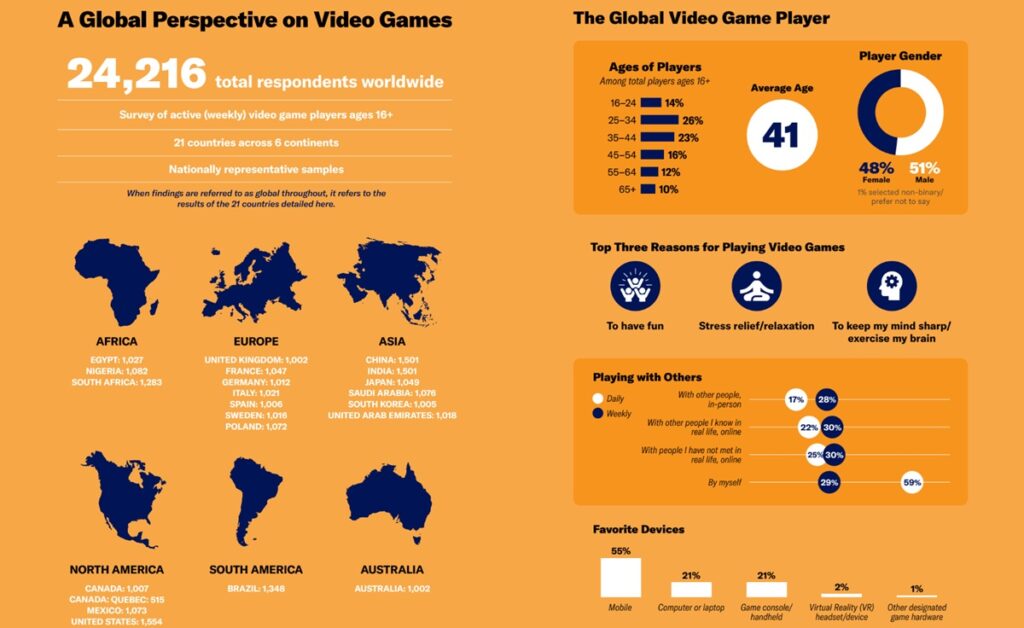
Alongside these more ephemeral stats, the report also breaks down the various demographics of the respondents in terms of age and gender. While reading the report, I noticed that the gender breakdowns were much more even across the board than I expected them to be — and then questioned why I expected them to be more skewed in the first place.
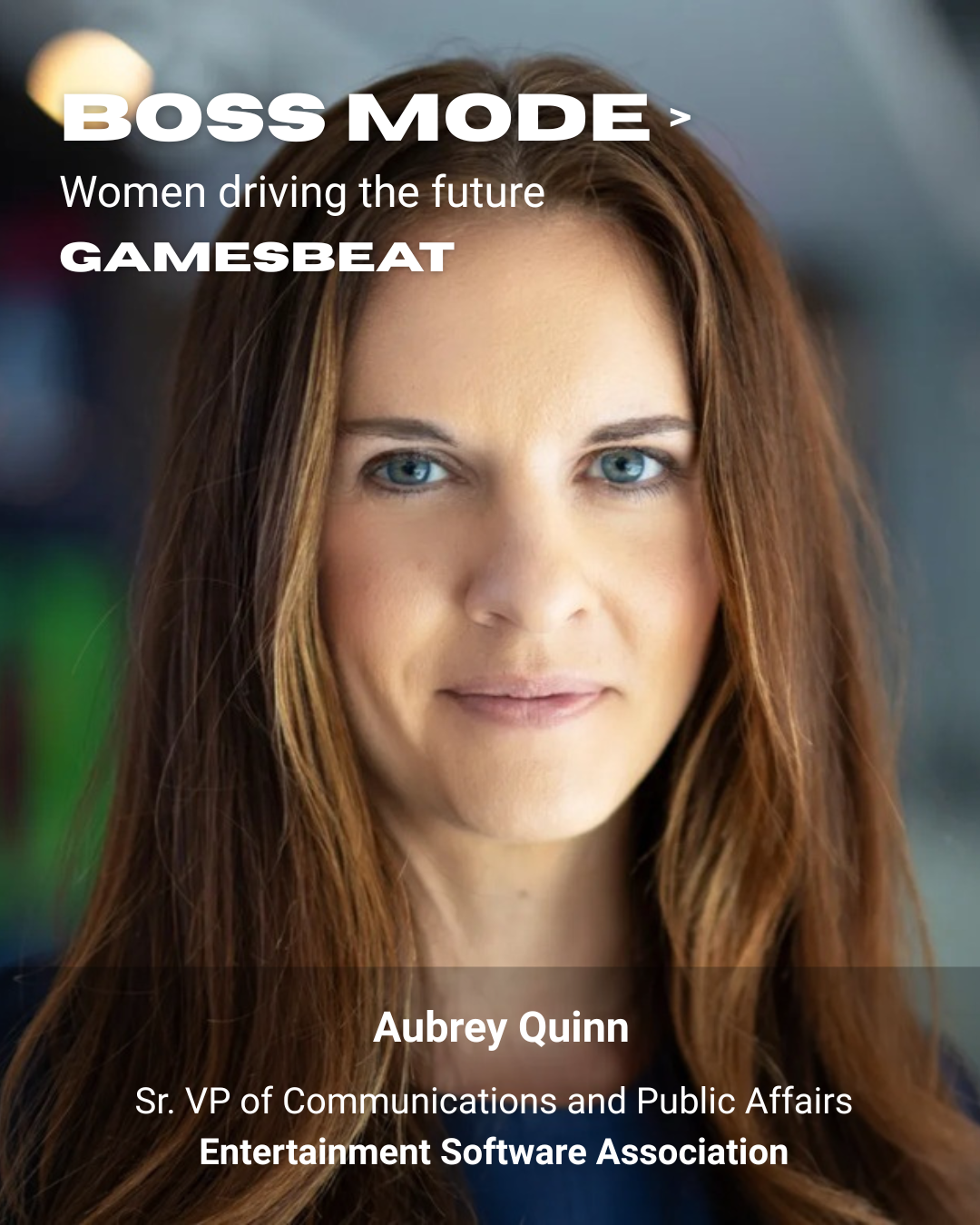
To better interrogate these thoughts, I spoke with Aubrey Quinn, the ESA’s SVP of communications and public affairs. Quinn has worked with the ESA for three years, and has been a gamer for as long as she can remember, and she knew exactly what I was talking about when I said the report’s findings were “not what most people would expect.”
I spoke with Quinn about the findings in the report, and how the demographics in it defy traditional, outdated stereotypes about what makes a gamer. Below is an edited transcript of our interview.
GamesBeat: Is this report the biggest the ESA has ever done?
Quinn: Yes! 2023 was the first time we did what we called the Global Power of Play Report, and we partnered with other trade organizations around the world to take a bigger snapshot than our own countries. We talked to players in 12 countries – it was the first time we’d done it, and we wanted to see if people were interested in this type of data. The response was really positive.
When we did it again this year, we wanted to tell a more truly global story. We don’t have the time or resources to talk to every country, but we added some major population centers in this one: Africa, China and India are represented in this year’s report. All-in, we have 21 countries and spoke with over 24,000 gamers over the age of 16. It represents almost 60% of the world’s population, so it’s pretty expansive.
GamesBeat: I feel like the picture that people have of gamers is not the same as it was 10-20 years ago. It doesn’t dovetail with reality.
Quinn: The stereotypes about who plays games and what they play – they are so stubborn! They are so persistent! The Entertainment Software Association has been talking to gamers here in the United States for decades. And I think, at our lowest, in terms of female representation of who says they play games, it was 40%. So it’s never been this disparity that people think it is. It’s never been 90% men, 10% women. The gap is closing, certainly. What I liked about the Global Power of Play Report, when you look at the different country breakdowns, there are often more women playing than men.
The stereotype that the gamer is a man, alone in his basement, playing by himself, angry, is so stubborn despite decades of data saying that isn’t the case.
GamesBeat: Is there a reason why we tend to think of gamers a certain way? Has there ever been any evidence to suggest gamers were the demographic the stereotype represents? Or have women always been part of gaming?
Quinn: In the 2024 U.S. Essential Facts, for the ESA’s 30th anniversary, we looked at a lot of comparative analysis – how gamers have changed over time. In 2004, the split was about 60% men, 40% women in terms of people who said they play video games at least one hour a week. The stubborn stereotype of the gamer as a young man didn’t even exist 20 years ago, and that predates mobile gaming.
Part of the reality of gaming’s history – the history of any technology, really – is that you used to have to go to a particular place to play games or own a certain device. In terms of accessibility, it wasn’t just a gender thing, but a matter of financial resources. Can you afford a console? Can you afford cartridges? You don’t have to look far in history to see evidence that women are financial decision makers, who buy gifts and toys.
I grew up with the original NES and Sega devices in my house, and I remember playing with my parents, my brothers and my sisters. It was never a gendered thing, just like movies, tv shows, music. Video games are a form of art and entertainment.
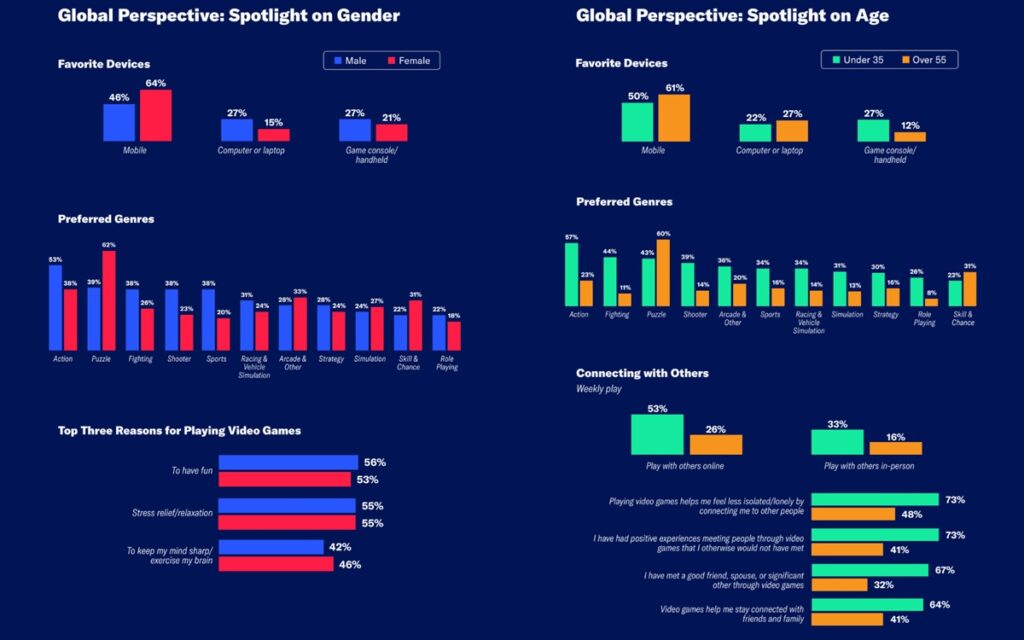
One of the most compelling facts for me in this year’s Essential Facts Report (not the Power of Play report) is that the gender breakdown in the United States showed 52% men, 48% women for players 5 and older. In the Global Power of Play Report, showing 15 and older, it’s 52% women, 48% men. The exact same proportion, but it skews differently. When you look at older players today, in the 60+ demographic, more women play than men.
The majority of kids in Gen Alpha play video games – something like 88% of boys and 78% of girls. We don’t grow out of entertainment, we grow with it. The girls who grew up playing video games are still playing them, and now you have a gaming device in your pocket with your smartphone. No matter where I am, I’m surrounded by women playing video games, instead of only being able to play on certain devices at home.
I imagine accessibility really has a role in why that number has shifted. One, there’s time on our side – we grew up with games. Two, games are more accessible. There are different genres, devices, pricing models. This has helped democratize it, so I think you see more people playing and playing for longer.
GamesBeat: As you said, the split was a lot closer 20 years ago than people might have thought. I wonder how much of a role marketing played in that stereotype – so many things were marketed towards young men. I remember a book [20 Years of Tomb Raider by Meagan Marie] written about how Lara Croft was an icon because there were so few other female characters in gaming when she debuted.
Quinn: I think you could do a whole separate study on the impact of marketing on women in the 80s and 90s unrelated to video games. I imagine that it did play a role, for sure. For my own daughter, one thing I love about video games is the representation now: She’s drawn to games where she can create her own avatar and person who looks like her. Unlike movies or tv shows where characters are defined by you… her favorite game, hands down, is The Sims.
One piece of data that drives me crazy is when gamers are asked if they’re “represented” in games, and some gamers like older women will honestly say no. But then you find out what games they play, and they’re playing Wordle or Candy Crush, which isn’t representative of any human! If you ask them if they’re playing as a person, the number is much higher.
I think when you talk about gender in video games, you have to put it in the context of gender and every industry. Gender in tech, gender in entertainment. Women were poorly represented in movies and shows for a while, or played to certain stereotypes. For me, it’s more of an era issue than an industry-specific issue. Women are more likely to attend college now and get technological and STEM degrees.
One of my favorite statistics that I’ve learned is that girls who play video games are three times more likely to pursue a STEM career than girls who don’t. When you think about who creates video games, you often have to have some sort of STEM or technology background to develop these games. We needed women in college then to create the games we play now. This isn’t a video game problem – this was an “all women going to college” problem in the 70s and 80s.
[At this point we branched off and began discussing Dr. Mario at length, as we both played as youngsters. I wish for everyone to know that Quinn can pack exceptionally well thanks to Dr. Mario and types very quickly thanks to Mario Teaches Typing.]
Growing up, my family were early adopters of PC games, and then we got Super Nintendo and the SEGA and Nintendo 64s and GameCubes. I was one of five, and we played games as a family. We would work together to clear levels in Sonic, Mario and others. Our family would gather around a family computer and solve puzzles in 7th Guest, and that was one of my favorite childhood memories.
We are big gamers and I think the economic value we got from games was something my parents saw. When I became a mom, my sons, who are now in college, and I would play games together. I love games that allow them to play with their little sister, which helps them bond much better than a Facetime would.
I saw the positive influence on my family, with games crossing generations and age gaps between my siblings. We learned resilience, how to start over and try things differently. Those are soft skills that transcend video games. We even asked about that in the Power of Play Report for the first time this year. We asked, “Do you see a positive impact of games on your education or your career pursuits?” The majority of the world says yes.
That’s another unfortunate stereotype: People think gamers are “lazy,” but gaming teaches a lot of soft skills. Teamwork, resilience, communication skills, and that all empowers you away from the screens.