
Gaming IP is ripe for adaptation — but it requires a different touch for different forms of media.
The era of video game adaptations is fully upon us, with films like “The Super Mario Bros. Movie” and “A Minecraft Movie” dominating the box offices and streaming series from “The Last of Us” to “Fallout” shattering viewership records. But as gaming IP invades film, TV, and other media, the shepherds of that IP are tasked with the challenge of ensuring consistency across platforms while tailoring offerings to each medium’s unique audience dynamics.
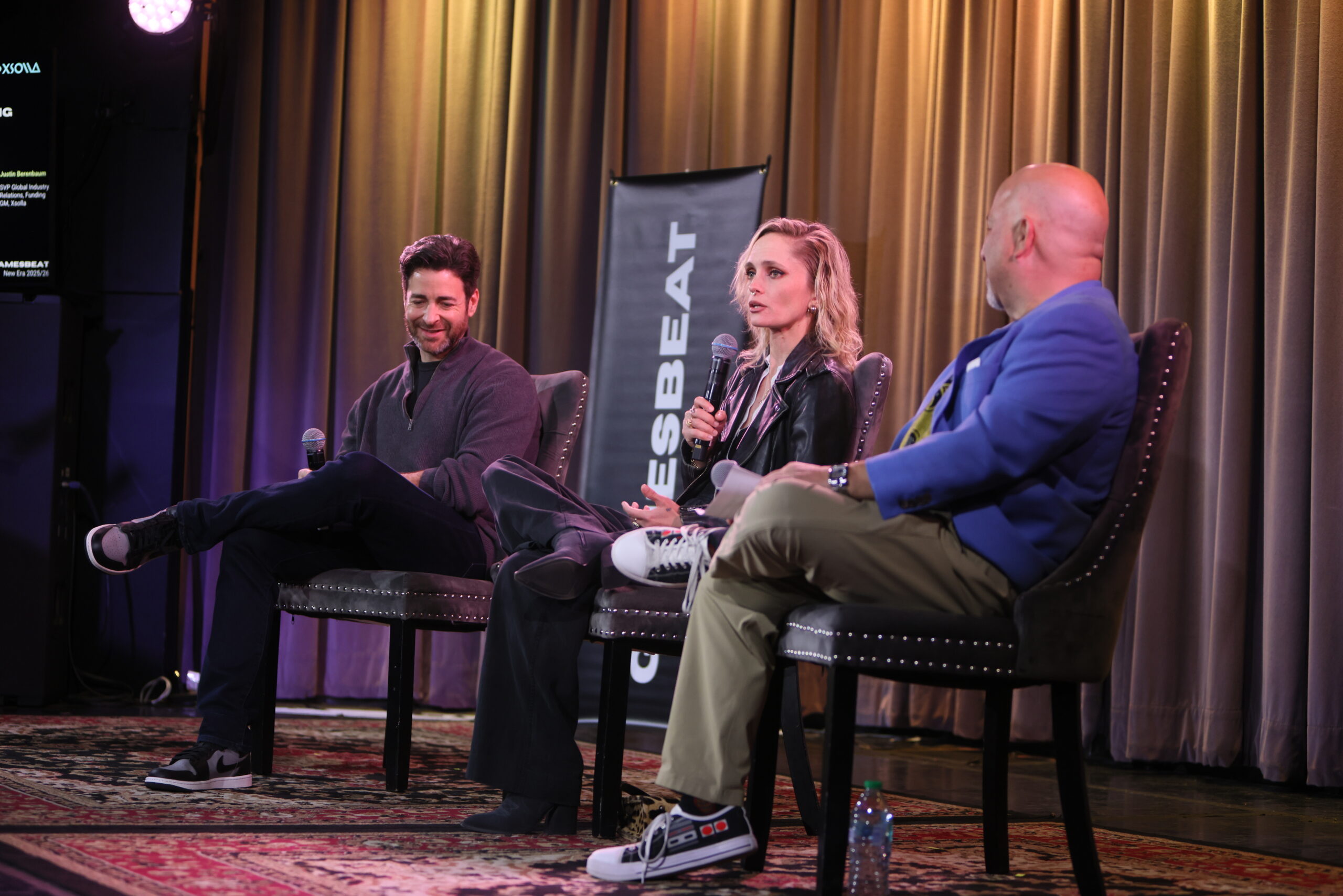
At last week’s GamesBeat Insider Series: Hollywood and Games, a group of experienced industry leaders set out to address this challenge, with Bad Robot Games co-founder and executive vice president of storytelling David Baronoff joining “The Last of Us Part II” and “The Last of Us” television series writer Halley Gross for a discussion on the topic of cross-platform world-building moderated by Justin Berenbaum, the senior vice president of global industry relations for Xsolla, the panel’s sponsor.
To some extent maintaining consistency across different platforms is simply a matter of involving stakeholders for those platforms earlier in the development process. Baronoff, whose studio recently announced that it was developing a four-player co-op shooter with Sony, said that the upcoming title has “transmedia aspirations.” He said that his team at Bad Robot had brought in colleagues from the film and TV sides of the production company to give input on narrative or gameplay elements that would be a good fit for adaptation.
“Once we have that bedrock of what is our core gameplay, we’re instantly collaborating with our colleagues in linear media to build this out and to find organic extensions into a show or a film,” he said.
Both Baronoff and Gross made it clear that the purpose of bringing film and TV stakeholders into the development process earlier was not to make any changes to the game itself, with the quality of core gameplay remaining the primary goal.
“What I need to do is make an authentic story, with authentic characters that resonate with me and with the team and tell themes that I think are important, that we need to put into the zeitgeist,” Gross said. “But I don’t think we work in service of hoping to get a pat on the head.”
Involving adaptations’ creative teams earlier in the process also helps spark more creativity. Baronoff cautioned gaming IP holders against making their film or TV adaptations one-to-one recreations of the original properties, flagging “The Last of Us” as an example of a game adaptation that presented the same story in a unique and interesting way.
“You also don’t want to put any barriers to entry in your content. If you’re requiring your audience to go play a game or watch a show before they can enjoy what you’ve done, I think you’ve failed,” he said. “That’s not to say you shouldn’t have lots of really juicy connections and Easter eggs and payoffs — that stuff is great — but on a higher level, someone should just be able to come in and enjoy what you did as its own standalone piece of entertainment.”
Gross closed the panel discussion by pointing out that the secret behind a successful video game adaptation into film or TV is not what is translated over from the game, but rather what isn’t. Games often require 40 or more hours of entertainment; even the most in-depth television season likely has less than 30. To do a cross-platform adaptation right, creative stakeholders need to know what to keep and what to cut — which can only come from a close knowledge of the core IP.
The amount of violence you can show in an action game is not the same violence that you can show in film and television — it’s going to feel gratuitous,” Gross said. “You want the violence to feel grounded and elegant; it needs to articulate the rules of the world without feeling like we’re here just for the slaying and the blood splatter. So for us, with ‘The Last of Us,’ it was about, ‘How do you make it elegant? How do you reduce, in the best of ways, the action and the violence so that it feels purposeful and intentional?”