
In an industry increasingly dominated by blockbuster budgets and corporate pipelines, Digital Scorpion Interactive is going the opposite direction by leaning into volunteer-led development, community collaboration, and handcrafted quality.
The studio, founded in 2021 by Nick Revell, describes itself as volunteer‐driven but not ephemeral. Their goal is a sustainable hybrid model, where early contributors help carry the creative vision, and future revenue supports paid positions.
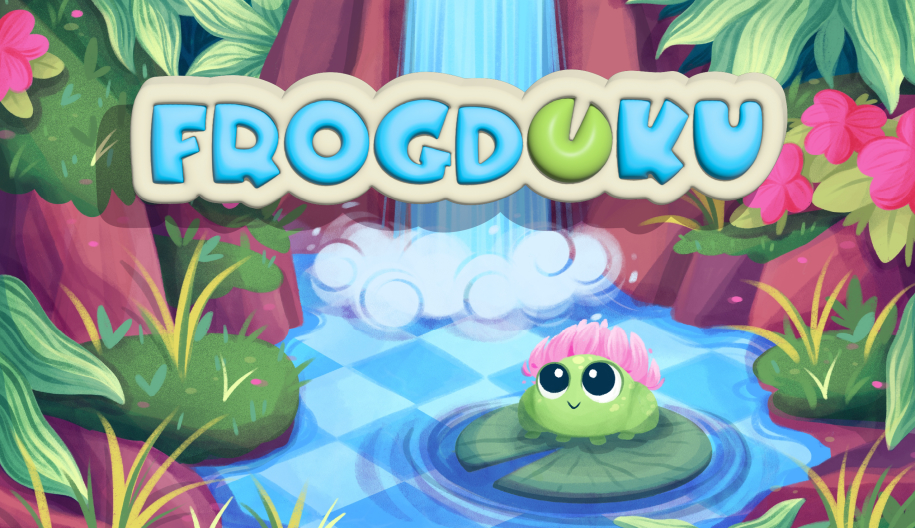
That long game is embodied in their upcoming title, Frogdoku, a puzzle experience that reimagines Sudoku through soft movement, peaceful design, and precise mechanics. But Frogdoku is intended as more than just a game. It’s a proof point that small teams can still craft deeply felt, polished work without sacrificing values.
“The core of Digital Scorpion is to push beyond the expected and create immersive, unforgettable adventures that players truly connect with,” Revell said in an email interview. “By building a team of diverse volunteers, we’ve been able to foster an environment where creativity thrives without the pressures of corporate overhead.”
How volunteer contribution fuels craft
The model isn’t without risk: indie and small-team games are notoriously volatile. Many self-published titles on platforms like Steam never recoup development costs. In fact, a recent study this year found that half of all self-published games on Steam did not generate more than $4,000 in revenue.
However, Revell leans into that uncertainty, viewing community as part of the resilience: “As revenue grows, we’ll reinvest into the studio, gradually offering compensation and creating hybrid volunteer/professional pipelines.”
One striking detail: every visual in Frogdoku is hand-drawn by volunteer artists. “We’ve committed to never using AI-generated art in our games,” Revell said. “Every lily pad, every animation, comes from real human hands.”
Because Digital Scorpion doesn’t carry a publisher’s weight, they bear the burden of visibility themselves. “We’re not just selling a puzzle game — we’re inviting players into a movement built on creativity and collaboration,” Revell said. The studio leans heavily on storytelling, community updates, and creator transparency to build interest.
In an era where distribution visibility is increasingly a bottleneck for indie games, this kind of narrative-driven marketing can cut through. It also aligns with broader shifts: some indie collectives (like Sokpop Collective, for example) have found success releasing one experimental game per month, building audiences with consistency and authenticity.
At first glance, Frogdoku seems minimalist. It’s a puzzle game where players guide a frog (named Konna) across lily pads under Sudoku-like constraints. But as levels progress, mechanics layer in movement, subtle physics, and spatial logic that reframe the core puzzle model. The plan is also to add player‐created puzzles and regular community content, tying into the studio’s ethos of co-evolution.
“Cozy puzzle games should feel welcoming — not just in gameplay, but in price,” Revell said. Frogdoku will launch on Steam at $7.99, a modest price point especially compared to premium indie puzzle games that push $15–$20. For a studio that started with volunteers, balancing accessibility and sustainability is a delicate act.
Beyond the base game, Digital Scorpion envisions Frogdoku as the first chapter of a player-responsive journey. Future titles may explore narrative adventure or other mechanics, but the studio promises a unifying sensibility: “Whether it’s a narrative adventure or a quirky experimental title, you’ll always know it’s a Digital Scorpion Interactive game because it feels personal, handcrafted, and built boldly,” Revell said.
Digital Scorpion’s journey offers a kind of counter-narrative to the prevailing logic that only big budgets and publisher backing can sustain creative ambition. Their model echoes collectives like Sokpop, which lean on community, consistency, and low overhead.
If Frogdoku finds even modest commercial success, it could validate a middle path for small teams, finding that values, craft, and financial viability aren’t mutually exclusive. The real test will come in long-term sustainability, community retention, and next projects. But for now, Frogdoku stands as a living experiment in what a volunteer-rooted studio can build when it doesn’t compromise its identity.
Frogdoku’s free demo is expected to be live today, with a full launch on Steam slated for October 14.