
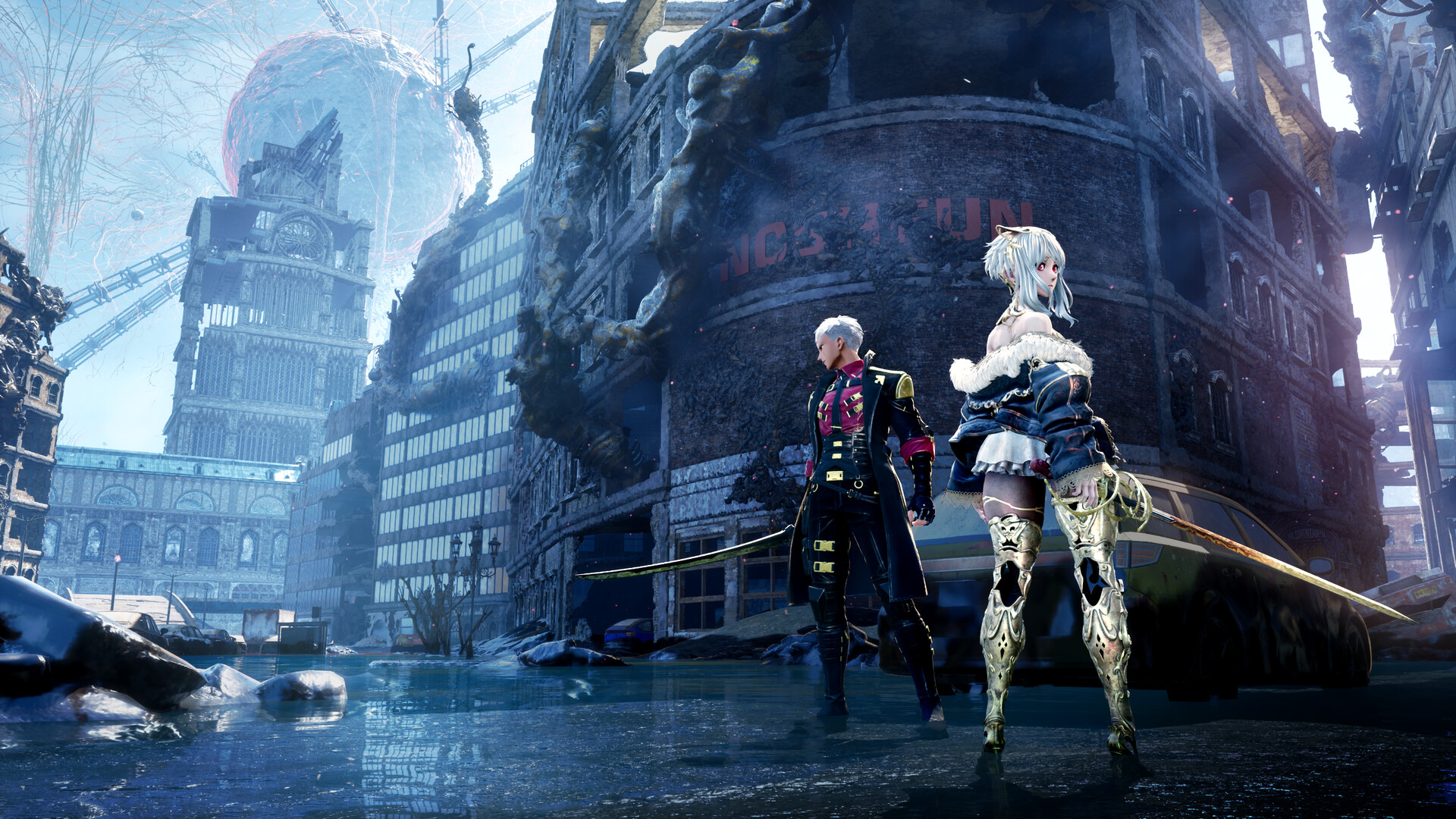
When the original Code Vein was released in 2019, it was often described as an anime-version of Dark Souls. For the sequel, Bandai Namco sought to establish a more distinct identity.
Code Vein 2 releases on January 29, 2026, for PlayStation 5, Xbox Series X|S, and PC, and at a preview event GamesBeat attended last month, we had the opportunity to participate in a group-style interview session. Aided by an on-site translator, we were able to chat with the game’s director, Hiroshi Yoshimura, and the game’s producer, Keita Iizuka.
In the years since the original Code Vein launched, the Soulslike genre has undergone a quiet identity crisis of its own. Once defined by tightly wound level design and oppressive difficulty, it has since splintered into open-world experiments, cinematic reinventions and mechanical remixing.
Against that backdrop, Code Vein 2 isn’t trying to escalate the genre’s arms race. Instead, Bandai Namco is narrowing its focus by asking what a Soulslike feels like when player identity, emotional consequence, and narrative agency take precedence over scale.
A whole new world
That question is embedded directly into the sequel’s most striking decision: a complete break from the original game’s world and characters. Rather than treating continuity as a safety net, the team saw it as a constraint.
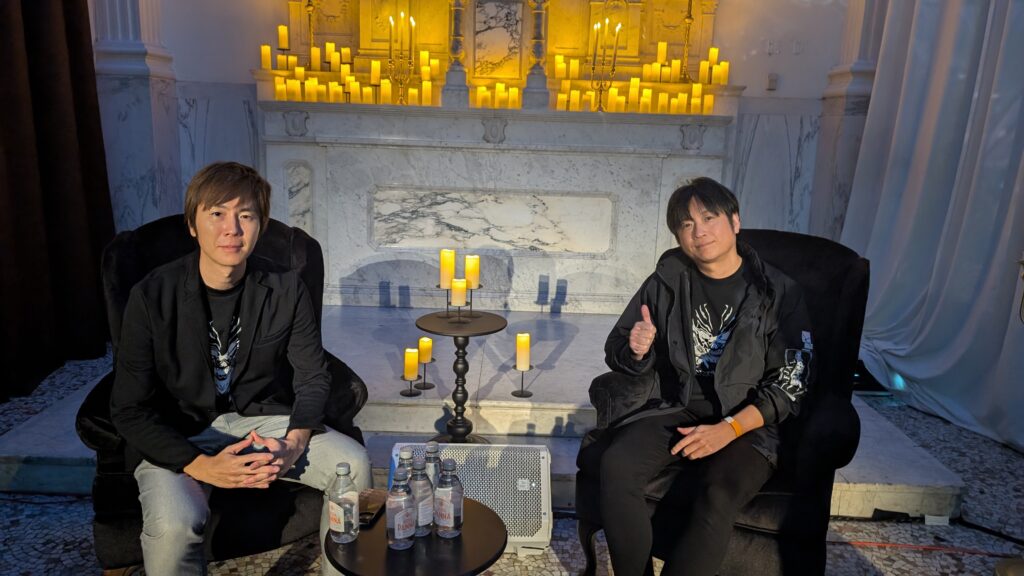
“With regards to Code Vein 2 being set in a completely new world with new characters, one of the biggest reasons was to deliver the experience of the player being the main character of this world and of this story,” Yoshimura and Iizuka said. “One of the turning points for Code Vein, aside from the action, has always been the exchanges between characters and the drama you get to see. To maximize that experience, we felt players needed the ability to affect everyone’s fate itself, to actually change history through the time travel mechanic, and that includes the player.”
Sequels in the Soulslike space often deepen lore vertically by adding layers, callbacks, and increasingly obscure connective tissue. Code Vein 2 goes in the opposite direction. By stepping away from the original timeline entirely, the developers avoided turning player choice into revisionism.
This matters because Code Vein has always leaned more heavily on emotional ownership than canonical authority. Players weren’t just overcoming bosses; they were forming bonds, losing allies, and internalizing the consequences of survival in a collapsing world. Rewriting that history, even in the service of a sequel, risked invalidating the original experience.
“If we had continued the previous world and characters, players would be changing events that already happened in Code Vein 1,” they said. “We didn’t want to take that away, because Code Vein 1 belongs to the players. That was everyone’s own experience and story. In order not to erase that, we chose a new backdrop and a new cast so players could have a new level of emergent experience.”
Forging a new path
That framing reveals a key part of Code Vein 2’s identity: the sequel isn’t about expanding lore, but is instead more focused on preserving the meaning of player choice.
The Soulslike genre has matured to the point where innovation is no longer measured solely by difficulty or mechanical novelty. With Elden Ring pushing scale and freedom, and titles like Lies of P refining narrative presentation, differentiation now comes from intent. For Bandai Namco, that intent hasn’t changed, but the context around it perhaps has.
There’s certainly been a big shift in the genre, and for us, that pressure was actually a good thing.
– Hiroshi Yoshimura and Keita Iizuka
“It pushed us to deliver the best possible experience we could,” they said. “What’s always been in Code Vein’s DNA is character drama, and the sensation of overcoming difficult challenges together with the characters in this world. That deeper involvement in relationships and bonds is what really defines Code Vein and separates it from other Soulslike games.”
Rather than chasing genre trends, Code Vein 2 doubles down on its emotional axis. Where many Soulslikes emphasize solitude and ambiguity, Code Vein frames hardship as a shared burden. The presence of companions isn’t just mechanical support — it’s narrative reinforcement, reminding players that survival is collective, not solitary.
Time travel is often treated as a narrative spectacle or a mechanical trick. In Code Vein 2, it functions more like a moral lens. Players don’t simply jump between eras; they witness how ideals decay, how heroism fractures, and how intervention reshapes meaning.
“You’ll see heroes from the past and then encounter them again in the present,” they said. “Seeing characters from multiple angles across time is one of the strengths of Code Vein 2, and it changes how the game is positioned within the genre.”
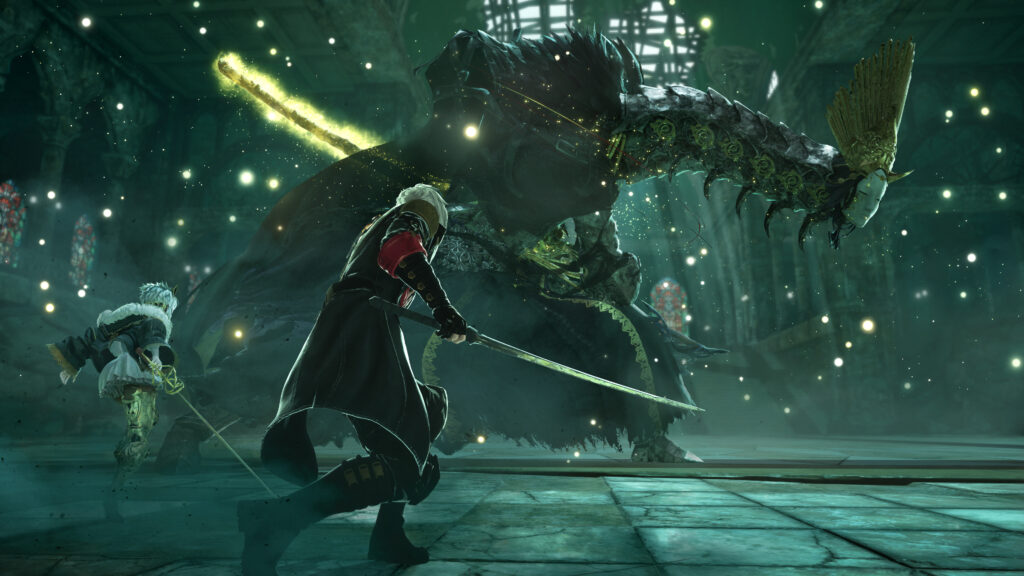
This structure reframes boss encounters entirely. Rather than serving as abstract skill checks, bosses become the culmination of layered histories — shaped by who they were, what they lost, and how the player interfered.
From a design standpoint, this is a subtle but meaningful shift. Difficulty remains intact, but motivation changes. You’re not just asking can I defeat this enemy, you’re asking why they are here, and whether your actions made things better or worse.
Emotionally, Code Vein 2 is unapologetically heavy. Where many games soften consequence through reversible systems or narrative escape hatches, this sequel leans into discomfort.
“How players feel, and how they choose to act within [the story’s] context, is the point of what Code Vein 2 is trying to do,” they said. “…that emotional weight is intentional. We want players to have agency, but also to be moved by their own decisions. Sometimes intervention leads to more serene outcomes, and other times it creates even harsher conditions. Experiencing that wide range of consequences is a core part of what makes Code Vein 2 the experience that it is.”
Finding a progression balance
One of the persistent criticisms of Soulslikes is their reliance on repetition as a form of mastery. Code Vein 2 offers an alternative: lateral progression through exploration and narrative engagement, which seems directly inspired by the likes of Elden Ring.
“If you’re struggling in a dungeon, you can return to the larger field that connects them,” they said. “There’s a lot to explore there, such as sub-dungeons, character interactions, and episodes that help players gain resources and strengthen themselves before returning to the main story.”
This design reinforces Code Vein 2’s identity as a Soulslike that values process over punishment. Progress isn’t binary, and failure isn’t a dead end. Instead, the world offers space to regroup, reflect, and recontextualize challenges.
“There isn’t a difficulty selection like an easy mode,” they said. “When players get stuck, the idea is to explore, level up, and experiment. The partner system offers more methods of trial and error, giving players different ways to approach encounters rather than lowering the difficulty across the board.”
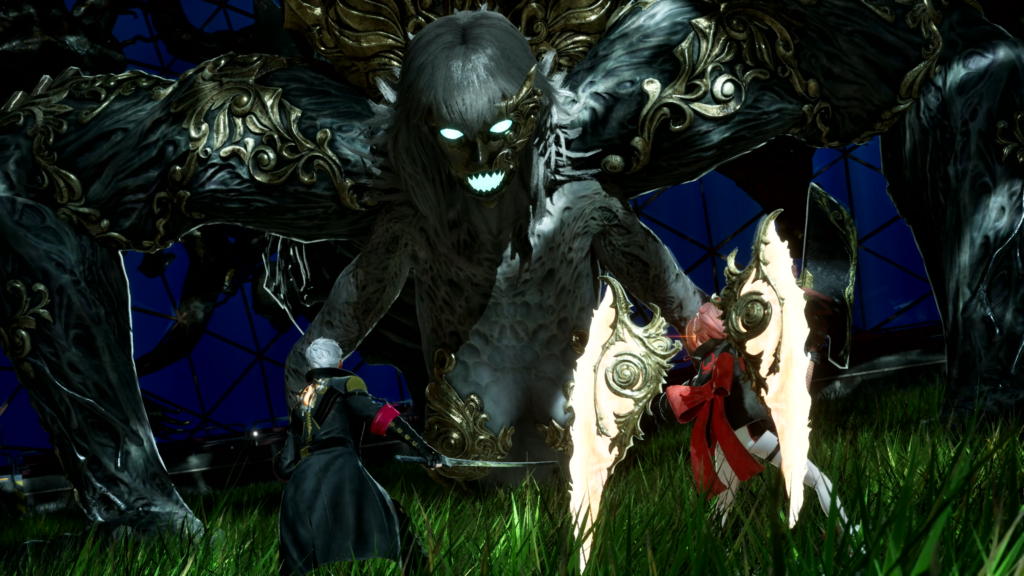
In Code Vein 2, players will unlock access to various partner characters that each have their own personalities, combat tendencies, and passive bonuses they lend the player character. It not only adds a layer of companionship that’s often missing in this genre, but also provides a protective layer since these partner’s have limited revive capability if you run out of health.
Rather than chasing the genre’s biggest trends, Code Vein 2 defines itself by narrowing its focus. In a Soulslike space increasingly measured by scale, spectacle, and endurance, Bandai Namco is positioning the sequel around something quieter.
Not just over builds or victories, but over history, relationships, and the emotional weight of intervention. And players won’t have to wait long to see how Code Vein 2 resonates, as it releases very soon on Januray 29. 2026.