
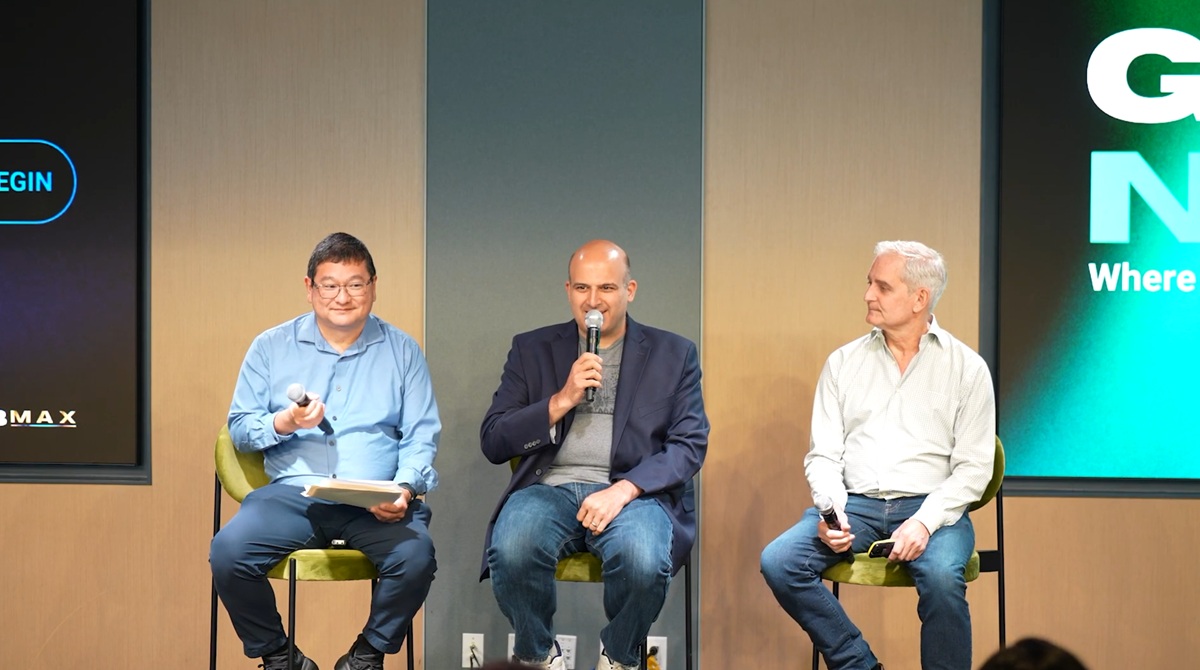
Ed Fries and Amir Satvat, two leaders at 1Up Ventures who come from very different backgrounds, are in sync when it comes to gaming’s bright prospects and the shift in opportunities across regions, studio sizes and careers.
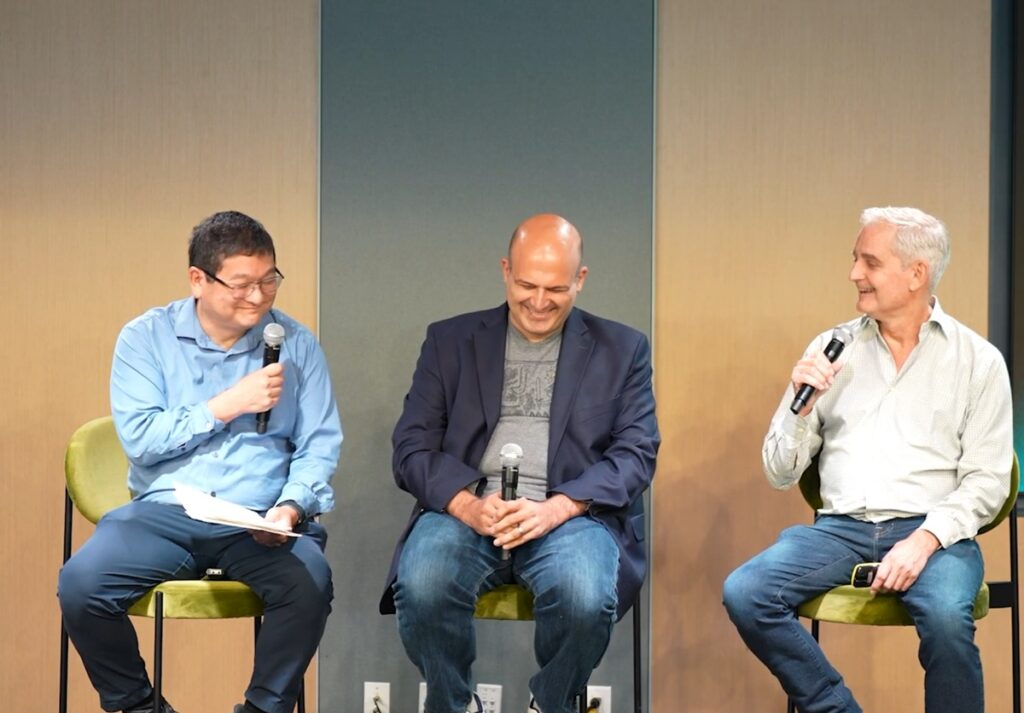
I discussed this topic with them in a fireside chat at our GamesBeat Next 2026 event earlier this month. Fries, the former head of Microsoft Game Studios and the founder of the 1Up Ventures fund, sees the industry from the top down. His game studio-focused venture capital fund has made 86 investments over the past seven years.
Satvat, a new general partner at 1Up and founder of the game jobs support community ASGC.gg views it from his game jobs data, from the ground up. On LinkedIn, Satvat has 700,000 followers. Their combined perspective makes them unique, and Satvat said their values around games are aligned closely.
“We’re very community focused. We’re really focused on getting all the people that we invest in to talk together and help each other together, and so it really fit with what Amir is doing as well,” Fries said in our session.
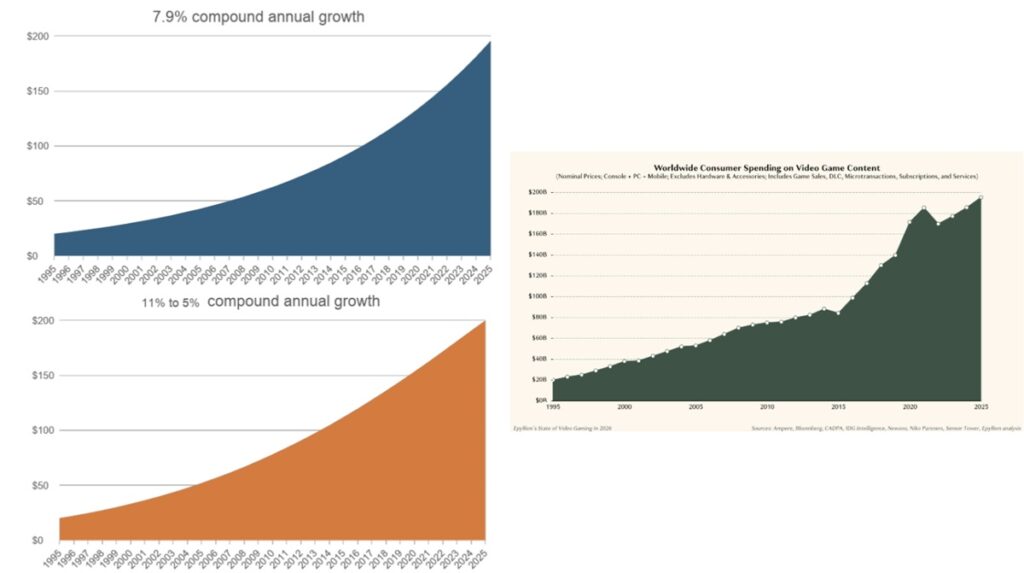
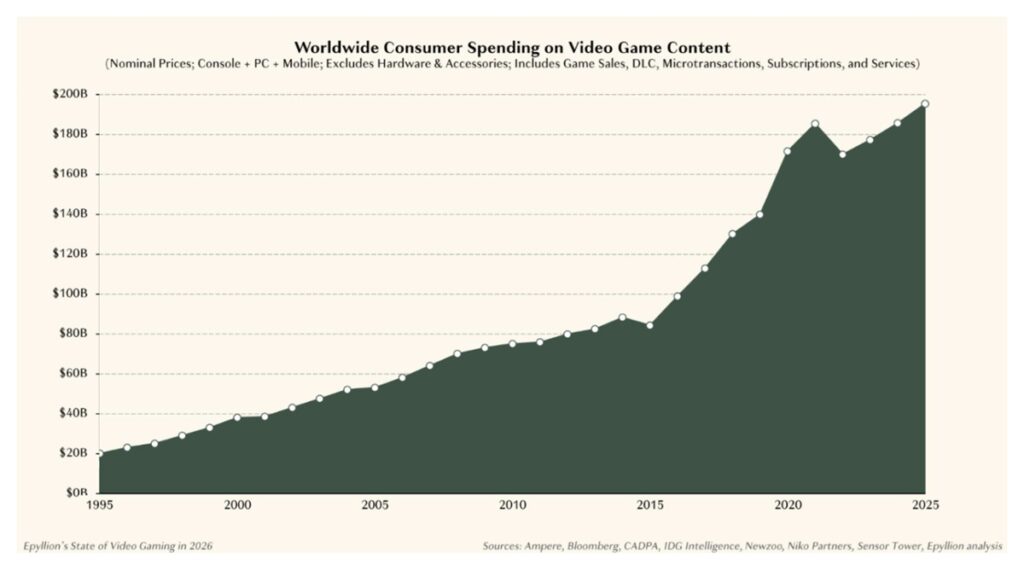
Fries observed that global game revenue has grown for about 30 years, from roughly $20 billion to $200 billion, averaging around 8% annual growth; recent growth is closer to 5% to 6%. While the pandemic produced a temporary revenue spike, the prior growth trajectory has recovered, he said.
“There’s so much stuff going around about how it’s a terrible time,” Fries said. “I’ve been in the game business a long time. I’ve seen a lot of ups and downs in the game business. And I mean, frankly, some of the things that some people are saying are just a little crazy.”
He pointed to a slide that showed a steady line, a big decline during the 1984 crash and a big bump during the pandemic, but overall steady growth.
“I heard someone the other day a pretty well-known person, say that, “Oh, this is the worst the game business has been since the crash of ’84. Okay, I have a chart for that. It shows the game business, with inflation-adjusted numbers….Our business has gone up for 30 years.”
“So we’ve had incredible growth in the game business. This is why I’m optimistic. We’re growing. We’re continuing to grow.”
That recovery has happened even though Grand Theft Auto VI had a couple of major delays and is only now getting into the market. Speaking before the November 19 release of GTA VI, Fries predicted that its release would not create a lasting industry-wide sales bump, since players may substitute one game for another.
Regional shifts
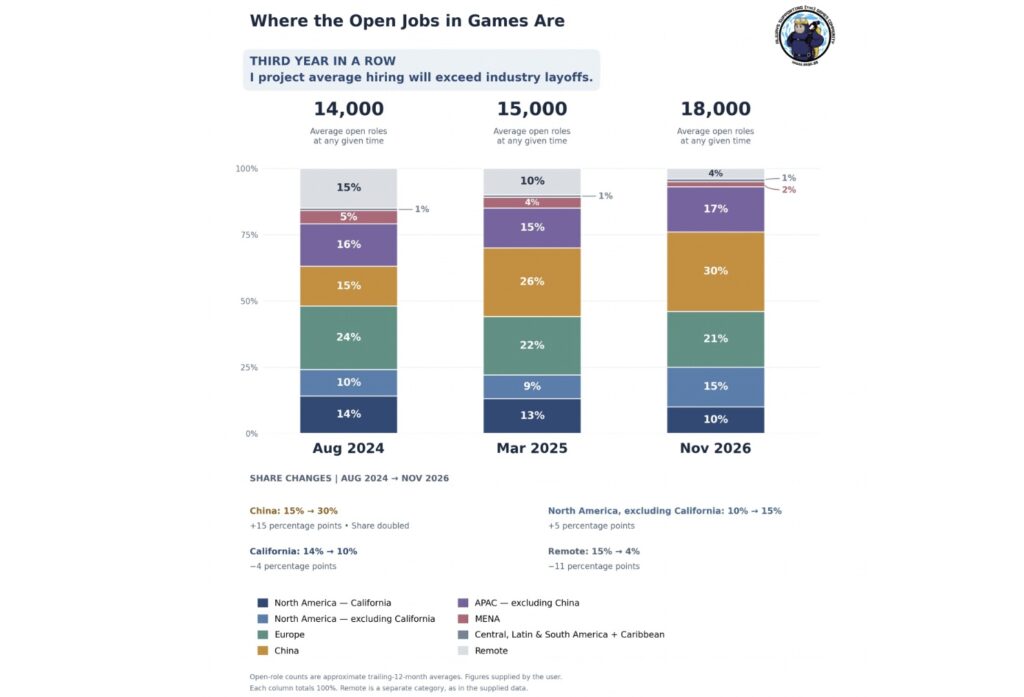
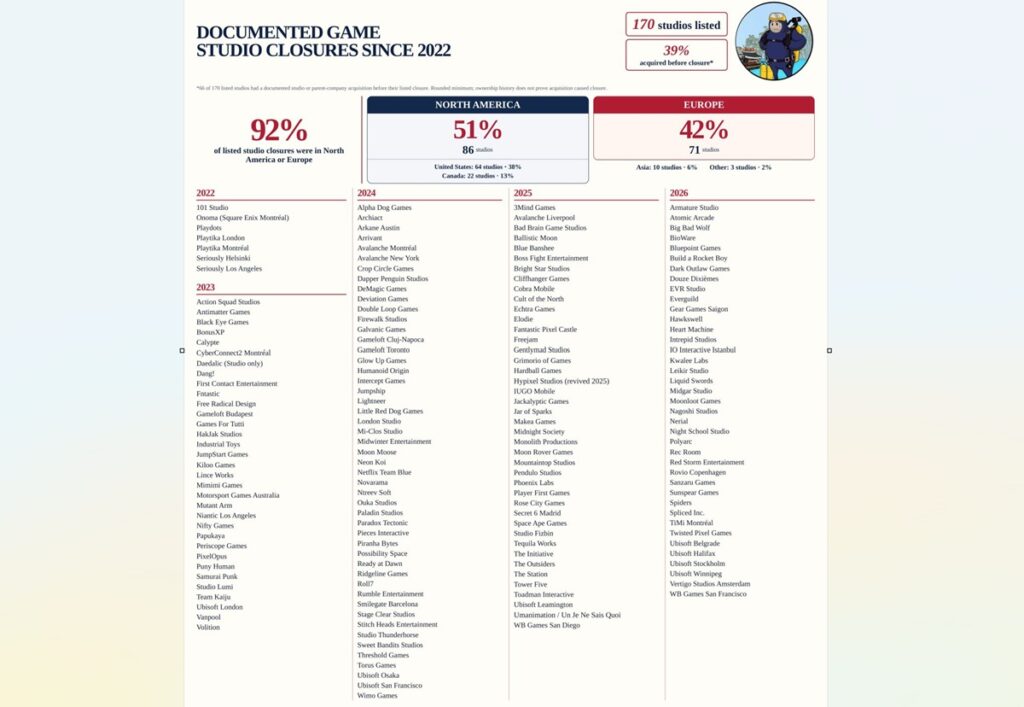
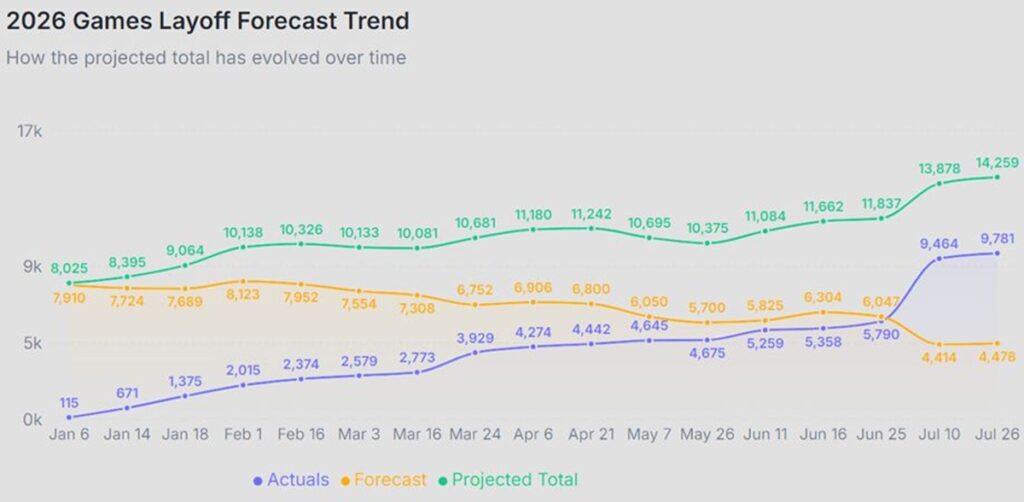
Satvat noted that overall revenue growth does not erase hardship, particularly in North America and Western Europe. He estimated game-industry headcount grew by 100,000 to 150,000 from 2017 to 2022, but there was only 3,000 to 4,000 net growth from 2022 to 2026 (after calculating both layoffs and hiring).
And Satvat attributed much growth to regions outside North America and Western Europe.
“What it’s taking to produce that revenue and where it’s produced and the headcount and the types of firms and firm sizes that are producing that absolutely is shifting,” Satvat said.
Satvat noted that open roles are shifting away from triple-A games. Its share fell from about half of tracked openings in 2022 to 30%. Total openings averaged higher this year than last, but growth is not evenly distributed geographically. Remote roles fell from 25% in 2022 to 7% to 8%.
“Neither of us want to paint over the incredible hardship, particularly concentrated in North America,” said Satvat. “Maybe as a combined point with Ed’s point, the line still keeps going up. It is amazing to me that despite the incredible brunt of that force that’s been felt in North America and Western Europe, headcount has still remained in a positive growth trajectory despite that. I would conjecture that a huge part of that is 30% to 40% of the total industry headcount is in China. There’s a lot of growth in basically any region that’s not North America –(with growth in) Latin America, India, Eastern Europe, and so forth.”
Satvat said there has been an “unprecedented explosion in people coming into the field” of games.
And Satvat said there’s been a 10 times increase in game degree programs over the past decade. He estimated 850 open game-design roles at any given time, including 300 to 350 in the United States, versus about 10,000 annual graduates, roughly half seeking design jobs.
He encouraged career flexibility and transferable skills across industries with related skills, given the oversupply of graduates for the game industry. Fries note that he worked on databases and spreadsheets for a decade before he was able to focus on games, while Satvat was 38 when he got his first game industry role. About 60% of those who get jobs through ASGC.gg get jobs outside the game industry.
“More than ever, people should be thinking about just any career that they can do with their skills, rather than just games,” Satvat said.
The trend toward smaller teams
Both Satvat and Fries foresee potential in smaller teams, lower budgets, and independent studios. Fries argued lower costs could support greater creative risk, while Satvat said smaller studios often succeed after multiple projects and may gain from more accessible tools.
“Where we’re headed is toward smaller teams working on more creative projects with lower budgets. So lower budgets mean you can take bigger risks and do more cool stuff. And when you have a small team, one of the biggest benefits you can have is to be in the same room, around the same table,” Fries said. “That’s the the real positive of being able to outsource effectively to AI instead of something else.”
Satvat said he is optimistic because of the growth in indies.
“We all really enjoyed that legends panel, and I think something we consistently heard from everybody was this discussion about people being able to take risks to make games that they couldn’t (before). And if you look at the structure, if I try put on my most optimistic hat of the silver lining of a lot of things that can often feel very scary about AI, it’s that perhaps tools enablement will indeed allow more teams to make games that would not be possible under current triple-A structures,” Satvat said. “If you look, for example, at Metacritic, which I know is not equivalent to sales, and you look at games that are 80 plus or 85 plus,” you see more of those games are done by smaller studios than bigger ones.
Is migration the answer?
I noted were were having the event in perhaps the most unique place in the world. Silicon Valley has drawn expats from all over the world. The tech industry has created real migration, and perhaps it will happen where people can move to a place where they can get jobs in the rest of the world. But Satvat noted it’s hard to get people to move.
“Even if someone decides they have total geographic mobility, how achievable is that, and it does vary depending upon the country. I think what I can say for now is, as I mentioned, well over a majority of the people that I see, even just through our community, are looking at these non-game roles,” Satvat said. “The biggest thing I’ve been trying to push is for something just much simpler, which is that anybody who’s thinking about games or loves games as a career needs to understand, particularly if they’re just coming out of school, that having a decision point of that being a mainstay career of what they’re going to do for their entire career perhaps isn’t a completely realistic thing, and instead they should be thinking about skills and things that they’re building for any career and have flexibility going between those jobs.”
AI and Careers
Satvat expressed concern that AI may reduce early-career hiring, while hoping better tools could enable more small studios. He argued human taste and design may become more important as generated content increases. And he said graduates need to be adaptable.
Fries predicted AI-generated games would not substantially change total consumer spending, while distinguishing that revenue outlook from the uncertain impact on jobs.
Satvat also highlighted China’s large player base, talent pool, and potential industry opportunities. Fries contrasted current conditions with the 1984 game-industry crash and presented long-term growth, describing a return to the pre-pandemic trajectory after the pandemic spike.
He questioned whether delayed or released blockbuster titles such as GTA materially change the industry’s overall revenue path. He remains concerned about AI’s effect on early-career employment and noted that employers may use tools instead of hiring.
Fries expects AI-generated games will have little effect on total game spending.
Regarding AI’s impact, Satvat said, “I’m very concerned about the impact on early career employment. When I ask people how many early career people they’re hiring or going to hire, so many tell me they’re not, and they’re just going to staff more to tooling. Because this is a realistic, optimistic talk, I would like to believe that coming out of the end of it may be enabled by that we have more smaller studios. But I can’t lie and say I also don’t have a great deal of fear, even beyond our industry, of the impact as I think any reasonable person does.”
Fries said, “As far as the business goes, looking at the charts, I say that chart says that we are making more than enough games for people already, and have been for a while. Our customers are very loyal. They’re happy. They’ll buy (something else) if one thing’s not available. If we dump another 1,000 or 10,000 AI slop games on the market, people are still going to spend the same amount of money on games. It’s going to grow at the same rate. That’s my prediction, and you’ll just see the game business continue to grow.”
“I do remain confident, Dean, that as tools become more (advanced), the gravitation towards human taste and what is designed versus just slopped out is just going to become more important because that is going to be the only thing that can differentiate games,” Satvat said in conclusion.