
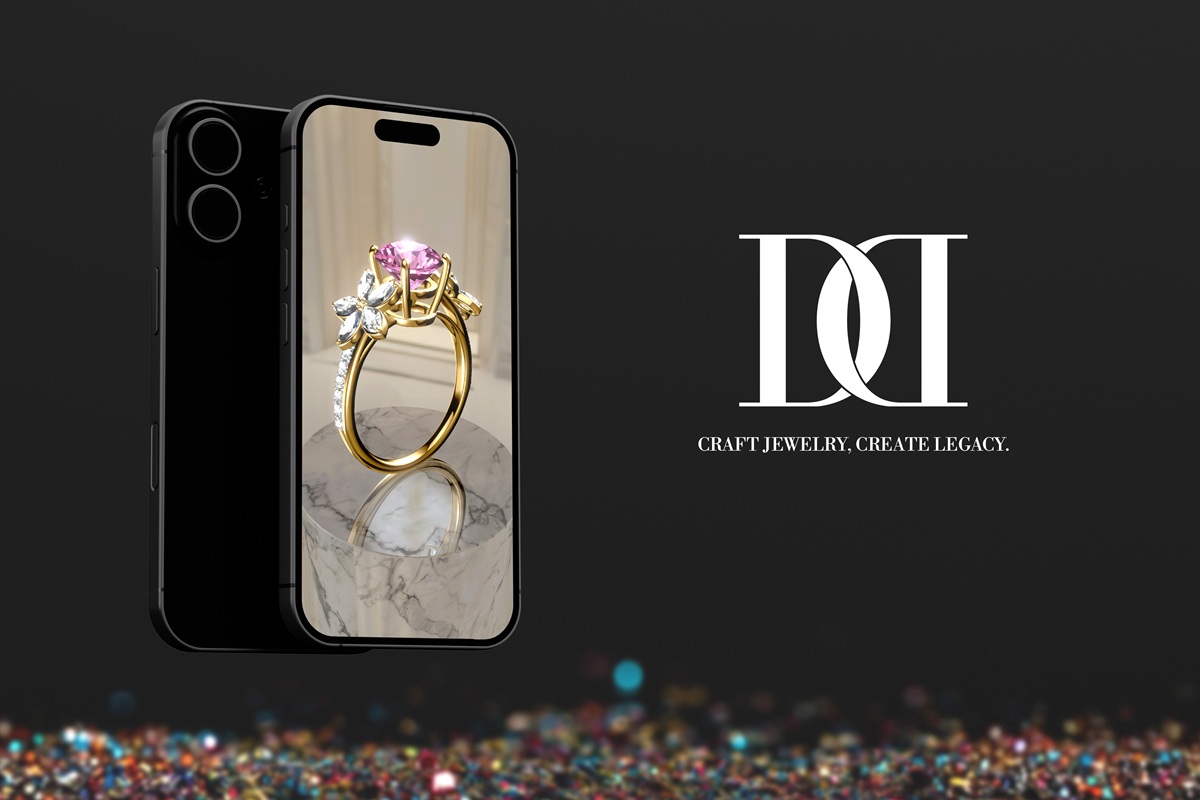
GFAL‘s Diamond Dreams, a match-3 puzzle game with a luxury theme and optional Web3 features, is launching worldwide.
GFAL (short for Games for a Living) said Diamond Dreams combines sophisticated craftsmanship, immersive storytelling, and sharp visuals to create what may be the most luxurious game experience ever designed.
The global launch is accompanied by the rollout of Season 1, including digital collectibles and full web3 support for in-game transactions and trading.
“It’s been a big adventure. And finally, now is the time of the truth,” said Manel Sort, founder and CEO of the company, in an interview with GamesBeat. “We did the test with the beta group, and the retention was outstanding. Monetization was also very promising. Now we’re going to be launching in September 1.”
The GFAL Marketplace is live for trading, and the first tradable items are live from the Season Pass.
The launch is coming in two phases. The game will be released today with Season 1. It will have the match-3 game with collections and AI agents, which are characters in the game with their own social media profiles.
And phase two will come in November where the company will kick off a celebrity collaboration and launch a real physical jewelry collection based on the artistry of art director Javier Leon.
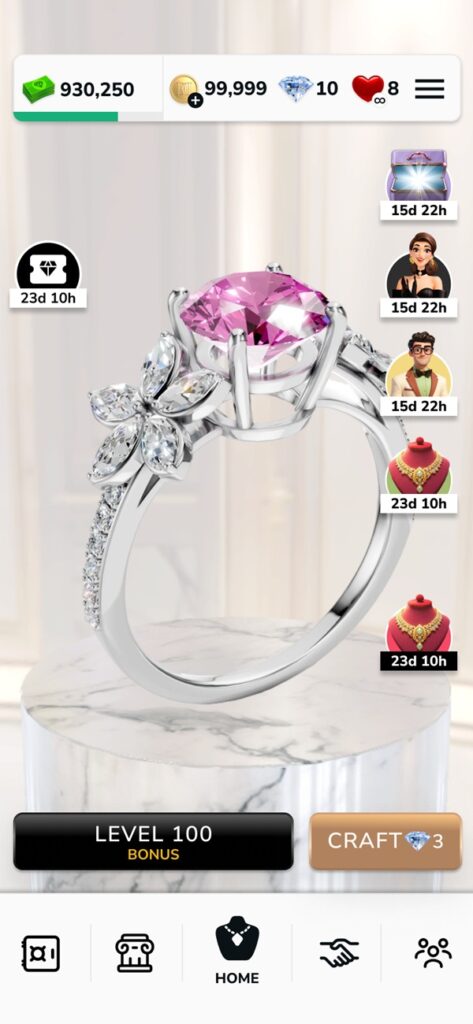
In Diamond Dreams, players craft exquisite, lifelike jewelry in a world that reflects the elegance and prestige of high luxury. Every move on the puzzle board fuels a creative journey, allowing players to curate an evolving collection of personalized jewelry pieces. These pieces are displayed in The Gallery, a socially interactive space where every achievement reflects the player’s growing prestige in the game’s world.
The blockchain element
In addition to its artistic elements, GFAL said Diamond Dreams incorporates blockchain technology to offer true digital ownership of in-game items. Players can trade, showcase, and retain their rarest collectibles, ensuring that the time and creativity invested in the game have lasting value beyond the mobile screen. However, the game is designed to be accessible to all players, with Web3 features seamlessly integrated rather than a requirement for enjoyment.
GFAL said that, at its core, Diamond Dreams stands out for three key reasons: its novel approach to digital ownership, unparalleled visual craftsmanship, and strategic depth with innovative puzzle design.
The game’s approach to digital ownership is more than a feature, it’s a fundamental part of its identity. Players don’t just collect in-game items; they create and own unique jewelry pieces that can be owned, traded, and retained. Every piece carries weight and significance, making collections feel authentic and personal. However, ownership and web-3 features are optional, ensuring the experience remains accessible to all players, regardless of their familiarity with blockchain technology.
What truly makes ownership meaningful in Diamond Dreams is its Fusion Mechanics, a system inspired by the luxury principle of scarcity. Much like a master jeweler crafting a rare, one-of-a-kind piece, players can choose to fuse collectibles, combining select items to create new, rarer creations.
The Web3 integration is pivotal in the game because it enables fast, high-value transactions directly between players—a feature that traditional payment methods simply can’t match. This player-to-player payment system is at the heart of the deluxe economic model, allowing for significant, seamless transfers of ownership of exclusive digital collectibles.
This blend of familiar match-3 mechanics and next-generation visuals marks a shift in what mobile gaming can offer. The game features ray-tracing in diamonds, a technology rarely seen in mobile titles. This technology allows light to reflect naturally off every gemstone and metallic surface, giving the game a level of realism that rivals high-end PC and console graphics.
“We created a new way to sell things. What we’ve done is to set the anchoring for pricing for virtual items. So what we’ve done is, when we start any collection, we start with something we call the dynamic pricing,” Sort said. “You have a set of items that are limited edition. The first ones are relatively cheap, and then as people buy them, the price goes up until there is a point where people start buying from the secondary market because it’s cheaper than the primary market. But that sets a price anchoring, and that helps at getting an idea of the prices.”
Origins
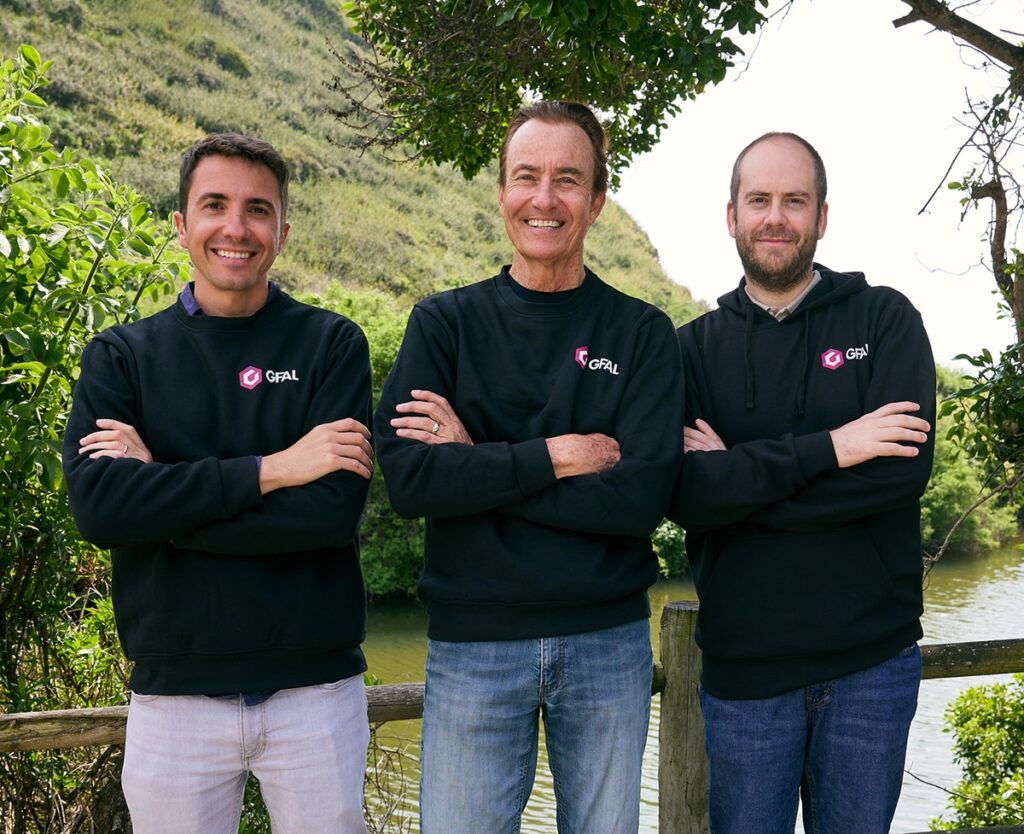
GFAL was founded in 2021 by Sort and a team of seasoned video game industry visionaries. Sort is the former first vice president at King and an expert in emerging video games business models. He joined forces with Hawkins, legendary founder and former CEO of both Electronic Arts, 3DO and Digital Chocolate, and Javier León (Art Director), an Emmy Award Nominee.
Christian Gascons (COO) and Marc Tormo (CCO), both ex-Blizzard Entertainment, and entrepreneurs Carlos Blanco and Ernest Sánchez, leaders in new technologies, complete the founding team. Collectively, the GFAL founding members bring over 140 years of experience in building and growing video game startups.
GFAL raised $3.2 million in April 2024 from investors including Supercell and Mitch Lasky among others. The $3.2 million seed funding round adds to the $4.4 million in capital GFAL raised from the successful launch of its $GFAL token back in Q1 2023. It has a market cap of $44 million today.
The company’s progress
Back in March, the game soft-launched in Malaysia and the Philippines to kick off its user acquisition for retention, and it gathered thousands of users. The aim was to spend slowly on user acquisition and tweak the game to hit a 45% day one retention target (meaning getting 45% of players to come back after playing the game on the first day).
The company launched a Proof of Luxe campaign on July 8. It was GFAL’s first limited-edition luxury jewelry drop: 66 numbered rings handcrafted with León, the art director.
León approaches each digital creation with the precision of a master jeweler, ensuring that every facet, engraving, and reflection mirrors the craftsmanship of real-world luxury jewelry.
The result is an experience that feels tangible, where every gem sparkles with glassy translucence, every metallic setting gleams with polish, and even the game’s smallest jewels reflect light in ways that mimic how luxury brands like Tiffany & Co. showcase their finest creations.
The team promoted it through an influencer program (details here) and sold 80% of the supply in seconds. Users traded the rings with each other. You can see it here.
The game also debuted in Canada on July 28 to begin monetization tests and the company has rolled out more territories leading up to today’s global launch.
In partnership with Saga Origins, GFAL also launched its first AI Agent live on Discord (also created via our partners SAGA), called Jasper. You can see it on the Discord server here, under “Diamond Dreams” category, “dd-chat” section.
Blockchain transactions with no NFTs
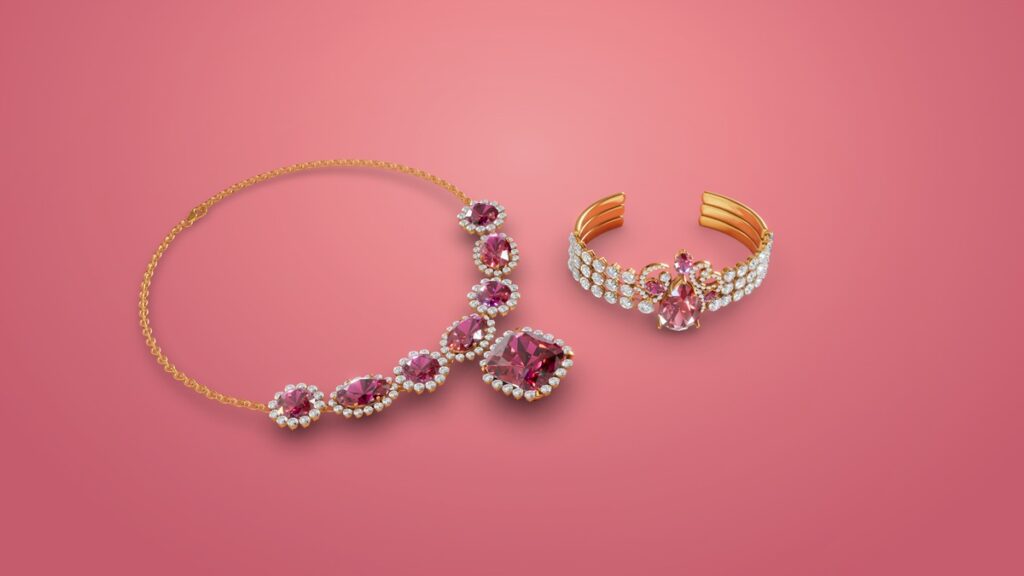
With the first three rings, the company tested dynamic pricing. Some were sold at $3,000 to $4,000, and that was where the anchoring stopped. Then the secondary market took over.
With the seasons, you can think of them like a Battle Pass for Fortnite. When Fortnite releases new skins for characters, they set a price floor. Those first ones are sold at a low price and then the price goes up as people buy them. At some point, no on buys, and then people start selling and buying on the secondary market. If you buy a Battle Pass, then you get access to better skins instead of just the free skins.
With GFAL, a percentage of players are willing to trade their skins, and supply and demand takes over. Some are happy with showing off skins, and others don’t mind selling them off. Some might be willing to craft their on collectibles, which are minted on the base collectibles and progress in the Season Pass.
“This use of blockchain is because we created this new model where we only use blockchain for allowing payments player to player,” Sort said. “We don’t do NFTs. We just allow players do the transactions as if Fortnite allowed an integrated blockchain to allow that. And then we create this focus on collectibles. It’s more about collections.”
GFAL takes a 5% cut on the transactions for the digital sales. The average transactions were around $400 earlier in the summer. Casual spenders can still spend money using credit card transactions and get things by playing the full season.
A crypto-friendly world?

It’s taken a while to get to the market, but the timing is good in terms of cryptocurrency’s maturity. With the Trump administration, the U.S. is taking a hands-off approach with more regulatory clarity for blockchain entrepreneurs — including the passage of the crypto-friendly Genius Act. Sort said his own token was approved in Spain.
All of these developers are why the company has decided to launch the game now. Tests have shown that 15% to 18% of the players move on to cryptocurrency transactions, moving to a “deeper experience,” Sort said.
“Our token is so much like a utility token, as we don’t even have a staking or anything that is a financial feature in our token,” Sort said. “It’s a pure transactional token in the game that is helping us to be a lot more safe in all of what we do. We do not have non-fungible tokens (NFTs). Because when you have NFTs, the NFT can can leave your marketplace, and illegal transactions can take place outside.”
He added, “If you have a closed environment, and the token is only a transactional token in your environment, you can control much better the economy. And from a compliance standpoint, it’s possible then to create a safe environment.”
Dealing with worldwide competition and AI
Sort was engaged with AI as far back in 2003 in his university days. He specialized in computational physics but was also obsessed with AI.
“I always thought that I wanted to create something with AI, but none of us was expecting what happened with AI. With OpenAI, this reasoning capability that was completely unexpected.
As for the match-3 competition, it’s huge, ranging from the leader Candy Crush Saga to Bejeweled and more recent titles like Royal Match and Match Villains. The games have simple gameplay and are broadly accessible to hundreds of millions of players. Yet new games in the category are appearing all the time, especially in places like Turkiye.
While the launch is worldwide, the main target for the game is the U.S. and Europe. The competition with the Asian game companies will be challenging. To further move into Asia, the company is considering publishing deals. Now the firm has 13 people, smaller than it used to be but Sort believes it can do the job.
Upcoming plans

On September 16, the company’s limited edition items wil go live. And in mid-October, the final two pieces of the season will be released, requiring crafting materials that can be earned in-game through both free and premium passes.
Looking ahead, in November we will release Season 2 with a celebrity collaboration. This season will also introduce a new marketplace feature where players can purchase physical copies of their jewels and have them shipped directly to their homes.
Moving publishing to the UAE

Part of the reason the company had to move was the gray area around the law in Spain around buying and selling a utility token. The value-added tax could have kicked in, triggering a 21% tax on every single token trade. That set up the company for a move to the UAE.
“I decided to set up a team in the UAE. I asked them to go to UAE and set up this specific operation for management of the token,” Sort said.
Sort has been in the process of moving the company to Dubai in the United Arab Emirates, where he is setting up publishing operations.
Some developers can remain in Spain, but the core publishing will be in the UAE. Sort is also assisting the government of Abu Dhabi, another game-focused emirate in the UAE, on its gaming plan for the next 10 years.
“They care about video games. They are very creative there. And they want the sector to grow,” Sort said.
Sort believes that the region should focus on an area of gaming where they have the chance to be No. 1 in the world, such as AI gaming.
“AI gaming is going to be a whole discipline. It will be completely different kinds of games,” he said.
Trip Hawkins, the founder of EA and 3DO, is an adviser to Sort. And Hawkins noted how the game industry was aided by its proximity to U.S. government-backed industries as well as universities like Stanford and Berkeley. The result was companies like Hewlett-Packard, the founding company of Silicon Valley.
“You always start with education, and then education drives all the rest, and it’s a process that takes time. In Spain, we had a really good educational system. We created the foundations for all these people to grow the industry. And I think in UAE, they want to do that. It’s it’s difficult because it will take time. I think AI will fit better what they are after.”
Sort said that he had an easier time recruiting fresh game developers in Barcelona than in Dubai, but he has found people who are enthusiastic, like one who was a product manager for luxury car manufacturers and another who was an interior designer for mansions in Dubai.
“In some respects, it’s tricky, and in others it’s not,” he said. “You can be creative and get around that challenge.”