
Games are entering a moment where control over distribution and revenue is slowly shifting back toward developers.
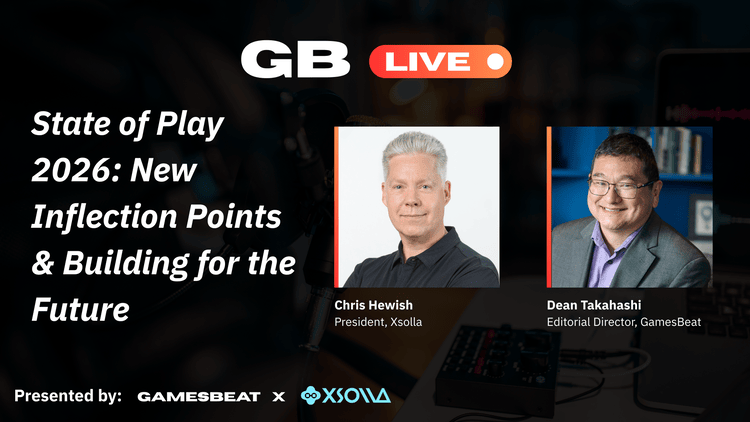
At the GDC Festival of Gaming, GB Live featured a candid conversation between GamesBeat editorial director Dean Takahashi and Xsolla President Chris Hewish. The discussion explored how platform policies, monetization tools, and changing player behavior are reshaping how developers run their businesses. From recent legal developments affecting mobile storefronts to new infrastructure tools, Hewish described how studios are finding new ways to take ownership of their revenue streams.
One major topic was the recent shift in policies surrounding the Google Play Store following the Epic and Google court ruling. As a result, developers now have more flexibility in how they operate their businesses on the platform. They can use their own payment systems rather than relying solely on Google’s infrastructure, and the company has also reduced certain fees associated with transactions.
“I think it’s a win for developers, it’s yet another step in the right direction of developers being able to take control of their business on a platform,” Hewish said.
Xsolla connecting developers across platforms
Those kinds of changes connect closely with the types of tools Xsolla are building. Hewish pointed to Xsolla SDK, a unified integration designed to work across multiple platforms. The software development kit aims to simplify how developers implement payments, commerce systems, and monetization features so that studios can manage those systems consistently across PC, mobile, and console environments.
The conversation also touched on Xsolla’s earlier push into web shops, which allow developers to sell in-game items directly to players through external storefronts rather than traditional platform marketplaces. Hewish noted how Xsolla helped pioneer the approach several years ago, long before it became a widely discussed strategy across the industry.
Since then, web shops have become an increasingly important way for companies to diversify their revenue streams. By selling items directly through browser-based stores, developers can reduce platform fees while maintaining a closer relationship with their players. The Epic and Google ruling may also accelerate that shift by increasing awareness among both developers and players that these alternatives exist.
“It’ll also open up more awareness amongst gamers that these web shops exist,” Hewish said.
The conversation also touched on Xsolla’s continued global expansion as the company looks to support developers in emerging markets. Hewish highlighted regions like Southeast Asia and Vietnam as areas where the company is investing more resources, reflecting the growing importance of those markets in the global games ecosystem.
The ongoing battle for retention
Beyond storefront changes, Hewish also spoke about the broader economic realities facing game companies today. After years of rapid expansion, parts of the industry are beginning to hit natural limits on player growth, particularly in mature markets. As a result, studios are increasingly focused on keeping the players they already have rather than relying on constant audience expansion.
“There does become a point where growth plateaus and becomes much more limited,” Hewish said. “We’re already seeing a shift to retention of your players. I’ve had some conversations this week with companies who say they are still seeing growth but are focused on retention. When we talk about 2026 and the next few years in games I think that’s going to be a prevalent battlefield area.”
That shift toward retention reflects a broader recalibration across the industry. As distribution rules evolve and new monetization tools emerge, developers are increasingly looking for ways to maintain stronger relationships with their audiences while building more sustainable business models.To hear the full conversation between Takahashi and Hewish, watch the complete GB Live session filmed during the week of the GDC Festival of Gaming.
This article and the GamesBeat Live session it covers were sponsored by Xsolla.