
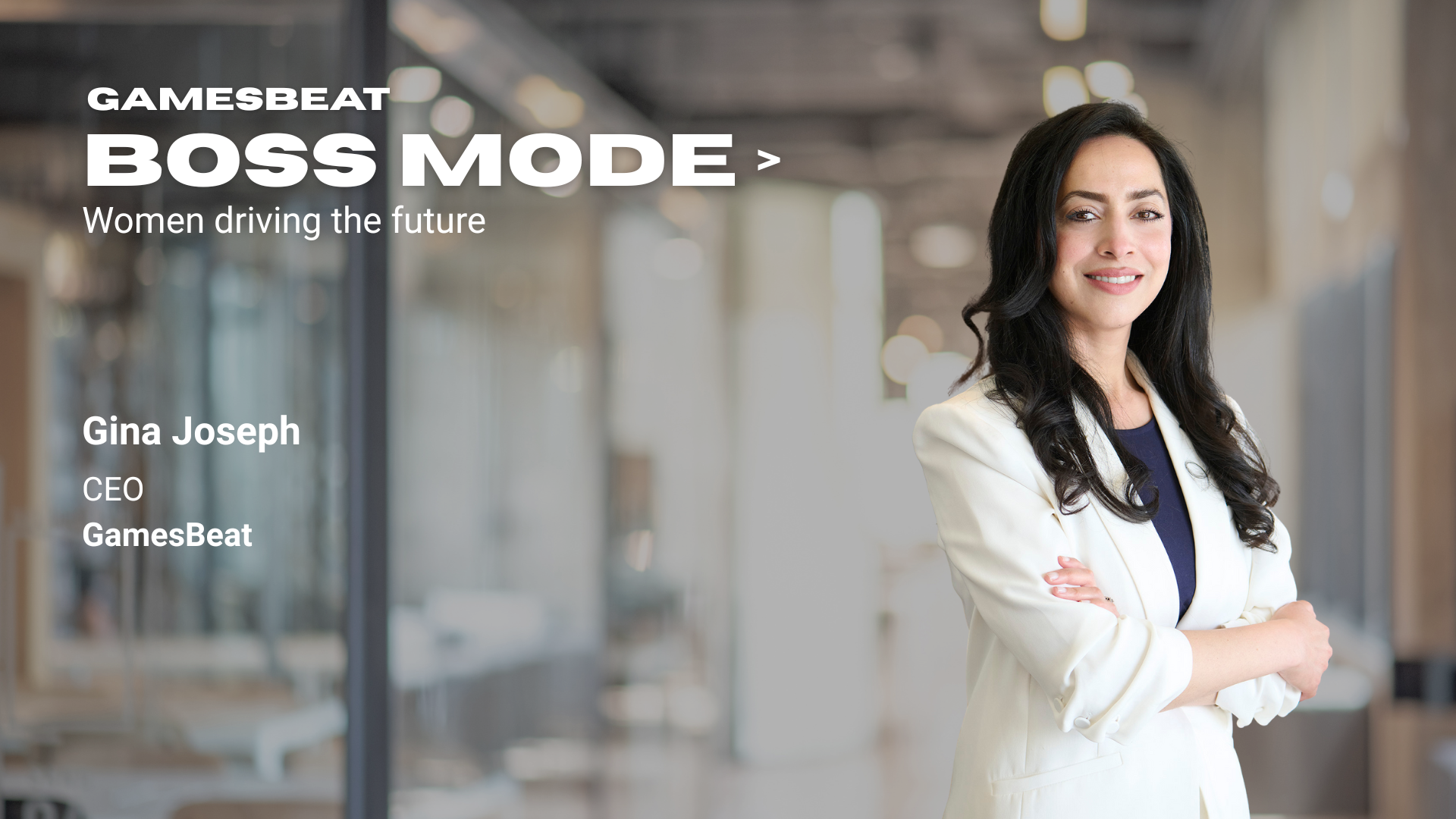
When I realized my final article of 2025 was going to be a BOSS Mode, I knew exactly who I wanted to be the subject of the interview: My own boss, Gina Joseph, CEO of GamesBeat. I would be remiss in my own mission of bringing the best insights from female leaders in the games industry if I didn’t share the insights from the woman who has led me for the last few years of my career.
In case you don’t know our history, GamesBeat was formerly part of VentureBeat. Then, this year, Dean Takahashi paired with VentureBeat’s Chief Strategy Officer, Gina Joseph, to spin us off into an independent entity earlier this year. So to call 2025 a banner year for GamesBeat would be a mighty understatement.
Spending any more time going into detail about our journey together would feel like unnecessary self aggrandizement … so I’m going to jump right into our conversation. Below is an edited transcript of our interview.
Rachel Kaser: Can you give me a little bit of the backstory? I know some of your story because I’ve been part of it, at least a little bit, but can you tell me any parts of it I maybe don’t know?
Gina Joseph: I think the most important thing that resonates with me in this moment, here with you, is that I’ve always thought about ways to elevate women in leadership and support that throughout my career. This is a little bit of a full-circle moment for me, where you’re humbly asking me to tell my story. And I’m happy to do so because I hope my story can inspire others!
Also, I can provide some of the things that I’ve always been seeking from other leaders: What are the strategies and business insights that they’ve been doing? How do they navigate things to drive their business forward or drive their company or objective forward? I feel like we just don’t talk enough about that.
For those women who are already in leadership roles, what are they doing? What decisions did they make within their company that drove their business force? How do they bring the biggest impact within the company? Showcasing them in that light, I think, is incredibly important.
Perhaps female representation has been minimal because most of the time, when you want to hear how a big Fortune 500 company or a startup did well, you have the CEO talk about it, and they happen to not be a woman. You don’t get the insights of maybe women who are within the organization who have done impactful or insightful things. I hoped we could do that with BOSS Mode, and in this moment with you I hope I can help support that mission and that objective.
So, in my career, I’ve always thought about ways to put a spotlight on and elevate women in leadership; both here and outside my day job, taking the initiative to join board roles and volunteering to play my part. I’m on the board of the IGDA Foundation, Harvard Women Alumnae-i, and other organizations that represent underserved communities like Midwest Games.
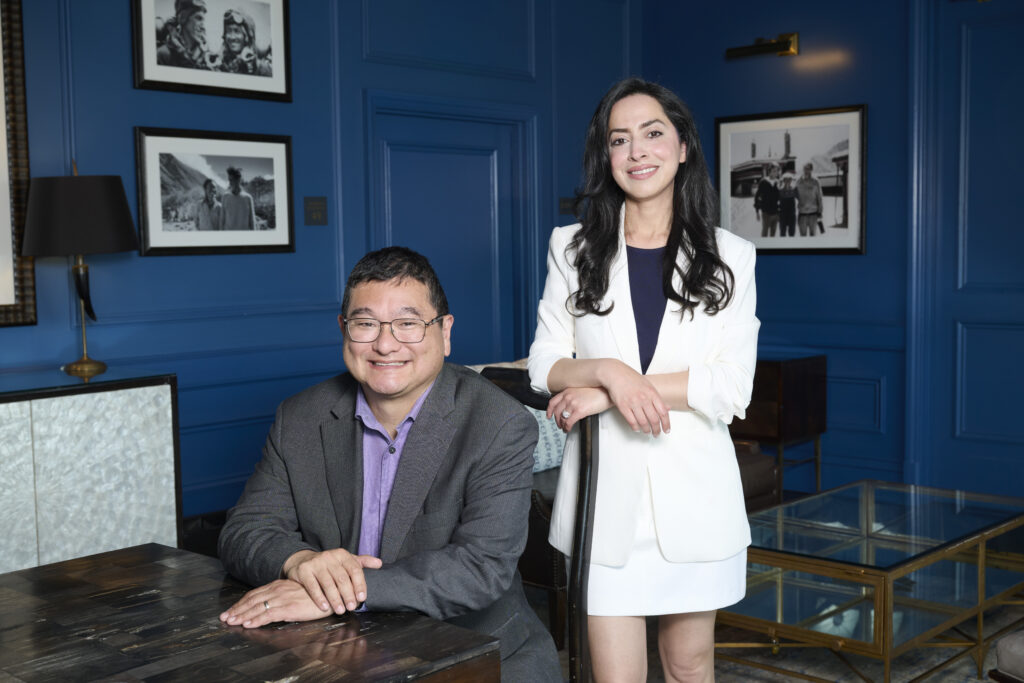
For people who are curious about what I’ve done, I’ve been in media and publishing for about 20 years now. I started in college at UC Berkeley and I worked for the Daily Californian. It was a startup-like environment, and honestly a lot of what I learned there I still apply to my day-to-day job. I got thrown into a scenario where it was a student-run organization and I had to manage a million-dollar P&L and I wasn’t even 20 years old.
When you’re thrown into something, you’ve got to roll up your sleeves. You have to figure out how to get it done, and that was a beautiful thing, to be able to work with so many other incredible students and run this media company. From the beginning of my career, I was collaborating with my editor-in-chief at that time, and we were figuring out how to fulfill our objective as an independent newspaper for the university.
From there, I continued to work in publishing and media, and got recruited by Digital First Media, where I was for about four years. Then I was at Hearst for four years, and then I joined VentureBeat and GamesBeat, was there for seven years, and now here we are!
What’s been fascinating is seeing the evolution of media and where it’s gone, and I’m happy to talk more about that. But my role has always been about driving digital strategy, and helping the company move forward with its new chapter and adapt to the changes of the market.
When I was at the Daily Cal as a student, that was a time when Facebook was exclusive to college students. We were still reading newspapers in college, and digital was kind of new. So how do you launch these digital ads? What does that look like? How do you price it out?
Then I was recruited by Digital First to drive their digital strategy. They recognized that people aren’t reading newspapers anymore. How do we build out our online strategy? Then I brought that forward to Hearst, implementing new cultures and ways that editorial and sales would work together.
As I reflect back, and talking to you about this, I guess I played a part in a shift where the media company was going to adapt to the changing needs of the marketplace. I think what we’re doing here at GamesBeat is different because we’re not adapting, we’re changing the game for what the future of media should look like going forward.
Rachel: You said it’s always been a project for you to elevate the voices of other women in the industry?
Gina: It was never assigned to me, but it was important as someone who was always the youngest and one of the only women in the room because I started working so young in my career. If nobody looked like me in the room, would my opinion or voice be heard? What kind of barriers do other women have? Facing the glass ceiling, I felt its transparency is super important for everyone.
It points back to why it’s important for all of us to play our part to ensure we understand the impact. We don’t want to put more women in leadership because it’s nice to have, or it’s a nice thing to do. We do because we want to recognize the impact of an inclusive team. You actually have greater ROI if you have the right culture, if you have the right business strategy, and all of that starts with how you build your team and what kind of perspectives you bring in.
When you bring in different perspectives, whether it’s someone younger or a person of color or a woman or male — all of these things are important because that inclusivity has a direct impact on how you can better understand who you’re trying to serve, what you’re trying to do. I believe you should hire on merit, right? You have to be qualified for the job. But you have to be intentional and understand the impact.
What would the impact be if more women received funding? Let’s do that study. We take a lot of time to understand how many women don’t get funding, but we don’t take enough understand why they don’t, and what would happen if we do.
Rachel: I would be interested as well. On the surface, when you say we need to understand, I can’t help but think that we know why, but you’re right: What would happen if we pulled back the layers of the onion?
Gina: I don’t think it’s intentional, where organizations are saying, “We don’t want women in leadership and we’re going to be intentional about not hiring them.” I think it’s all a trickle effect, and change unfortunately takes time. But I think we’re in an era where we’re just saying, “Let’s acknowledge it and make some change.” Ask why it isn’t happening and figure it out. The more we can put a spotlight on the impact, then I think it becomes more intentional to put more women in leadership.
When I say “leadership,” I mean the opportunity to make an impact. You don’t have to be in a C-suite role to drive impact or initiative in a company. We believe that — that’s why we’re doing BOSS Mode, right?
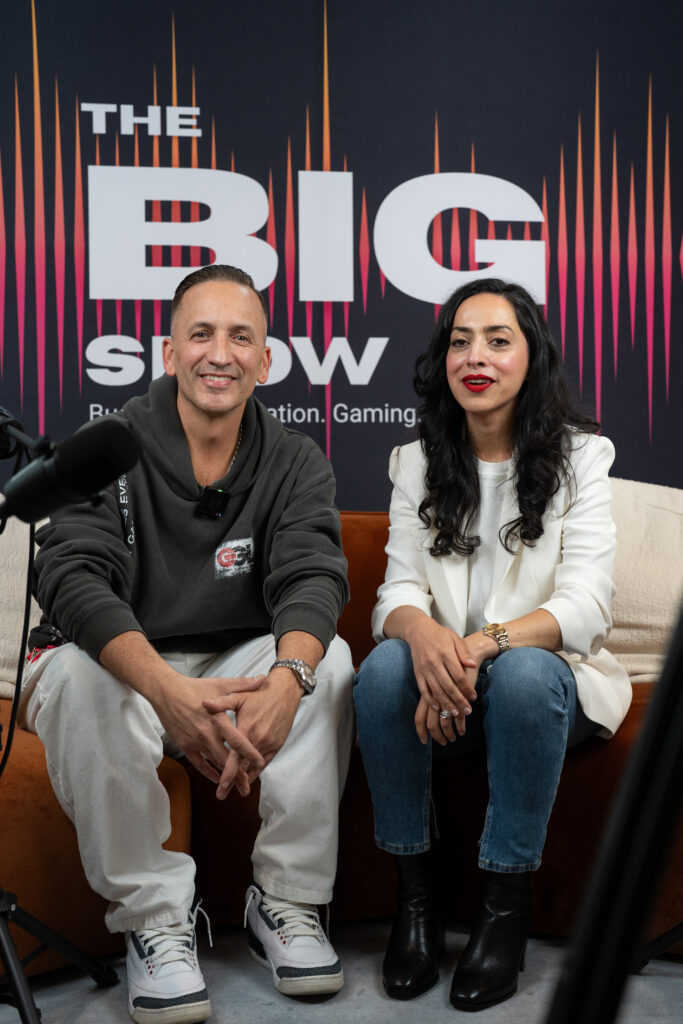
Rachel: Is GamesBeat your first role within the games industry?
Gina: Yes, it is — or technically, VentureBeat was, seven years ago. But the ironic thing about your question is the answer is also no. Whether I realized it or not, I was intersected with the industry because I worked in tech. I worked with tech clients who wanted to build gamification strategies. I worked worked with tech giants who worked gaming companies. Just because nobody was using the word “gaming” doesn’t mean weren’t in the gaming industry.
That’s actually something I hope we can change, where people understand how much intersects with the industry. The actual answer is that I was always tied to it in some fashion or form whether I realized it or not.
Rachel: Do you have any personal background as a gamer?
Gina: I do! I grew up with two brothers, and I was exposed to gaming because of my older brother, transparently. We’re three years apart, and my entire childhood was playing Nintendo and Mario and seeing how excited he got. I looked up to him, and whatever he did, I wanted to do it — and I enjoyed it!
Playing Crash Bandicoot and Sega and getting excited about the new release of Resident Evil because he was excited. It wouldn’t sit well with him when I ended up beating him in things like Mortal Kombat and Tekken, or win a race in Need for Speed. I was a button-masher at that age, and he was actually playing “correctly.”
When I got older, my interests shifted to other forms of pop culture. It’s interesting how my interest in gaming evolved, because my family got more into games during the pandemic. My parents and I would play Fruit Ninja or Bejeweled, and they love playing those games.
Right now, my kids are my whole world and we talk about and play Roblox. I think I have an advantage having kids this age because I can see how powerful a game like Roblox or Minecraft or Fortnite is to their generation — how they connect and engage with each other is so different from how grew up with games. It’s been nice for me to see the experience of what a “gamer” has looked like for me in different phases of my life.
The beauty of this industry is it evolves and I’ve evolved with it. The beauty of this industry is how everyone gets their escapism, their entertainment and connection in different ways. The definition of gaming is being redefined, because whether people realize it or not, they do play games! I miss the days where I used to play a lot of games with my brothers, but that’s just part of the evolution.
Rachel: What opportunities do you see when you look at the games industry? I know we’ve talked about the barriers for women, but on the flips, what do you think the games industry offers to women?
Gina: I think it’s more that there’s an opportunity for women to come into the games industry and accelerate innovation in a way that’s never been done before because it’s been such a small representation of the industry. I think every single woman we add to the industry will make that much of an impact. The opportunity is for women to come into the industry with new ideas.
What I would encourage is for the games industry to not only hire those who have worked in it before. That’s how you grow and how you can bring in inclusivity — otherwise, it’s not going to solve the problem. In order to do that, we have to welcome people who can bring in new ideas and new perspectives. The more we can do that, the more we can innovate and think about ways to drive this industry forward.
Rachel: What advice would you have for young people just starting out, based on what you’ve seen of the industry and your career trajectory so far?
Gina: My immediate answer is that the biggest advice I can give people is that if you have a great idea that you want to go after, and it’s knocked down, that doesn’t mean it wasn’t a good idea. It doesn’t mean that you were not capable of doing it. I doesn’t mean that you shouldn’t still go after it.
I say that because that is probably the most fundamental reason why emerging talent become discouraged. You’re going to get a lot of no’s, and sometimes really good things don’t come easy. You might have to break through a lot of barriers and walls. That can happen if you’re part of a big corporation, or if you’re part of a small organization that doesn’t have the right culture.
So the number one thing I would say is that if you have an incredible idea and you get knocked down, it’s not because your idea was wrong. Use it as a way of motivating yourself to figure out how to make it happen.
Rachel: What would you say is your boss move, the decision or career move that got you to where you are now?
Gina: I wholeheartedly believe that accepting the role of CEO of GamesBeat was the biggest boss move I’ve ever made. I say that because it was the first time I’ve had the opportunity to change the game for an entire industry. That’s not an opportunity I’ve ever had in the past, a fundamental opportunity to build a media entity that was going to play a growing role in the future growth of the games industry.
It was less about becoming a CEO, and more about what kind of chance do I have to make a positive impact or change the game. That’s why I think of it as a boss move. Not because the title, not because of the authority, but because of the opportunity to do something of a scale that could be so impactful; to build a culture that we are all proud of; to set the tone for where the future of media is going.
Rachel: And what is your boss music? The music that would play if you were a boss in a video game?
Gina: I love all music, but when I think about a game, I would probably want to the cinematic route. I love the soundtrack of Transformers. I love the theme song of Pirates of the Caribbean. Something that would give you the sense of feeling that you’re about to take over, and that you’re ready to play the game.