
Gameplay Group International (GG) is a newly formed game development studio that has an unusual business model: reviving canceled games.
The company acquires and reimagines commercially unrealized games. Founded by industry veterans Victor Lugo and Philip Mayes, and staffed by veterans from gaming, film, consumer products, and themed entertainment, the company delivers community-first experiences that honor legacy franchises while innovating for future audiences.
It’s happening at a time when a petition dubbed Stop Killing Games has drawn more than 1.45 million signatures in the European Union. The petition, if turned into a regulation, aims to protect gamers’ rights by ensuring that purchased games remain playable even after publishers shut down servers or delist titles. It was sparked by Ubisoft’s controversial removal of The Crew, which rendered the game inoperative for fans.
This is a little different. In today’s high-risk, high-cost gaming landscape, promising projects are often canceled or rushed to market, resulting in lost revenue and declining player trust. Gameplay Group addresses this by identifying games with untapped potential and giving them a second life, refining gameplay and delivering polished, high-quality experiences for players worldwide. It’s giving games a second life.
“I’ve long been frustrated seeing good games canceled or unable to find their audience,” said Victor Lugo, founder and chief creative officer of GG. “I found a kindred spirit in Philip, and we developed a model at Gameplay Group that would allow those games to get a second life. Every project we touch is designed to elevate play, and our initial slate of fighting games is especially close to my heart. I’m excited to share more soon.”
“Economic pressures in our industry often force difficult decisions, leaving high-potential games cancelled or rushed to market,” said Philip Mayes, CEO of GG, in a statement. “While not all games can be saved, we look for diamonds in the rough and leverage our global network to bring them to completion, creating a win for everyone. Developers get to see their vision realised, and players get to play games they would otherwise have missed.”
Gameplay Group is majority Black, Woman, and Minority-owned, and specializes in gameplay and technical design, particularly in fighting, sports, and character interaction. With a team spanning the US, Australia, Brazil, and Europe, the company blends global expertise with a focus on gameplay innovation.
I did an interview with Mayes and Lugo. Lugo said the idea started for him almost 15 years ago, when games started moving into platforms like Xbox Live Arcade. Then they started moving into streaming platforms and subscriptions.
“I noticed it was a really volatile time in the industry, as we tend to have every other year now. I started to notice was that there were a lot of games that were canceled, but also these games were getting a second chance on the streaming platforms,” Lugo said.
As a fan of music and seeing similar things happen in other industries, he thought it might be an interesting strategy to think about a different way and give games a second chance. Even for some of the games that never came out.
“That’s the idea of how Gameplay Group was birthed. It was my desire to make games that didn’t have a good launch so they could have better [relaunches], or to have games that were canceled that didn’t get a chance to get their first or second chance to get out the doors,” Lugo said.
Mays met Lugo early last year as consultants on the same project. Mays had run a game company in Australia and was taking some time off to think about where the opportunities were.
“Meeting with Vic, and he pitched me this idea of acquiring and revitalizing these commercially unrealized titles are the ones that didn’t quite come out the gate strong enough, or ones that didn’t quite get across the line,” Mayes said. “And I started talking about what the development environment was like here in Australia, and opportunities that created for us. There was real synergy in that conversation, and that was the catalyst for me to get into it.”
He agreed the industry was so volatile.
“It can feel very wasteful when you’re in it as a developer because you put a lot of effort into products — just to see them disappear for reasons that are completely outside your control. And so we felt there was an opportunity here for a win for a bunch of different angles,” Mayes said.
Mayes added, “You can have a win for the developers, to allow them to bring those games back to life and get them back to market. The win for the players, because they get to play games that they would have otherwise missed. And so, yeah, it felt like an exciting opportunity.”

Thinking of such games, they pointed to titles like All Points Bulletin (APB), which was created by David Jones, the original creator of Grand Theft Auto. But the game failed at launch in 2010 and Realtime Worlds went into bankruptcy. The game was later acquired and relaunched as the free-to-play APB Reloaded by GamersFirst in 2011, which continued on PC and consoles for several years. But the market changed and the console versions shut down in 2024. Perhaps it’s not the cleanest example of a canceled game.
But it’s easy to think of more. In a case that turned out better, Epic Games canceled its multiplayer online battle arena (MOBA) game Paragon in 2018. But fans, including creator Robbie Sing, revived it under the startup Omeda Studios. They relaunched it and the game has been a success.
Both Mayes and Lugo said it wasn’t about putting their own ideas forth. Rather, it was about empowering creators and developers to bring their visions to life the way they intended.
Mayes, who is more of a business thinker, said, “The interesting thing about the model that Vic proposed was fascinating — you’re starting with products that have already solved a bunch of the difficult problems in game development.”
Mayes added, “What we’re doing is we’re bringing in that expertise to help take it higher. Sometimes it’s a very good game. You want to take it up to be a great game. And for us, it was about working the networks that we’ve built over these years to bring those experts to help us massage these products.”
Lugo said it wasn’t about a particular game, though he would have loved to see Platinum Games complete Scalebound, the monster-fighting game that got canceled. He had friends on that team. Lugo also felt like he wanted to help others reach their dreams.
“We call ourselves a Gameplay Group. Gameplay is in our name, and that’s the core of what we do. We want to make sure that there’s a strong foundation of gameplay within each title we look at,” Lugo said.
They also look at issues that studios face like technical debt. What has to be overcome before the game is brought back to the market? How intact is the team? The team has access to capital, but it isn’t able to do tasks like reviving Concord, a very expensive game that Sony/ProbablyMonsters made over seven years, only to see it flop in the market.
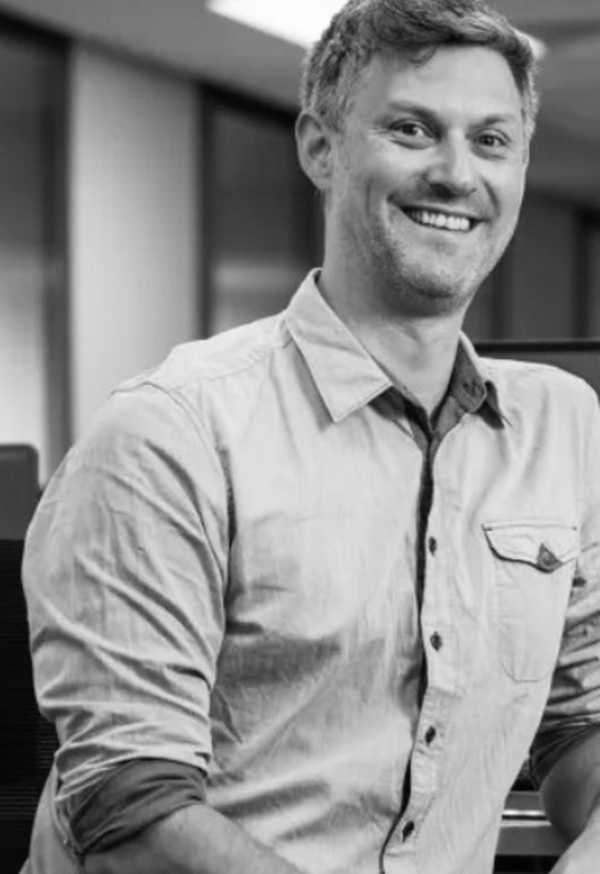
“Is it a fixable problem? We don’t just want to inherit someone else’s problem,” Mayes said. “We want to inherit opportunity and look for those diamonds in the rough, the hidden gems.”
Sometimes a studio may spread itself too thin and cancel one game because of that. Sometimes insiders can deliver insight to Mayes and Lugo and help them understand whether a game can be fixed or not. It’s not just about supplying the money that the game needs to keep payroll going to get across the finish line.
“It’s all about how we can elevate and take that to that next level,” Lugo said. “So it’s not about just picking up a game and putting it out the door. It’s about how do we take the core of what was there and elevate it to that next level so we can really knock it out the park.”
Mayes noted, “The economic risk for us is a lot different than if we were starting it from scratch.”
Mayes said the firm has two projects underway and can finance them. Over time, the company will seek more money.