
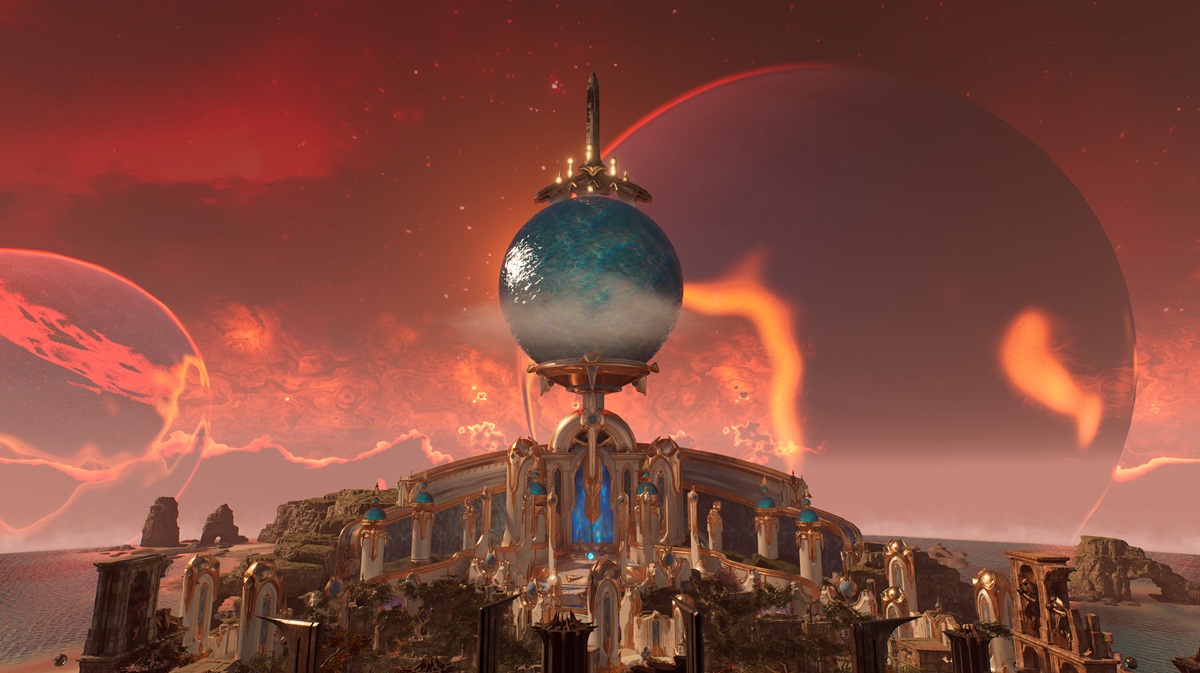
Omeda Studios has been one of the awesome success stories among smaller game companies. And now it’s getting game-changing events, where if players hit certain achievements in a match they can alter the map of the the multiplayer online battle arena (MOBA) game itself. The new update launches on September 2.
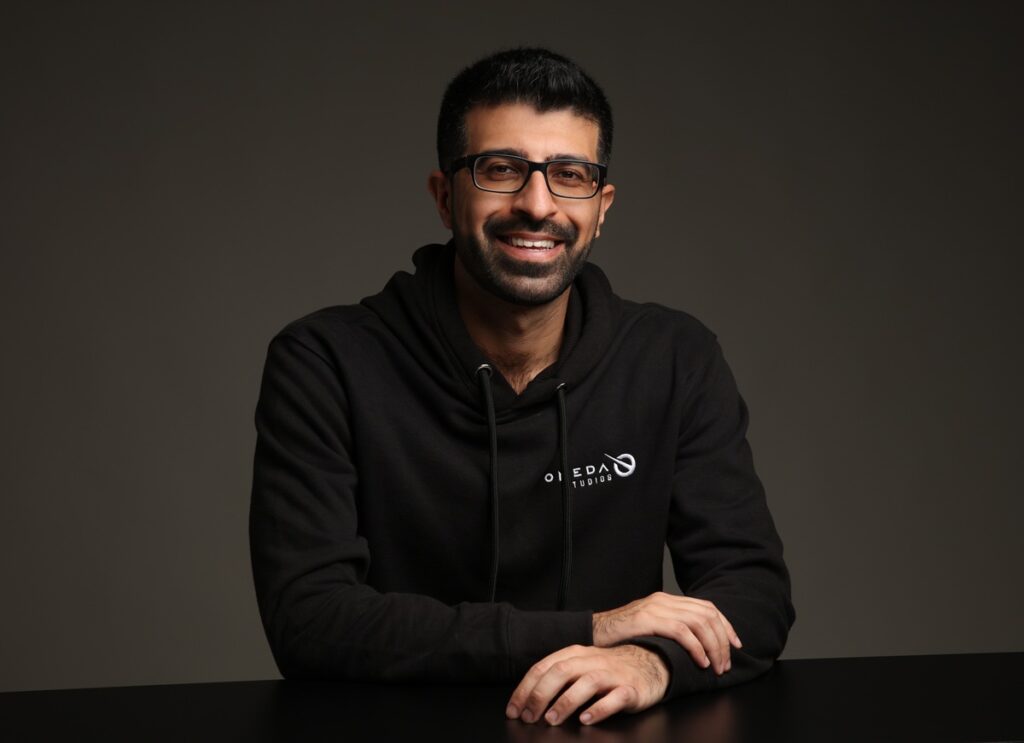
Led by Robbie Singh, London-based Omeda Studios acquired Predecessor, which had been initially built by and then discarded by Epic Games.
As a fan of the pending title, Singh was disappointed in Epic’s decision to shut down Predecessor (then known as Paragon at Epic). So he rallied the community to acquire the rights to Predecessor from Epic and then launch it. He formed Omeda Studios for that purpose.
Paragon was a free-to-play MOBA from Epic Games that never received a full release, and the studio shut development down permanently in 2018. Omeda Studios came to life out of a desire to keep Paragon alive in some form, using assets from Paragon that Epic offered. And when Omeda Studios launched the game, it was a hit.
Since the launch, Omeda Studios has been updating the game regularly. With Hathora, it reworked its server infrastructure so that online competitive play could be more fair between players on the East Coast and the West Coast of the U.S. And the company is encouraging fans to create their own multiplayer tournaments. Singh hopes this will naturally lead to an organic esports foundation for Predecessor.
And today, Singh said in an interview with GamesBeat that the company’s “World Shift” 1.8 update will enable players to dynamically change the in-game map. At the heart of the update is the World Shift, a revolutionary in-game mechanic that dynamically transforms the battlefield mid-match, delivering a MOBA experience unlike anything players have seen before.
For the first time, players will experience a battlefield that transforms dynamically mid-match, introducing new pathways, objectives, and environmental threats in real time. This isn’t just a visual upgrade; the World Shift reshapes strategy on the fly, demanding swift adaptation and tight teamwork. It’s a bold evolution that makes the world of Predecessor feel more alive, immersive, and unpredictable than ever before.
The World Shift will introduce a wealth of new strategic opportunities for players to outmaneuver opponents. With expanded pathways and hidden routes, mastering fresh ward placements and anticipating ambush angles has never been more critical. Newly accessible areas, such as shadowy corridors and elevated platforms, offer creative vantage points for surprise attacks. This will ensure that every match is more dynamic and unpredictable than ever before.
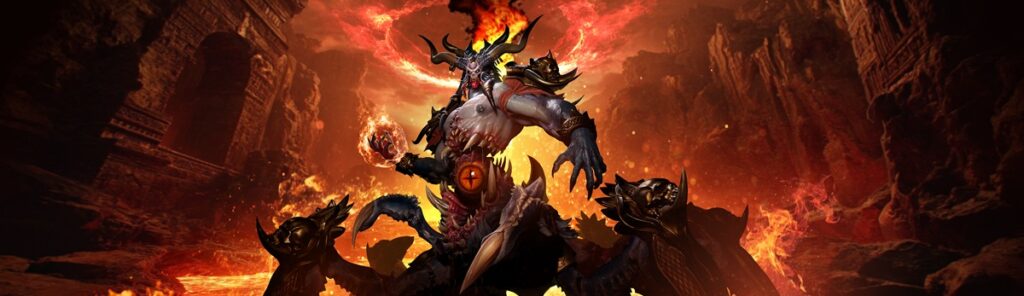
The game is also introducing Akeron, the Demon King, as a new hero in the roster of characters. Predecessor is also officially launching in Japan with the opening of dedicated Asia servers. The update is live today across all platofrms.
Akeron, the highly anticipated Demon King, is the culmination of the Ashes of the Damned storyline that has been building over the past several months, driving the corruption that has been spreading across the world.
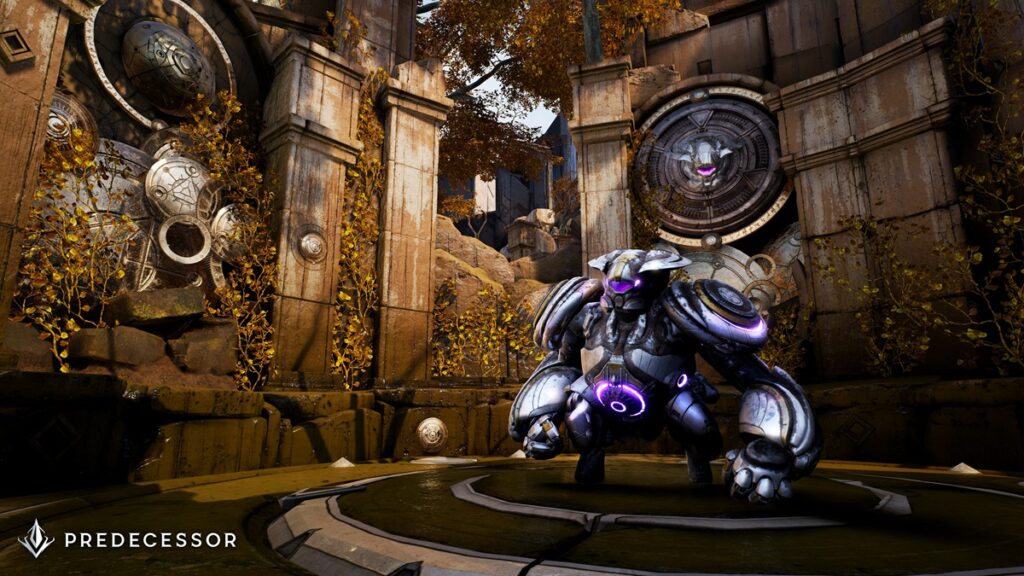
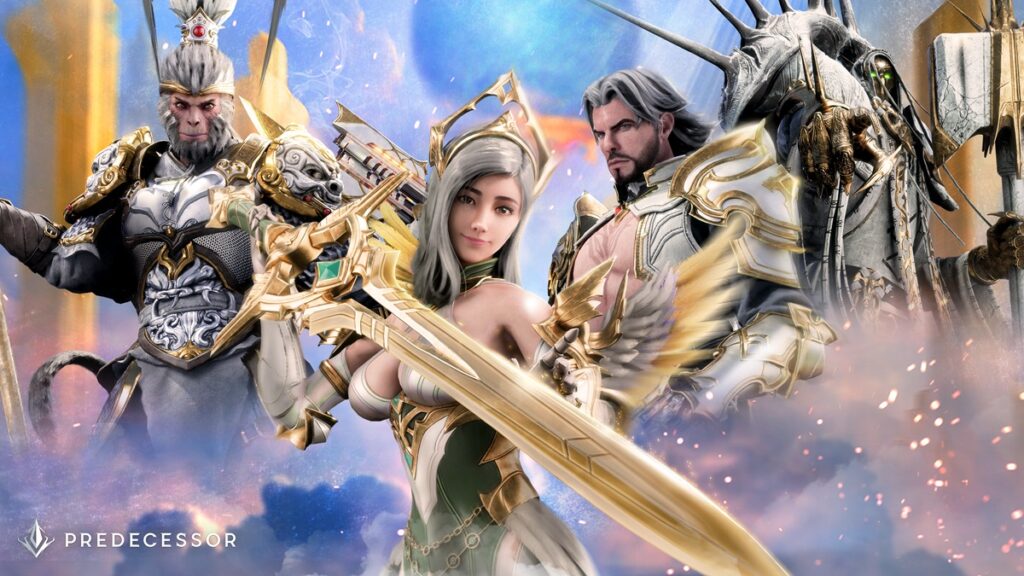
Akeron boasts a unique playstyle and physical design. As a tank/offlane/jungle hero, he can attack enemies from walls, using his spider-like abilities to traverse terrain in a way no other hero can. His kit focuses on area-of-denial and a powerful sustain mechanic that makes him a terrifying presence in late-game team fights.
Predecessor is available to play on PlayStation 5, Xbox Series X/S and Microsoft Windows via Steam and Epic Games. The game now has 45 heroes.
Here’s an edited transcript of our interview.
GamesBeat: What’s the status of the game right now, a few weeks after the server changes? How is the momentum going?
Robbie Singh: We’re seeing a lot of momentum, especially since March, earlier this year. We redesigned some of our characters. We took a lot of community feedback. Our players told us they wanted more depth and strategy. We introduced some more layers to our heroes. That went down very well. Since that point we’ve been growing month over month, which has been really exciting.
Also some of the stuff we spoke about in the past – moving the servers to a more central location in the United States, so that players could play together – also increased the competitiveness. You have really good players on the east coast and west coast that previously weren’t able to play against each other. Now they can. That’s upped the level of competition within Predecessor.
More recently we showed the new update with the augment system, which allows players to customize their heroes in a way they couldn’t before. Every MOBA has a hero that can pull another champion. But what we did was, we allow players to customize their heroes, so they can change the pull to allow them to swing across the map. We saw those changes to heroes resonate really well with players. Some heroes can now pull across the map. Each hero has their own different attributes. Some of them will get new mobility. That went down really well. That was in our most recent 1.6 update.
In our coming update, on September 2, we have a really interesting mechanic that I’m excited to share. A lot of players in MOBAs complain about the map. They play on the same map all the time. Then you look at games like Heroes of the Storm where they rotate the maps. We weren’t massive fans of making a ton of maps. We decided that the map could evolve based on player input. In the 1.8 update players can kill an objective in our map. That creates an apocalyptic event where meteors fall from the sky and destroy parts of the map. It creates new pathways, new points of elevation. It allows heroes to engage on the map like never before.
We think that’s the future of MOBAs. The map isn’t just a static map that you play on for thousands of hours. It’s about bits evolving through your gameplay. The first theme we’re shipping is the apocalyptic one. Down the line we’ll ship more different themes. The map can evolve randomly based on player input. We’re really excited about that.
We’re also shipping a new hero, Akaron. That launches at the same time. He’s the demon king in our storyline. The cool thing about him is he has spider-like abilities. He jumps on walls and leaps from them. That was me challenging the team around how we could take advantage of the game actually being in third-person. In other games you might have a spider hero, but in a top-down view they don’t really interact with the environment. What if we had a hero that was actually on the wall and then just leaps on you like a real spider? We’re excited for players to try that out. It’s an example of what Predecessor offers that’s unique in the MOBA space, that doesn’t exist at the moment.
GamesBeat: The apocalypse can happen in a different way every time?
Singh: The way the mechanic works, you kill an objective. Then it randoms which event will happen. The first one we’re shipping is the apocalypse, where meteors fall from the sky. Certain pathways open. We’re still figuring it out. It’ll be a learning process for us with the community. We’ll ship a version where it’s static. When you kill the objective, the map will transform in the same way every time.
We felt like it being random every single time might be a bit too much. It will transform, but the randomness will be when we add more world shifts. Which one is it going to pick? There might be the apocalypse, or in the future we might have an ice-themed one, a blizzard. You might get one or the other. You don’t know how the map is going to evolve. But within those, they’ll tend to be pretty static. The map evolves in a specific way. New things spawn. In the apocalypse, it feels volcanic, so these hot geysers can blow you up into the sky to reach new points on the map. We looked at the MOBA genre and thought about how we could push this in a direction that no one’s done before. We did early playtests and our players love it. We’re excited to ship that.
GamesBeat: It’s interesting to me that some players care a great deal about the backend infrastructure and how things like matchmaking happen. It’s very technical, very in the weeds, but it rises up in the consciousness of players. They want to know if the matches are fair, or if there’s any way to find an advantage. Skill-based matchmaking is still a really controversial topic. How much do you find that you need to talk about it? What’s the relevant information that you need to pass on to players?
Singh: We’re very transparent with our players. That’s throughout everything. One thing we have is the API, where players, the community, can directly pull the game data. They can see the matchmaking. They can see how many points each player has, how the teams are structured. Players have created their own websites to track all these things. We’re very transparent. This is how it works. This is what we’re doing. You can go and check it out yourself.
Of course our players will show us matches they don’t think were fair, even if maybe we think they were. It’s all based on perception. We all have bad days. Sometimes you don’t have a great game. Players will ask why someone ends up on their team despite playing badly, but those things happen. It’s not always the matchmaking’s fault. Any matchmaking system is always going through iteration. We’re always monitoring data. We’re always trying to find ways to improve. Sometimes people just have a bad game. The matchmaking can’t account for that. Other times there are learnings we’ve found from our community about the matchmaking.
We’re always trying to balance two things. One is the time it takes to get into a match, and then the other is the quality of that match. You have to factor in parties as well. You can play as a duo in the highest ranks, and between five to three in the others. The matchmaking tries to balance that. If you’re a team of five it tries to put you up against another team of five, rather than all solo players. Your communication is going to be better if you’re all friends. We have to balance all these things to create fair games.
Statistically speaking, when we look at the data, our games are almost always pretty fair. You do get some anomalies. That’s bound to happen. But our community appreciates our transparency. The people that wrote our matchmaking, the backend team, they’re always on Reddit and Discord speaking to players and learning about how it feels. You can be statistically right 50% of the time. The matchmaking is always balanced 50-50. But if players don’t perceive that or feel that, it can still be a frustrating experience.
GamesBeat: Is there a threshold you reach where the quality gets better just thanks to the number of players you have?
Singh: When we were in early access, just on PC, we definitely noticed that. Right now we have quite a lot of liquidity. That tends not to be an issue. The thing we optimize for is just making sure that the quality is good, because we have enough liquidity.
GamesBeat: Are you happy with the level of growth at this point? How has that evolved over time?
Singh: We took a lot of learnings from our launch in August. We sat with our community and looked at what they wanted, spoke with the team, redesigned a bunch of things around that. As I mentioned, since February of last year we’ve grown every month, which has been incredible to see. That momentum is just starting. It takes a long time to develop the things that the community wants. It’s not like we can do it in one or two months. We shipped the earlier stuff in March and onward. Now we’re getting to the bigger features that we know players are really excited about. In early testing those have resonated extremely well with players. We’re excited to ship that. We see that momentum continuing. All our metrics are up and to the right.
GamesBeat: You have a lot of people with time and skill. Where do your resources tend to go now, between implementing these new features and fixing things along the way?
Singh: Some of it is obviously backend infrastructure. As you begin to scale your game and grow at the level we’re seeing, you need to make sure everything is keeping up with that. That’s where some of the time of the backend team goes. On the gameplay side it’s just innovating. We want to really differentiate ourselves in the MOBA space. It’s not just about building another MOBA. It’s about differentiating and challenging why certain things are. Why do you have to play a MOBA on the same map every time? Why can’t that map evolve? Those are the problems we’re trying to tackle. We’re constantly pushing on why things are the way they are. Can we push them in a different direction? That’s where a lot of the team’s time goes.
The final one is regional expansion. Now that we’ve seen great growth in the United States and Europe and we have a good understanding of how the business is growing, we’re able to start growing in other regions. We’ve done small tests in South America. That’s always been a popular region for us. Now we’ve put a server there. On September 2 I’m heading to Japan. We’ll start doing things in Japan, opening up a server there as well. We’re excited to welcome those players. The third part of that is the team looking at how we can expand Predecessor other regions.
GamesBeat: When you talk about opening a server, how big a chunk of a data center do you have to spin up?
Singh: Yes, people might think of a server in different ways. It’s an entire infrastructure. It takes weeks or months of planning and coordinating with the right providers. We’re doing that in Japan. We’ve got that all set up. We also have a lot of traction in the Middle East. That’s one of our bigger regions. Saudi Arabia in particular. A lot of players come through there. We’re also putting a server there for those players, setting up the infrastructure there as well. Not many games host servers in that region. We’re one of the first doing that. That’s exciting for us, because we have a lot of passionate players there.
GamesBeat: That seems like a smart thing to do. The attention they’ve created for themselves makes the Middle East into maybe the most interesting place in the world for games. They’re investing heavily in esports.
Singh: Yeah, I’m really excited. We see a lot of competitive players, to your point, in Saudi Arabia. One thing that was very interesting for us was–we started looking at regional expansion. We spoke to players that play Predecessor in Saudi Arabia, and also the wider region. Dubai, Abu Dhabi, those places. We asked them how they engaged with Predecessor. They said, “Oh, we actually have a tournament this weekend.” Mind-blowing. They were already organizing tournaments. They love esports. Esports are very popular there. We’ve done small esports events of our own, but they’re already hosting their own tournaments. That’s a really good sign for Predecessor. So we said, “Why don’t we put a server there? How would you feel about that? What are the things you need?”
In Japan we’re localizing the game. We’re doing V/O. The announcer is all in Japanese. We’re trying to embrace what those players want out of Predecessor. We have great relationships with them. We listen to what they want and try to build it into the game. That’s where a lot of time and energy goes.
GamesBeat: Are you building towards esports on a larger scale?
Singh: Esports is an interesting one. Just this weekend in Kansas City our community hosted their own esports event. One member in particular put up a lot of money. He put $35,000 in the prize pool and hired out a venue. There were 50 players, 10 teams, about 150 people coming to watch. It was all done by the community. That was the community saying, “We want an esports scene for this game.”
We flew out some of our team members. My co-founders went and spent time with the players to understand what they’re looking for out of esports. How can we help as a company to help facilitate that and meet the players where they are? That was an incredible experience. My co-founder Steven came back saying, “We’ve got to do esports.” But we don’t want to do it in a way where we’re forcing it. We want to do it with the community, since they’re so passionate about it. They’re putting up tens of thousands of dollars in a few months to play in tournaments that they facilitate themselves.
We’ve started to try to figure out a way where we can work with them on that. We’ve started shipping skins where all the proceeds go toward funding the esports scene. We think that’s the next logical step. One day our goal is to fill up arenas and go really big, but we have to go step by step and get there with the community.
GamesBeat: The attraction might be that it becomes a stickier game. The competition means people are more into doing this every day.
Singh: MOBAs are inherently competitive, and that makes them incredibly sticky, but I think they’re also sticky because of the esports angle. People want to play and compete. When I spoke to some of the players who competed in that event, they were so excited to play on a stage. It was like a dream for a lot of them to play in front of other people. It’s an aspirational goal. A lot of people want to experience that. Having done it myself in the past, it’s a lot of fun.