
Game developers are passionate about live ops.
Yesterday, April 28, the game industry community in Austin, Texas, came together for GamesBeat Engage, a panel and networking event hosted by GamesBeat and sponsored by Xsolla. The event’s rapt audience and impassioned speaker sessions reflected the evolution of live ops in gaming — and the ongoing debate over the role of the live service model within the broader industry.
Creative ambitions
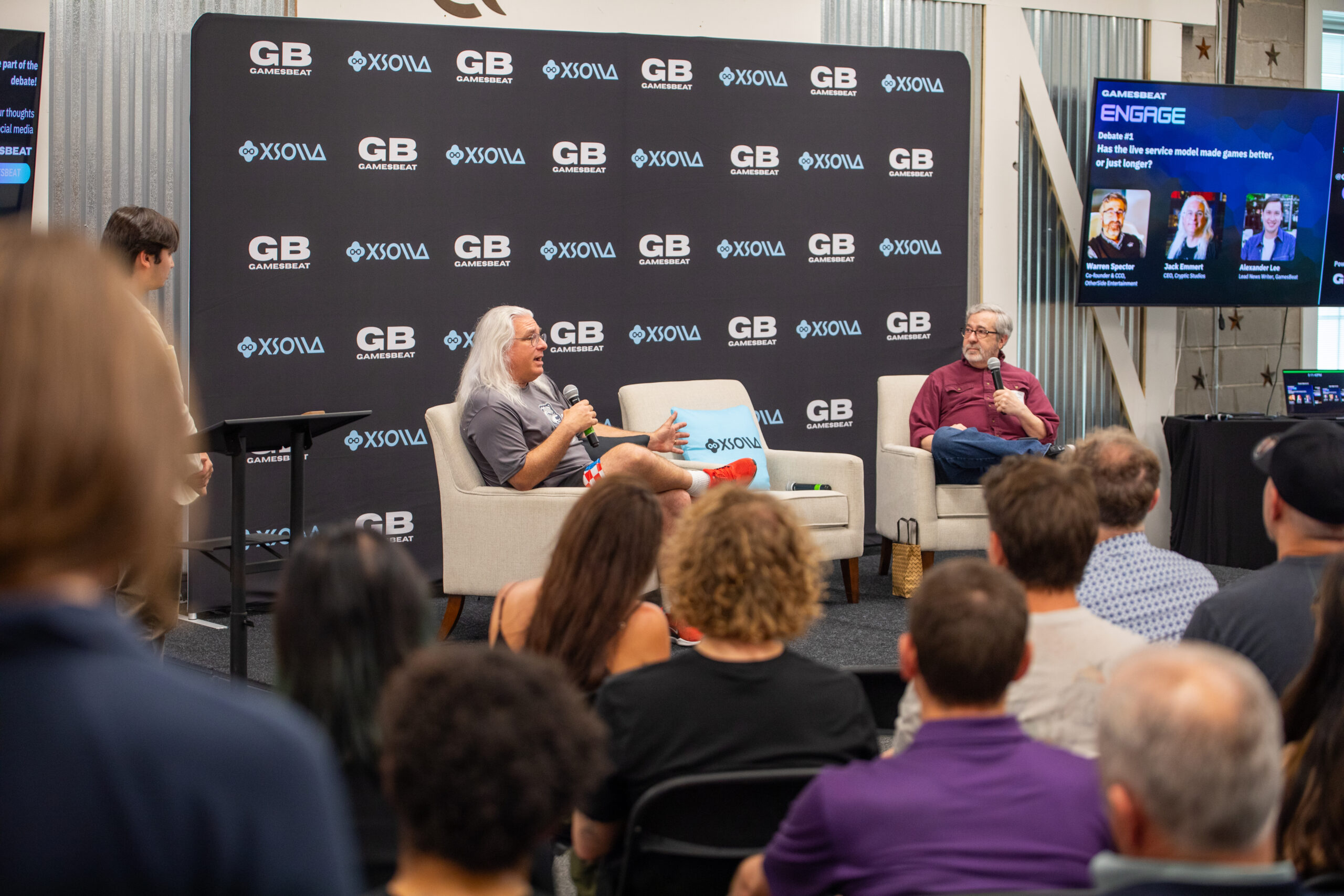
The first of GamesBeat Engage’s two debate sessions, moderated by yours truly, pit Jack Emmert, the chief executive of Cryptic Studios, against OtherSide Entertainment co-founder and chief creative officer Warren Spector. The veteran game makers discussed whether the live service model has empowered or limited the industry’s creative ambitions, with Spector taking the anti-live-service perspective and Emmert speaking in favor of the business model. Both speakers game out swinging, asserting their academic credentials and impressive game portfolios to make it clear that their position was correct.
Much of the discussion revolved around the merits of finite versus open-ended narratives, with Spector arguing that narrative media inherently needs to have a discrete start and end, although he acknowledged that video games allow creators to expand on fictional universes after the end of a narrative with features like downloadable content.
“Even in a premium-plus model, the premium part is going to end, and each of the subsequent adventures is going to end, providing a satisfying sense of closure for players — which I think players deserve and require,” Spector said during the debate.
Another crux of the debate was the importance of creator intent versus audience preferences. Emmert argued that the live service model empowers creators to adapt their games to audiences’ needs, changing games over time to fine-tune them to their players.
“The minute you launch, it’s no longer your game — it’s the community’s. They let you know what’s good; they let you know what’s bad,” Emmert said during the debate. “You can look at the forums or social media, you can look at data, and then you can evolve the game into the direction that the players want, because they’re giving you constant feedback.”
Studio structure
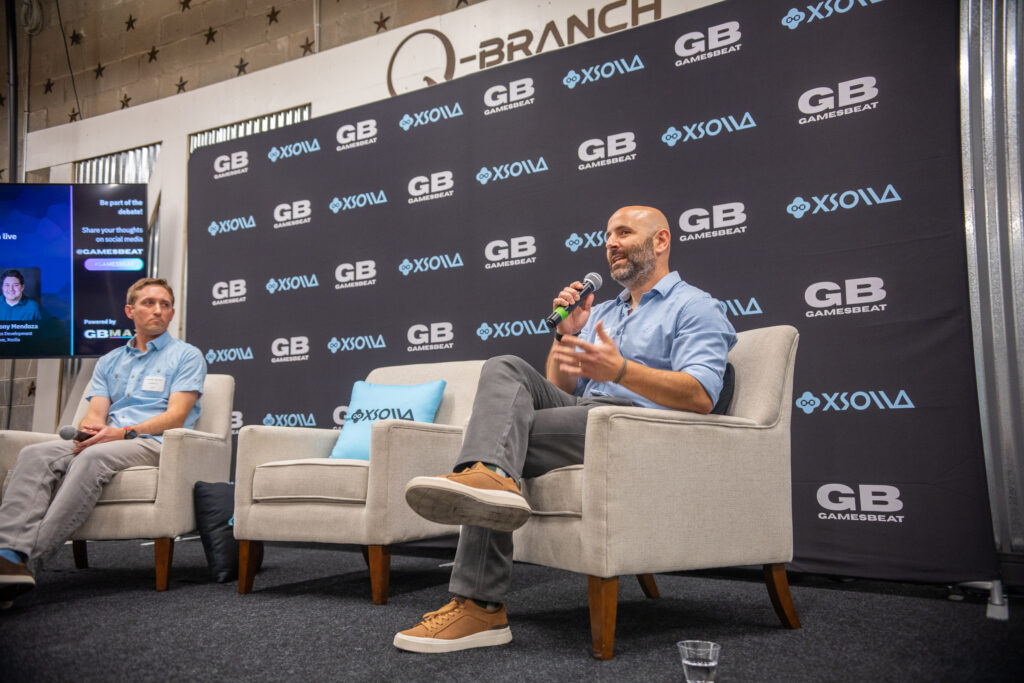
The second debate of the evening was moderated by Xsolla business development executive Anthony Mendoza and featured a discussion between Zynga senior vice president of games Andrew Ice and SciPlay senior vice president of global data and analytics Shmuel Ben-Meleh on the topic of studio size and structure and their impact on live ops.
As a representative of Zynga, which employs several thousand staff across its global portfolio of studios, Ice represented the position of larger game makers in the debate, although he pointed out that SciPlay’s scale is considerable, with the latter company employing nearly 1,000 staff.
Mendoza kicked off the discussion with a question about user acquisition, asking both debaters about the role of cross-promotion within their companies’ portfolios. Ice described cross-promotion as a “nice-to-have,” but said it is not the backbone of Zynga’s UA strategy.
“One of the big changes that we’ve made at Zynga internally over the last several years is actually to bring marketing from being a centralized organization to being wholly within the studios,” Ice said during the debate. “Today, for all of the games that I run, I also run our entire marketing teams.”
One area where Ice and Ben-Meleh disagreed was on the topic of cannibalization between games in a studio’s portfolio. Ice said that he believed cannibalization is “super overrated,” but Ben-Meleh described it as real and potentially risky, particularly in today’s UA environment.
“I see companies that find themselves acquiring the same player over and over again, and paying over and over again, without seeing any incremental revenue or impact over their portfolio,” Ben-Meleh said. “That’s the place where you need to be very careful and manage it correctly.”