

Video games are taking over the world — but the majority of players don’t identify as gamers.
Today, October 27, Publicis Media and the gaming marketing tech company Livewire published their “Power in Play” report, an analysis of the culture and business of gaming in 2025. Between August and September, the two companies polled 2,400 respondents across the U.S., United Kingdom, Australia and Canada about their gaming activity this year — and the results showed a significant ongoing shift in the culture and demographics of gaming. As of 2025, the majority of respondents no longer view themselves as gamers, despite playing regularly.
“My hope is that, from reading this, people will understand that gaming isn’t just about a stereotypical gamer, and that there’s also different variations of gamers,” said Publicis Media head of gaming Samantha Lim in an interview with GamesBeat. “Through this, people can start to open the aperture of what gaming can offer, and who gaming can reach.”
Ahead of the publication of Livewire and Publicis Media’s report, GamesBeat received a sneak preview of the findings. Here are some of the key takeaways.
Video game players largely prefer to identify with terms other than “gamer”
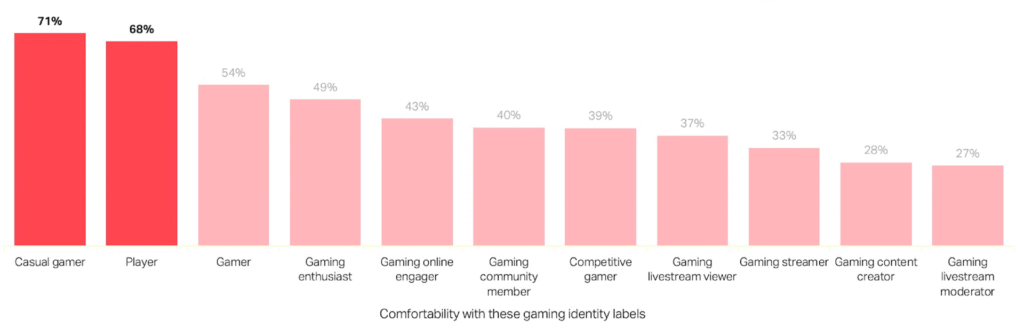
Livewire and Publicis Media’s report found that the most popular identity labels used by frequent video game players were “casual gamer” and simply “player.” The term “gamer” was significantly less popular. 64 percent of respondents who game at least once a week do not strongly identify with the gamer label, per the report.
The decline of the dedicated “gamer” label reflects some gaming industry observers’ belief that brands that specifically target the core gamer demographic with their advertising and marketing campaigns risk missing out on the opportunity to reach a much wider audience through games, including individuals who regularly play games but don’t think of themselves as gamers.
“Even those who are in console or PC games, those AAA games, are also playing on mobile devices that a lot of people might have turned their nose up on, because they feel like that’s not gaming,” Lim said. “But in reality, we’re seeing that people are playing across lots of devices, and that it is a broader audience than just the AAA titles, and so there is more room and opportunity to be able to reach audiences in different places.”
Players’ gaming habits are similar regardless of how they identify
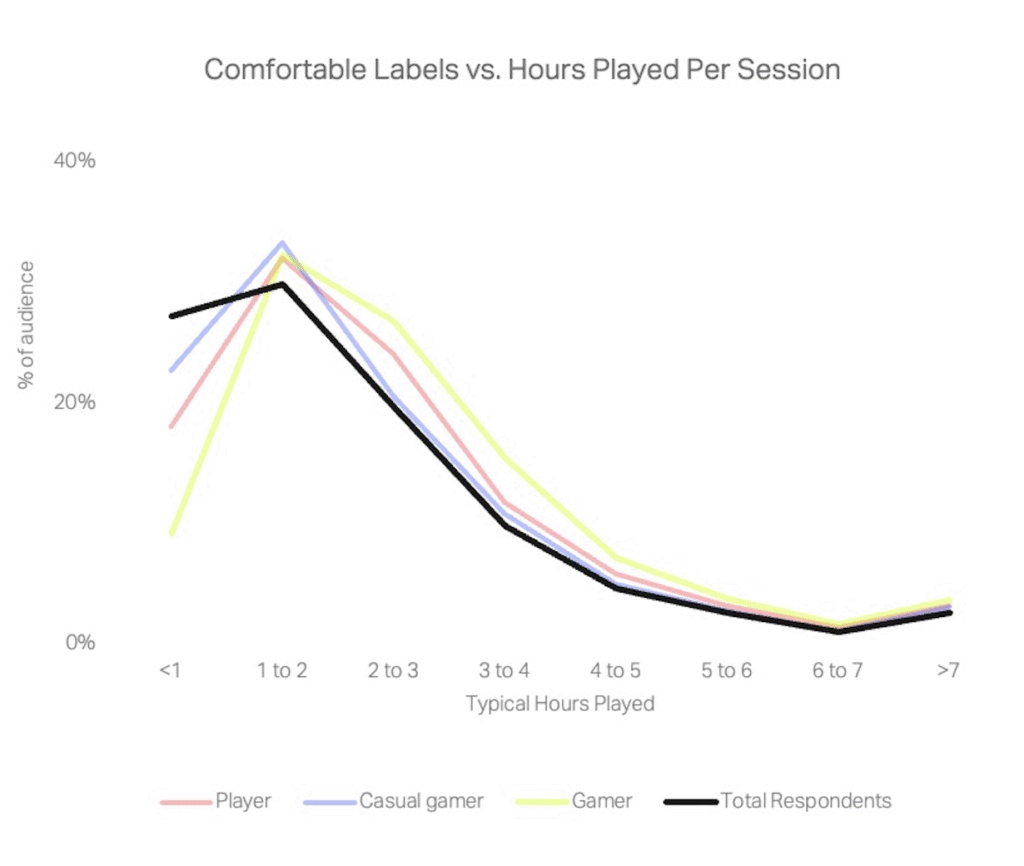
The decline of “gamer” as an identity label does not mean video games themselves are getting any less popular. The report found that respondents demonstrated similar levels of gaming activity regardless of the specific term they identified with most, with the majority playing between one and two hours. In other words, people are still playing as much as ever; they’re just not thinking of themselves as “gamers” while doing so.
“Everyone’s identifying as a player — as they probably should, because we’ve moved on with gaming audiences,” said Livewire global co-CEO Fiona Mellor in an interview with GamesBeat. “They’re mass audiences now.”
Gaming is (mostly) recession-proof
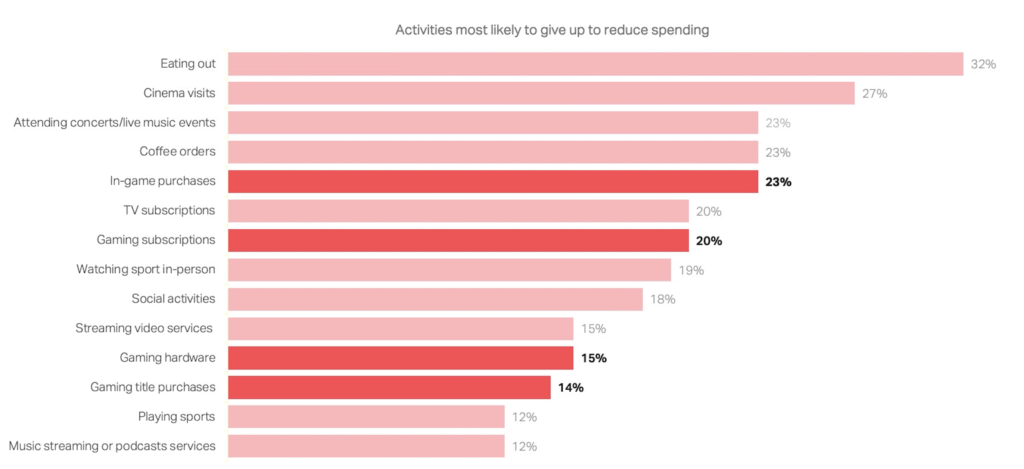
Some economists are increasingly anticipating a global recession, although reports are mixed about exactly what shape it might take. Regardless, there is a general sense in the air that the economy is teetering on the brink of something, spurring Livewire and Publicis Media to ask respondents about how their spending on games might change during a financial downturn. The results were encouraging — both for gaming companies and brands looking to reach consumers through games. Across the board, respondents said they were more likely to cut back on activities like eating out, going to the movies or buying coffee than on purchasing games or gaming hardware.
Not all aspects of gaming are as recession-proof as others. 23 percent of respondents said they would likely cut back on in-game purchases during a potential recession — the same proportion that said they would cut live music and coffee from their budgets.
“It was encouraging to see that in tough economic times, when somebody’s looking to save money, games are still a priority for them,” Mellor said. “They might cut out going out to other entertainment events, but they’re seeing this as their escapism — as their way to cope.”