

In a new blog post, Epic Games is praising recent improvements to Apple’s iOS install flow for third-party app stores in Europe while warning that the tech giant is still failing to comply fully with the EU’s Digital Markets Act (DMA).
According to Epic, Apple’s July iOS 18.6 update cut the process of installing an alternative store, such as the Epic Games Store, from 15 steps down to just six. The update also removed what Epic calls “scare screens” and misleading warnings that previously discouraged players from completing installs. Epic said the result has been a dramatic 60% decrease in player drop-off when trying to add the Epic Games Store on iPhones.
Before the changes, Epic estimated that about 65% of users abandoned the process due to Apple’s confusing design. That number has now fallen to around 25% and continues trending downward as more players upgrade to iOS 18.6. For the first time, Epic says, iOS install success rates for its store are nearing those seen on Windows and Mac.
Still, the Fortnite maker argues that Apple is undermining competition in other ways. Epic points to Apple’s controversial Core Technology Fee, which charges developers €0.50 per annual install beyond one million installs, as well as restrictions on developers who work with competing stores. Epic also criticized Apple’s notarization and approval requirements for outside apps, calling them anticompetitive because they give Apple power to dictate product design decisions.
“These Apple policies are unlawful and stand in stark contrast to the operation of Apple’s own Mac platform, which does none of these things,” an Epic spokesperson said in a prepared blog post.
The company says that because of Apple’s fees and restrictions, far fewer mobile games are being distributed through the Epic Games Store on iOS compared to its Android version.
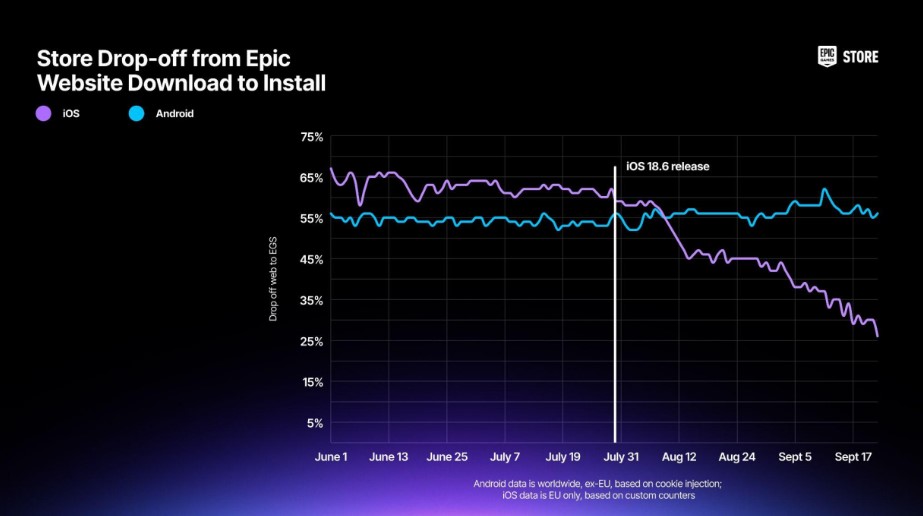
And while Apple has taken steps after pressure from the European Commission, Epic claims Google is still in violation of the DMA. Google’s Android install process involves 12 steps, a “scare screen” warning that outside apps “may be harmful,” and what’s called deceptive user experience design. Epic says this sabotages install attempts more than 50% of the time. All of this connects back to the landmark Google vs. Epic court cases.
The DMA, which came into force in 2023, was designed to curb the power of “gatekeeper” platforms like Apple and Google, forcing them to allow fairer competition and opening app distribution. Epic has long been one of the most vocal challengers of the app store status quo, and its public critique signals that the battle over compliance is far from over.