
Deadhaus Sonata is coming to early access soon on Steam as a cooperative action RPG from Denis Dyack’s Apocalypse Studios.
In an exclusive interview with GamesBeat, Dyack said you can wishlist the game, where the undead fight the living, and you can expect it to come out via Steam early access in 2026. It’s a game that puts players at the center and uses novel game design concepts. Instead of epic loot drops and seasons, you can play with items that carry their own history and thereby become more valuable over time.
Dyack — known for games like Blood Omen: Legacy of Kain, Eternal Darkness and Too Human — said players will take the role of undead gothic champions from the House of the Dead and wage war against the living across the dark fantasy world of Malorum.
It’s a passion project that has been in the works for a decade so far with a team of less than 10 people.
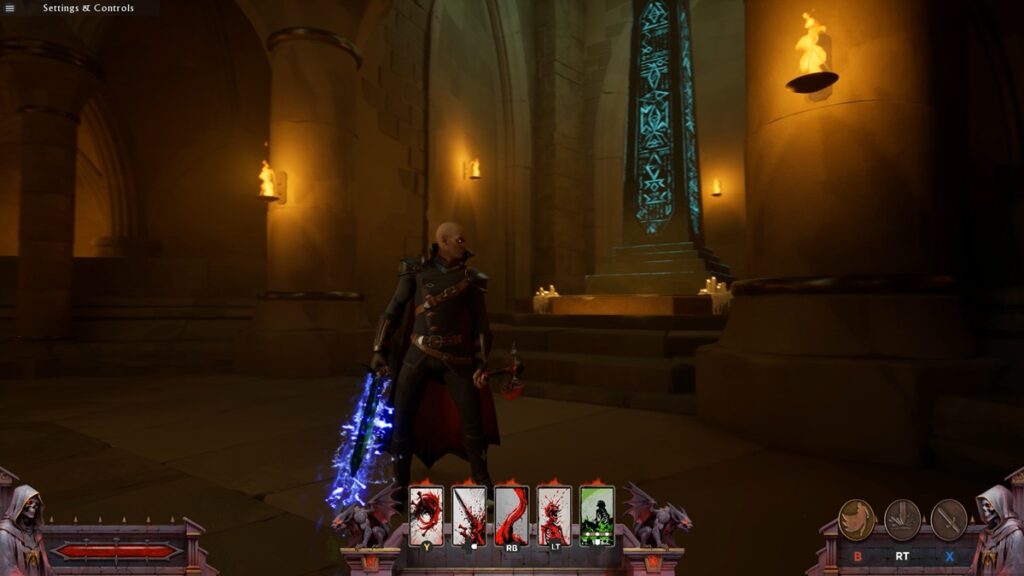
The gameplay in the trailer shows how you can play the third-person game as an undead vampire with superhuman speed, spellcasting and combat abilities. Players can unlock cards through quests and combat that allow you to meld abilities. You can evolve.
As an undead warrior, you are not visiting the world. You are bound to it. Undead forms evolve over time, shaping how you fight, move and exist within the realm. As vampire, you can feed and grow stronger and unlock supernatural powers.
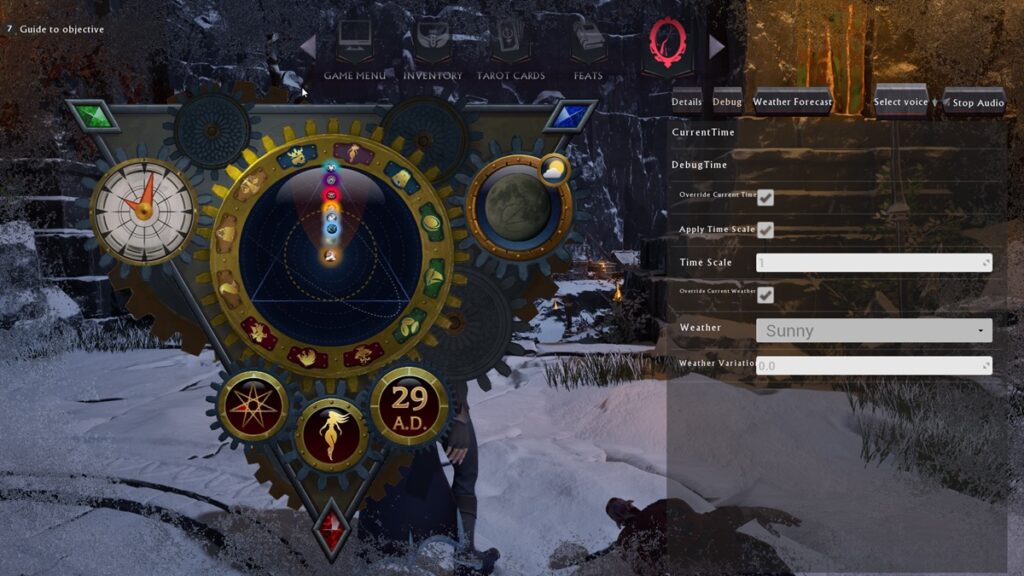
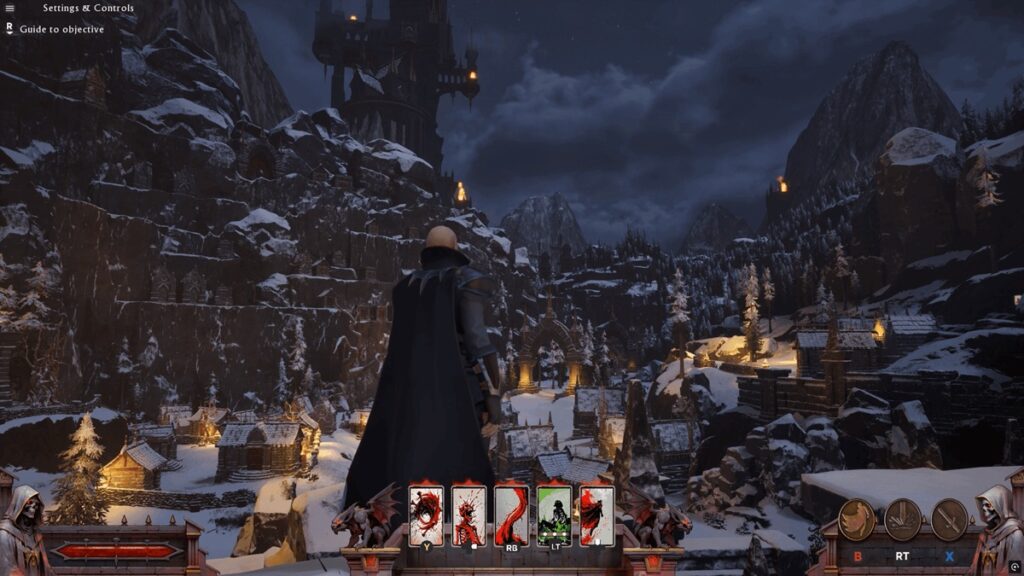
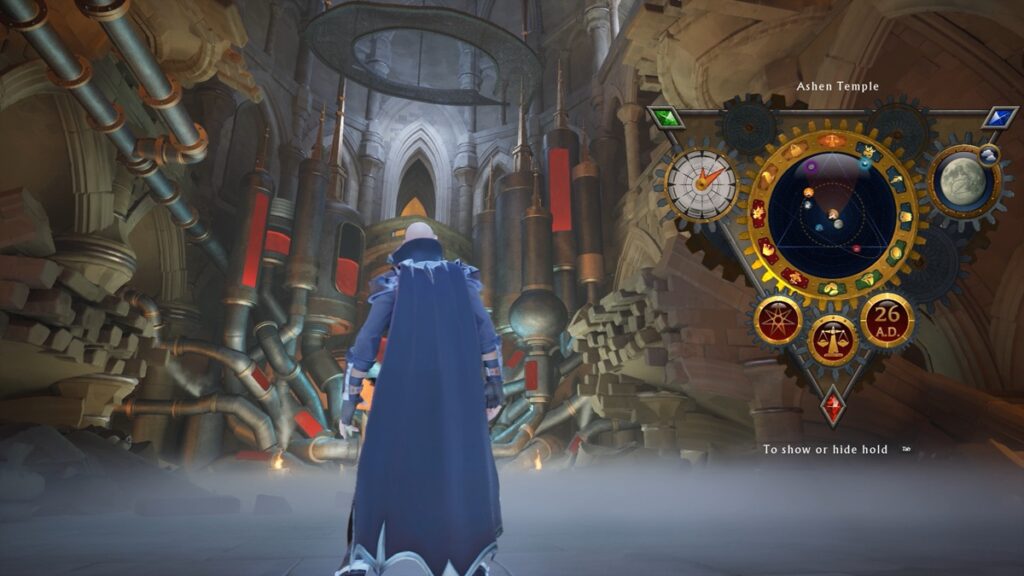
The world is governed by a celestial clock. Time moves forward, seasons shift. Enemies, events and opportunities change as the world progresses, making the realm seem alive an reactive. The land of Malorum has been shattered by divine war and corruption. There are haunted fortresses, forgotten kingdoms and ruins shaped by ancient history. Nothing is as it appears, and every discovery reveals new layers of lore.
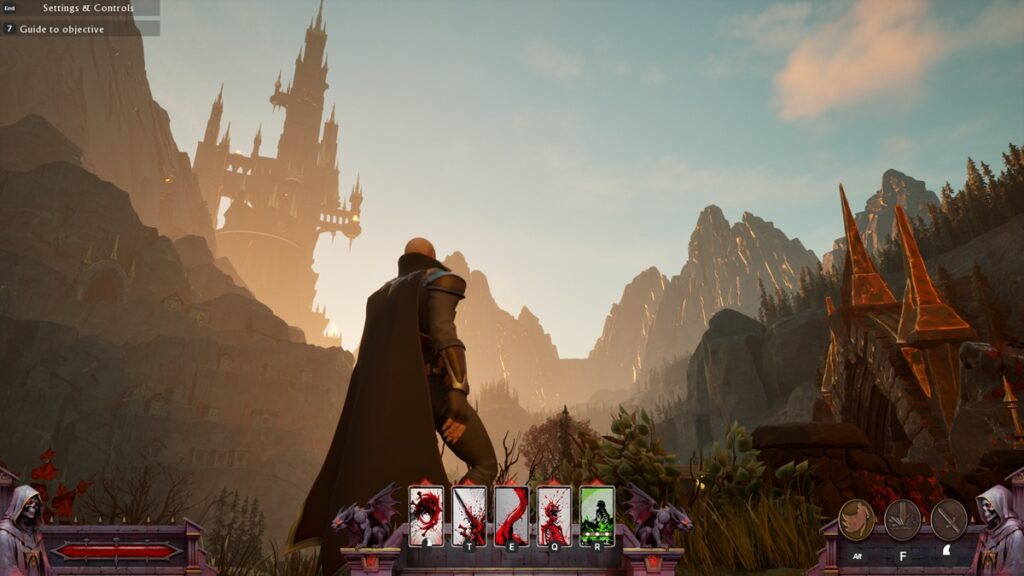
The game has over 15 hours of voiceover by professional actors to bring the world to life, with a story woven into its systems, progression and player choice. It’s a rich world, with psychological depth and interconnected lore.
There’s no power treadmill. Progression is deliberate. Power is earned through mastery and commitment, not resets or random spikes. Builds are chosen, not rolled. Playing is crafting. History is currency. Every reward reflects what you have done, not chance. Your loadout tells the story. Your gear is sentient. You can play solo or in co-op mode.
In the narrative-driven game, your choices shape your legend. Feed to grow stronger, master powerful classes, and carve your path solo or in co-op through a dark realm filled with secrets. Powered by Unreal Engine 5, the game enters its reawakening phase as development continues through pre-alpha.
History and philosophy
Dyack first announced Deadhaus Sonata back in 2019, and the game has been in development through both the beginning and the end of the pandemic.
Dyack said that many game companies have made RPGs based on casino mechanics, where repetitive actions such as defeating enemies will eventually yield rare epic item drops for players. It’s like playing a slot machine in a casino where you await the jackpot. Free-to-play games have adopted this model, without actually creeping into gambling.
“It is a fundamentally different way of thinking about video games, actually, and it goes beyond that. So when you’re playing undead, you kill enemies, and you hope for that 1% loot drop to get that epic drop,” he said. “When you think about that mechanic and you analyze it, it is literally a casino mechanic. It’s like playing a One Armed Bandit. You continually kill enemies and hope for that drop. So imagine we come up with a fundamentally new system of thinking about loot and item value.”
Dyack believes gamers have tired of these mechanics and feel fatigue from the grind. But in what Dyack calls “quantum mechanics,” Deadhaus Sonata integrates player histories and rewards them for high engagement with the game. And that in turn defines the gameplay and the gaming world.
Dyack noted that Marcus Aurelius famously wrote, “What we do in life echoes in eternity.” His team created Deadhaus Sonata with these very principles.
Each weapon in Deadhaus Sonata is uniquely based on history.
“Playing is crafting, and history is currency,” meaning players are changing the world by playing. The history is meaningful for gamers, representing their memories and exploits in the game.
Gamers no longer have to compete over the same weapons, as there is no such thing. Developers no longer have to quantitatively ease new epic items into the system every season to maintain engagement, as gamers create them through actions. It is a system that naturally reflects the world as we know it. Players can have more reason to return to the game as their actions help make the world.
Quantum mechanics, or you are your history
Dyack said that if you think about quantum mechanics and our most current understanding of the known universe, when you look at Einstein’s theory of relativity, the whole idea of 3D objects moving through time and space has been outdated.
“The best way to describe our universe is through our history. So Dean, all the times that we’ve talked over the last 20 years, all the articles that you’ve written, all the conferences you go to, those best define you. Same with us. All the games we’ve worked on, all the tech we’ve used, all of us working on Legacy of Kain and Eternal Darkness, all of these things defeine me,” Dyack said.
“If we want to describe us talking about this right now, the best way to describe it is we are our history,” Dyack said. “We are our history. So now imagine we create a game where the fundamental mechanics are based upon that notion.”
Dyack said that if you have a sword and kill 100 enemies, and then he passes that sword on to me, and I kill a god and 10,000 enemies, then we use its history to determine the value of that weapon.
“Fundamentally, that changes everything. Now, since everything’s based on our history, everything in the game is unique. Everything is based upon what you do. And now we’re not doing things like they do traditionally in a game where you create a spreadsheet and say, here’s our epic set [of loot items], and we’re going to make 1,000 of those, and people can earn them by 1% loot drops.”
He said, instead of that, what you do in the game determines the value of the item.
If you want to buy a samurai sword by Miyamoto Musashi, you don’t buy the sword because it’s worth $1 million on its own. It’s well made, but if it’s Miyamoto’s sword, then he won 50 duels to the death with it. So the value is in the history, and that’s how it is in real life.
“Now, imagine that sword gets used and used, and it upgrades so much and it is sent to you, and then it starts telling stories of how it was played with years ago,” Dyack said. ” So now what we’ve done is we’ve created a social media network where we’re using an AI stack to tell stories that are deterministic, based upon what you think.”
He noted that in games with seasons, like Diablo, they introduce a new epic set of items each season. With each season, the old items are devalued. Then you have to grind for the new set of items. But gamers hate grinding, Dyack said.
With Deadhaus Sonata, there won’t be new seasons. The game will preserve the history of the items and how a sword might have been used to slay 10,000 soldiers.
“This is a fundamentally new way of thinking. And so now there’s no longer new tables,” Dyack said. “And what we like to say is playing is crafting, and history is currency, and as you play the game, imagine that everything you do affects everything.”
Examples of game possibilities
As an example, a sword can be so be made more famous because it belonged to a very special player, and it might become more valuable. Over time, it gets more history and can become more powerful.
“The thing to start thinking about is now imagine this in the entire context beyond the sword. Imagine it affects everything. So everything you do affects anything,” Dyack said. “Now let’s take Legacy of Kain. When I created Legacy of Kain (30 years ago), we had these story points, and we’d say, ‘I’m going to write a clip for this part describing the terrain, the story, where we are, and this is all linear.”
He added, “But now abstract that to now, where we write in a certain way for a certain character. So now imagine we have all this big data, and we have all of these things that are stored history, and now we run it through archetypes.”
There are unions of archetypes, like the wizard or the king or the lover or the hero, he said.
“You want to put in these character archetypes and that changes what characters say. And so now, instead of writing the conversation, I can now generate dialogue that’s based upon an ever-changing world. And this whole concept came from a conversation that happened a long time ago.”
He added, “If you take these technologies and combine them in the way I’m talking about, imagine a million people creating stories, and then now we’re getting into theory of the Shakespearean plays, where Shakespeare wasn’t a single author. The entire trip, imagine a million people telling the story. Maybe we can create more direction so it becomes a platform.”
A long tech journey
When the company created Apocalypse Studios, the team started looking at the technology. The team started with Amazon’s Lumberjack game engine, which was eventually open sourced as O3DE. But Apocalypse Studios wound up with something very different in terms of the game engine. The studio sought funding at various points but Dyack found that to be extremely difficult. So the project was on and off throughout its history, and the current version has been in the works for about 1.5 years.
The game is built in the Unreal Engine, and the tech includes cloud-based tech stacks and user-generated content. The team also contemplated using blockchain tech, but it also backed away from that.
And Apocalypse Studios leaned into fan contributions.
“What if we created a platform where an entire community could create something like this. That’s the goal. So it’s all based upon all these different technologies combining in ways that are greater than the sum of the parts,” Dyack said.
Dyack added, “We have a 10-year story arc that we’re going to write as tradition, like we’ve always done. Then there is a user-generated content part. At Deadhaus.com, Apocalypse has 15 hours of traditional stories with radio plays, fully voiced by actors.”
“The community liked it so much they started writing their own radio plays,” Dyack said. “So we have our stories that are traditionally done. Now we have people creating UGC already before the game’s out. And so now we can do all these things that I told you, where gamers are playing and making stories.”
So imagine you go out into the world you found a tower, Dean’s Dark Tower. Every time people come back to that tower, they’ll be ask, ‘Who’s Dean and why did he found it? All of those histories that are behind it. They will be able to look it up. Or if there’s a town crier that you’re walking by, and the town crier knows that we played together one time, we say, ‘Hey, Dean, you know what Denis did last week?’ And it’ll tell you.”
He said, “Imagine a deterministic approach, where everything you do defines the value. So if you do it together with a partner, maybe it changes the value of the item. If you do it doing a full move, it’ll change if you do it single player, multiplayer, however you want to tackle it. Now, imagine all these vectors. Gamers can create. It’s basically a completely new field of thinking about game design.”