
CYGMA, the Cyprus Game Developers Association, has been established to represent the country’s game developer industry.
The founders of the association include Wargaming, Gaijin Entertainment, Owlcat Games, My.Games, Helio Games, and GDCy, all of whom have an established presence in Cyprus.
Together, the founding members bring broad experience across PC, console, mobile, and casual game development, as well as long-term studio operations in international markets. The board also includes GDCy, the largest game development community in Cyprus, whose experience in connecting developers and supporting knowledge-sharing will be used to further strengthen the local ecosystem.
Expats from Russia, Ukraine, and other parts of Eastern Europe have congregated in Cyprus over the years — with the primary attraction being not just low taxes but a stable business climate.
Cyprus is one of the last few EU countries without a formal game development association or a dedicated booth at Gamescom. And so some game leaders got together to create one.
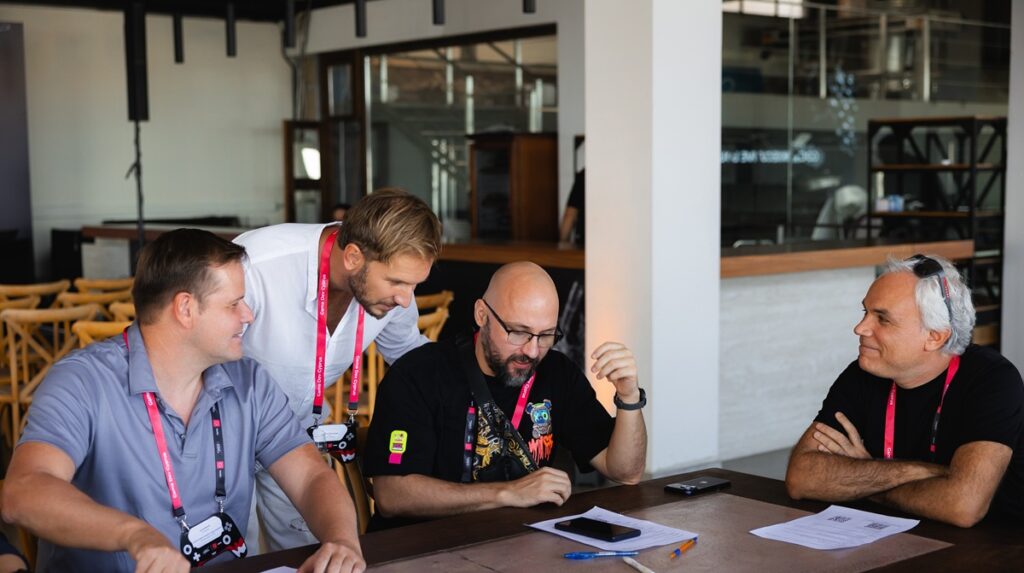
“We managed to make it happen just because we decided it had taken too long,” said Andrey Ivashentsev, cofounder of GDCy and general manager of CYGMA, in an interview with GamesBeat. “Nobody was doing anything in Cyprus so we collaborated together.”
In the past few years, it’s been clear that Cyprus has a big industry in games and the industry should be present when members of the government or European regulators speaker about matters affecting games, Ivashentsev said.
“GDCy is the heart of game development in Cyprus, and we arranged for CYGMA to become the voice of game development,” Ivashentsev said.
Cyprus gaming snapshot
CYGMA’s initial market snapshot, compiled using data from AppMagic and publicly available sources, indicates that more than 300 studios currently operate from Cyprus, collectively releasing over 550 titles in 2025 and generating an estimated $1.6 billion in annual game revenue. While the sector has expanded steadily over recent years, this scale has remained largely under the international radar.
CYGMA’s mission is to support collaboration within the game development community, encourage knowledge-sharing, represent the collective interests of game creators, and help shape a sustainable industry where studios can build, grow, and succeed. A key part of this mission is to highlight Cyprus as a trusted, stable, and inspiring home for game development worldwide.
The association is governed by a board representing its founding members and the broader industry ecosystem. The Board of Directors includes Anton Yudintsev (Gaijin Entertainment), Ilya Karpinskiy (Owlcat Games), Sergey Orlovskiy (Helio Games), Roman Zanin (Wargaming), Elena Grigorian (My.Games), and Andrey Ivashentsev (GDCy), with George Mountis (Chrysostomides & Co LLC) serving as Board Secretary.
Yudincev, founder of Gaijin Entertainment, said in an interview with GamesBeat that there are thousands of game developers in Cyprus and a few hundred game development studios generating billions in total revenue.
“Cyprus is one of the biggest European countries in terms of amount of studios, numbers of people, and revenues. For some reason, historically, Cyprus is not even on the map of the European gaming industry,” Yudincev said.
CYGMA will operate through specialized committees focused on increasing the international visibility of Cyprus-based game developers, improving the regulatory and legal framework affecting studios, and strengthening collaboration between the game industry and universities to support education, research, and talent development.
In addition, the association aims to support sustainable studio growth by facilitating dialogue and connections between game developers and major gaming platforms, financial institutions, and relevant government bodies, while promoting responsible development practices and adherence to high professional and regulatory standards.
With its formal establishment, CYGMA establishes itself as the unified voice of the game development industry in Cyprus, shaping the conditions for sustainable growth, international cooperation, and the country’s recognition as a trusted home for game development.
Game community origins
Cyprus has been viewed as a tax haven for decades. But when it joined the European Union in 2004, it changed its tax policies. The northern part of the island is claimed by Turkey.
One of the reasons why Eastern Europeans like the country is because of its widespread Eastern Orthodox religion. It also has sunny weather. There is also freedom of movement for European Union citizens. Ivashentsev said it’s a small enough place where you could be snowboarding in the mountains and less than an hour later be sitting on the beach.
The gaming roots go back to when Wargaming relocated from Belarus to Cyprus for some of its headquarters functions in 2013. Wargaming remains the biggest company in Cyprus, even though many of its people are spread out throughout Eastern Europe and the world.
But many other companies have sprouted as the expat population has grown because of geopolitical matters like the Ukraine-Russia war.
“There is still a perception that Cyprus is only a tax haven. Maybe it was true 20 years ago, but a long time now, it’s not,” Yudincev said.
Gaijin started out in Hungary and established its division in Cyprus in 2018. It moved a large number of people to the island. The company’s back office workers are all in Cyprus, and the firm has three game development studios in the country.
Ilya Karpinsky, CEO of Owlcat Games, said his firm started a Cyprus office in 2017 and started relocating people in 2021. Owlcast also has a lot of people in Armenia. There are still tax benefits for having more high-paid people in Cyprus, Karpinsky said.
Cyprus has so many game developers now there is mobility between the companies. Overall, that’s beneficial for both the companies and the employees, Ivashentsev said.
Cyprus hosts a few conferences a year related to games, including GDCy, which is targeted at executives. There are venture funds like The Games Fund that invest in Cyprus companies, with the occasional family office. While the gaming ecosystem is strong in the country, parts of the ecosystem have to come from interaction with the rest of the globe.
One of the challenges is that local universities are not yet turning out game developers who can be easily hired.
I asked if there were any California game developers who migrated to Cyprus. After all, California is likely many times more expensive than Cyprus for cost of living. But those who do come appear to be the occasional U.S. top management executives.
“We compete for many companies with countries like France and Germany, but we have some advantages. Cyprus is easier to relocate to compared to others, but Cyprus is not part of the “no shengen,” zone, where people can pass between countries with internal border checks.
“One idea for CYGMA is that we are planning to work with universities,” said Ivashentsev. “We are thinking about a 360-degree system, where we first motivate children to think about game development and inspire them to make this a part of their life strategy.”
And some of the real point of the association is to give back to individuals, Ivashentsev said.