
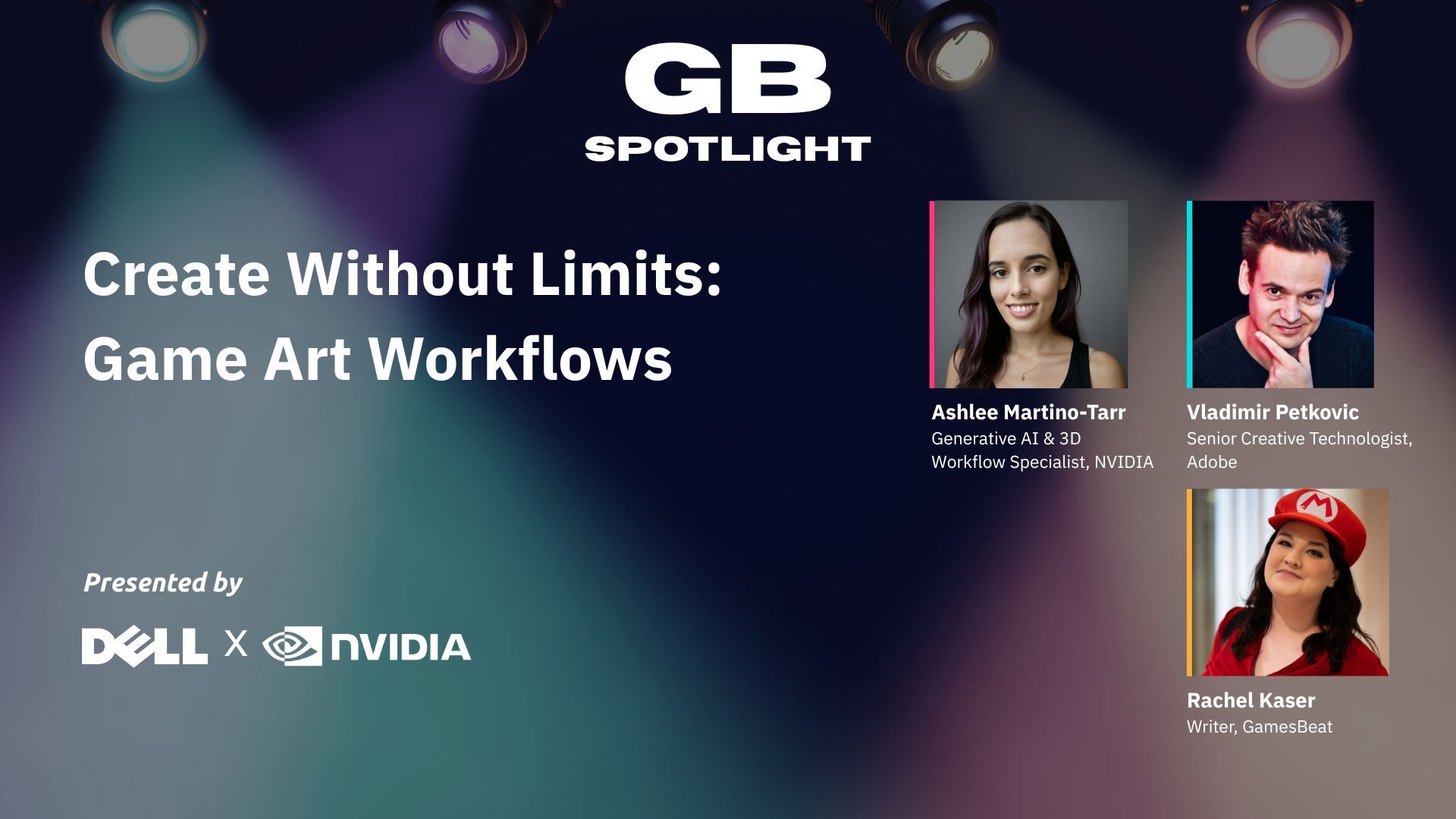
Presented by Dell and Nvidia.
Agentic AI is reshaping creative workflows across game development as teams adopt new tools while maintaining artistic intent.
In a recent GamesBeat-hosted webinar, Create Without Limits, leaders from Adobe and Nvidia explored how AI is being integrated into modern art pipelines to accelerate production and iteration.
Featuring demos from Ashlee Martino-Tarr and Vladimir Petkovic, the session showed how studios can move faster while maintaining control over style, authorship, and creative direction, moderated by Rachel Kaser of GamesBeat.
Accelerating iteration without losing control
Martino-Tarr and Petkovic emphasized that these tools are not meant to replace creatives, but to extend their capabilities and bring more ideas to life.
“So many people have great ideas, and there are always areas where you have to sacrifice,” Martino-Tarr said. “When you are limited on time, you have to cut down on what you can explore.”
As shown in the demos, these tools reduce low-level tweaking, repetitive changes, and some design work, allowing teams to iterate more quickly and explore a wider range of concepts. That increased flexibility points to a more collaborative and efficient creative process.
“We have shown an exciting future here together,” Petkovic said. “We can fine-tune this process until we see something amazing.”
Watch the webinar here:
Inside the webinar: what you can expect
The webinar — moderated by GamesBeat’s Rachel Kaser — explores how game studios are integrating AI into art workflows while maintaining creative control and production efficiency.
Speakers include:
- Ashlee Martino-Tarr (Nvidia): Workflow specialist specializing in 3D modeling, surfacing, and lighting for production pipelines. She focuses on using AI-powered tools to accelerate asset creation and iteration while maintaining quality and creative control.
- Vladimir Petkovic (Adobe): Senior creative technologist, where he develops 3D and generative AI pipelines for creative production. With over 20 years of experience, he has collaborated with organizations like NASA and the Smithsonian Institution on immersive, story-driven work.
The session highlights a broader shift across the industry as AI-powered art workflows move from experimentation to becoming a core part of game development. As production demands grow and timelines tighten, studios that integrate these tools while preserving artistic intent will be better positioned to scale creativity.
This post is partner content paid for by the sponsor and created in collaboration with GamesBeat Studio—our custom platform for branded thought leadership. It was produced independently of the GamesBeat editorial team. For more information, contact [email protected]