
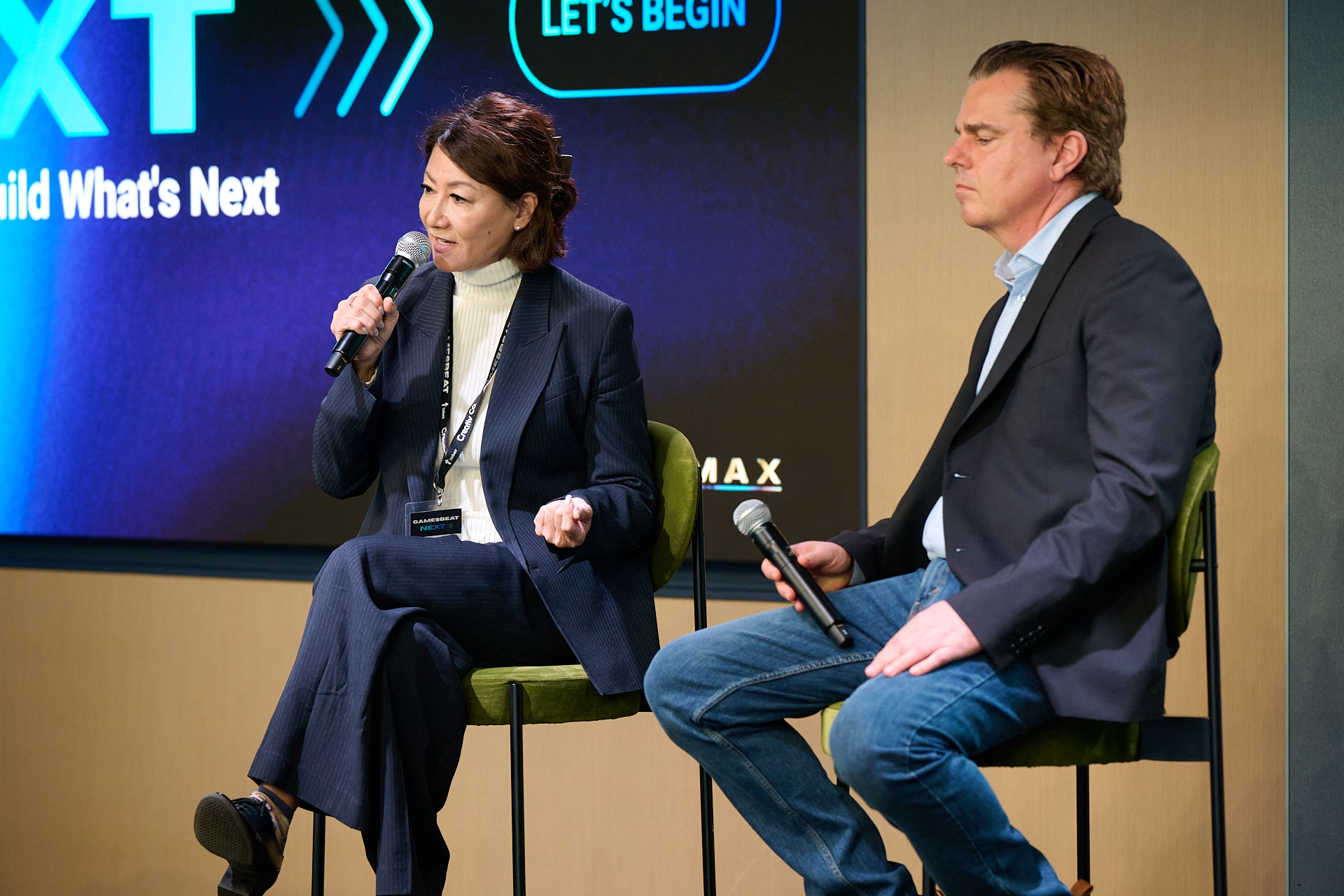
Corsair is betting that sim racing and creator gear will be the biggest factors in its next stretch of growth, CEO Thi La says. She spoke at GamesBeat Next 2026 in San Francisco in a fireside chat with Michael Metzger, managing partner at Drake Star Partners.
La, who came to Corsair 17 years ago when it’s primary focus was on DIY PC components, described Corsair’s trajectory, as it expanded its mission into designing gaming keyboards, then streaming gear through its Elgato brand and its Stream Deck control panel, then sim racing through the Fanatec and TrackRacer brands. La noted that revenue has grown from about $300 million to about $1.5 billion, and that the company remains profitable. “Our company is like a house of brands, but each one has a separate set of communities they talk to,” she said.
When Metzger inquired about her boldest move since assuming the role of CEO, La pointed to her reorganization of the company as an approach to cope with tariffs, semiconductor shortages and expensive memory. She expalined how she has utilized AI to maintain lower operating costs and pursue acquisitions to scale. “Making sure that people are open-minded is important,” she said.
La also shared her pitch to game studios on working with Corsair through the Stream Deck marketplace, where makers can upload and share control profiles. She said Star Citizen was the most downloaded profile in recent months, and that Corsair can share that kind of data with studios, build profiles for launch day and make complicated games much easier to start.
“We can basically share some of this data and say if you can incorporate some of this setup into your games for the next version, then the adoption will be wider,” she said. She said the top maker on the marketplace has passed $1 million in revenue.
As of now, sim racing is where La sees the clearest opportunity. She said the market for sim racing is growing at double digits every year yet still remains a small, scattered business.
“The market is still pretty much a cottage industry,” she said, adding that anything around sim tends to deliver a better return than other categories. Corsair is also moving into motorcycle racing, and she said the company wants partners on game titles that can be paired with its hardware.
La argued that the appeal behind simracing goes beyond the desire for fantasy. “Everyone loves to drive a super fancy car and then crash it,” she said, but she also said the skills carry over, citing Corsair employees who practiced in sims and then performed well on a real track. To make the category less intimidating for new buyers, Corsair is testing an AI-assisted shopping tool in beta. Shoppers describe what they want, and the tool renders a 3D sim rig they can rotate and take apart.
On AI integration, La explained how Corsair’s engineers often use coding tools heavily, which raises concerns about protecting intellectual property and controlling costs. She said the company runs a local workstation for internal code and data and a separate machine for web research. She urged studios to keep their data in-house. “That data should never leave your four walls,” she said. “The minute that you let that go out, you’re going to lose it.” She said Corsair moved to local computing after its spending on AI tokens grew too large to control.
La went on to describe a future in which players start with a blank-slate world and shape it themselves. “No one is going to have the same experience as I do,” she said, adding that she expects games to move in that direction.
On the topic of hardware prices, La noted that the surge in AI demand has been hurting the PC gaming market. She predicted that semiconductor supply will not settle down until 2028, when more manufacturing capacity is made available. In the short term, she said, peripherals such as keyboards and mice have risen less than other components, which gives Corsair some room to grow. She expects a wave of upgrades afterward from people who want machines capable of running local AI models. When Metzger asked whether that means gamers should expect to pay more for the next few years, La replied, “Unfortunately, until data centers settle down.”
La described a simple rule for acquisitions. Corsair builds in-house if it can do the work better and reach the market on time, she said, and buys if a deal speeds growth or fills a gap such as a sales channel. Near-term priorities are recurring revenue and expanding gaming and sim driving. She said Corsair does not sell standalone software today, though that may change next year.
La closed the conversation with some advice for studios on short-form video, which she said she now enjoys as much as playing games. “Why let someone else do it?” she said, urging developers to include video in their roadmaps.