
Cartwheel is an AI animation platform with the mission of improving the process of making 3D animated sequences in games, movies, social media and ads.
And the New York company’s founders, ex-OpenAI scientist Andrew Carr and former Google Creative Lab founder Jonathan Jarvis, said in an interview with GamesBeat that their tools can make the animation process as much as 100 times faster. The company is releasing its application programming interface shortly for this solution.
It could also make 3D animation tools more accessible to the masses who want to create their own games but are daunted by the professional training needed. The company unveiled the tech in May 2025, but now it has the results to talk about.
“We make the next generation of animation and movement tools,” Jarvis said.
The company is backed by Jeffrey Katzenberg’s WndrCo, and it’s fueled by a team of leading Pixar, Sony and Riot game veterans. In less than a year since launch, it has captured the attention of the gaming world for redefining how players create, capture, and refine motion in a flexible, directable format.
Cartwheel is making tools for professionals, but it’s also building a mini tool available for creators to make their own PC and console games. The hope is for Cartwheel to do for animation what the iPhone did for photography. And to put creative people in the driver’s seat as they dramatically accelerate their workflows, eliminate tedious tasks, free up more budget for creative exploration and take control over their final products.
The team sees Cartwheel affecting the future of animated film, anime, gaming, advertising and storyboarding, social media and more. The company has 15 employees.
Cartwheel turns video, text and large motion libraries into production-ready 3D character animations that are easy to move, edit and download directly into current workflows. Professional animators can rapidly prototype ideas in any 3D format, make major refinements or subtle tweaks using Cartwheel or their preferred 3D software, and unlike other generative tools, eliminate disruptive changes to their existing pipelines.
Animators can also access Cartwheel’s library and quickly find a motion to fit or inspire their scene, while more novice creators can swiftly generate video clips, and designers and developers can turn their character animations into files that can simply be dropped into their apps or websites.
Cartwheel’s unique formula of eliminating hours of repetitive work, and in turn, opening up time to explore more in-depth storytelling, has made the company a hotbed for some of the most respected talent across industries.
Carr, Cartwheel’s Chief Scientist and former scientist at OpenAI, built code generation for codex and ChatGPT. Jarvis, Cartwheel’s CEO and former director at Google, was a founding member of the Google Creative Lab and launched a wide array of new products and features for Google Brain, Search, Android, and Workspaces, as well as led animation studio Universal Patterns.
On the team is Neil Helm, a feature-film animator turned head of interactive animation at Cartwheel, where he leads a cross-disciplinary crew building tools to empower storytellers. During his 16-year run at Pixar, he crafted performances for award-winning films such as Up, Turning Red, Coco, and Lightyear, and served as Crowds Animation Supervisor on Toy Story 4 and Inside Out 2.
Founded in 2023, the company has raised $16.6 million to date from Craft Ventures, Jeffrey Katzenberg’s WndrCo, Ben Feder’s Tirta Ventures and Runway, and with participation from existing investors Accel, Khosla and Human Ventures.
Origins
He said animation is really important to him because it changed his life in a really big way.
He was getting out of grad school during the financial meltdown of 2008. There were no jobs, and he had a lot of student debt.
“On a whim, I decided to make an animation, like explaining how it all happened, and for whatever reason, I posted it online. It went viral overnight. It’s like the first viral animated explainer,” Jarvis said. “Somebody at Google saw it, and they called me up and they said, ‘Hey, would you like to move to New York City and work in this brand new creative team that we’re starting in house?’ I was like, ‘Yes, I would love to do that.’ I need a job.”
He worked there for a while and then decided to try a startup. He worked on an AI chatbot company, but it turned out he was six to eight years too early. He did politics for a year and then started an animation studio. He kept thinking the combo of animation and AI would lead to something promising. He teamed up with Carr, who had a similar idea.
At OpenAI, Carr worked on Codex and GitHub copilot and the first version of ChatGPT. That work was exciting, but he wanted to run a company. So he joined with Jarvis.
They figured it was key to enable AI to create animations that someone could edit into something that was exactly like what they needed. They needed to iterate with the tools. That became the vision for Cartwheel.
Generating tools
Jarvis said there are multiple buckets of what the company can do for game studios, production studios, ad agencies, creative agencies, and tech companies and robotics.
Animation through motion capture has become labor intensive, with big companies using expensive motion capture stages with lots of cameras to capture a 3D object or person from every angle.
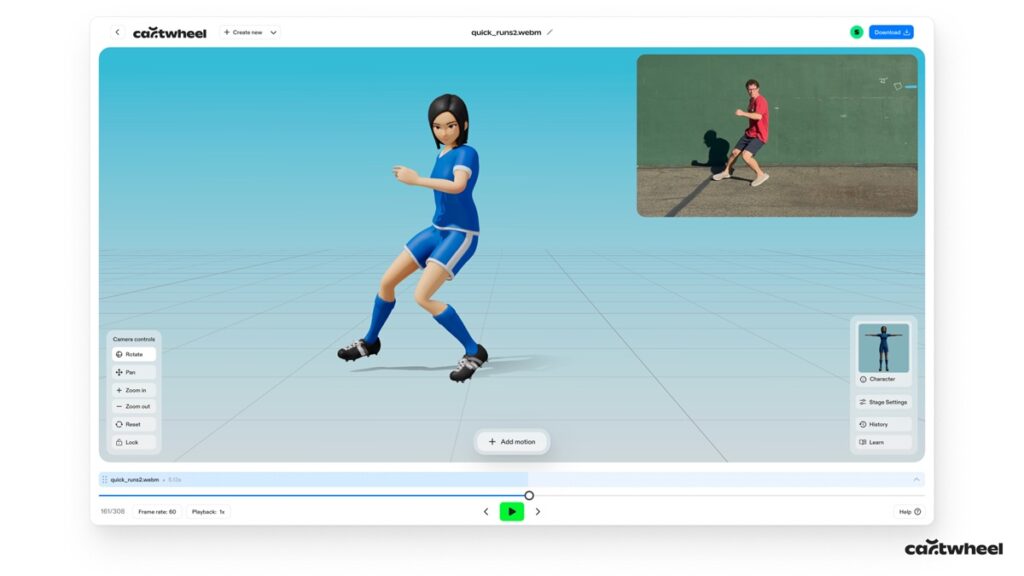
Cartwheel created a tool called AI Video Motion Capture. It allows someone to capture 3D imagery using a smartphone camera. They combine that with powerful editing tools so you can capture a performance and edit it to be what you need.
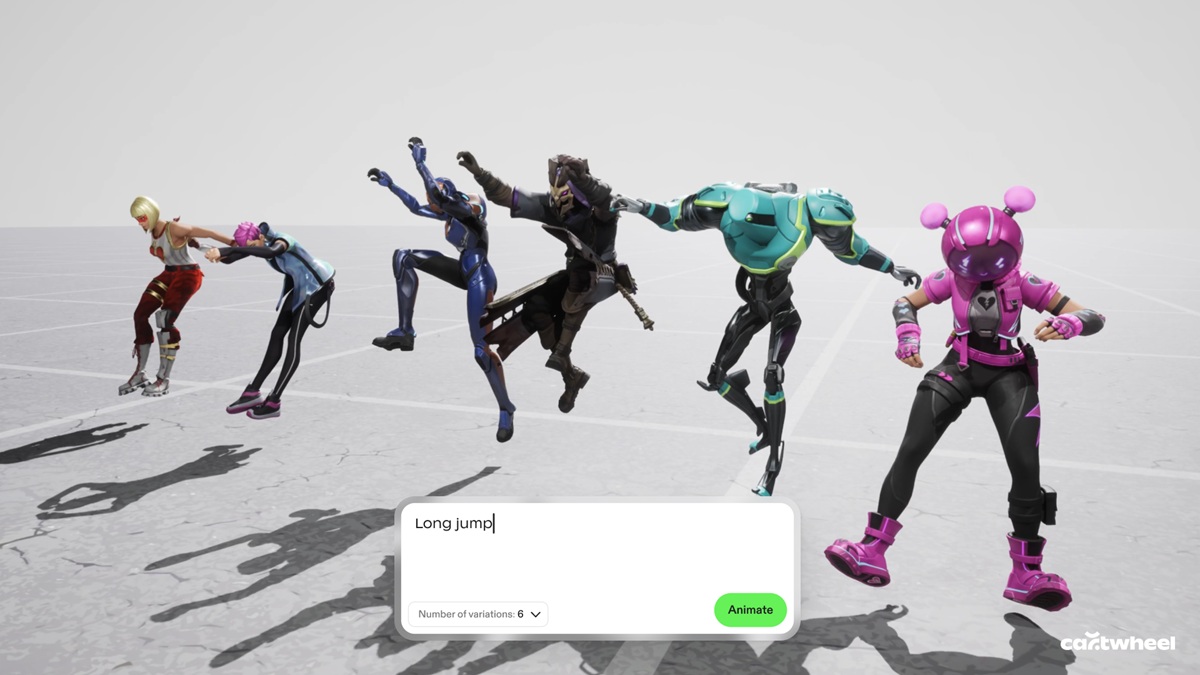
The tools can capture multiple subjects at the same time. You can use it to capture faces for a number of people at the same time. With a text-to-motion-model tool called Swing, you can type something like, “Conduct an orchestra.”
And it will generate variations of a conductor’s performance.
“We’re really leaning into this notion of motion at scale that we found particularly underserved,” Jarvis said. “We have a very, very powerful, universal retargeting solution that we call Cartographer that’s just about to come out.”
He added, “Essentially, then you can set up this character, and then you can just start puppeting it with human motion. And you can do that from the capture. You can do that from the generation, or you can do from the editing. And so this is also quite helpful in the field of robotics, where they need a lot of nonverbal communication data.”
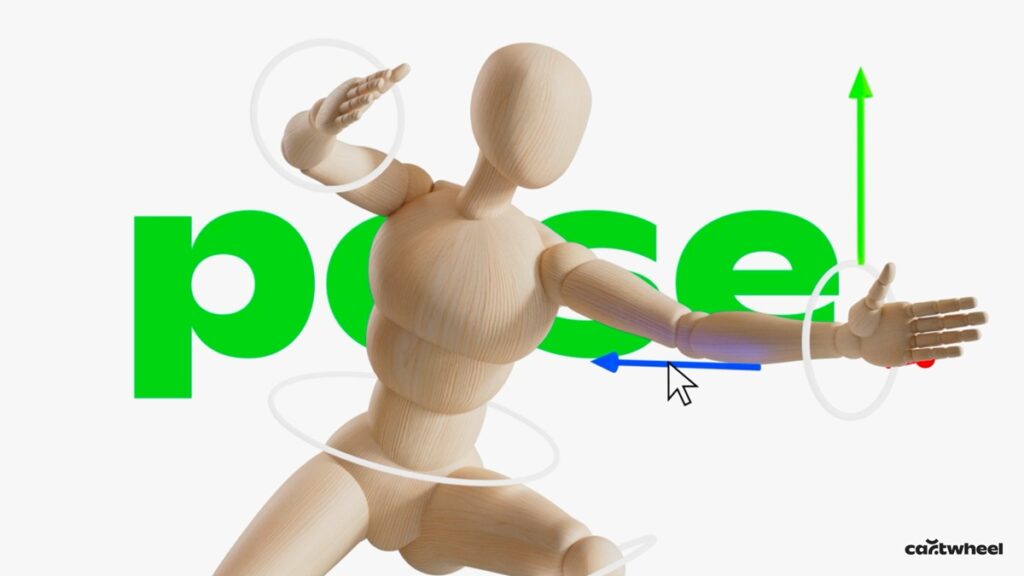
Jarvis said the ability to edit comes in the form of a model dubbed Hermes. It can take a motion, either captured or generated, and you can make edits to the motion.
“You’re actually changing hundreds or thousands of key frames with one stroke,” Jarvis said. “We think this is very powerful.”
Among the things that are possible with this tool: take some actor’s motion capture and then make them do movements that they didn’t do in a studio. Though this might seem unethical, the company can pay the actors for the use of their likeness and avoid unnecessary callbacks for trivial scene changes.
Asked if actors might object to using their bodies in some way, Jarvis said, “We deal in motion. We’re not re-creating the likenesses of other people or characters or IP. We have guardrails to prevent the generation of a character for something like that. All the data that we train our modles on is licensed and paid for. We’re not out to piss anyone off.”
The future possibilities
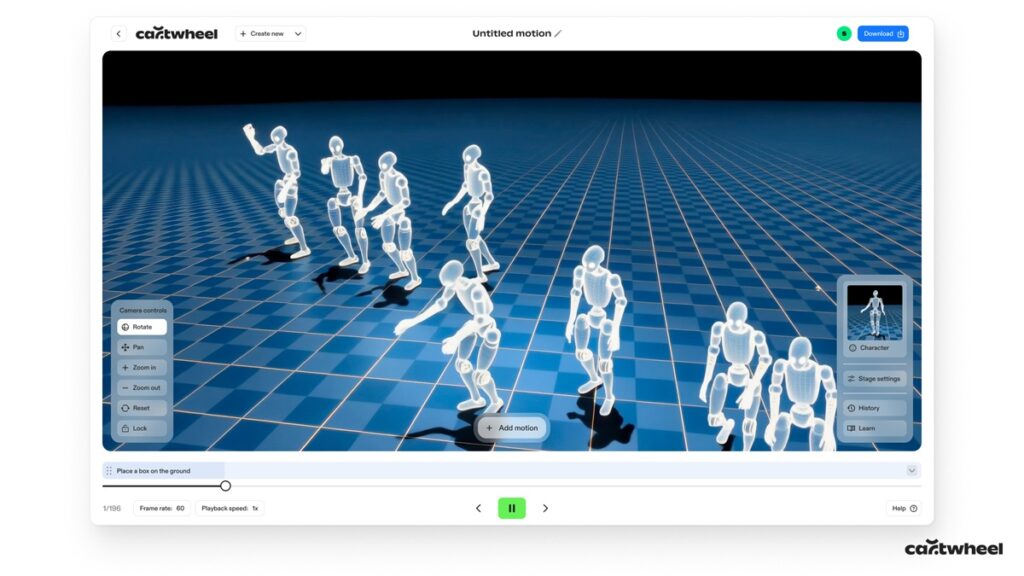
Carr sees the world moving to the ability to do continuous shoots with actors, who can work in their own homes rather than go to mocap stages. You can adjust someone’s height if they’re too short as a stunt person for a character.
For gaming, the tech works in creating motion for characters in video games, cut scenes, and cinematics in video games. Using AI to tighten the cycle of iteration can by itself result in a 40% improvement, Jarvis said.
If you compare the cost and time of doing something by hand, it could take a week to either capture or generate it. With these tools, it could be done in minutes.
“Everyone’s going to be producing a lot more. What that enables is that you can form a team with a smaller group of people, but you’ll still have these big teams doing just much, much more compelling and tremendous games,” Jarvis said.
This kind of improvement is necessary in a world of open-ended games and dynamic worlds with immersive experiences. The tools are tightly integrated with Unreal Engine.