
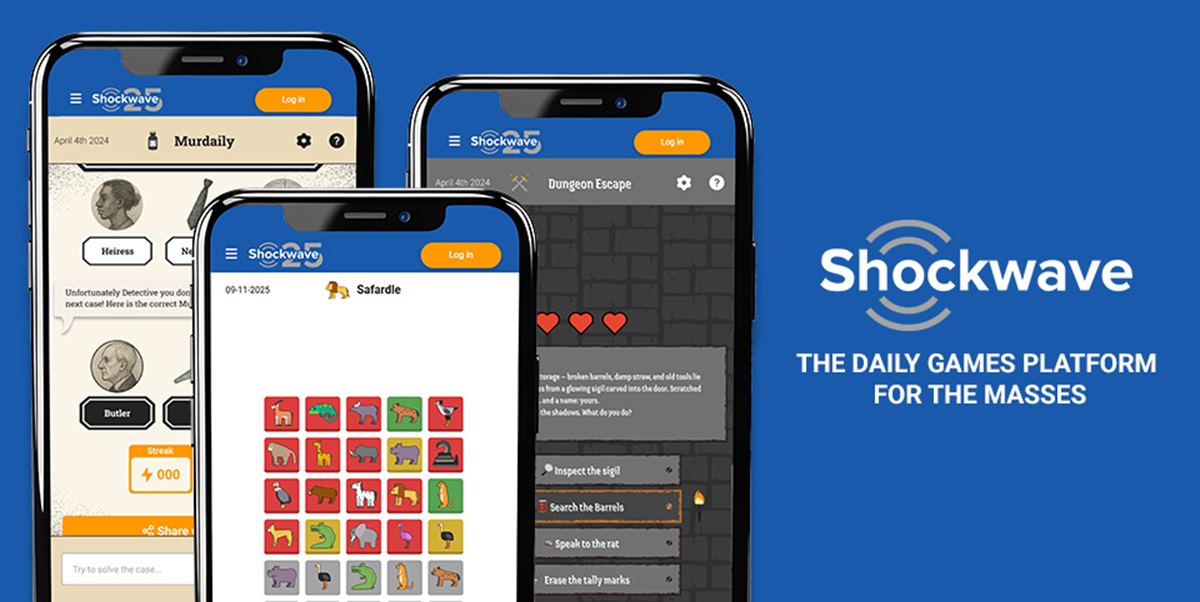
Shockwave, the iconic online gaming portal from the early internet, is back with a modern twist and a return to the idea of small daily casual games.
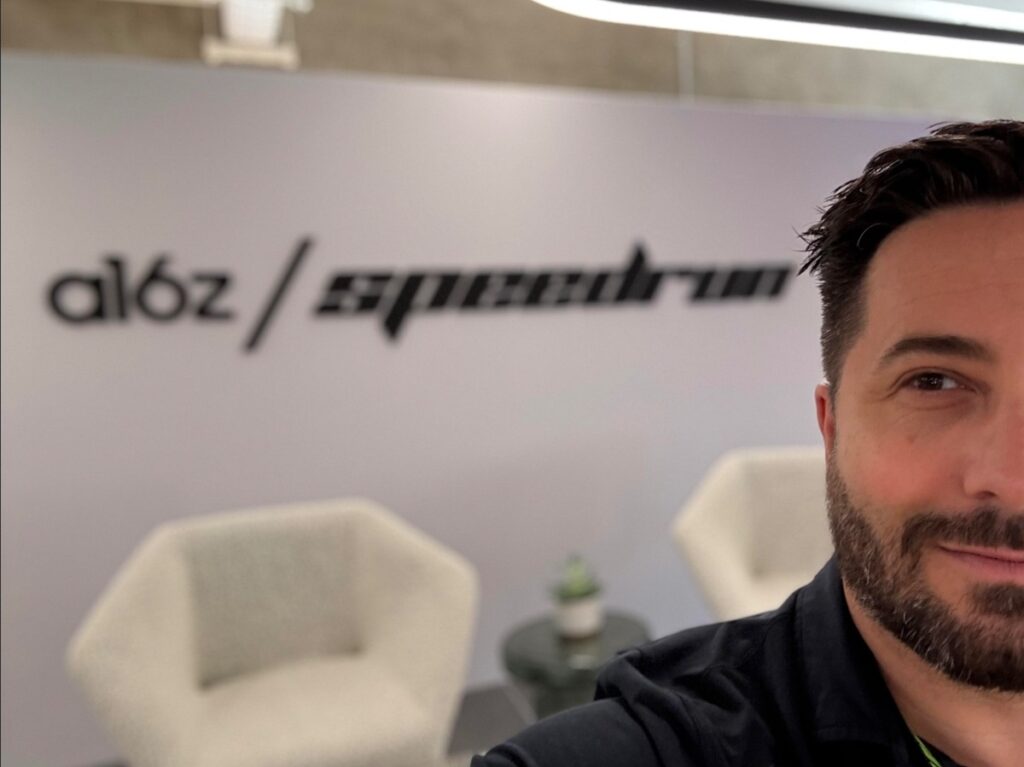
The company will unveil its reimagined platform at Andreessen Horowitz’s (A16z) Speedrun Demo Day on October 7, presenting to investors and showcasing the future of gaming.
Launched by Macromedia in 1999, Shockwave defined online gaming with its vast library of Flash-based games, from puzzles to multiplayer hits. Now, it’s evolving for today’s world with a mobile-first approach and AI-driven features.
“The new Shockwave will offer cross-device gameplay, where AI tailors challenges to your style, creates dynamic worlds, and integrates AI for immersive experiences making Shockwave a bridge between nostalgia and innovation,” Bill Karamouzis, CEO and cofounder of the new company.
The mobile app and the suite will be ready in the coming months. Today, Karamouzis is announcing he’s bringing the brand Shockwave back.
“It’s bringing back this treasured property with this long history,” said Karamouzis in an interview with GamesBeat. “We really want to make sure we do it right. I feel like we have this gem of internet history. We have this rare chance to write the next chapter of it, and that’s what we’re going to do.”
Shockwave’s history
The company has a storied history, and many gamers today will remember it. By 2005, the website had more than 22 million players and by 2010 it hosted more than 400 games. The owner, Shockwave.com, merged with Atom in 2001 to form AtomShockwave Corp.
It was renamed Atom Entertainment in 2006 and MTV Networks bought it for $200 million. Defy Media purchased the site in 2014 and sold it to Addicting Games, then run by Karamouzis, in 2018.
Meanwhile, Addicting Games emerged as a casual gaming giant. It was sold to Viacom, which then sold Addicting Games to Enthusiast Gaming — then a fast-growing media (owner of The Escapist and Destructoid) and gaming events company — in September 2021 for $35 million. But Enthusiast Gaming had a shareholder dispute and subsequently went through multiple CEOs.
A long business journey
During the shareholder battle, Karamouzis had to step into the role of president of Enthusiast Gaming. He did that for a year and a half and fulfilled his obligations for his earnout for the sale of Addicting Games.
At that point, he decided to go back to school and join Harvard University’s Advanced Management Program. Enthusiast Gaming continued to have struggles, and Karamouzis decided to buy Shockwave back in 2024.
After his academic work, Karamouzis felt inspired by the games in The New York Times such as crosswords and Wordle — those games are generating more traffic than the news for the big media giant.
“We have always loved these daily games and watched them do this fantastic job with games that we love, like we had always built at Addicting Games,” Karamouzis said. “They were quirky, easy to play, but tough to master games. And I knew once I left that was the world I want to be in. I also just like the audience, and they’re just getting older.”
Karamouzis added, “It’s not necessarily that they only get played by older people, but there’s just a nice joy to those types of games. You can share them with people. I can play them with my dad, that’s just not something I have anywhere else. You play them with your kids. And so we knew we would build something in that space. We just had to find out how.”
After the deal, Karamouzis was joined by a team of veterans from Addicting Games, Jam City, and previous gaming companies.
“It had stayed its 20-year-old, encapsulated version of Shockwave. And so we bought it, and it has become our mission to essentially revitalize it, build a backend that people can actually update on and get new content. So that’s the journey that we’ve been on,” Karamouzis said.
Now the company has raised new money through A16z Games and it hopes to raise more.
“We had bought the company, we had refactored everything, we presented our plan, and everyone loved it,” Karamouzis said. “Everyone thinks the New York Times is doing a good job, but there should probably be more than just the New York Times doing this really cool platform.”
A tough personal journey
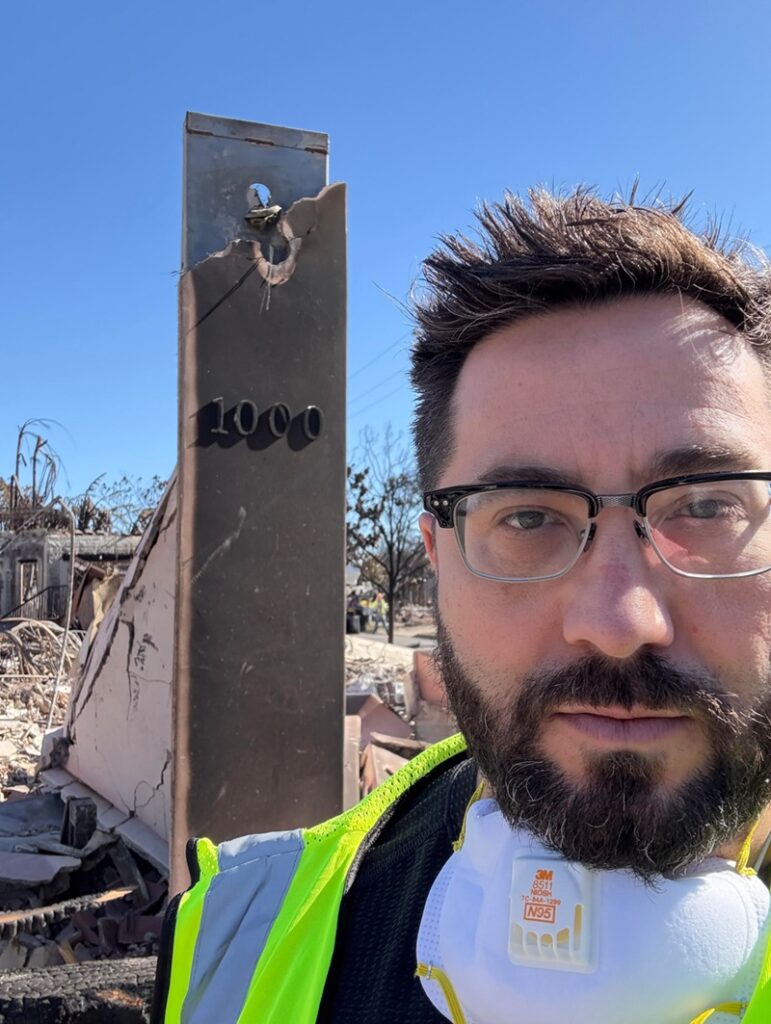
The team kicked off the effort on January 7. But that also happened to be the same time as the Pacific Palisides firestorm. Karamouzis was sitting in the audience and he started getting news alerts.
“By that night, everything had unfolded, from the ultimate startup peak,” to the low of losing a home in the fire, he said. “You come back and 80% of your clothes are now A16z swag.”
It’s been eight months since that fire, and Karamouzis has had to deal with a lot of the extremes of the good and the bad.
Karamouzis felt like the Pacific Palisades fire took out a whole community, which had everything from rental houses to the most opulent places near Santa Monica, California.
“Not everyone was well off,” he said. “My neighbor was 102. There were definitely a lot of gaming executives there. We had to get back to building family live and professional life. It’s a resilience story, as none of that stops. We’re just finding our way through it.”
“The mind has never been meant to bend that way from one extreme to another,” he said. “I’ve been dealing with a lot of that while trying to push Shockwave forward.”
And now the time has come to move the company forward.
“Now we’re telling the world about the launch of the new Shockwave, the mobile app, and all the cool things we’ve done with AI to create really cool and novel daily games,” Karamouzis said.
The team has 12 people, with some in the U.S. and some in Edmonton, Canada.
“Shockwave was so good in its early days, and then it became harvested for so long,” he said. “It had video ads before anyone else and the games were of higher quality. But then no one innovated on it for a long time. It just kind of became this corporate entity that lived from Viacom to Defy Media to Enthusiast Gaming.”
He added, “The difference now is we’re building games. We’re emphasizing the people behind the games. We’re building games that connect with the audience. So we’re launching games and gathering feedback and then iterating on them. So it’s not just launching the next Sudoku. It’s launching authentic and new games.”
The company is building its own suite of games and it is tapping AI to make them more accessible. Let’s hope that Karamouzis gets to fully rebuild his home life too.
“AI is a tool that enables the developer to get all the creative juices in their brain out into something real. And so that’s been our focus,” he said. “We will have third-party games on Shockwave because we think it’s a great launchpad for other people.”
Casual gaming is the focus, and Karamouzis wants to make it a daily habit.
“We’re not building games for gamers,” he said. “We’re building games for regular people. Accessibility is a big part of trying to find novel ways to engage people. And I think the biggest trend of why this is happening now is we’ve seen it in video, where people went from sitcoms to YouTube to Shorts and Tiktok. That is also happening in gaming.”