
It is a question that developers, producers, voice actors, and many others across the game industry continue to ask. Will AI in gaming and Hollywood destroy jobs?
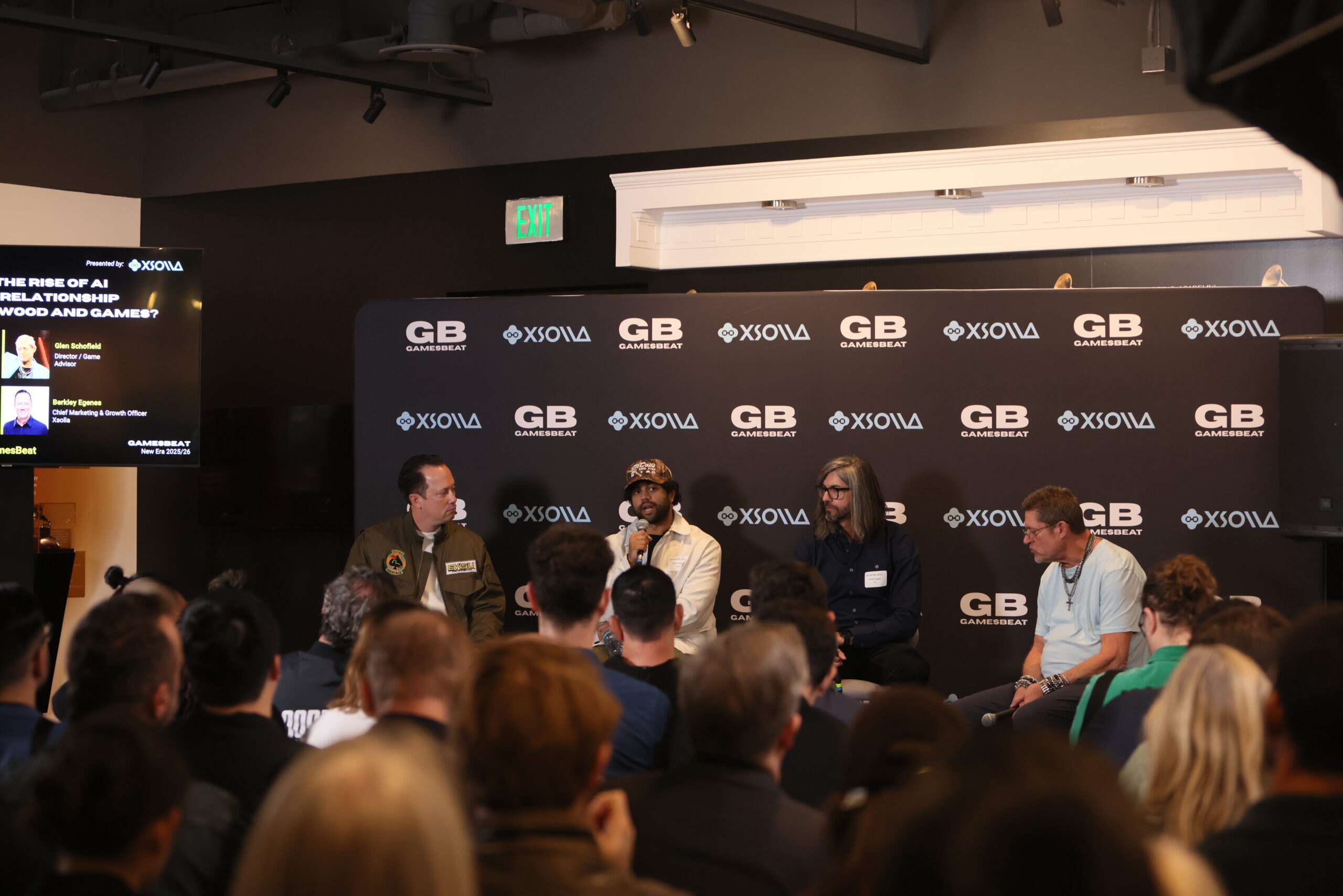
“It already has,” someone shouted from the crowd. That moment framed the opening of the GamesBeat Insider Series: Hollywood and Games, a session focused on how the rise of AI will shape the relationship between Hollywood and the game industry.
The panel brought together voices from across entertainment and technology. Genies CEO Akash Nigam, game development veteran Glen Schofield, and CAA head of video games Derek Douglas joined moderator Berkley Egenes, chief marketing and growth officer at Xsolla, which sponsored the panel.
Across the discussion, the speakers addressed many of the concerns that developers, actors, and creators share about artificial intelligence in gaming and Hollywood, while also exploring how ethical use of AI could bring meaningful improvements to game and content development.
“Yes, AI will obviously impact jobs and different forms of tasks we perform today,” Nigam said. “But it will also increase the ambitions of what humans ultimately want to do.”
AI as a medium, not just a tool
Schofield, whose work includes Dead Space and multiple Call of Duty titles, has become a strong supporter of the creative potential of AI in gaming. He has used Midjourney to generate thousands of images to visualize ideas for new projects, and he sees AI as a full creative medium.
“It is like painting. I have my acrylic paints, my sculptures, video games, and I have my AI,” he said. “I have embraced it because I know the lawyers are going to sort it all out. By the time it is over, I do not want to see this generation not adopt it.”
Schofield said AI can streamline many tedious parts of development while freeing teams to focus more energy on what matters most: generating new ideas.
Hollywood and gaming talent pushes back on AI
AI played a major role in recent SAG-AFTRA strikes, with actors raising concerns about being replaced or replicated without their consent. These concerns escalated as companies introduced contract clauses that granted them rights to use an actor’s likeness to create future AI versions.
“I think what it comes down to for talent is control, consent, and compensation,” Douglas said.
Throughout the session, he emphasized that there is an ethical way to approach AI. He pointed to scenarios where actors like Brad Pitt could use AI versions of themselves to expand the work they can take on. Actors are limited by time and geography, but an AI likeness could help them deliver voice work for a cartoon or provide material for a magazine feature.
He added that the goal should not be to replace writers, actors, or directors.
“I do not think anyone in Hollywood is thinking, great, now we have these tools so we can get rid of these three writers,” he said. “It is more about seeing what more we can get out of these writers.”
Fans and players push back because AI has been forced on them
In recent years, fans of both games and film have watched AI-generated work appear more frequently in the content they consume. Brands like McDonalds and Coca Cola have released AI-driven holiday ads that sparked controversy. In nearly every case, consumers had no choice about whether AI was used.
“It is the value to the consumer,” Douglas said. “The way the consumer has reacted so far is indicative of how AI has been thrust upon them.”
The panelists agreed that audiences could be more open to AI-enhanced content if developers and studios used it to genuinely improve the player or viewer experience. When AI is deployed to accelerate production in ways that lead to what many call slop, it risks alienating audiences.
The industry is still in the early, chaotic stage of the AI era. Thousands of companies are making sweeping promises about what the technology will deliver. There is no clarity yet on which companies will succeed, how global governments will regulate AI, or how the technology will affect individual players, developers, and performers.
“There is a way to do AI ethically,” Douglas said. “Leaning into that model is the best long-term option.”