

Arknights: Endfield, from Chinese developer Hypergryph and publisher Gryphline, is a new free-to-play RPG that blends strategic base management elements with real-time action combat. GamesBeat was given early access to the game ahead of its January 22, 2026, launch to try out the introductory segments and preview endgame content.
Leading up to release, over 35 million players have pre-registered for access to Arknights: Endfield, so the demand is clearly high.
Similar to other popular anime-style RPGs such as Genshin Impact and Wuthering Waves, Arknights: Endfield is a gacha game. This means a core mechanic of the experience and its progression systems is the randomized collection of hero characters. You’ll need to earn the ability to randomly draw heroes, lottery style, either via limited in-game rewards or by opening your wallet and spending real money.
Even though Arknights: Endfield has plenty of surface-level similarities to other games in the genre, it arguably has just as many differences as well.
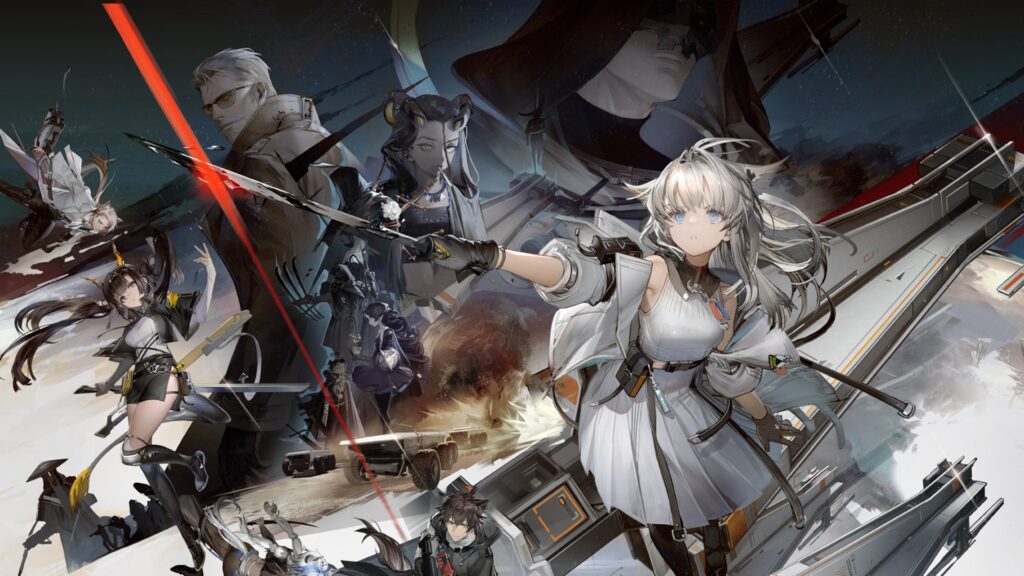
At first glance, the anime-inspired art style is immediately familiar. The cast of characters is dominated by expressive and colorful heroes who each feature unique combat mechanics. Once you’ve filled out your team, you can swap between characters on the fly with the press of a button for any situation.
Combat is fast, fluid, and frenetic in all fo the best ways. It doesn’t have the clunky staleness that can often plague other such games, but instead feels just as quick and responsive as you might expect from a high-action hack-and-slash game like Ninja Gaiden. Except it’s far easier and much prettier here.
Where games such as Genshin and Wuthering Waves emphasize open-world exploration as their primary engagement driver, Endfield feels intentionally more segmented and purpose-built. Zones are structured around missions, traversal is efficient rather than sprawling, and the game rarely pushes players to wander simply for the sake of discovery.
That design choice has implications. Open-world exploration is expensive to produce and maintain, particularly for live-service games expected to ship content updates on a regular cadence.
Yes, there’s base building
Endfield’s structure suggests a conscious effort to control content scope while redirecting player attention toward repeatable systems — namely its Automated Industry Complex (AIC), the game’s factory-style base-building layer.
This is where Endfield primarily separates itself from genre peers.
The AIC is not presented as a cosmetic housing system or passive background mechanic. It is a functional production network that players actively build, optimize, and expand. Resources are extracted, processed, routed through belts and pipes, and converted into materials that feed progression across the wider game.
On the plus side, the base building mechanics are extremely deep and rewarding to wrap your head around. On the other hand, if you just wanted another cool sci-fi meets fantasy gacha RPG to play, the complex strategic elements could be a huge turn-off.
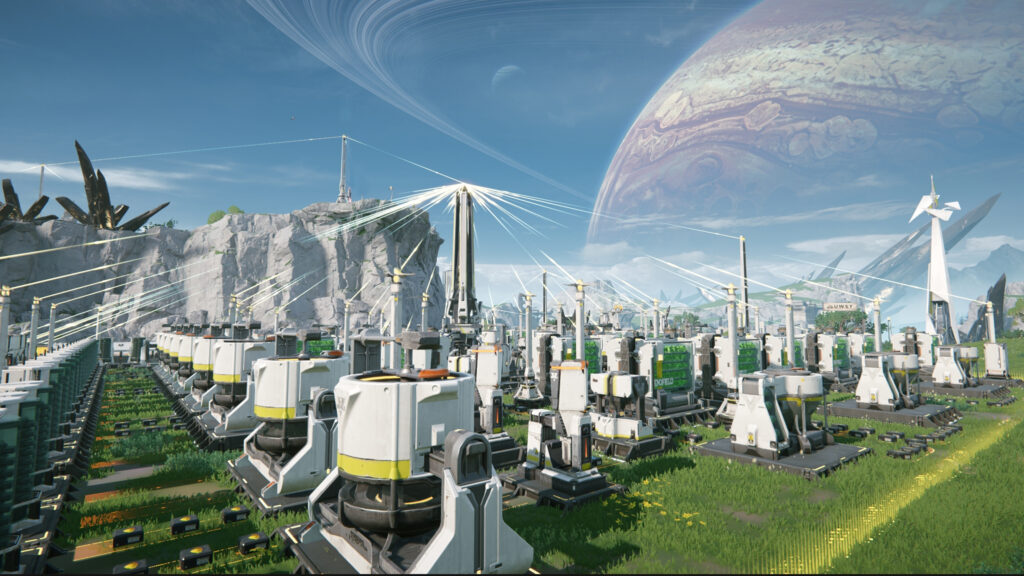
From a design standpoint, this introduces a second engagement curve. Combat drives short-term excitement and character desirability, while the AIC supports longer sessions driven by optimization behavior: tweaking layouts, improving throughput, reducing bottlenecks, and planning future expansion.
This mirrors engagement patterns seen in factory and automation games, albeit in a simplified form suited for mobile and controller play. For publishers and developers, that matters because it creates retention hooks that are not directly tied to banner releases or narrative updates. Players have a reason to log in even when they are not chasing a specific character or story beat.
Hypergryph’s visible focus on AIC usability during testing resulted in clearer routing feedback, stronger visual indicators, and reduced friction when editing layouts, which all suggest the studio understands the risk here. If the system becomes cumbersome, especially on mobile, it turns from a retention driver into a churn risk. The current implementation shows a clear attempt to strike a balance between depth and accessibility.
Not just another gacha RPG
Combat encounters are structured to reward preparation and team composition, reinforcing the broader resource economy. In practice, this means combat feels like part of a larger operational flow: fight, gather, return, expand, repeat. That loop is coherent, and importantly, predictable, which is a trait that often correlates with stronger long-term engagement metrics in live-service games.
This is a notable contrast to games that rely on constant combat innovation to sustain interest. Endfield appears more interested in stability than spectacle, which can be a strength in a market where development costs are rising, and player expectations for content cadence are increasingly unforgiving.
The timing of Endfield’s release window is critical. The mobile and cross-platform RPG market has stabilized after a volatile period, but competition remains intense. High-fidelity gacha games are expensive to build, difficult to operate, and increasingly judged on their ability to sustain engagement without escalating content budgets.
In that context, Endfield’s layered design reads like a risk-mitigation strategy. By adding a systems-heavy loop that can absorb player time without requiring constant narrative or character production, the game potentially lowers pressure on its live ops pipeline.
That does not eliminate monetization risk. The character-collection layer still carries all the usual sensitivities around gacha mechanics, pricing perception, and banner fatigue. But if the AIC succeeds in anchoring daily and weekly engagement, Endfield may be less vulnerable to the boom-and-bust cycles that plague content-driven competitors.
Endfield’s cross-platform approach, spanning mobile, PC, and PS, aligns with broader industry trends toward ecosystem reach rather than platform exclusivity. For publishers, this expands the monetization funnel and improves brand visibility, but it also raises expectations around performance parity, UI clarity, and control schemes.
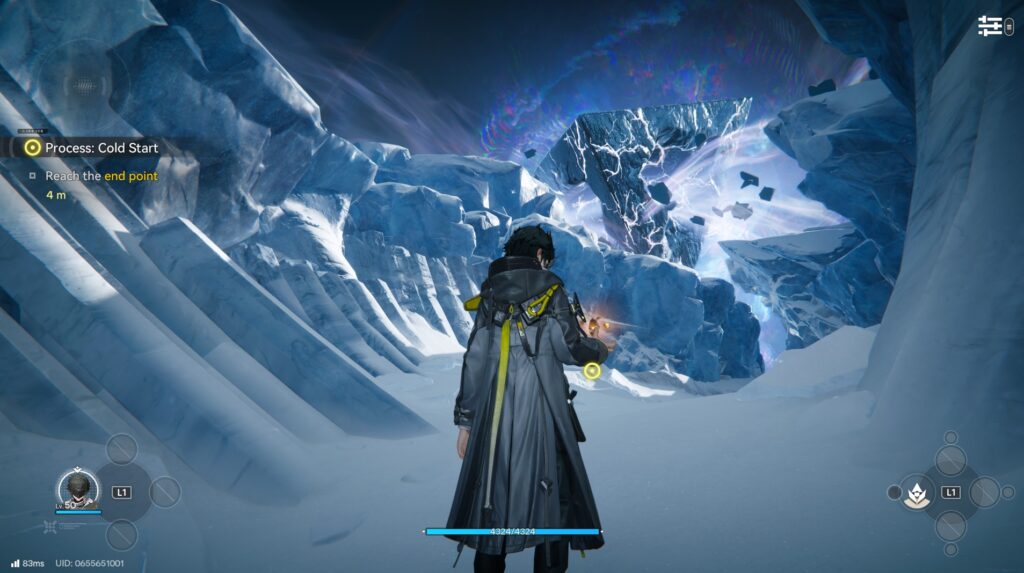
Endfield’s segmented structure works in its favor here. Zones load quickly, interfaces are legible across inputs, and the factory systems feel intentionally modular, reducing the friction often associated with managing complex systems on touchscreens.
Arknights: Endfield is not trying to out-Genshin Genshin. Instead, it is probing a different question: can a character-driven action RPG sustain itself by giving players meaningful systems to operate, not just worlds to explore?
If the answer is yes, Endfield could serve as a template for a second wave of high-production RPGs that trade infinite exploration for operational depth. That would be a meaningful shift in how developers think about retention, content cost, and live-service sustainability in the genre.
For now, Endfield feels less like a mass-market spectacle and more like a calculated industry experiment that truly respects your time and energy. Undoubtedly, the reception and retention will be closely watched by other studios.