
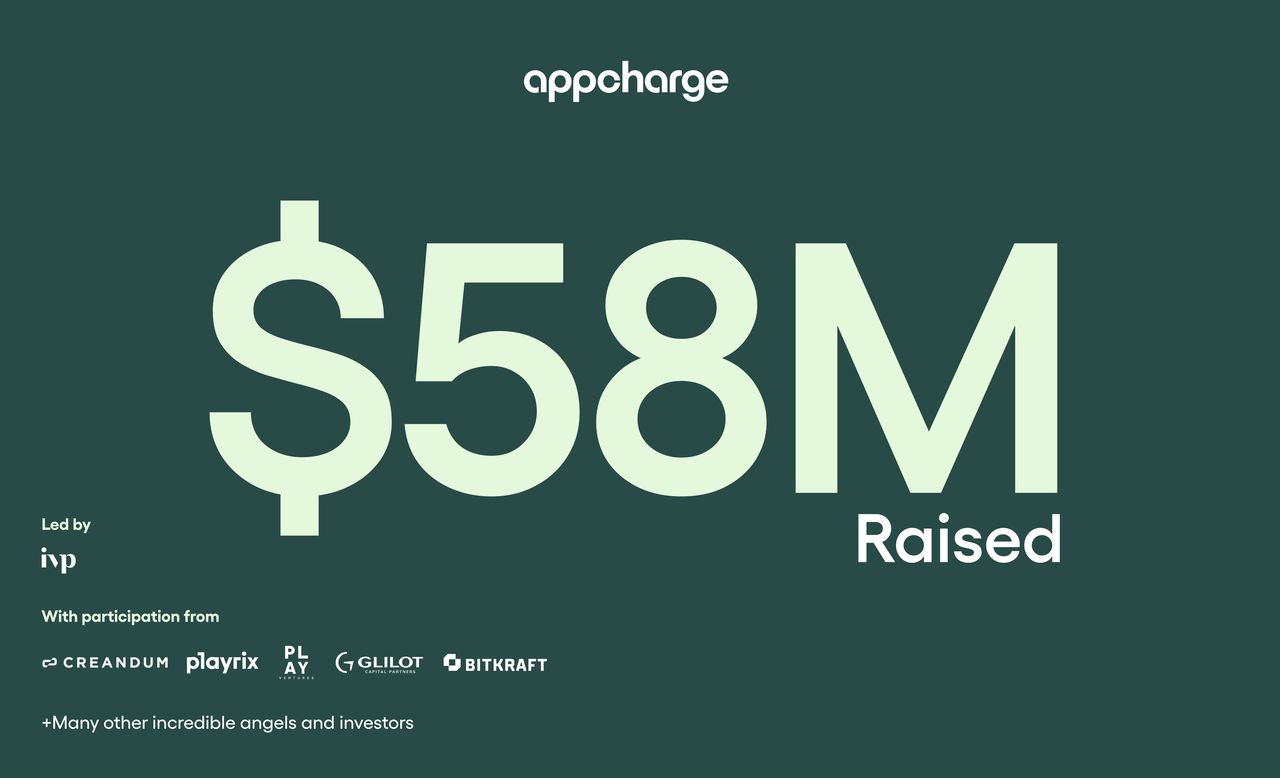
Appcharge, a direct-to-consumer (DTC) platform for mobile game publishers, has raised $58 million in funding.
IVP led the round, with participation from Playrix, as well as existing investors such as Creandum, Play Ventures, Glilot Capital Partners, Smilegate Investment, Moneta Ventures, Bitkraft Ventures and Corundum.
The new financing brings the company’s backing to date to $89 million. The company will use the round to scale its platform with new products to meet the global industry demand and to lead the next era for mobile games’ customer engagement.
This funding comes in the midst of an explosive period of growth for Appcharge, which already is processing more than $500 million in transactions and has grown 14 times year over year. The raise comes just nine months after the company’s Series A round, underscoring the exceptional momentum for Appcharge’s platform.
“Court rulings and policy changes have blown the direct-to-consumer doors wide-open,” said Maor Sason, CEO and co-founder of Appcharge, in a statement. “Publishers are increasingly moving to direct-to-consumer as a fundamentally stronger model. We are at the forefront of this evolution, helping build the era beyond app stores – and even beyond web stores – for better economics for consumer apps and more options for customers.”
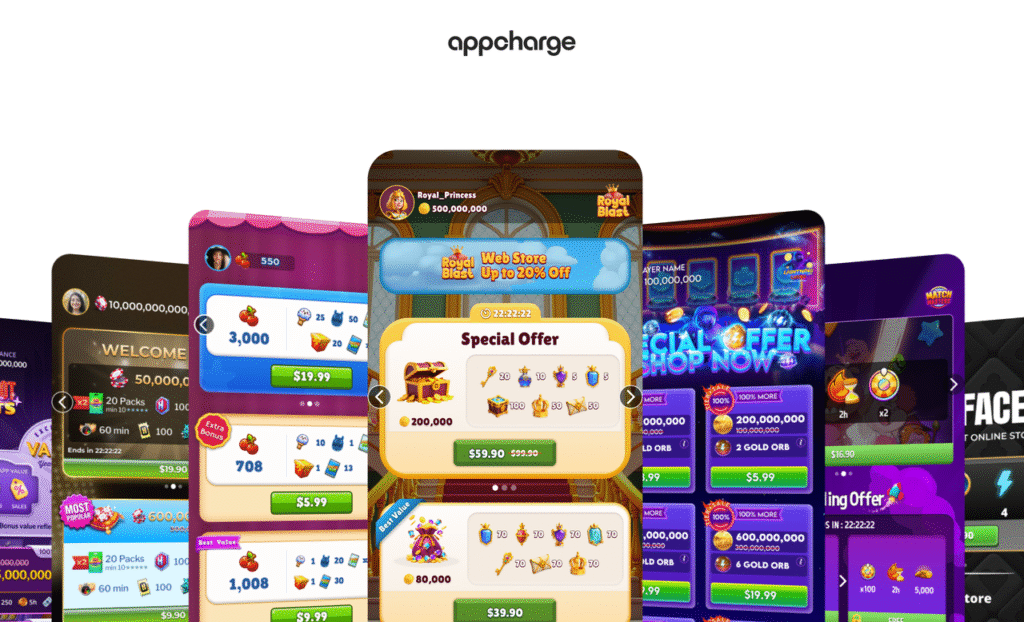
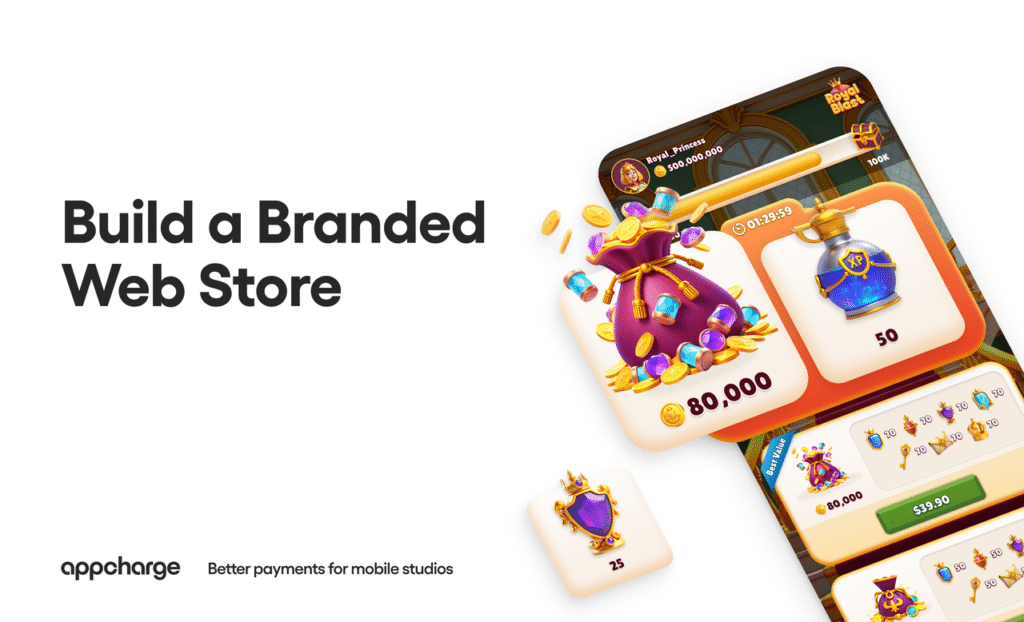
Appcharge empowers publishers to boost revenue and reclaim ownership of their player relationships with fully branded web stores, seamless payment options and much more. Appcharge powers stores for more than 100 games, with publishers reporting significant gains in retention and average profit lifts of 35%.
“Appcharge is one of the fastest-growing companies we’ve seen in gaming infrastructure, and they’re only getting started,” said Karthik Ramakrishnan, partner at IVP, in a statement. “For nearly two decades, mobile game publishers had no choice but to give up a hefty cut of every transaction to the platforms that controlled distribution. That era is finally ending -and Appcharge is building the future that comes next. What sets them apart is not just their explosive traction, but the caliber of execution from a team that knows this space inside and out. Maor and Roei bring a rare combination of domain expertise and product obsession that makes them the right team at the right moment.”
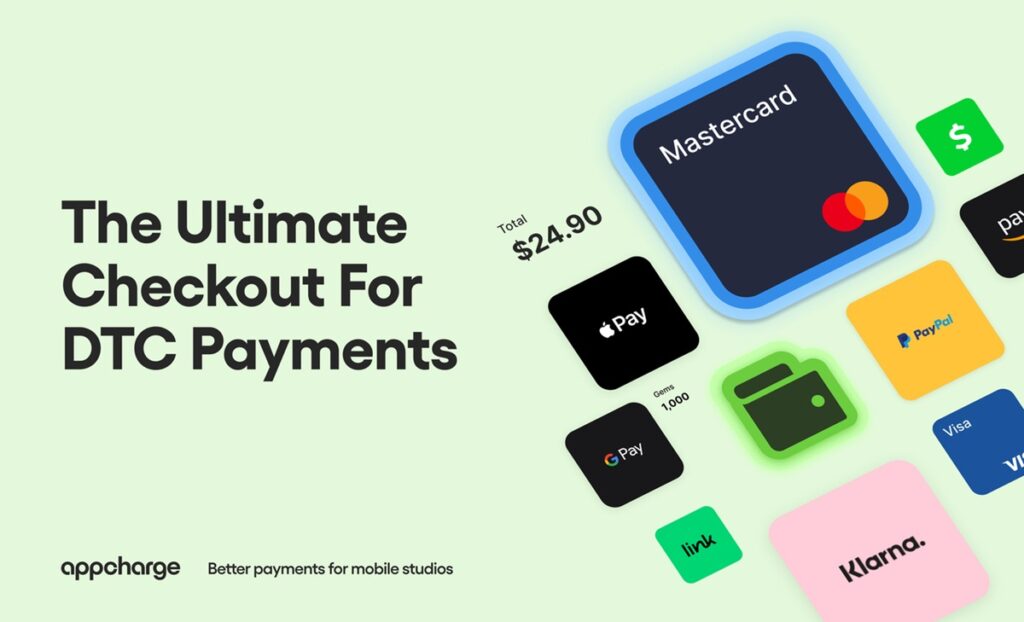
The funding round follows the launch of Appcharge’s iOS Payments SDK and AppDirect, two powerful products that expand the company’s suite of seamless, compliant, and scalable direct-to-consumer solutions. These new tools, alongside Appcharge’s widely-adopted Payment Links, further equip publishers to embrace a holistic DTC model which frees them from platform fees and unlocks more meaningful and financially rewarding interactions.
Just last month, the company published its first report analyzing over $500 million in web store transactions.
The Appcharge report showed sharp differences in payment methods between regions, underscoring the complexity of the rapidly growing web store market, driving the need for developers to have universal solutions, rather than managing myriad forms of payments.
In other words, the key takeaway is that if a developer is not supporting the payment methods players trust, they are making it harder for them to spend. And if it’s harder to spend, they won’t. The data also reveals purchase behavior pointing to the importance of initial store experience for the player, as well as the untapped opportunities that follow a player’s first purchase.
As publishers increasingly embrace web stores to boost margins and deepen player relationships, understanding behavior within these stores becomes more and more business-critical. New data from Appcharge’s report articulates the sheer intricacy behind storefronts catering to the preferences of a global playerbase.
Also in July, Appcharge announced AppDirect and iOS Payments SDK to boost mobile game web store sales.
Like a number of other web shop companies like Xsolla, Coda, and Fastspring, Appcharge is taking advantage of a loosening of restrictions on off-store mobile game sales at Apple and Android, due to recent legal rulings in the Apple vs Epic antitrust case as well as related European regulations.
In doing so, it is helping game publishers to build direct relationships with players and improve their business. Appcharge’s AppDirect enables direct Android APK distribution, and the new iOS Payments SDK builds on the company’s Payment Links solution, said Maor Sason, CEO of Appcharge, in an interview with GamesBeat in July.
These new capabilities align with Appcharge’s vision of expanding direct-to-consumer offerings beyond traditional web stores — creating a comprehensive suite of tools addressing the full player lifecycle. Publishers can now directly engage players across multiple channels, both in-game and out-of-game, enabling diverse purchase experiences ranging from impulsive emotion-driven purchases, to planned intent-based buying.

AppDirect is the answer for Android APK, built as a solution for sideloading on Android devices. It lost some momentum with the recent ruling in the U.S. by U.S. District Court judge Yvonne Gonzalez Rogers, said Sason, but it’s still a “crucial part of direct-to-consumer future.”
Epic Games’ CEO Tim Sweeney complained that Apple wasn’t serious about permitting off-store links, as it put a lot of “scare screens,” or warnings to users, if they clicked on links that could take them to developer stores. The scare screens, he said, were meant to make alternative stores less effective, and Sason agrees, as he calls them the “screens of hell.”
As for why Appcharge is better than its rivals, Sason said his company has incremental knowledge of mobile monetization. He noted Israel is rich with such monetization experts.
“These are the kind of people that are working here together in Appcharge, super driven to make a change and to disrupt the industry. And I think that’s what differentiates us from the competition,” he said. “We actually understand in depth the needs of mobile games. We understand their hardships and the solutions we bring to them.”
Appcharge combines various solutions like conversion, loyalty, analytics, insights and more, as well as the new iOS payment SDK and AppDirect. He said there is a lot of customization available for customers.
“With AppDirect, we’re the only ones who are offering it,” Sason said. “Nobody has it among the alternative web shop companies out there.”
“Over the next two years, we will witness a radical transformation in mobile gaming, with frictionless gameplay and in-game transactions outside traditional app stores becoming the norm,” said Sason. “Publishers embracing direct-to-consumer strategies can deliver better pricing, foster stronger player loyalty, and significantly enhance their profitability by reducing platform fees. With our latest products, including Payment Links, we are empowering publishers to create an integrated ecosystem that meets players exactly where they are, driving deeper engagement and increased revenue.”
Appcharge said it helps publishers sell directly to their players, which increases profits by 35%, and greatly improves player relationships and loyalty.
Origins
Sason, 34, started the company in 2022. He started out in banking and then became an entrepreneur. He started an ad network and sold it to a public company for a profit. He got together with Roei Barassi, cofounder of Appcharge to find a solution for mobile gaming stores.
“We realized we needed to build something sophisticated for more sophisticated mobile game developers,” Sason said. “Now we’re leading the direct-to-consumer efforts for mobile game developers.”
Headquartered in Tel Aviv, Appcharge has more than 90 people.