
One of the tech industry’s leaders said that AI will grow in the coming years to more than five billion users.
For comparison, there are only about a billion hardcore gamers and creators the planet, and there are about 8.27 billion people on the planet.
“It will come as no surprise that tonight is all about AI,” said Lisa Su, CEO of AMD, in the opening keynote for CES 2026. “My theme is you ain’t seen nothing yet.”
She said we’re just scratching the surface of where it’s going to be in a few years and it’s affecting every industry. The good thing is it will be accessible to everyone, she said.
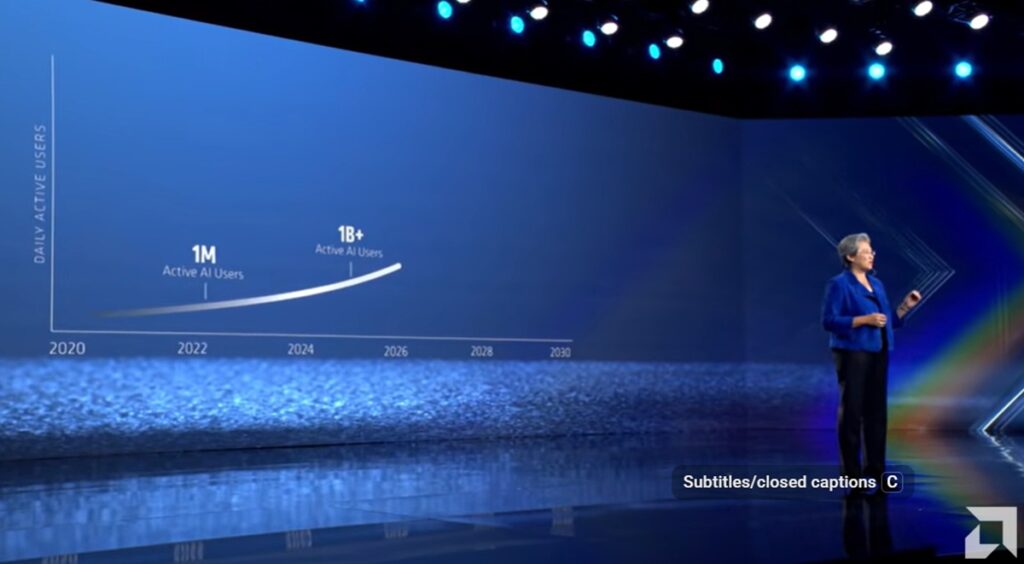
Su said AMD is the only company that has the right elements to reach all of the places AI will go, from the data center to the PC to the devices on the edge.
The cloud
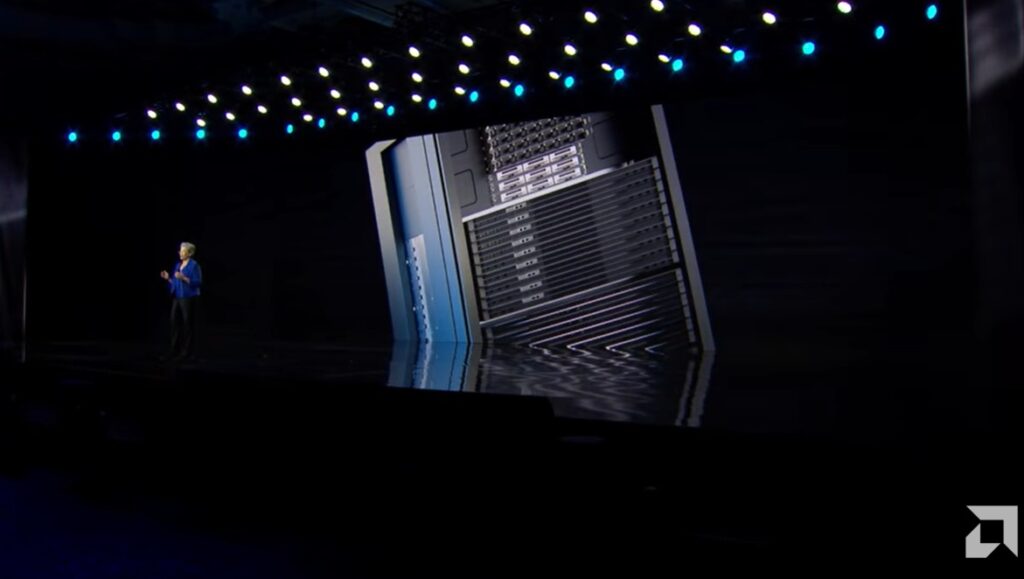
The cloud is where the largest models are trained in data centers and the results are delivered to billions of users in real time. Whether you use ChatGPT or Gemini or Grok, you’re using the cloud and every major data center relies on AMD tech, she said.
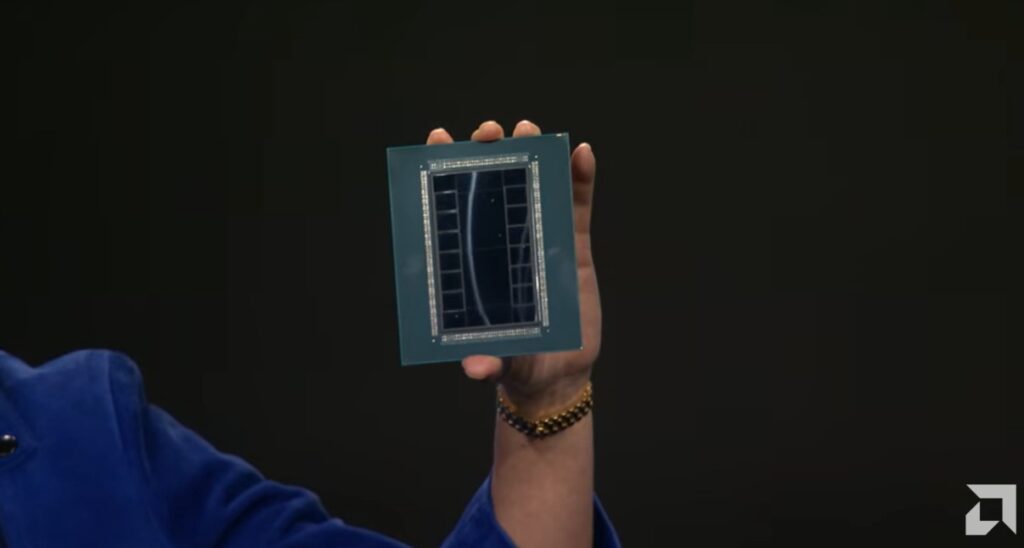
She showed off a Helios rack developed with Meta and it weighs over 7,000 pounds. It is more than two compact cars. She showed off an AMD Instinct MI455X chip that serves as the AI GPU. It has 320 billion transistors, or 70% more than MI455. It has 10x more performance than the previous generation.
“That is game changing,” she said.
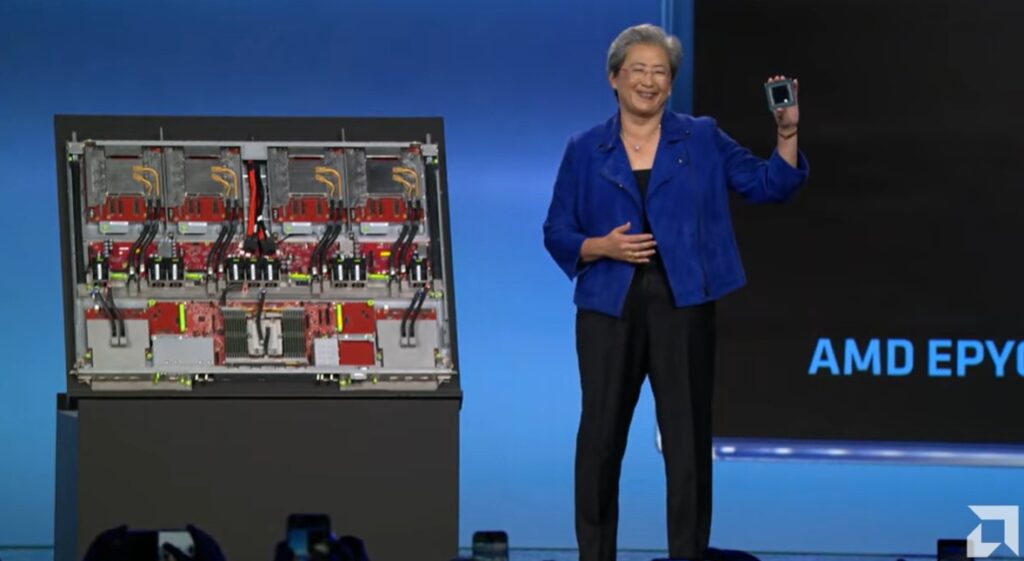
“It’s the most advanced chip we’ve ever built,” she said. “We put four of these into the compute trays. Driving those GPUs is our next-generation CPU, code-named Venice.”
Venice is built with 2 nanometer tech and features 256 Zen 6 cores. Greg Brockman, president of OpenAI, came out on stage to tout AMD’s hardware. He said OpenAI was seven years in the making. He said the added technology adds up to being able to save lives with expertise, like medical advice, that is available at the fingertips of everyone.
He said the key is to use the compute resources we have to get the most benefit for everyone.
Amit Jain, CEO of Luna AI, came out on stage to talk about training systems that simulate physics and causality and render the results that you need.
“In short, we are modeling and generating worlds,” he said.
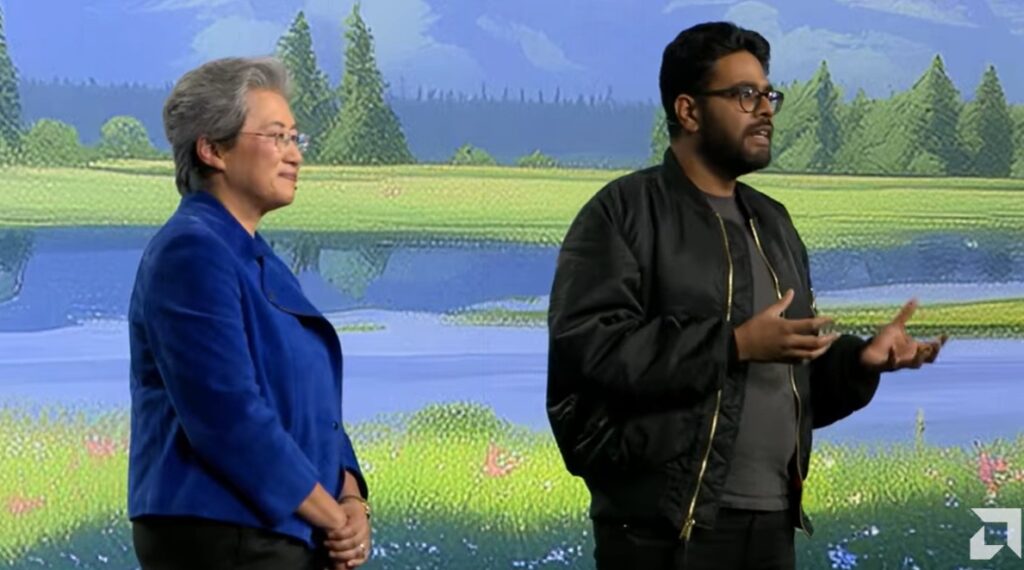
He showed a demo that showed how the system generates worlds. But he said the company’s Ray3 tool is a way to edit the worlds.
“Filmmakers and creators can create entire universes now without elaborate sets and edit them to get to what they want,” Jain said. “In 2026 will be the year of agents that help you get to the task.”
He said there will be multi-modal agents that can take a whole script of ideas and imagine that as a movie. Jain said the AMD tech to do this just works out of the box.

Fei Fei Li of Stanford University and World Labs showed how her tech could create a realistic 3D hobbit world in an instant. This is not a glimpse of the distant future, but a glance of the near future, Li said.
“It’s our responsibility to develop it in ways that reflect true human values,” Li said, keeping people at the center of the story however powerful the technologies are.