

Ubisoft reported six-month bookings of €389 million ($427 million), above guidance of around €370 million, thanks to sales of Assassin’s Creed Black Flag Resynced. But the company also said it is laying 166 developers at its Montréal and Québec City locations.
The Paris-based video game publisher said the rest of the catalog, including the Assassin’s Creed catalog, the Ghost Recon franchise and Invincible: Guarding the Globe, saw strong performance. Excluding partnerships, net bookings were up over 50% year-on-year.
The company said its new operating model is fully in place. All of its creative house leadership positions are now filled with an upcoming general manager joining Creative House 4 in January. In trading, Ubisoft’s stock price was down 2% today, with market valuation at $+579 million.
The Creative House 3 and Creative House 5 teams merged to leverage synergies between live experiences across platforms. Ubisoft also established Motherbrain as a dedicated subsidiary focused on AI for gameplay innovation, supporting all game creators in developing groundbreaking experiences.
And it said it launched a dedicated unit to maximize the value of brands not included in a Creative House with an agile and investment-light model.
First tangible benefits being delivered

Ubisoft said that the Assassin’s Creed Black Flag Resynced game had commercial performance among the industry’s most successful action-adventure remakes.
And Tom Clancy’s Rainbow Six Siege saw that its strong focus on gameplay and anti-cheat over the past year with significantly positive impact on activity. It was ranked Top 10 across Xbox and PlayStation combined in terms of monthly active users (MAU) over the first half of the FY2026-27 fiscal year ending March 31, 2027.
Ubisoft also said its cost-reduction plan is on track. The group’s third phase of its cost reduction program, targeting a fixed cost base of €1.25 billion ($1.37 billion) on a run-rate basis by March 2028 remains on track. The H1 FY2026-27 fixed cost base stood at €660 million ($724 million), down 6% year-on-year. Headcount down close to 1,100 over the first half.
Balance sheet and financing: Cash and cash equivalents of €1.03 billion ($1.13 billion) at September 30. The put option on the 2028 OCEANEs was exercised for €453 million ($497 million) and settled from cash on hand mid-November.
“We have made progress on our refinancing plan, which comprises two components. The first, launched over the summer, is well underway. The second one will launch shortly. Together, they are designed to strengthen the Group’s liquidity as well as extend its debt maturity profile, to be completed over the coming months,” Ubisoft said.
FY2026-27 and mid-term outlook confirmed
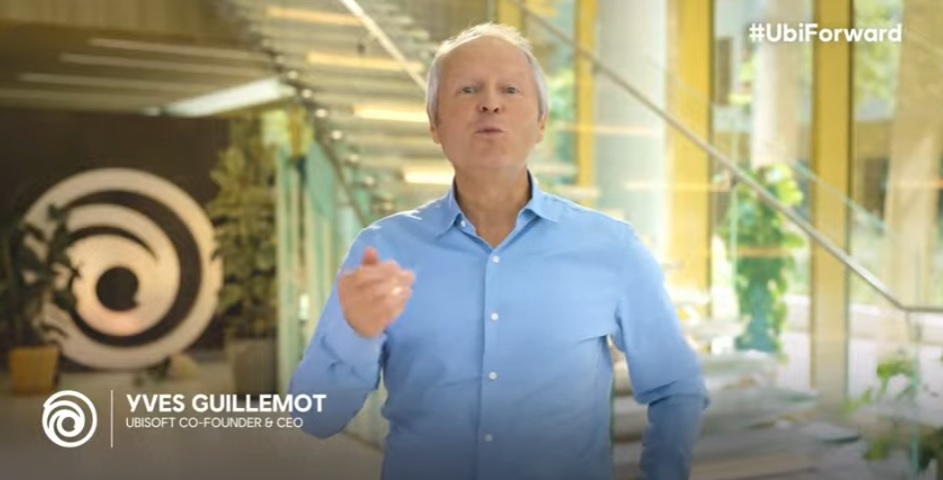
Yves Guillemot, CEO of Ubisoft, said in a statement, “In the first half of FY2026-27, we continued to make tangible progress on our strategic and operational priorities. Q2 exceeded our expectations, driven by the continued success of Assassin’s Creed Black Flag Resynced and solid contributions from our broader portfolio.”
Guillemot said the new operating model is now fully in place, with leadership secured across all creative houses.
“In an increasingly competitive entertainment industry, gamers require exceptional quality, distinctive creative experiences, uncompromising gameplay and a defined audience for games to stand out and succeed,” he said. “By repositioning our talents at the center of decision-making and fostering a more spontaneous and direct link with our communities, our new model is designed precisely to deliver on these imperatives.”
He said the first benefits are already visible, with the commercial success of Assassin’s Creed Black Flag Resynced and the renewed momentum of Rainbow Six Siege.
Guillemot pointed to Motherbrain, the team behind our first playable generative AI experience Teammates, as a dedicated subsidiary developing proprietary technologies for gameplay to empower creators and open up new possibilities for richer, more immersive and engaging player experiences.
“We remain on track with our cost reduction program, reflecting our commitment to a focused and disciplined organization as we are preparing for a significantly stronger content cycle. In parallel, we have made progress on our refinancing plan with the objective of securing competitive terms and putting in place an efficient medium-term plan over the coming months,” he said.
And he said the company is confirming its FY2026-27 objectives. By combining our iconic brands and creative talent with a more focused, agile and accountable operating model, we are building a stronger Ubisoft.”
More Q2/H1 activity
Back-catalog bookings stood at €218 million, down 55%, reflecting a high comparison base that included partnerships and the significant contribution of Assassin’s Creed Shadows. Excluding partnerships, back-catalog was down a high single-digit percentage year-on-year.
Overall, net bookings for the semester stood at €645 million, down 17% year-on-year, or up double-digits excluding partnerships. MAUs and Unique Active Players across Consoles and PC respectively stood at 34 million and 88 million, stable versus last year.
Assassin’s Creed Black Flag Resynced outperformed expectations in its launch quarter, supported by solid in-game spending and a higher-than-expected share of premium editions. The game’s performance also benefited from a more targeted marketing approach.
The rest of the Assassin’s Creed catalog also performed strongly, supported by effective promotional campaigns. Assassin’s Creed Odyssey also materially benefited from the release of a major summer movie and more recently Assassin’s Creed Valhalla passed the 40 million players threshold.
The franchise will celebrate its 20th anniversary next year. This is a major milestone for the brand, which is preparing a year of reveals, updates, rewards, and community moments.
Tom Clancy’s Rainbow Six Siege performed in line with expectations this quarter, as the team continued to refocus the game on its tactical, competitive core. Leveraging player feedback, the adjustments made to Ranked 3.0 from mid-July drove a strong rebound in player activity, further supported by the new content cadence delivering meaningful gameplay updates every three weeks. Since the start of Q3, player activity has held up well through October and the first half of November despite a highly competitive release slate, with October net bookings doubling year-on-year and quarter-to-date session days growing 50% versus last year. Looking ahead, Season 4, launching in early December, will focus on Siege’s core players, while Year 12 will mark the return of four new Operators per year.
Tom Clancy’s The Division 2 saw net bookings growth this quarter, building on the monetization improvements initiated in the first quarter. In-game spending increased significantly year-on-year, while player activity remained in line with last year’s levels.
The Ghost Recon franchise delivered a strong performance this quarter, led by Ghost Recon Wildlands. To celebrate the franchise’s 25th anniversary in August, the game received a new title update, Last Rites, featuring a new mission and a 4K/60fps upgrade, which drove significant engagement and net bookings growth.
On mobile, Invincible: Guarding the Globe continued to outperform expectations this quarter, with player activity remaining elevated.
Recent pipeline announcements
At Gamescom in August, Ubisoft unveiled two games scheduled for release in the 2027 calendar year. Rainbow Six Tactics, a single-player, turn-based tactical game set in the Rainbow Six universe, will bring the franchise’s tactical DNA to a new kind of experience. Heroes of Might and Magic III Remake will bring back the 1999 classic, building on the renewed momentum of the franchise following the early access release of Heroes of Might and Magic: Olden Era earlier this year.
Ubisoft also announced the launch of The Player Council on PC, a platform that allows players to test prototypes and games in development and share their feedback directly with the teams. It reflects the Group’s commitment to placing players at the heart of development from the earliest stages, and to strengthening its engagement with the PC community, the industry’s most dynamic platform.
Progress on Group Transformation
New Operating Model now fully in place
Ubisoft said its new operating model represents a radical change. It is built around Creative Houses, fully accountable for their P&L, whose purpose is to reposition creative talents at the center of decision-making and foster more direct and spontaneous relations with gamer communities.
Creative House 2, which includes iconic franchises like The Division, Ghost Recon and Splinter Cell alongside March of Giants, has been named Massive Entertainment. Creative Houses 3 and 5 have been combined under the leadership of Julien Bares to leverage synergies between live experiences across platforms.