
The next generation of game studios may be built less on a single blockbuster bet and more on financial flexibility.
With an unprecedented wave of industry layoffs jettisoning thousands of experienced game developers into the job market in 2026, founding a smaller studio instead of diving back into triple-A presents an alternative path forward for many game makers. But founding a studio means taking on the business side — not just the creative work. At GamesBeat Next 2026 in San Francisco on November 3, a panel of expert game developers and studio founders took the stage to share advice and observations from their journeys.
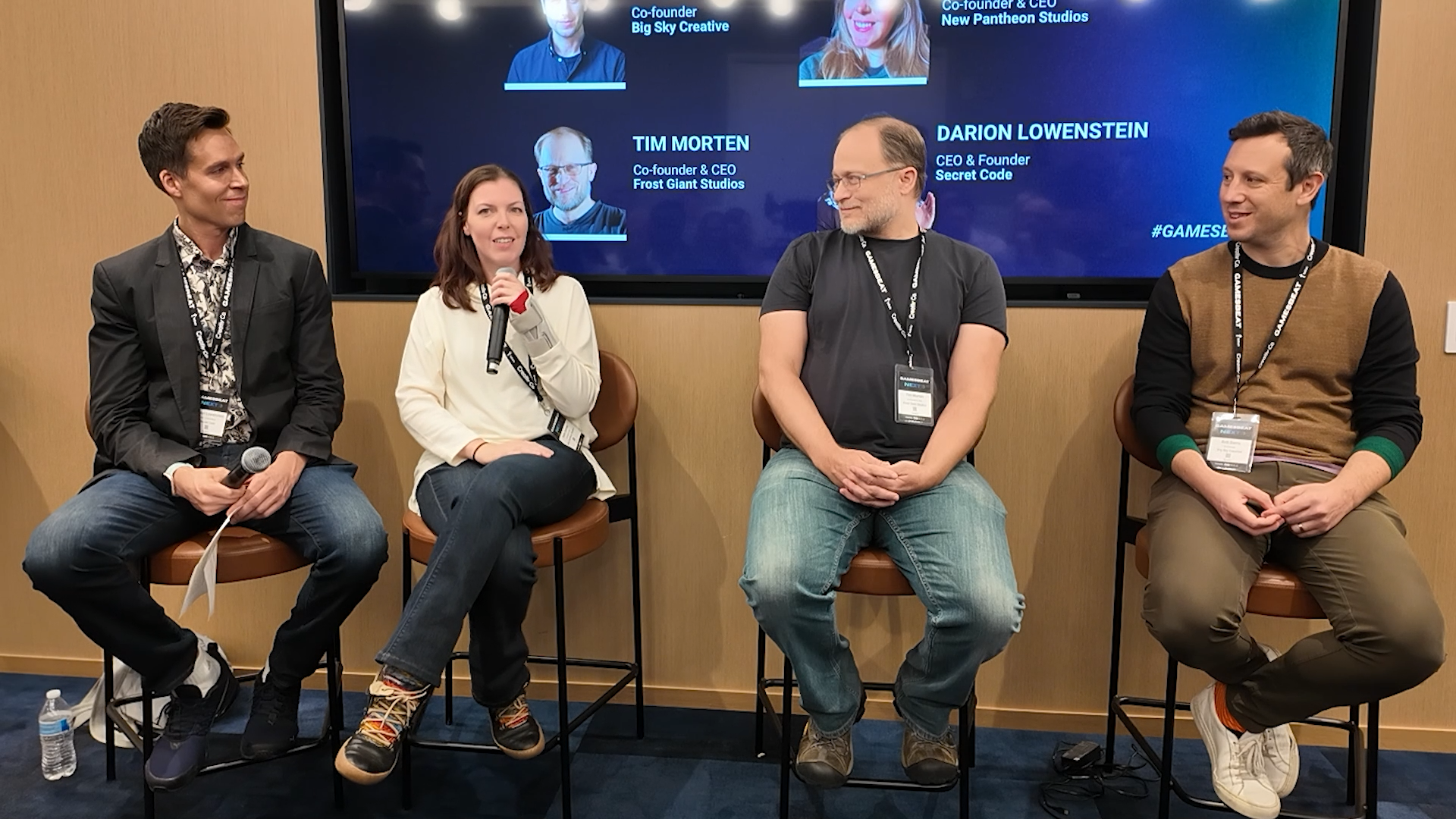
Moderated by Darion Lowenstein, the chief executive officer and founder of Secret Code, the panel featured the voices of Rob Davis, the co-founder of Big Sky Creative; Katie Golden, the co-founder and chief executive officer of New Pantheon Studios; and Tim Morten, the co-founder and chief executive officer of Frost Giant Studios. Here are some of the key takeaways.
Funding expectations have tightened
Publishers’ goalposts have moved from simply saying yes to a good idea to wanting prototypes, vertical slices, or even nearly-finished games, according to Golden. She predicted that this goalpost was going to continue shifting due to natural market forces, pointing out that it simply makes business sense for publishers to diversify their investments across multiple game prototypes rather than putting all their eggs in one basket.
“That’s just what risk aversion has looked like,” Golden said. “I hear people saying, ‘I’d love to get started on this sooner with you and be in the conversation earlier in development; however, I can build up a war chest with a couple of these games, get some hits, and then I can do that.’”
Co-development services can provide a stable foundation
The panelists agreed that the rise of co-development as a standard industry practice had been a bright spot for smaller studios in recent years. Instead of placing all their bets on a single project years out from release, indie studios can pair client co-development work with original IP development, using distributed teams to manage costs across both. For example, AdHoc Studio kept the lights on during development of Dispatch by doing work-for-hire development on The Wolf Among Us 2. Davis said his studio had helped avoid significant debt and protect its staff by doing co-development work on Uppercut Games’ Magicians: The Devil’s Deal.
“If anyone else is interested in this branch of development, I see that need continuing more and more every week as people look at the balance sheets, not just in terms of AI and efficiency, but in terms of raw costs as well,” Davis said.
Working in indie development requires a different level of urgency than triple-A
Morten said one of the challenges in bringing triple-A developer talent over to indie studios was the difference in resources and schedules afforded to developers at indies. Teams accustomed to abundant resources might not immediately be aware of the financial and operational pressures that indie studio founders feel acutely. It’s leaders’ job to communicate this shift in urgency to their teams, per Morten, who said it was a problem he “had to figure out how to address quickly.”
Golden agreed with Morten’s assessment, using the analogy of indoor and outdoor cats to illustrate the point — with triple-A devs as the former and indie devs as the latter.
“People from triple-A are very much indoor cats; they’re used to getting up from their desk and walking over to the soda machine and maybe taking a break during the water cooler,” Golden said. “Whereas outdoor cats, you don’t know where your next meal is coming from, and you might have to fight a possum.”