
Game makers are getting creative to fund their projects in 2026.
With venture funding for games drying up, the old assumption that an equity round will easily bankroll a game’s production can no longer be relied on. To get their games made, studios are exploring alternative funding pathways — but the most accessible options still favor studios with reliable data and a good product.
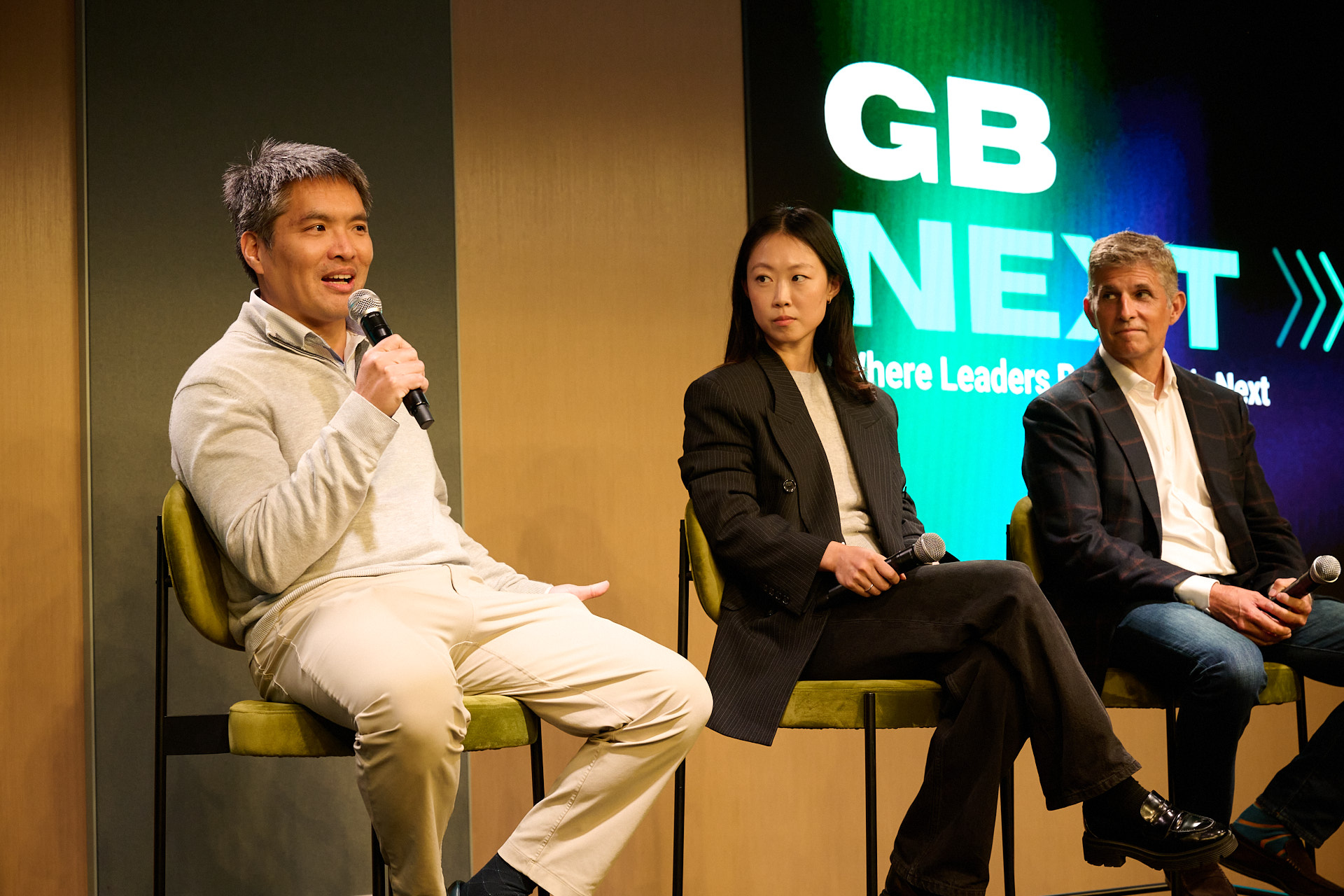
At GamesBeat Next 2026 in San Francisco on November 3, three panelists took the stage for a discussion of alternative methods of financing and the most accessible ways for studios to obtain them. Moderated by Eric Goldberg, the president and co-founder of Playable Worlds, the panel featured the voices of Greg Richardson, a managing partner of Juno Capital, Jerry Ye, a partner at Bitkraft Ventures, and Rod Humble, the chief executive officer of Megastructure. Together, they provided an overview of the range of alternative financing methods available to game makers going into 2027.
User acquisition financing
The first option covered by the panelists was UA financing, which Goldberg described as the “most prevalent” alternative funding pathway. Ye, who joined Bitkraft two years ago to spin up the company’s UA financing strategy, said he typically covers between 50 and 80 percent of a studio’s marketing spend per month in exchange for a capped revenue share. He said he had observed an uptick in interest in UA financing among game makers, with some companies concurrently raising an equity round alongside UA financing.
“For founders, it makes a ton of sense because this is a short-term solution for a very predictable problem,” Ye said.
Publishing and completion-publishing deals
The second option outlined by the panel was the publisher financing pathway, in which publishers provide funding, distribution, and go-to-market support in exchange for a share of the IP or other economics. The rise of such publishing deals in 2026 represents the return of an older strategy, according to Richardson, who noted that companies like Electronic Arts and Take-Two Interactive had downsized or sold off their publishing deal divisions in recent years. However, he said there is a new wave of publishers, many of which backed by private equity, that are currently looking to pick up deals where they can own a piece of the IP and a seat at the cap table.
“There’s a subset of those that are now doing completion-publishing,” Richardson said. “Basically, you’re in soft launch, there’s reasonable metrics, and they’ll come along and say, ‘hey, look, I’ll broaden your distribution, I will help you with the go-to-market, and in the last six months of development, I’ll pick up and I’ll do the localization on top of that.”
Self-publishing funds
During the panel, Kim flagged a new and growing funding pathway that he predicted could become more prevalent over the coming year: self-publishing funds. Instead of working with publishers for last-mile services, Kim said he had observed more developers were looking to self-publish instead. To adapt to these changing attitudes, he said some publishers are exploring setting up dedicated self-publishing funds alongside their core publishing businesses.
“What this could mean for the number of games that these publishers are targeting is they could go from 6 to 10 games a year to plus-4 on that target, so 10 to 14,” Kim said. “We alone are talking to several publishers at the moment. I think this type of indirect funding mechanism is actually much more palatable for private equity that cares about diversification, so hopefully this will have a nice derivative impact on the availability of funding.”
Monetizing player data
Another alternative funding pathway covered by the panel was the option to monetize player data. Established game makers may be able to sell or license player data to entities like AI companies, per the panelists, who raised this option as a possible opportunity in the future, rather than a broadly established financing channel.
“If you’re a company that’s been out there for a while and has users, all of the AI companies will pay real money for your data,” Richardson said. “So, you may not have made a profit on your live-operations game, but if you touched half of one or two million players over a period of time, that data is invaluable, and it becomes an alternative funding source for you.”