
As user-generated content platforms look to make gaming into a full-fledged creator medium, they are increasingly turning to AI tools to make development more accessible to the masses.
Platforms like Roblox and Fortnite are looking to become the definitive creator platforms for game makers, giving individuals and small teams the ability to build and monetize audiences through game development, much like YouTube handed the keys to the kingdom to grassroots filmmakers and video creators over the past decade. Unlike other creator media like video and written content, however, creating a game is not as simple as putting a pen to paper or turning on one’s webcam. That’s why UGC platforms are looking to leverage AI tools to bridge the skill gap between wannabe game makers and UGC creators.
At Roblox Developers Conference last month, members of the press were guided through a showcase of the platform’s new and upcoming AI tools that included Build, a mobile-first creation tab in the Roblox app that allows developers to turn text prompts into fully playable basic games. In an interview with GamesBeat at RDC, Roblox chief creator ecosystem officer Vlad Loktev acknowledged the accessibility benefits of Build’s prompt-based interface, saying it was intended to bring first-time developers into the ecosystem.
“Over 70 percent of people who are building in Build today have never even opened [Roblox] Studio, or created a game on the platform before,” Loktev said. “These are players that are just playing games; they’ve maybe been inspired for a long time, and they just haven’t had the right toolset. And now, they have these superpowers where they can go and start making games.”
Amid a broader push into AI-powered development led by chief executive officer Tim Sweeney, Epic Games has encouraged creators in the Unreal Editor for Fortnite ecosystem to use more native AI tools in their creation process as well, with the company launching its first AI assistant product last year. At Unreal Fest Chicago in June, Epic announced an experimental native Model Context Protocol server integration in Unreal Engine 5.8, allowing UEFN creators to connect AI models like Claude and Gemini directly to their projects.
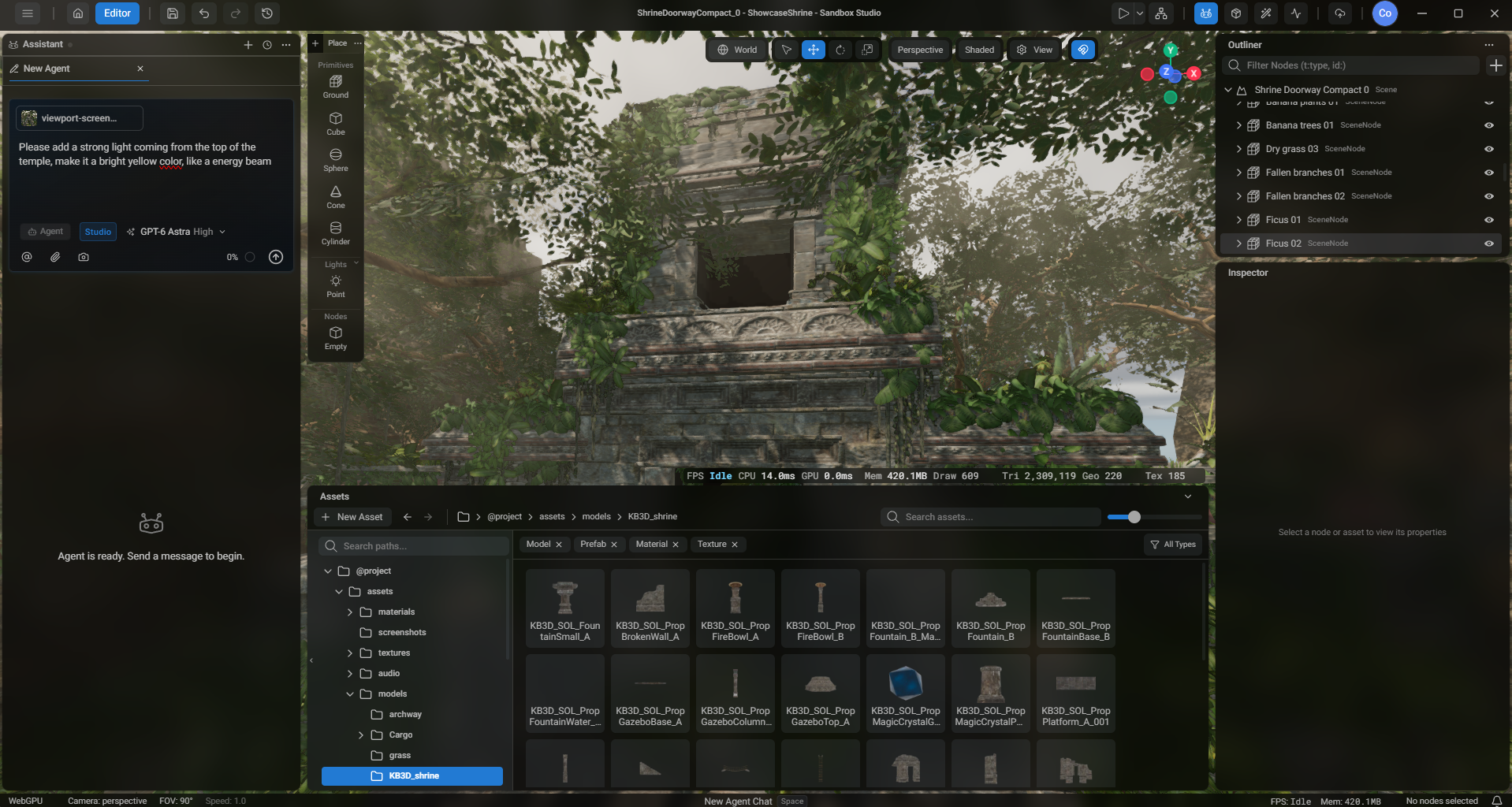
Some companies are creating UGC platforms and even game engines from the ground up with AI-enabled development in mind. The Sandbox’s Sandbox Studio platform is purpose-built for agentic coding, giving an AI agent access to its engine, codebase, documentation, and editor controls. Creators can incorporate external AI tools like Meshy into UGC games that they can publish through browser links, with planned support for multiplayer and monetization in the future.
“One of our goals behind doing this was to figure out how AI is disrupting game development, and how we can use those tools to best serve the original vision of the Sandbox community, which was to create an environment where not only can anybody make stuff, but more importantly, they can also benefit from the stuff they make,” said The Sandbox chief executive officer Robbie Yung in an interview with GamesBeat.
The Sandbox Studio’s AI tools are intended for both new game makers and experienced devs, with the company framing them as the next step for UGC game creators looking to more deeply integrate AI into their workflow.
“There are some tools already where you can just type something and the game appears,” said The Sandbox chief content officer Nicola Sebastiani in an interview with GamesBeat. “What we’re trying to do is lower that barrier, where more and more people can do more than just that.”
Earlier this month, Google launched Playground, a gaming platform that allows users to create and share games without prior coding experience. Built by Google’s AI innovation and research team, Playground allows players to turn written prompts into refined, browser-based games that are playable across phones and laptops. In the near future, the company plans to integrate Playground with Unity’s Spark AI game making platform.
In a written interview with GamesBeat, Google product communications manager Nia Carter described Playground as “an early Google experiment focused on creative expression” and said the platform does not currently offer built-in monetization or commercial publishing, although it is open to feedback as the product continues to evolve in the coming months.
“We’ve been encouraged by the initial response to Playground,” Carter said. “Right now, we’re gathering feedback and are focused on evolving the platform alongside our community.”
The growing accessibility of UGC game creation thanks to AI could bring potential challenges and changes to the broader gaming ecosystem. While AI tools could bring new game dev talent into these platforms, they also risk flooding platforms with lower-quality games and prioritizing the needs of novice developers over experienced and established businesses in the space, according to Itai Cohen, the chief strategy officer at the growth and monetization platform DT, in an interview with GamesBeat.
“Creating is becoming so easy. Do people actually invest the time and thought and effort into testing and validation? Because I can just move onto the next idea — I don’t even have to spend the hard work validating and refining an existing idea,” Cohen said. “So, that kind of dynamic would contribute to the gaming version of AI slop.”
Cohen said that AI will inevitably allow game makers to take more shots on goal, but that it will be key for developers to use AI-enabled tools in thoughtful and creative ways to ensure that their creations don’t get lost in the mix.
“What we’ve seen again and again is that it doesn’t matter if AI is used for operational or creative purposes,” he said. “It’s only as good as the way that you use it, and so the real value is in having the operational discipline and the processes to use it the right way.”