
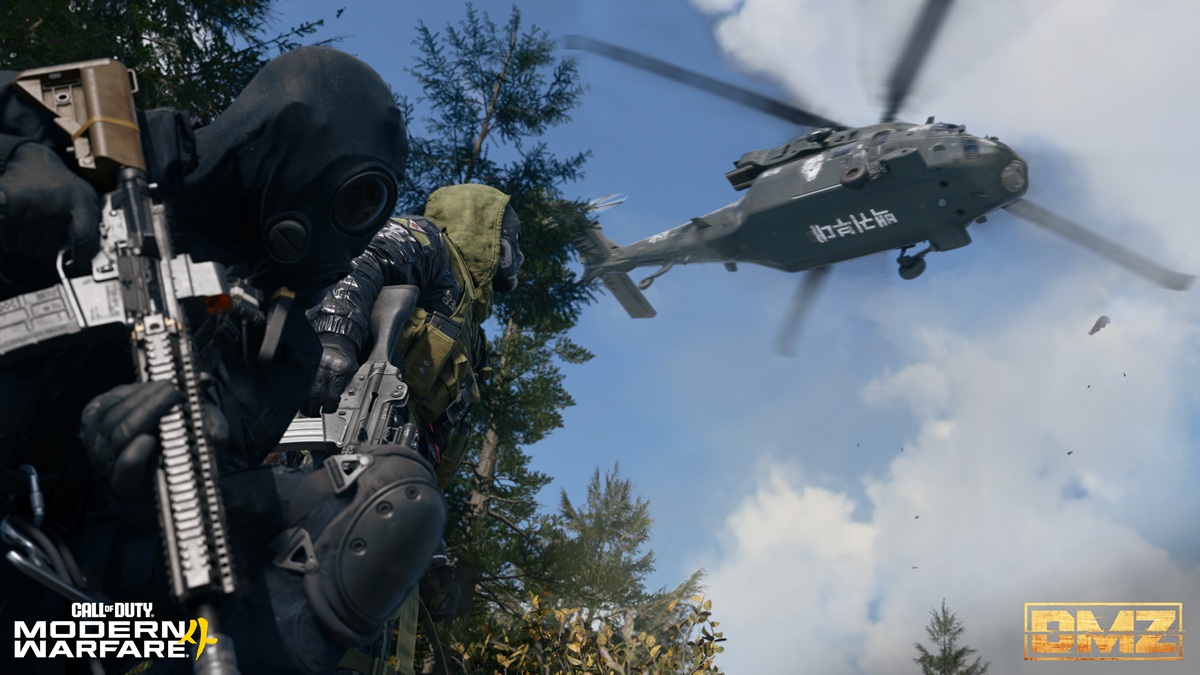
When I heard that Infinity Ward was returning to DMZ as a new extraction mode in Call of Duty: Modern Warfare 4’s multiplayer, I wasn’t excited. The previous DMZ debuted as part of Warzone 2.0 and Modern Warfare II in 2022 as a way to compete with the popular Escape From Tarkov.
But it didn’t last. By 2023, Infinity Ward dropped it and seemed to move on. But it turns out Infinity Ward didn’t give up on it, and at Infinity Ward’s headquarters in Los Angeles, I got to be one of the first outsiders in the world to try it out. I think it was excellent, but we’ll talk more about the mode itself in an accompany DMZ-focused review. Early access to DMZ begins today, after the single-player launch last Friday. On the October 23, multiplayer starts.
One of the ways they showed me how to play was by giving me and my play partner, Ned Jordan of The Gaming Temple, a “sherpa.” This was Joe Cecot, studio creative director for multiplayer. He took us inside the open world of DMZ and showed us the ropes.
I wrote about the single-player campaign of Modern Warfare 4 here, and it depicted combat about a squad of inexperienced South Korean grunts who are thrust into battle in the middle of a full-scale North Korean invasion of the south. DMZ continues some of that story and takes you into an actual DMZ, a fictional piece of geography that includes pieces of North Korea, South Korea and Russia. Within the DMZ map, there’s a nuclear power plant that is leaking radiation, and you job is to go in, loot, perform missions, kill other players and non-player characters, and then escape before the radiation kills you.
In the half-dozen times I played, the match times varied. We could get in and out as early as 15 minutes if we extracted early. But if we waited until the very end — or sometimes too long, the match could last more than 40 minutes. Cecot showed us how to find a key in a police station where you could unlock special storage rooms. He took us through a mission where we had to extract a wounded North Korean officer in a hospital.
And he noted that hospitals are a kind of haven for players as North Korean NPCs won’t attack you inside — though human players might as they pursue the healing loot that could save players from death. Oh, and as you can see in the video above, don’t try to go into critical threat areas like the military base unless you have the right firepower and level to deal with it. Cecot thinks this kind of knowledge, passed along by word of mouth, is how the game will spread from player to player.
It turns out there’s a lot of thinking that has gone into the world of DMZ, where enemies are deadly, bosses are very difficult, and the terrain is so interesting that you want to explore the different places where you can find loot. And every time you go into the world, it’s different.
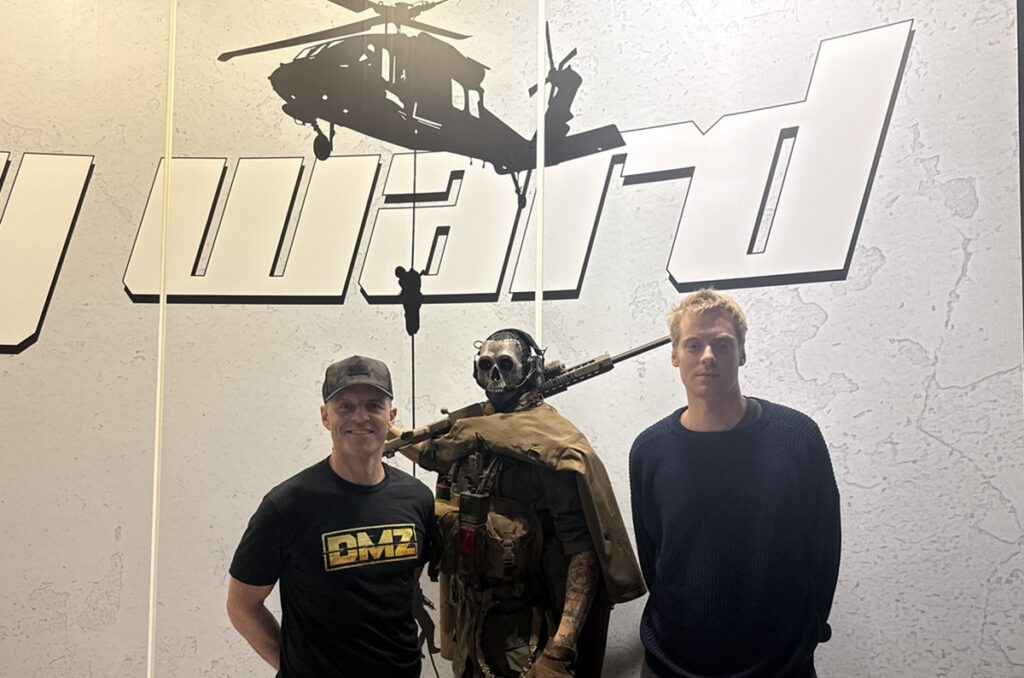
After I played, had a chance to do an interview with Infinity Ward’s Joe Cecot, studio multiplayer creative director; and Jacky Reynolds, lead game designer.
Here’s an edited transcript of our interview.
GamesBeat: Can you remind me of what DMZ was when you did the beta?
Joe Cecot: DMZ was very experimental for us. We had made Warzone. We wanted to do an iteration. We were seeing this new genre of extraction shooters emerge. What if we had AI and looting and whatnot? It was a challenging thing. What we went out the door with wasn’t really what we wanted to ship, but some of the limitations that were put on us made for a very approachable experience, a quick sandbox you could hop into with your weapons from Gunsmith. We had looting in the world, but it was a bit more like Warzone looting. You could keep contraband weapons.
Post-launch we started adding new features like active duty slots. You had some amount of persistence to your characters. We added exfil streaks, so you could get traits that would stack. We added a FOB that was like a menu with extra progression. We added new missions. We used it as a live testbed, kind of. But because of some of the decisions we made in making it, when we hit live we couldn’t take some of the big swings we wanted to. That’s what Modern Warfare 4’s DMZ represents.
GamesBeat: What was your perception of extraction and what people liked about it or wanted from it?
Cecot: It’s an interesting thing. We always had this saying. We talked about this when we were making Warzone. You don’t skate where the puck is, you skate where the puck is going. So we’d look at where the Warzone genre was going. For us and extraction shooters, we were seeing this genre emerge, but we were seeing a lot of the examples coming out–they were extremely hardcore. They were vicious in their difficulty. You’d die and it would say, “You failed to extract. You get 50% XP.” As opposed to, “Hey, you extracted, you get 200% XP!” It’s a perception thing.
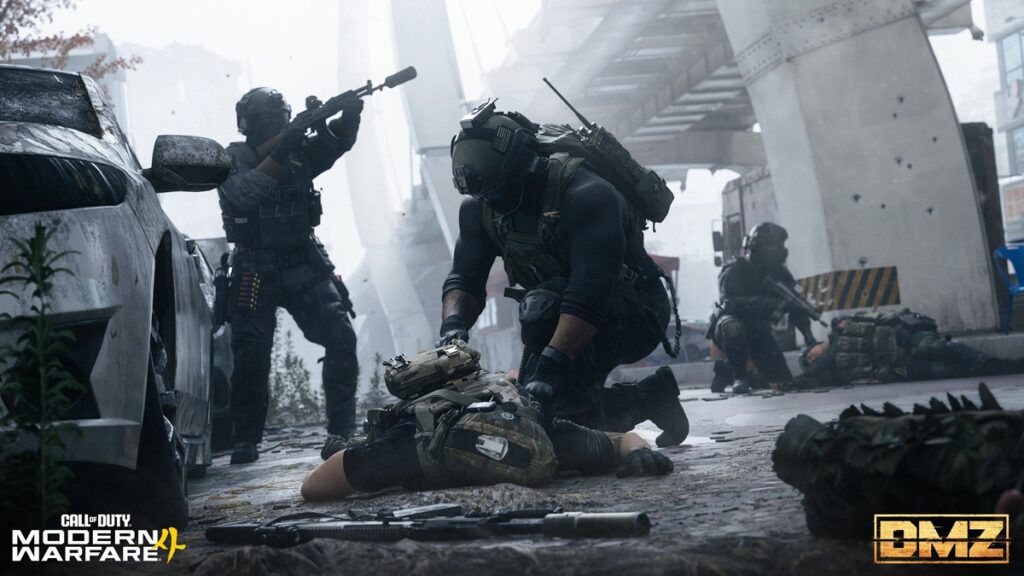
When we were making this, we felt strongly that the tension you felt because you were afraid you might lose some stuff–there was value and power to that. It created this more rewarding experience. The challenge was to do that in a way where loss didn’t feel as severe. You want the tension and fear of loss, but you don’t want it to be too punishing. You want people to come back. They’re playing for that feeling. That’s why battle royale exploded. Playing a lot of respawn shooter modes, you don’t care about your life so much. When you go into battle royale you think, “My God, I’ve found all these things, and if I did I’m going to lose it all.”
That’s what we were chasing when we looked at it. How do we get more people into this? Because there’s an even more intense feeling here.
GamesBeat: Did you think the experience needed to be shorter than Warzone, shorter than in battle royale games?
Cecot: No. At the time, too short made it feel like you didn’t get enough of what you wanted to do done. Too long, you would think, “Why am I still here?” In original DMZ we were trying to walk that tightrope. We built a pretty rich sandbox with contracts and strongholds and box spaces and things like that. But time-wise–another thing we talk about sometimes is the evolution of video games. Video games were extremely rigid back in the day. With Mario you had very set rules. Competitive games were almost like sports. But then you had things like MMOs and Minecraft, sandbox types of experiences. You got to define your own fun.
When we look at extraction shooters, to us it’s the marriage of PvE, PvP, and defining my own fun. When you talk about time, I could go in for 10 minutes in DMZ. I could go in, loot a couple of things, hit a police station, and leave. I could go in and hunt players for the whole match. I could go all the way to the final exfil and stay for 40-plus minutes. It was about players defining their time, and trying to figure out how to fit this genre into the type of game that we make.
GamesBeat: I do wonder why something like ARC Raiders was so late in coming, and yet turned out to be very successful. In some way you guys are also late to this party.
Cecot: I don’t disagree with that. But if you look at battle royale, from the ArmA mod into H1Z1 into PUBG into Fortnite into Apex and Warzone, there was a lot of iteration on that kind of experience. If you look at the extraction shooter genre, some of the very early iterations were severely difficult and punishing. Where there was this compulsion, it exploded. People really wanted that. But it was so hard that it told them, “No, you can’t go here.” With some of the more recent iterations, they’ve made it more approachable. They’ve made it more understandable. They’ve made it more accessible. What helped us as we were developing, we were making the 3D printer. We were making this crafting system. Then we got to go home and play a cool version of that. “Hey, this is resonating. This is working really well.”
A lot of what’s happened in the genre lately has also opened doors for us. It’s made people’s appetite for this type of experience–when Call of Duty 4 came out in 2007, the console shooter, the military shooter, the modern military shooter wasn’t really a thing. It wasn’t that mainstream. But once you go to MW2 and MW3, the starting point of the player changed. For extraction shooters, the starting point of where a player comes in and what they’re looking for has changed. I think ARC Raiders shifted that. Other games like ours will do that as well.
Jacky Reynolds: Two things I want to follow up on. I think a lot about how–a phrase I’ve come up with, I don’t know if anyone else says this, is “gaming literacy.” In the post-COVID world, that’s exploded. I think your average player is so much better than they would have been 10 years ago. A game like Elden Ring would have been considered too hardcore. Now it’s selling like hotcakes.
The one thing that ARC Raiders also did really well, which led to an explosion, and also one of the things we’re trying to do as well, is just the pacing of an extraction shooter. The pace in ARC Raiders, and in DMZ as well, feels not so consistently slow mixed with big spikes. It’s going to feel more gradual.
Cecot: It’s action-oriented. In DMZ I took you on those runs. There’s no shortage of looting, fighting, objectives, players over here, compounds. You’re in this sandbox and just having fun. Then you think, “Oh man, we gotta leave. Let’s get back to exfil and get outta here.”
Reynolds: Or “I gotta go to work, so let’s extract.”
GamesBeat: The feeling with ARC Raiders was also that you got to choose to stay to the very end, or just do something quick and get out.
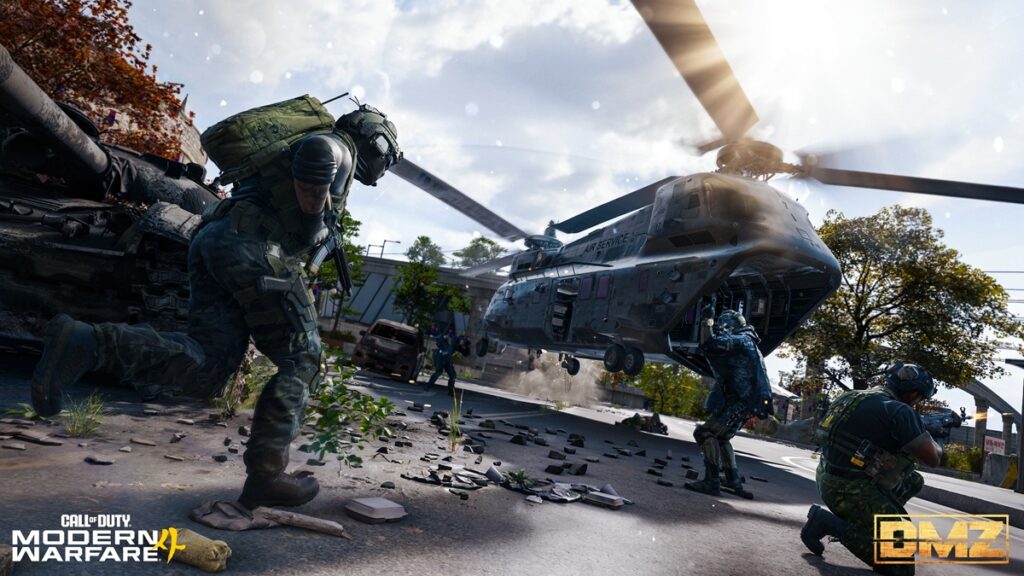
Cecot: We want to retain that in DMZ as well. Those exfils are there. You can load in, run to the exfil, and leave if you want. We do get pressure sometimes. People say, “Well, we should have all the players have to fight over one exfil.” We want players to find success, to find things that they care about, and to leave. If they want to go get in a fight, they can, but we want them to have the opportunity to choose that or leave. That way they can define their own fun.
If we say, “Hey, no matter what, in this mode we’re gonna give you a bloody nose,” if you’re gonna die 60% of the time, then a lot of people are going to say, “I don’t want this.” That’s the line we have to walk.
GamesBeat: Have you found a way to get players to want to work together? That’s one of the big things in ARC Raiders, the peaceful crowd. Are they ever motivated to work together because there’s something they can’t do alone?
Cecot: We have areas like–we went into mil-base today. Had we had more players, that would have been way more manageable. We have our commanders that are rolling around. The tank, the deathstalker, those choppers in the sky. We have a seven-foot-tall colossus, a radiation armored suit guy. Those are meant to be a bit more of, “Hey, we can go fight that, but that’s really risky. It would be better if we had people to work with.”
The main way, though, for us to push people is giving them the tools with assimilation that allow you to merge with squads, the truce flag. That lets you say, “Hey, everyone in the area, I’m cool. Don’t shoot.” That and proximity chats are things that let a player say, “I’m friendly.” It’s hard, otherwise, in our kind of universe, to come up with something that’s like the giant spider robot.
We also just don’t 100% know. We’ve tested at a small sample rate. We’ve built an experience that we love. We do user testing. But our real big test is going to be when we launch. The thing that we’re very careful with–it’s actually very hard, in an extraction shooter, to have a real test. You have to care about your profile. You have to care about your inventory. When you choose to fight someone, you have to care about what’s on your back, what you’ve got in. For that it has to be your account. That’s something we’ll pay attention to heavily as we go into live. We’re going to get this amazing influx of players who all care about their stuff. We get to see how the ecosystem shakes out.
GamesBeat: You have to educate the player to know what’s valuable and what’s worth going after. If there’s something really good in the military base and it’s fairly rare that teams are going to get it, players have to learn that. How do they pick up on that kind of lore?
Cecot: We have some good examples. You and I did the hospital story mission, but if you do the counterfeit story mission, it actually teaches you how to access the vault in the casino where there’s a lot of cash. You can do that vault even if you’re not on the story mission. All those mechanics are actually sandbox mechanics.
With mil-base, we went there and we weren’t prepared. We weren’t ready. But the story mission for mil-base has you sneak inside and figure out how to get into the armory, which is the biggest loot area in the map. We’re using the story missions, using the orders, as ways to teach players about the sandbox, so they can get that information, so they know where to go to get good loot and so on.
Reynolds: Furthermore, we have the campaign and MP to leverage as well. Stuff like killstreaks you can play in MP, those can show up in DMZ as well. Obviously something that’s a six-kill killstreak when there’s only six other players on the map, versus you do it through a whole POI and now you can fire on the whole area–there’s different value propositions there. But you’ve learned how to use this, learned what’s valuable. If you hear it coming you’ll know how to deal with it, because you encountered it in other parts of the game.
GamesBeat: It seems like player word of mouth really matters. They tell each other things. If you go in with someone who knows more than you, they’ll lead you where you should go.
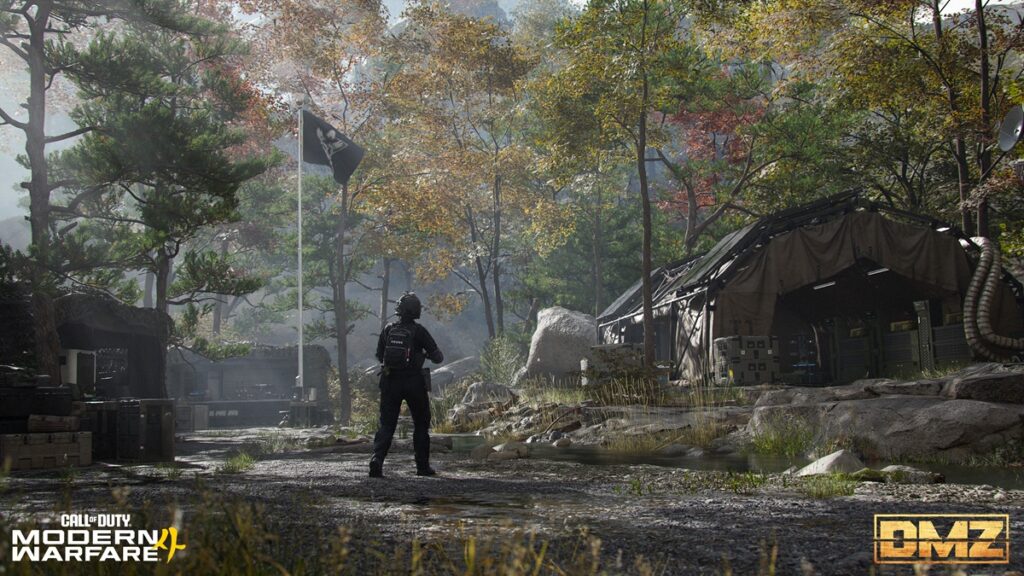
Cecot: I did that purposefully with you today, because I wanted to show some of the depth of Hajin. I took you to the police station to look for keys. I took you the lieutenant tower. We hit those missile silos, that tank graveyard, that toxic pool. All of that stuff is sprinkled throughout. I still don’t know all of it. I took you to some of the ones I know. But there’s so much depth in that experience. I think players will land and think, “Hey, there’s a tank graveyard over here. C’mon. There’s a missile silo just to the north. Let’s go.” That’s what we’re excited about.
The way we built the looting in DMZ, there are all these layers. The logical looting is police stations, clinics, hospitals, the military base. It’s very logical, what you would find in those places. But underneath that we have locked spaces. Keys you find will tell you where to go to use them, like the gun store we went to and some of the other locked spaces. We tried to find one in the prison. Underneath that we have things you can discover that are just word of mouth. There’s a locked door here, but it’s locked from the inside. I need to climb to the roof, drop down, grab the window ledge, and get in that way. The map is built with these layers where you learn where a key is to enter a certain room, or you learn about spaces you can get into with traversal.
I should have taken you to this one in Dead Town where you go there and the door is locked. But you look through the cage by the door and there’s a hole in the ceiling. You can climb around and hop up on the roof to drop in. Again, it’s another little loot room that doesn’t require anything except a little bit of prior knowledge.
GamesBeat: I’ve always felt like the Call of Duty campaign is what motivates you to go play multiplayer. If the campaign wasn’t there, multiplayer would be less involving. “Why am I doing this?” There’s always some kind of metagame that matters to people. I guess the advantage you have here–something like ARC Raiders doesn’t have that single-player game. You do. How do you think about ways single-player could extend into this multiplayer mode, or motivate people around it?
Cecot: The core MP, most of that probably comes from the maps and the locations. Geoff, my co-director, is much better than I am at talking about it. He’ll tell you that Sentry is actually this location in Russia that’s part of the campaign and it’ll show up in future seasons. Lithium is this special rare material mine that has an effect on what Russia’s going after and whatnot. All the maps that he built, he’s really good about giving them a kind of narrative. That helps drive the art, the set dressing, what’s happening, why we’re fighting over this. Everything has a reason. I really appreciate that he does that.
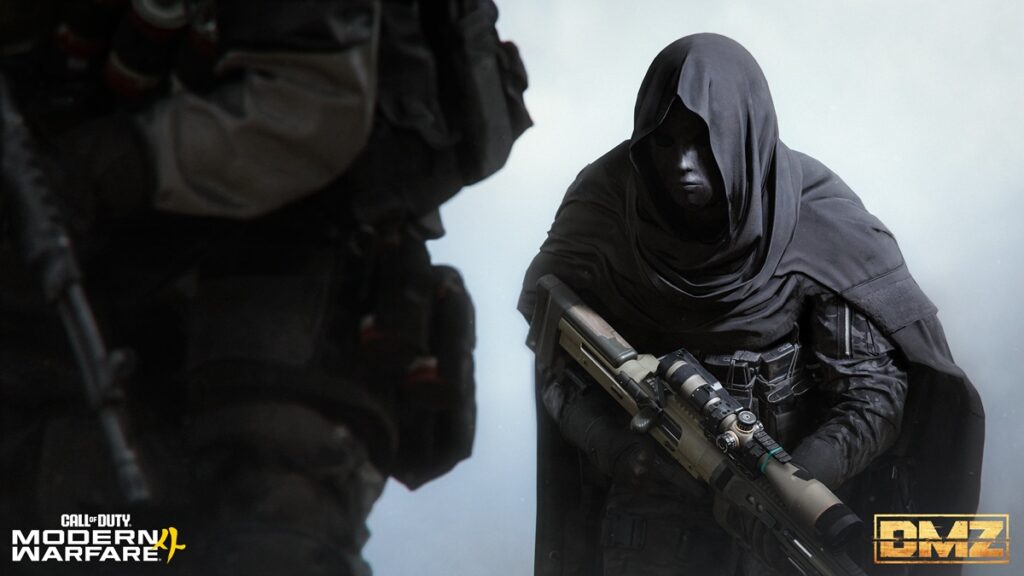
When it comes to DMZ–I can’t remember if we talked about this, but DMZ is a kind of continuation of the campaign. The campaign, for us, is the prequel. The invasion and occupation that occurs in the campaign, and then the nuclear meltdown, the inciting incident, that’s what causes everyone to flee. When Jeff and I talk about battle royale games or other extraction shooters, we’re always asking, “What’s the inciting incident? Why is nobody here” That allowed us to build and make DMZ feel real.
There’s the beach landing and some of the other campaign moments. They actually take place in Hajin. Hajin is this war-torn environment that’s built completely on top of what’s happened in the campaign. The nuclear meltdown, we had the same map designer working on the DMZ version of that as worked on the single-player version, Ryan Salomon. That allowed us to take DMZ and instead of it feeling like an appendage, it’s actually built on the foundation of the campaign. The story just continues. That will help us as we go into live seasons. The campaign does one story, and then DMZ will be this kind of offshoot. Then the next campaign will pick up. But it’s been really healthy for DMZ. Like you said, it gives us a foundation and a believability.
Reynolds: It sets the tone.
GamesBeat: In combat, in these different situations–in the campaign, when you’re in the hotel, you have to check every corner, because there’s someone around every corner in that set of rooms. That’s very intense. You have to be very sharp and on your toes there. Then there’s this stranger feeling of–you’re raining rockets down on these little tiny dots, or shooting at targets from a huge distance with the sniper rifle. What I wonder is, how do you try to replicate the feeling of those different moments from the campaign inside DMZ? How do you make these different kinds of encounters fun?
Cecot: When we talk about DMZ, there’s a kind of fantasy that when you’re coming in, it’s always as if–you have to kind of reset the world. You’re coming in to soldiers who’ve been on deployment for months. They don’t expect you to be coming in. That allows us to have the table set, and then you get to choose how you want to engage. You can come in guns blazing on a truck. You can snipe from a distance. We also have–you didn’t really get to experience it because we don’t have suppressors, but you also can be very strategic in DMZ and actually use suppressed kills. That won’t call in reinforcements. You can just down guys and go through systematically taking out a space, assuming you can kill guys without other people seeing it.
With DMZ we really leaned into having these different gameplay experiences. We did the hospital, which is more of–once you’re pushing the guy, the AI are pushing at you. You can play the casino a lot more stealthy and actually go through and clear the building. You have more corridor gameplay in the counterfeit and casino mission. The mil-base mission has you going into the interiors, the underground part of the base. Then post-launch we have a map coming that we haven’t talked about much at all, but it’s going to be very interior-based, more creepy. You’re going to be checking corners.
On the DMZ side we’re trying to hit those different experiences. We’ve tried to make the world, this ecosystem, where you can poke guys at range, but you have Deathstalkers flying ahead. You have air traffic. Twice today we ran into convoys where I said, “Don’t shoot the convoy. Don’t engage.” That would cause an influx of guys. For us it’s about creating this sandbox.
The other challenge, I would say, that we’ve had to adapt to when we made both the beta and then this game–we’re making a combat experience that’s for one player, but also for one squad of three players or for three squads of three players. When we program our AI and make them work, they have to be able to manage all of those states. Whereas the single-player campaign is a very paced experience you can play over and over again. We have a situation where two teams might assault mil-base from different directions. We might have two groups of players fighting with AI driving through. Our AI has to react to that and manage that.
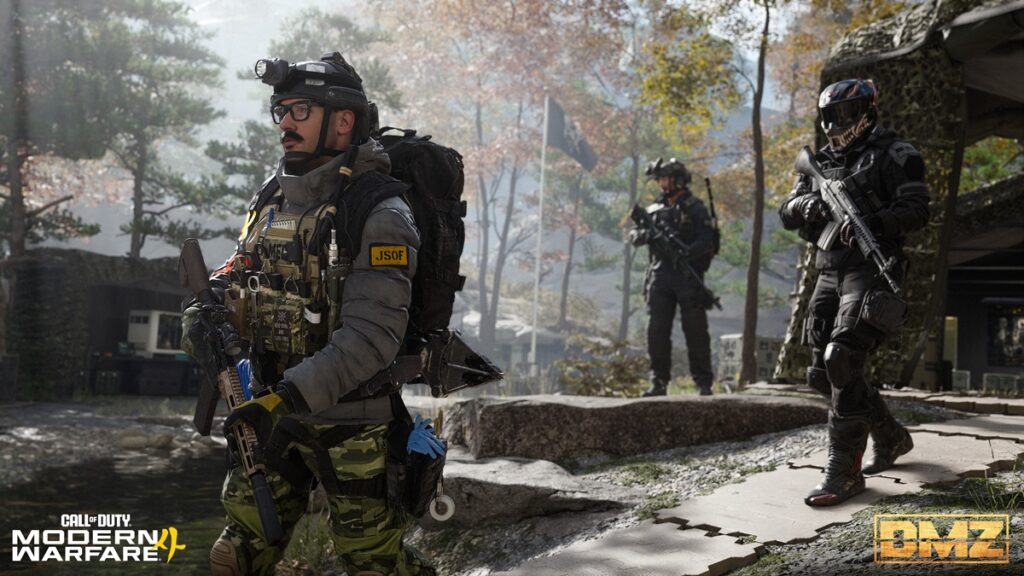
You guys didn’t get to experience it, but we’ve also done a lot of work to handle the solo player. Stealth helps them manage the sandbox, the stealth meter. As soon as an AI starts to notice you, you can hit the deck and they’ll stop. Suppressors will help you take them out quietly. The tourniquet allows you to get up. You can choose to leave at that point or use a medkit to get yourself back up to health. We’ve tried hard to make sure our sandbox works with nine players fighting or one player fighting.
GamesBeat: I did think the AI was particularly good in DMZ. There’s that notion of convergence on you and the need to escape. That was very interesting to experience. There are some fairly smart things coming at you from all directions.
Cecot: We’ve done a bunch of work with the AI where they–I think I mentioned when we were playing. They’ll hold their position and wait. When they hear you go loud, they kind of tuck in. If you don’t engage them, they’ll start to go investigate and come get you. It’s a mix. When I go loud outside, AI will start pushing me. If I run inside, they’ll come toward my last known location. You can break a window or hit a door and then run out the back to peek around. You’ll see guys post up on the door, throw in a flashbang, and then go in. You can scurry off away while they do that. We’ve tried to make them smart, but also believable in how they react.
It’s not perfect. You saw those AI that you were sniping in mil-base. They should have reacted and fired back at you. They should have moved. We’re still working on some things to make sure that they react well. But generally, they’re handling things pretty well. We had AI chase us in vehicles.
GamesBeat: Is there some way to marry some of these different goals? The campaign has a very good story where you follow one squad all the way through, but then you have this open world map in the middle. It changes up the experience. Is that just for the sake of variety? In some ways it’s disruptive to that story. Is there a similar challenge in DMZ, where you want to tell a story, but you also want an expansive, open experience.
Cecot: For us, DMZ is a sandbox that people can get into. They can practice it and master it. They can learn little pieces and get really good at them. “Oh, this is a new challenge.” I can’t speak to the campaign stuff. From my understanding, the way Call of Duty campaigns are always built, it’s about creating unique experiences that inspire a feeling in the player. Whether it’s the about the nightclub experience versus the open sandbox versus the big war beach landing. I know that when I first played Call of Duty 4, experiencing that pace and those different experiences, I was blown away as both a designer and a fan by the variety and the pace of that roller coaster. They could talk more about the why.
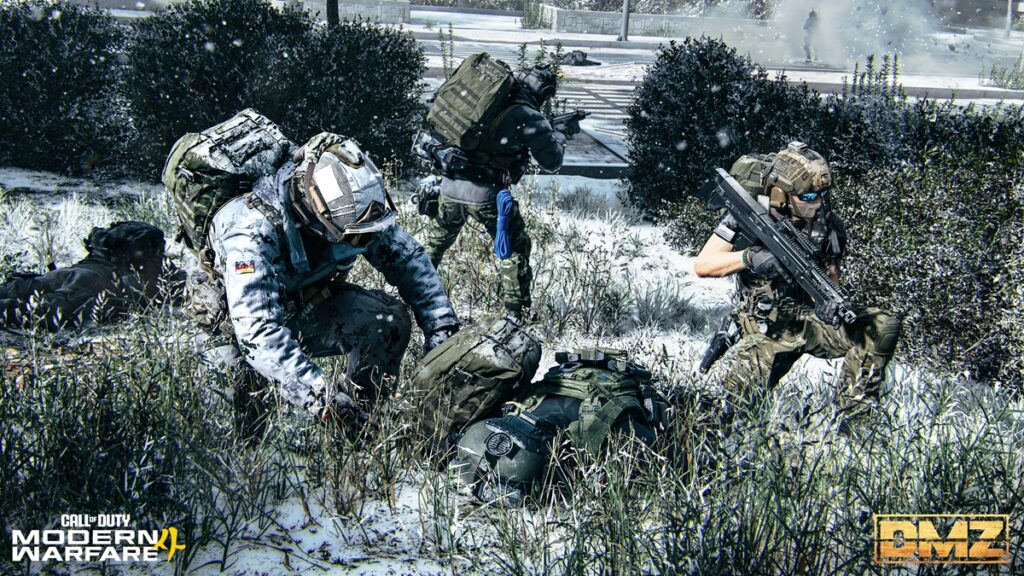
In DMZ we know we have to build something, first and foremost, that has a bunch of players in a map with a sandbox where they can have fun. That’s our basis. We want a really rich sandbox that they can master. They can choose where they want to go and what level of challenge they want. We can challenge them. The narrative part of it that we’re leaning into is so you have a purpose. Why is the world this way? What is my effect on the world? We can go into seasons and as you play through the seasons, we’ll keep telling that story.
When we looked at building DMZ, we looked at the people who played the beta and what they liked the most about it. It was this cross section. The biggest chunk was PvP, and then it was looting, and then it was exploration. We didn’t have a very good narrative in the original DMZ. It had almost none. When we looked at the different types of players who like different games, the exciting thing about extraction shooters is they can appeal to almost any type of player. If you’re a completist, if you like narrative, if you like collection, if you like PvP, if you like PvE. It’s this amazing mix of all these ecosystems that most other games can’t do. MMOs can do a bunch of these things, but it’s very hard for them to do PvP. Often that’s an added thing. We built our game for PvP from the start, and then we add all these other things.
To me as a designer, one, it’s kind of the evolution of video games, and two, it’s one type of game that can pull in all these different play styles. We have people in the studio who just love looting or love completing challenges. One of our systems designers, we ran an internal playtest and she did all the story missions. That’s what she loved to do. For me it’s that healthy ecosystem. I use the analogy of wolves and sheep. It’s this one ecosystem where they can both survive. The sheep are happy eating grass. Occasionally a wolf comes by and picks a sheep off, but the sheep can keep eating their grass.
Disclosure: Activision paid my way to an event where I played the full game. This story is the sole responsibility of GamesBeat.