
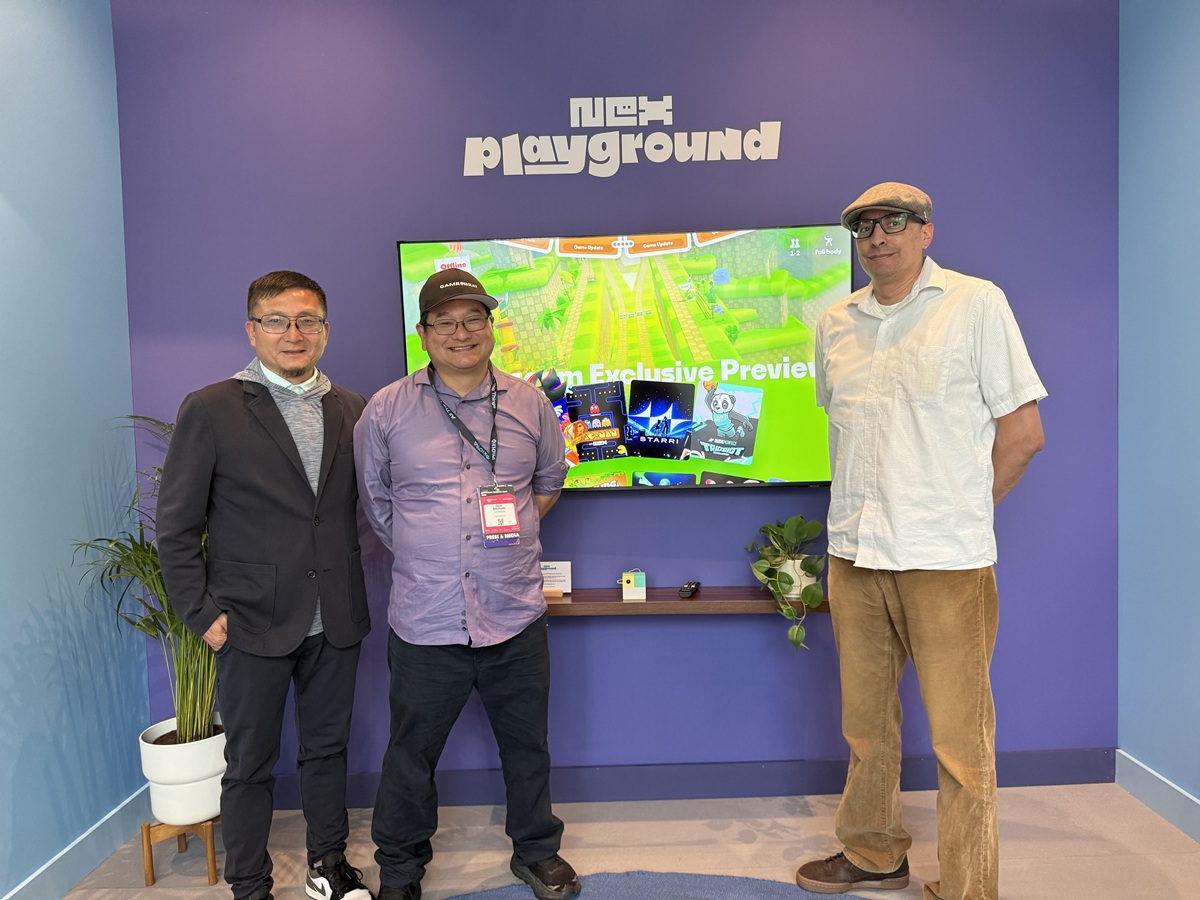
At the recent Gamescom expo in Germany, I played a motion-controlled version of Pac-Man that had never seen the light day before. It was a motion-sensing version of the game running on the Nex Playground, which is carving out a niche as a new game console focused on fitness and family play.
The uniqueness of the Nex Playground’s motion-sensing play, where you use your body instead of controllers in a way similar to the Nintendo Wii, and its focus on ease of use and fitness is what enabled the company to raise $150 million in funding recently. Nex also added to its leadership, with gaming industry veteran Jeff Shouger joining as CFO, and both Shouger and longtime gaming and technology executive Bing Gordon joining Nex’s board.
Nex is getting games from brands because it is expanding its footprint around the world. It’s breaking into retail and is available in 4,000 stores in just a few regions and i will be in 6,000 soon. It debuts in October in Canada, and it’s widely available on Amazon. It’s available in stores in North America, where you can see people laughing and waving their arms in store demos, said Tom Kang, president of Nex.
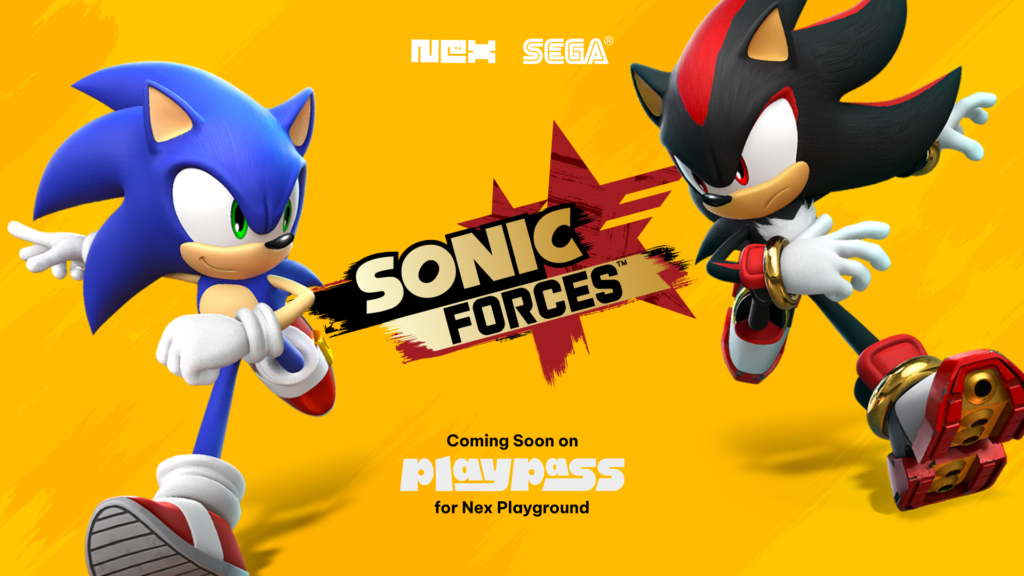
Pac-Man is the latest big brand coming to Nex, and the Nex Playground already has sports games available on its subscription from brands like NHL and the NFL. Sonic is coming soon and Bluey is set for October 6. Kang loves to talk about how he can get three generations of his own family to play games on the Nex Playground.
Other brands on board include Barbie, Teenage Mutant Ninja Turtles, Peppa Pig and Sesame Street.
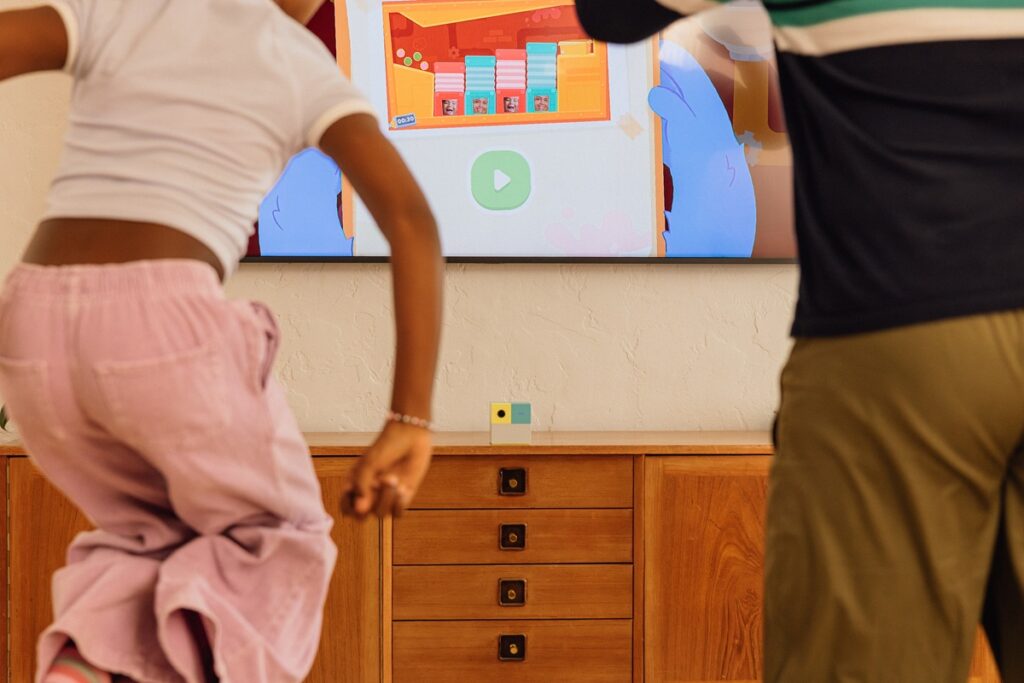
Nex is also in talks with various sports leagues to encourage youth participation in real-life sports. Priced at $300 with an $89 a year unlimited game subscription, Nex is a threat to the more expensive consoles from Microsoft, Nintendo and Sony. I kind of started that narrative by stating that it could be the fourth game console, when it had sold just 7,000 units. But Nex Playground is the little console that could, and it is now over a million units sold. And Nex Playground ranked as a top-three console during the 2025 Black Friday period and outsold Xbox, according to Circana.
“What you said (about the fourth console) is coming true. We’re selling really well. We’re already in 4,000 stores with Target, Walmart, Best Buy and Sam’s,” Kang said.
But its rollout is going to be much different than the main console game companies. Nex is focused on a strategy that could take five years to fully complete, as it isn’t going into local markets without local content. Rather, it’s developing games for local markets and making sure the content is translated.
Getting the licenses with the big brands takes time, as Nex is still a small company. But the leagues always have to worry about getting enough young people into their sports. They don’t want to lose traction with the next generation.
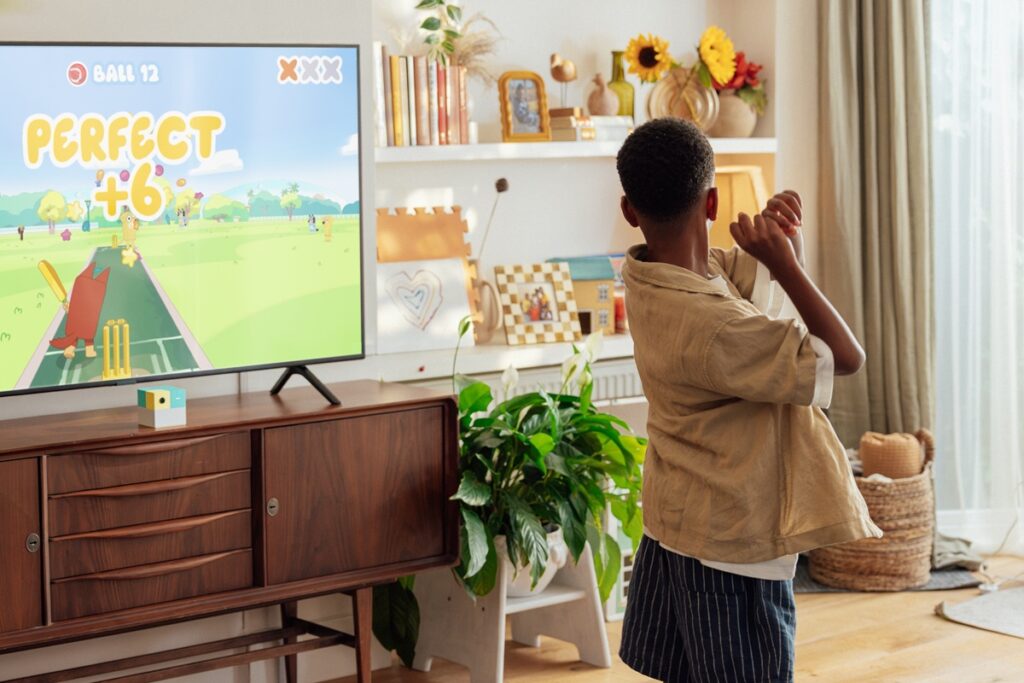
“The conversations with all the sports leagues have been relatively smooth because they share our vision of reaching youth and getting them learning the game, and if they can do it through games and active play, then they’re super enthusiastic about it,” Kang said. “We’re currently in talks with every single sports league.”
He added the challenge is harder now than it used to be.
“When you and I are growing up, we spent all our time outside playing sports,” Kang said. “That’s not what my kids do anymore. The leagues want to meet the kids where they are and what they’re doing right now, which is playing games. And we’re promoting active play. So this is kind of a unique opportunity for them to partner with us.”
The NHL game represents a title that is tailored to one of the new markets: Canada, where Nex will be available starting in October. The game will feature NHL marks, logos and stadiums. Leagues such as the NHL want to catch kids as young as possible and get them into the sport. Targeting them through games makes sense, and Nex skews a lot younger than the other machines. The idea is to partner on a vision to encourage youth participation in sports. And Nex is in talks with every sports league to do the same.
As for the retailers, Kang said they’re looking for innovation in the space since it’s been a while since Microsoft and Sony introduced their consoles in 2019.
“We have physical displays where you can go up and activate it and play these games,” he said. “All these stores want traffic, and they are looking for innovation and products that get people into the stores. When we got one chain, then everybody followed. This year, we have a giant increase in retail footprint.”
Of course, there’s all kinds of competition. Kids are often glued to their parents’ smartphones and tablets as well, and so they’re encountering games not just through consoles. They’re playing on mobile devices. But that’s where another facet of Nex comes in, Kang said.
For now, Nex is targeting English-speaking countries like the U.S., Canada, the United Kingdom, Ireland, Australia and New Zealand. It also plans to localize for other European languages later in the year.
“We are focused on a responsible growth strategy,” Kang said. “We are not just dumping product over our shoulders.”
The hope is to achieve a measured ramp, with a home run in the holidays and then more expansion next year.
“We want to make sure we don’t get over our ski tips and go too fast,” Kang said. “We expect to hit some critical mass in Q1 of next year. This holiday will be really big for us. We’re expecting to do some really big numbers this year. Once we achieve that critical mass then, then we’ll accelerate our global expansion, but not all at once. We’re not Nintendo, Xbox and Sony.”
Building a global footprint isn’t easy, and it involves a lot of hiring and partnerships. The company has received inquiries from more than 50 international distributors. But it has turned them down to keep control of its growth.
Nintendo has a new machine on the market with the Switch 2, but the price has hit $500, out of reach for many families, Kang said.
The true competition includes other products aimed directly at kids, like toys or electronic games made by companies like Vtech.
“We want to be the premium, high-quality brand for families with the most advanced technology with our motion gaming platform,” Kang said.
Kang said the company is lining up more titles for the holidays such as the Bluey game.
“It’s going to be featured everywhere,” Kang said.
Analyst commentary
Here’s some analyst commentary I pulled from our story on Nex’s $150 million funding round.
Mat Piscatella, an analyst at Circana, said in a message to GamesBeat that Last December there was “quite a kerfuffle around Nex Playground outselling Xbox for a week or two.” He noted that in 2026, the July sales for the Nex Playground were up 112% compared to the same time in 2025, with average pricing of the device increasing by 24%.
“It had a phenomenal run last holiday. We’ll have to see if it can repeat that performance. It’s well positioned at the price point, and it’s finding more space at retail,” he said. “It’s chugging along. We’re not talking massive units so far this year. It’s really a holiday/gifting thing.”
Yoshio Osaki, president of IDG Intelligence, noted in a message to GamesBeat that he is cautious about calling Nex Playground the “fourth game console.” He said that Nex’s growth shows the company is not a one-holiday fad, and the company is serving a market segment that is underserved. He noted that if Nex were truly a fourth game console, the company would compete for the same dollars as its rivals in households. It’s a good thing that Nex is pulling in households that weren’t buying game consoles at all, especially as traditional game consoles are becoming less affordable with price increases.
“In IDG’s view, what Nex has actually proven is that there’s a real fourth category in living room gaming, which is family/active play, and it’s currently one of the only companies seriously building for it. That’s additive to the market, and isn’t a 1:1 cannibalizer versus Xbox, PlayStation, or Switch,” Osaki said.
But he noted two things make IDG cautious. Osaki noted the Nex team had to increase its price from $249 to $299 this spring due to the memory shortage, the second price increase since the 2023 launch. If you add the $89 for the annual Play Pass subscription, the cost can be higher than the (older) Nintendo Switch. IDG also noted the reliance on NFL and Dude Perfect licenses can also cut into profits due to IP costs. Lastly, he thinks Nex has to watch out for Netflix and Amazon’s party and lightweight games available through subscriptions that consumers already have.
“2026 is a real test for Nex. Its hardware isn’t the value story it used to be now that pricing has caught up to mainstream consoles, so its case going forward has to be made on software and content depth,” said Osaki.
Piers Harding-Rolls, senior research director for games at Ampere Analysis, pointed out to GamesBeat that Nex Playground has found a niche with its kids-focused game offering, sitting in an area that includes kid tablets and smartphones, audio devices, and kid-focused subscription services, particularly for those ages five to nine.
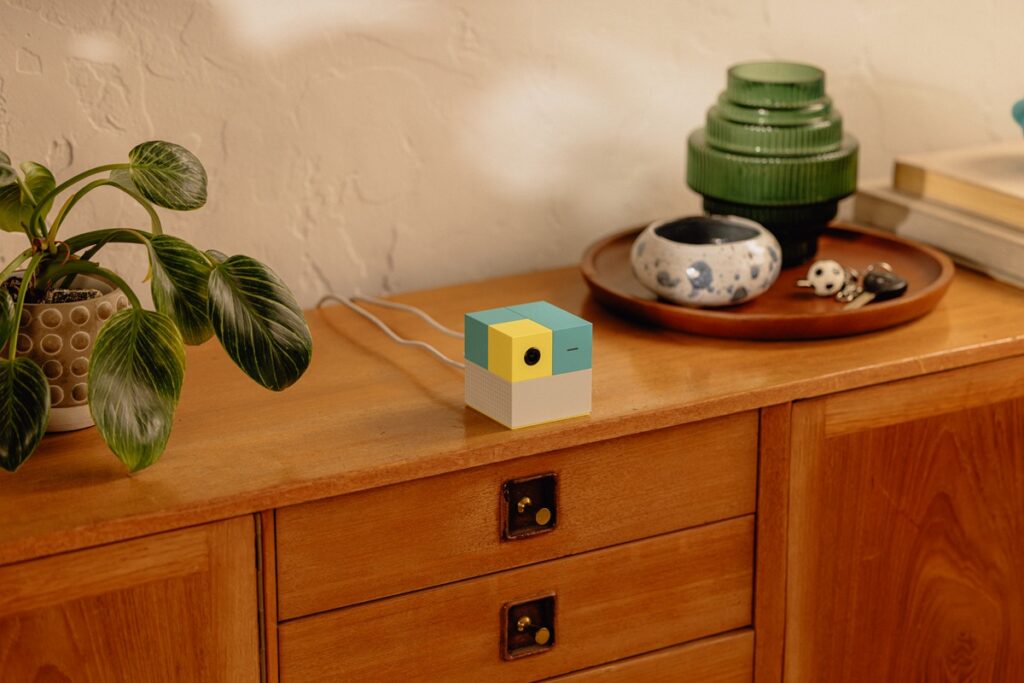
“The Nex Playground console builds on markets established by the traditional console companies through their motion control products and games, and leverages Android console expertise developed in the 2010s. The company has evolved the motion-controlled technology so that it’s controller-less experience can be delivered by a single RGB camera built into a very small device,” Harding-Rolls said. “As a device with graphical capability similar to the seventh generation of TV consoles (PlayStation 3, Xbox 360) it is not competing with the latest games consoles available on the market. The target audience and the tech capability of the device mean it is not directly competing with mainstream consoles from Sony, Microsoft and Nintendo.”
But he also pointed out as prices increase for the mainstream consoles, the Nex Playground could be considered a cheaper alternative in places such as Europe. This might be appealing to parents during the holidays.
“The timing of the Nex Playground also works in its favour – in Europe (and around the world) there is a growing focus on children’s online safety and increasing regulation in this area, as well as concerns around excessive screen time,” Harding-Rolls said. “The device offers an answer to these issues – capped spending, content specifically built for younger gamers, the ability to play offline and engagement driven by physical activity and local social play.
For families with younger kids, the appeal of subscription monetization is the cap on spending it enables so in that context it is an obvious advantage.”
But subscription fatigue is a real issue, and Nex will have to fight for subscription renewals in a competitive subscription market.
And he said, “Retail will be disproportionately important for Nex moving forward. Digital commerce almost acts as more of a conversion channel — converting existing interest, rather than driving that initial interest in the first place. Word of mouth also takes on significant importance here, as it can, to some extent, replace that physical demo experience for many people. Particularly as Nex is selling a social, family experience, and families typically like to connect over new ways to occupy the children. However, it is still important for them to try and replicate the demonstration effect online, and so they may have to lean more heavily on influencers and internet personalities to show this via video content.”