

Shorticald is an AI‑powered film and micro‑drama company that is producing short films that are made in as little as a day. There’s a chance it could be the future of entertainment.
The company was started in January 2025 to focus on short-form, vertical video series — including fully AI-generated shows for mobile audiences. Shortical began with live-action productions and transitioned to AI films, operating more like a gaming technology company using data-driven decisions and A/B testing. The firm has grown to more than 110 people.
Shortical is a mobile streaming platform focused on short‑form dramas, typically one minute to three minute vertical episodes, designed for phone‑first viewing. The Tel Aviv company is the brainchild of entrepreneurs Guy Shimoni and Igan Rozen. While others are struggling with the ethics of using AI to replace human filmmakers, Shortical is racing ahead and it could close in on $100 million in annual revenues.
The audience is over a million a month. That may not sound like much, but the conversion of the audience to paid subscriptions is high — perhaps as high as 20%.
“Shortical is a platform that creates stories that people return to,” said Shimoni, CEO of Shortical, in an interview with GamesBeat. “In the first period of the company, we were producing live action shows, and recently we transitioned into AI productions. The team behind Shortical are tech and gaming executives, and initially we felt very comfortable joining the market. Gaming and entertainment are similar in terms of the creative process, but it’s a whole new world that we’re very excited about.”

And now it’s hitting scale. Earlier this year, user-acquisition financing firm PvX Partners announced it would advance $100 million in growth capital to Shortical to help it find a new generation of viewers for its micro-dramas. That was a blessing for the high-growth category, suggesting the financial power of the AI-based business.
The company focused on romantic dramas and early-adopter women audiences, then it expanded into superhero and epic fantasy genres to reach males. It’s targeting English-speaking audiences for now as well as India and China.
The company’s first fully AI-generated series was Bound by Fire, which came out in May 2026. It’s a fantasy micro-drama that follows the story of Prince Chris, who returns home after eight years of war. He discovers the woman he loved has been condemned to death. His child, Zoe, was hidden from him. Queen Maggie tightens her grip on power and Zoe’s abilities become impossible to conceal, Chris must choose between his royal obligations and protecting his family. It might sound sensational, but it is the kind of thing that young folks are watching.

That’s a typical story for Shortical. And the team now plans to produce 20 hours of AI shows per month, alongside five hours of human-acted content. The creators use AI actors and AI‑assisted production pipelines to dramatically reduce costs. Shimoni said the company uses AI to improve its production efficiency by 10 or 100 times. It’s also betting that it can turn young humans into creators using its AI tools.
Of course, the obvious controversy is that Shortical is replacing humans with AI-generated actors and AI-produced shows. That could turn into a minefield, given the pushback and AI hate that many consumers and gamers are voicing toward “AI slop.”
Attitudes toward AI could matter as to whether this takes off further. Some may say they won’t watch any AI content, but another camp might not care at all, as long as it’s good.
“I can tell you that from what we’re seeing, people are getting hooked to the story because all actors in the AI production are acting the same,” Shimoni said. “It’s not like you have George Clooney that people come to see his his reactions, and they get attached to him. We have actors that people like, and they go from one show to another. But we see that people are getting hooked on the stories, and the story becomes very important side of it.”
The three things that matter

Shimoni said the company started out with a structure very similar to a mobile gaming company. But in a game company, making an hour of mobile gaming content could cost $200,000. But with AI, the results are very different.
Three things matter in this market, he said.
“The future of entertainment is going to be AI-driven, AI-boosted. Most of the content we will be consuming in the future is going to be produced by AI,” he said.
He added, “Secondly, the next streaming platforms are not going to be new platforms on our TV, on our computers. They’re going to be on our phones. Quibi tried it out, but only the Chinese companies like Bytedance actually found a product market fit, he said.
“The next streaming platforms are going to be on the phone, and lastly, the next media companies are not going to look like the traditional Hollywood companies,” he said. “Rather, they’ll be looking like a gaming tech company and managing the unit economics accordingly and making data-driven decisions.”
Shimoni said the company is data driven and it let’s the audience tell it what it wants. The early adopters are women, and they liked romance stories. But now the company is making superhero and epic fantasy shows as well.
Valuing humans?

Shortical notes that it is still valuing human creators, employing screenwriters, experience directors and more while using AI to scale production. A lot of its disruptive practices are similar to the creation of mobile games and video series. It optimizes for retention, uses cliffhangers, and engages in sophisticated analytics and monetization. And it moves fast. But the question is whether it be a pathway simply to riches or it could find its way to art.
All told, there are probably 200 people working on its films, including vendors in places like Israel, the U.S. and Europe. And it’s likely the company will raise equity financing along the way. About 80% of revenue comes from subscriptions, 15% from in-app coin purchases and 5% from advertising revenues. A 60-minute show could cost users around $25.
The main driver of traffic is the Shortical.com destination itself. But you can see the content on broadcast TV around the world, since the company licenses its content to broadcasters.
It’s not clear which way the company will go for expansion. It could become another streaming platform like Netflix.
“There’s two possible paths, the way we see it. One path would be similar to how streaming platforms work where you have like 10 top streaming platforms, with Netflix at the top. But you don’t have hundreds of platforms that are big, and each platform serves all audiences,” he said. ” This is one path where we we can go, and obviously Shortical wants to be at the top. In this case, only the companies that are now early on competing will survive.”
The other path, which is a bit similar to mobile gaming and TV channels, is to go where there won’t be platforms.
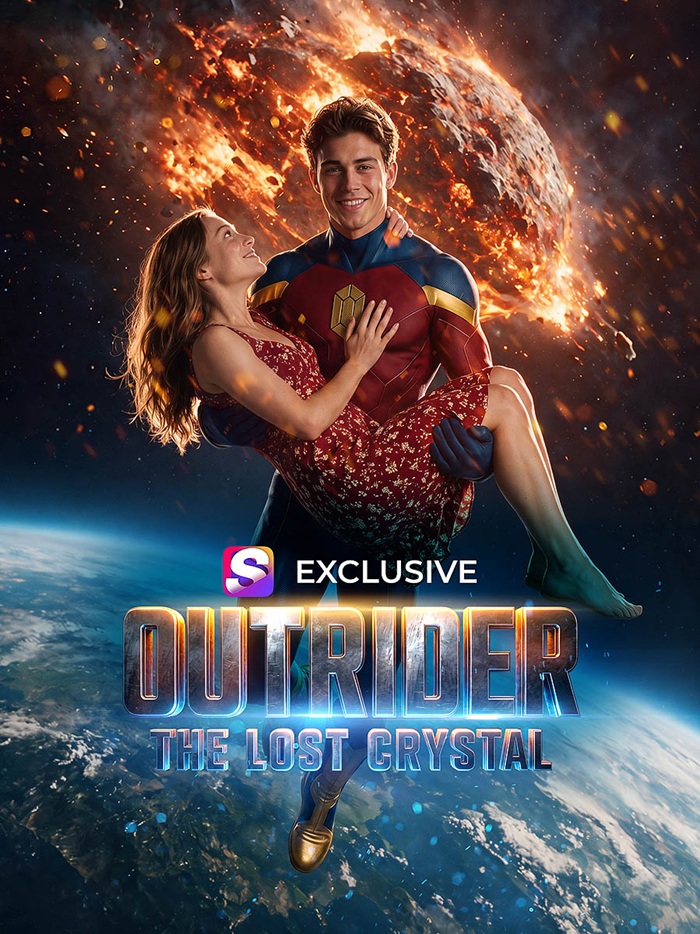
“We will be maybe a family of apps,” Shimoni said. “You will have an app for action, app for romance, app for animations, and maybe an app for Brazil and another app for Japan. And it will be a bit similar to mobile gaming, where you have hundreds of match-3 games and not just one. Or it’s like there are a bunch of TV channels that serves all kinds of audiences.”
Shimoni isn’t sure which path will prevail.
“We are very early on. I did see a lot of competition entering, and I thought it’s going to be like mobile gaming. We’ll have 1,000 match three games and we will have 1,000 apps,” he said. “But they do see that it’s harder to scale, and a lot of companies are failing, and only very few companies actually survived.”
There are Chinese companies that are competing in the West, such as Lillian and DramaBox — and they’re becoming major competitors They’re already big companies with thousands of employees. By comparison, Shortical has 110 employees and around 200 if you include vendors. The company has offices in Israel, the U.S. and Europe. Shimoni believes that maybe half the content on video platforms is AI now.
Where the people still matter is figuring out where to put emotion into a show. That added emotion makes a big difference in terms of adoption. Soon, the Hollywood talent will be coming on board, Shimoni predicted.
The roadmap
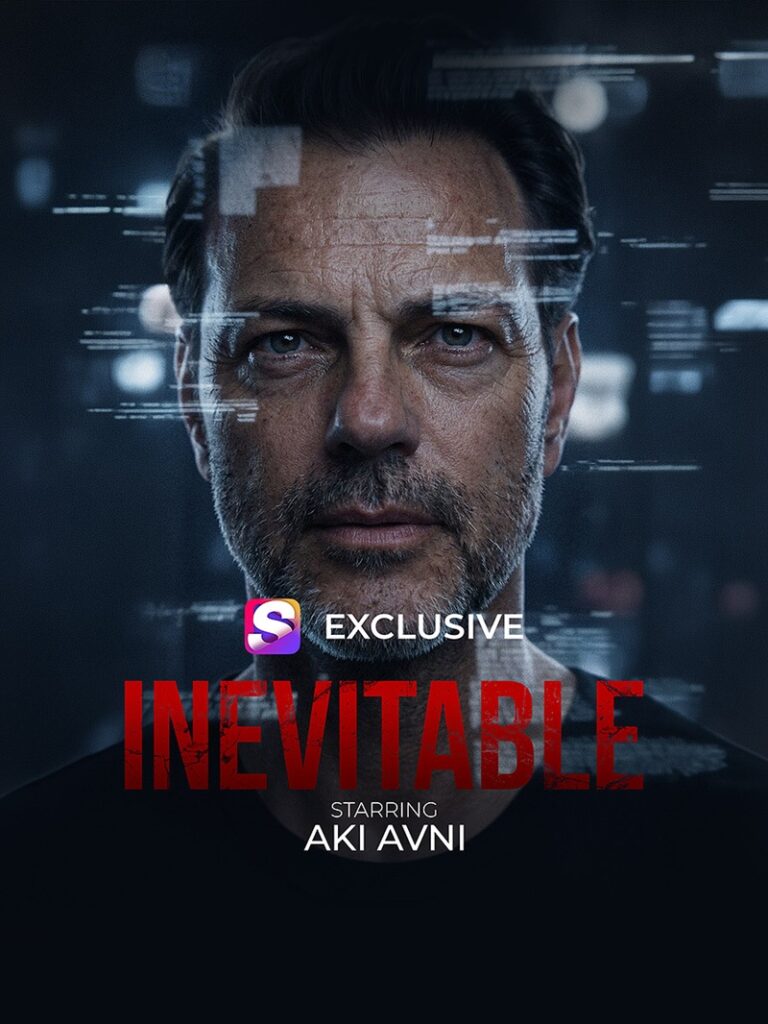
As for the roadmap, Shimoni said it is very early.
“We are at the Fruit Ninja era, even before the casual gaming era,” he said. “People will come back and play 30 minutes a day. When I look at the roadmap, as we move forward, we are creating the new behavior, a viewership behavior for the mobile phones that will eventually create a very sticky experience that people come back to 20 or 30 minutes a day.”
He said the market now is a bit more like cinema, where you come back to every weekend or a second weekend, and then you binge a show. But going forward, it will become more casual and people may come back 30 minutes a day. The teams can drop new content, gamify the experience, and offer live ops and reward programs to get retention.
The market has moved fast. At first, the tech wasn’t there. The physics was off and the 3D models weren’t good. But things changed quickly. Shortical now uses the latest AI tech such as Bytedance’s Seed 2.0 tech for generated visuals.
“We just try to serve our audience and figure out what they want to be watching, and then you know it’s a loop. The more stories we create, the more users we get, the more data we get, the better stories we then create,” Shimoni said. “And the market is still in its early days. What I wanted to say that now mobile gaming is such a big topic to cover. Mobile shorticals will be as big, if not bigger, to cover. It’s gonna be a a big part of our lives in in 10 to 15, years, similar to how mobile gaming started and is nowadays mainstream. You wouldn’t find anyone who who hasn’t played a game on their phone in the last couple of years.”
Shimoni notes that Christopher Nolan’s The Odyssey cost $250 million to make. But he thinks what AI can offer is different.
“The true potential of AI is not to take the 2.5 hour movie and make it for cheaper. It’s to take the two and a half hours and maybe make tit a 10-hour event,” Shimoni said. “It’s a very exciting time.”