
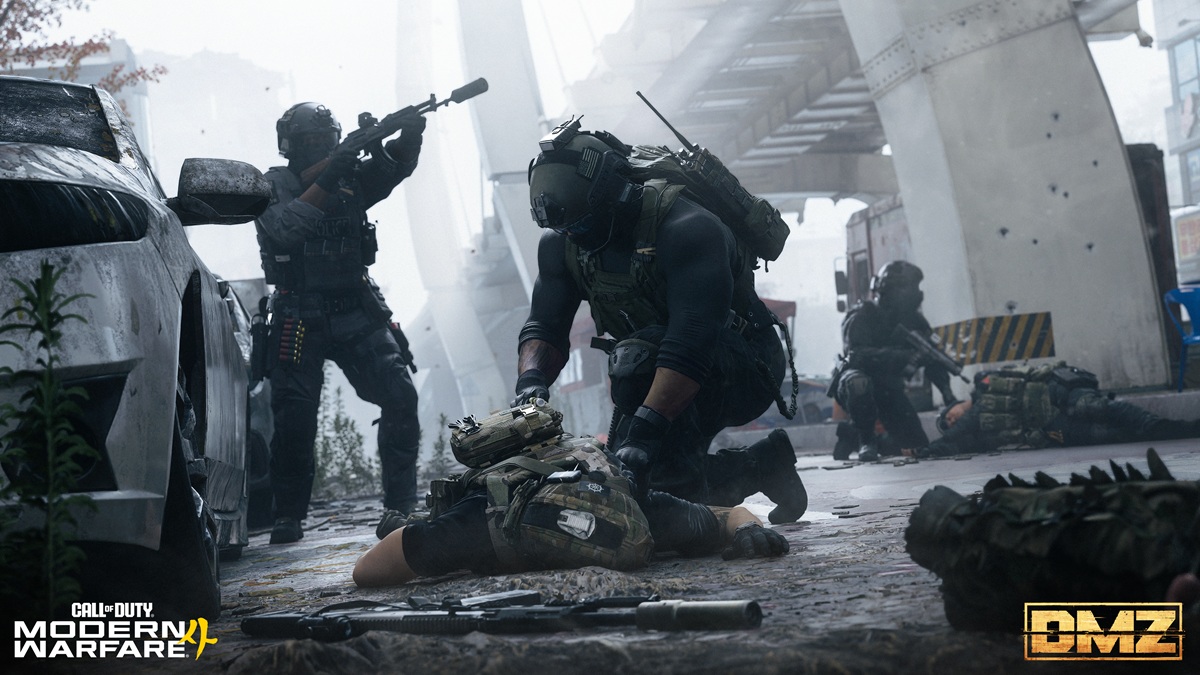
DMZ is Infinity Ward’s new extraction shooter, a living world with unpredictable enemy encounters, built into the multiplayer mode of Call of Duty: Modern Warfare 4.
I had a chance to play it at Infinity Ward’s headquarters in Los Angeles and in each round it felt like I was entering a dangerous world of DMZ’s Hajin exclusion zone, where I felt the pressing need to fight, loot and run for the exit. I haven’t been drawn to a lot of extraction games, except ARC Raiders. And this extraction mode has a lot going for it.
While many such open world maps have been disappointing, this extraction game is fun. It’s like Forrest Gump’s life being a box of chocolates. “You never know what you’re going to get.” The dynamic world of DMZ is full of enemies who appear in different places, even at the gas stations where you have to gas up your stolen vehicle. There’s shifting weather, from sunny days to sideways rain. And you’re motivated to fulfill contracts and take risks inside the DMZ to boost your progression from match to match.
Early access to DMZ begins today, after the single-player launch last Friday. On the October 23, multiplayer starts.
But if you get greedy, and try to go for a well-protected place for loot, or try to spend time on one more contract before you extract, you may run into a rude surprise, like I did on a run in the video above with Cecot and my co-op partner Ned Jordan of The Gaming Temple. And if you get killed or fail to extract from the mission in time, you can lose all — your armor, your guns, your loot and your whole kit.
Thankfully, DMZ comes with some kinder design. You earn a bunch of faux money each time you extract, and if you lose one of your characters, you can buy that character back. You can also 3D print equipment like replacement guns and attachments in your Forward Operating Base (FOB). But it can get expensive and you can run out of the fake cash. For instance, if you have a high-level gun with a lot of attachments, it will be expensive to replace that weapon.
I thought you actually had to go back into the DMZ and retrieve the body of your dead character. But that’s not the case. You can simply make the purchase from the menus in your forward operating base. The thing is, you’ll have to play a lot of games to get enough loot, cash and characters so that it lessens the pain of losing everything in one mission. That’s going to make you careful and to care about who you go into DMZ with.
If you really want to get high rewards, you can take the risk of going after specific daily orders or just target high-value targets.
This isn’t the old DMZ
Back in 2022, the beta version of DMZ debuted with Warzone 2.0 and Modern Warfare II as a way to compete with the popular Escape From Tarkov. It took the pressure off players who weren’t good at battle royale and let them loot and fight NPCs in co-op teams. Post-launch, the team added features like new missions, active duty slots, an FOB, and exfil streaks. But it didn’t last. By 2023, Infinity Ward dropped it.
But now it’s back. Joe Cecot, multiplayer creative director at Infinity Ward, said in an interview that the team tried to get something out fast to get into the extraction shooter players who were not quite so hardcore as the Tarkov players. Then it shelved it, and it cooked it for a while. The team continued to concentrate on making the new DMZ approachable, as a quick sandbox that you could hop into with your weapons leveled up from MW4’s Gunsmith.
Modern Warfare 4 evolved the extraction shooter into a deeper, more cohesive, and more persistent combat experience shaped by what resonated most with players.
Set in the Hajin exclusion zone (a fictional place with a nuclear radiation leak at the confluence of North Korea, Russia and South Korea), the place is uncomfortably akin to a potential war zone in the real world.
You deploy via helicopter into the zone and you just appear in the world, after you’ve presumably exited your helicopter. There’s no more trying to land at a given spot in the map. You make decisions about pushing deep into danger zones — rated from mild to critical — where there are different levels of enemies.
Once you’ve leveled up or made friends who are veterans, you can take on bosses such as Lieutenants in helicopters or plant bombs at a military base or take on a much-feared tank that just won’t die. It’s like big game hunting, but where the targets shoot back. You can also unearth some story arcs from the single-player campaign.
Finding treasures
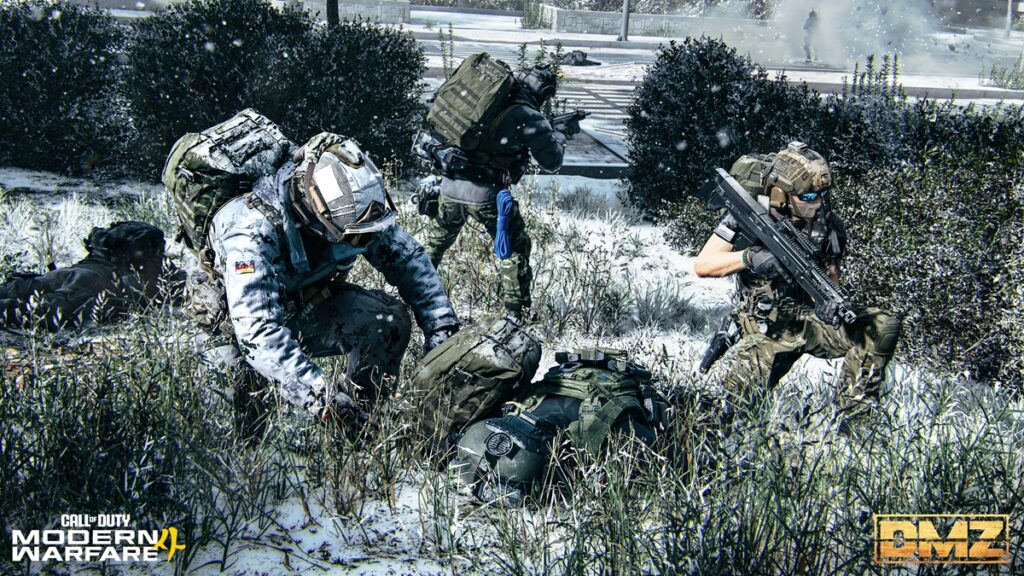
In the half-dozen times I played, the match times varied. We could get in and out as early as 15 minutes if we extracted early. But if we waited until the very end — or sometimes too long, the match could last more than 40 minutes. Cecot showed us how to find a key in a police station where you could unlock special storage rooms. He took us through a mission where we had to extract a wounded North Korean officer in a hospital. It was a crazy firefight while we were being shot at while rolling a hospital bed through a corridor, into an elevator, and then to exfil.
Cecot showed us a tank graveyard, a toxic cesspool with treasures underwater, places where heavily armored soldiers guarded places, and missile silos where you could go inside an underground bunker and find good loot.
And he noted that hospitals are a kind of haven for players as North Korean NPCs won’t attack you inside — though human players might as they pursue the healing loot that could save players from death.
Oh, and as you can see in the video above, don’t try to go into critical threat areas like the military base unless you have the right firepower and level to deal with it. Cecot thinks this kind of knowledge, passed along by word of mouth, is how the game will spread from player to player.
Balancing player desires and risk profiles
Cecot said the developers still wanted DMZ the tension of extraction as well as a less brutal environment for players who weren’t esports stars.
“When we were making this, we felt strongly that the tension you felt because you were afraid you might lose some stuff–there was value and power to that. It created this more rewarding experience. The challenge was to do that in a way where loss didn’t feel as severe. You want the tension and fear of loss, but you don’t want it to be too punishing. You want people to come back. They’re playing for that feeling,” Cecot said in an interview.
The battlefield itself might kill you. Following the events of the Modern Warfare 4 campaign, an exclusion zone across the Korean Peninsula remains saturated with abandoned military technology, weapons stockpiles, and destabilizing threats.
Operating as a shadow CIA asset, you are deployed behind enemy lines and tasked with
securing the various weapons and technology left behind before they fall into enemy hands. Both Rogue Operators and enemy combatants are active throughout the zone, forcing every squad to decide when to cooperate, when to engage, and when to disappear before tensions escalate.
Story Missions/Dynamic Ops/ Free Roam
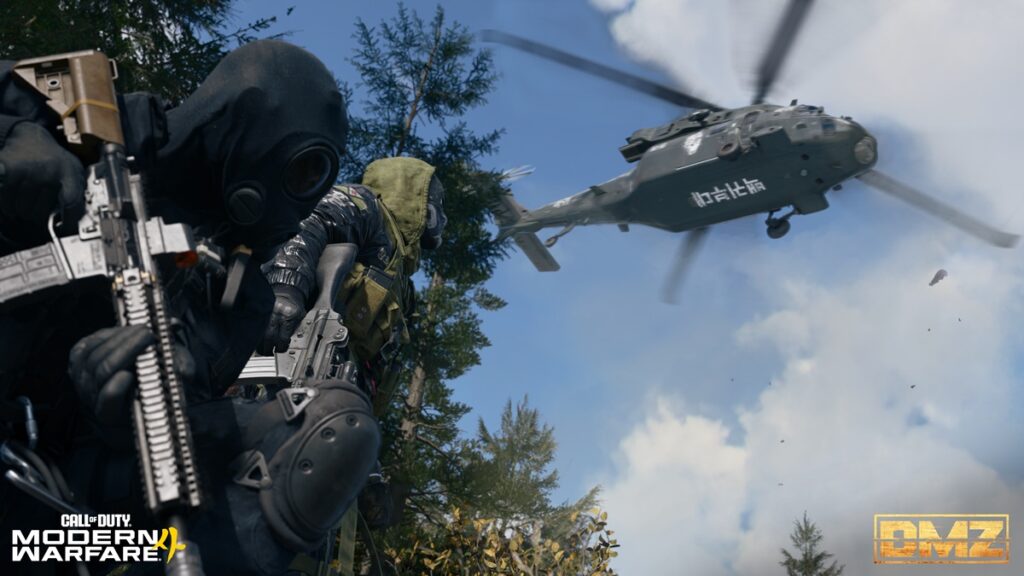
A collection of Story Missions expands the narrative of Modern Warfare 4 with unique objectives, high-stakes action, and gameplay scenarios unfolding inside specific points of interest across Hajin, all within a live DMZ server populated by other Operators pursuing their own missions.
Players can also choose to deploy directly into Dynamic Operations to earn Supply Drops or Free Roam for a self-guided experience.
Dynamic world systems respond to every action. Vehicle convoys move across the roadways, air traffic fills the skies, and hostile forces constantly reposition WMDs and strategic assets. With enemy factions and rival human squads battling for control of key locations, every operation can evolve in unexpected ways.
As we were torn apart and ready to escape, Cecot warned us not to fire at a passing convoy, as it would only draw more trouble. I felt that the enemies were very good at closing in on us. If we kept killing them and staying in one spot, they would soon call in all kinds of help, from more squads to attack helicopters or armored soldiers with riot shields. The enemy presence was where the world seemed most alive.
Forward Operating Base
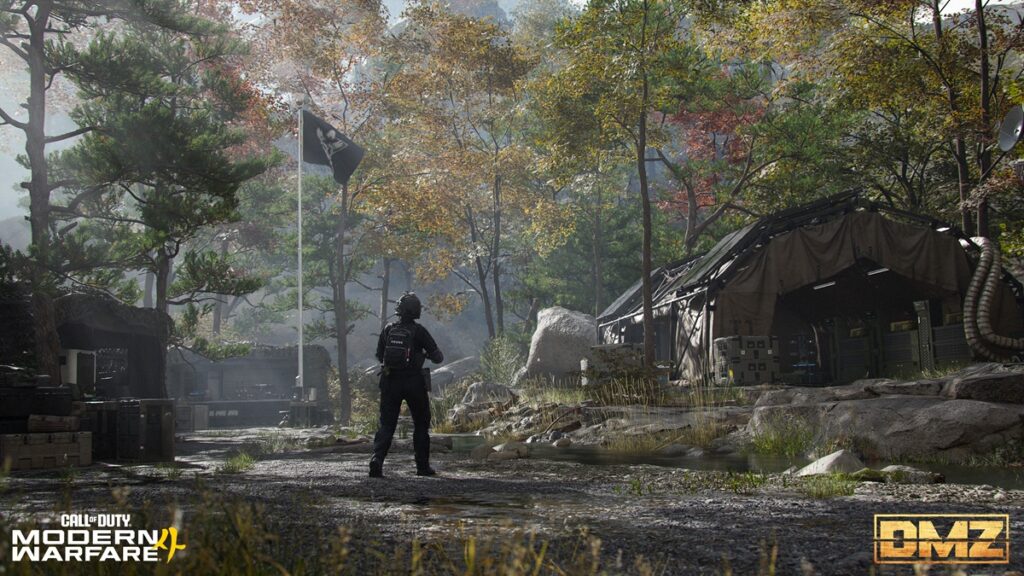
Before and after every extraction operation inside the DMZ, players return to their Forward Operating Base (FOB), a central hub built around preparation, progression, and long-term squad support.
The FOB gives players access to key operational services including the 3D Printer crafting station, and the stash where inventory items can be stored deployment to deployment. In the FOB, you can purchase weapons with your cash, practice guns on a firing range, inspect bounty boards to hunt down player killers, and unlock additional upgrade systems over time.
Operator Traits
Within the Active Duty station of the FOB, players can spend earned Trait Points on individual Operators to improve their effectiveness across a variety of disciplines, utilizing them from a roster of persistent characters. Earn Trait Points during missions and invest them into one of three Trait Trees, each leaning into a different skillset related to combat, scavenging, and other capabilities. Points are tied to the Operator who earned them.
Crafting
Transform recovered resources into valuable equipment and combat-ready tools. Materials are
disassembled automatically during a mission so players can stay focused on the action, while inventory management is easy to navigate. Extracted loot can be used back at your FOB within an intuitive crafting system built around a powerful upgradable 3D Printer capable of unlocking increasingly advanced crafting options, allowing players to manufacture equipment and rare gear.
Warzone overview — Full Integration in Season ̕ 1
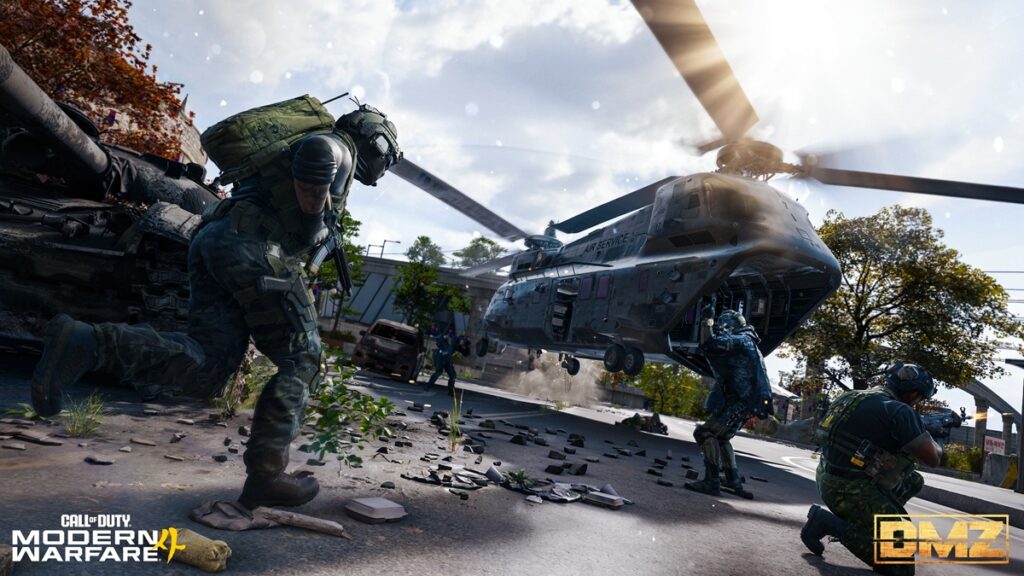
Beginning in Season 1, Call of Duty: Warzone will integrate Modern Warfare 4 content and seasonal progression as part of a connected experience between both titles. Plus, players will get more control over the Operator Skins they see in Call of Duty: Warzone with the new Operator Skin Toggle.
The toggle only impacts your game and not the experience of others.
There’s a new Resurgence Map: Zodiac Resurgence returns with the all-new Zodiac, a compact combat zone built around the DRC Advanced Systems drone assembly and manufacturing headquarters.
You can fight from the company admin building through and beneath the central double Trackline with multiple trains, then push toward the R&D facility and shipping docks as squads battle across offices, manufacturing buildings, rooftops, tunnels, and the surrounding shoreline. Expect an explosive tank battle, legendary loot, action across the ground and air, and other surprises to find during your matches.
New Battle Royale Map: Hajin
Warzone players will get their initial taste of Hajin in DMZ at launch. In Season 1, the map will join Call of Duty: Warzone as a large-scale Battle Royale map. Stay tuned for more info on Hajin and Call of Duty: Warzone later this year.
Community Wins
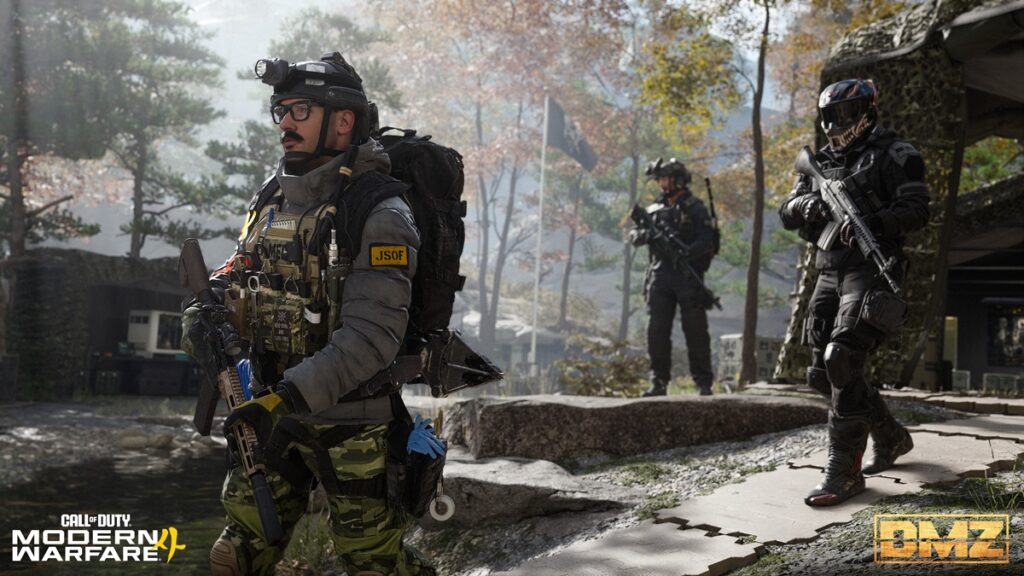
Across the Beta, player feedback informed quick tuning for weekend 2 across weapons, time-to-kill, spawns, movement, audio and visibility, with additional changes coming to launch.
Starting with Season 1 of Modern Warfare 4, a new Operator Skin toggle gives players more control over the Operators they see in Call of Duty: Warzone only, while Carry Forward continues to provide access to previously earned and purchased content.
Starting with Modern Warfare 4’s launch, double XP tokens will only count down during matches.
In Modern Warfare 4, updates no longer require restarts during game boots, reducing the friction of loading up the game after an update, though you can still expect a restart when an update goes live when you’re actively in-game.
Ongoing work across Call of Duty teams to detect disruptive behavior earlier, improve moderation efficiency and effectiveness, and reduce disruptive voice interactions players encounter in matches.
The new Weapon Progression system cuts down on redundant unlocks. Unlock an attachment once and build out an arsenal that gives you more options as you move from weapon to weapon.
Two Prestige path options give players a choice in how they progress, with Classic Prestige offering the traditional reset, while Regular Prestige lets players keep their Create-a-Class unlocks.
Conclusion
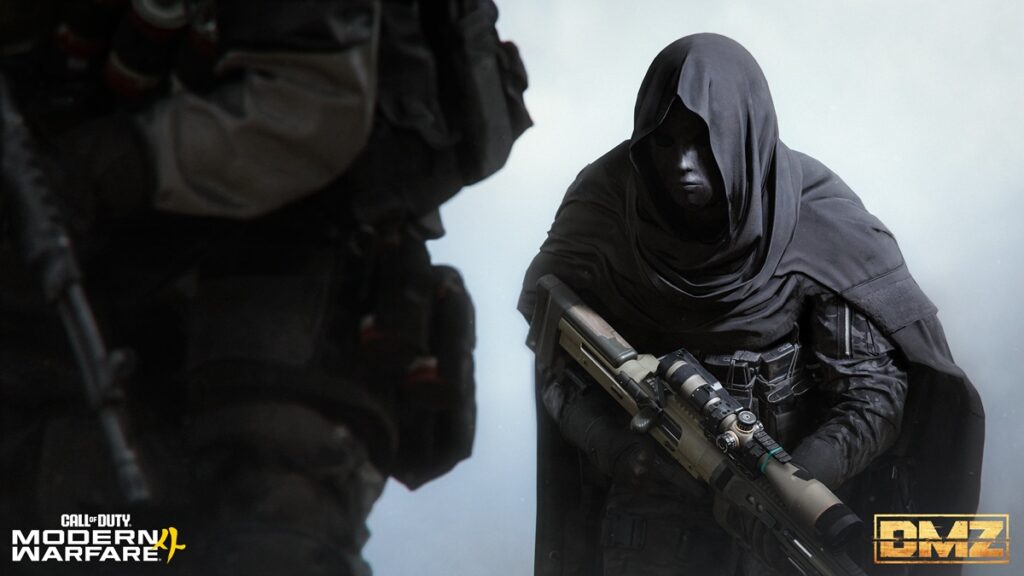
There are some tradeoffs in DMZ. If you want to play for a long match, you can do so and perhaps stay in the world for 45 minutes, where you’re cutting it close for missing the last chopper out Hajin.
That’s longer than many extraction experiences, and so it’s a bigger time investment you have to make as a player. On the other hand, you can do one mission, extract and be back at your FOB in 15 minutes. I had one such match, and I enjoyed it.
You can spend a lot of time in the big map of the Hajin exclusion zone and never really discover everything that’s hidden in buildings, terrain and underground bunkers. I think it’s great and fresh achievement that could make multiplayer stickier than in the past.
If I had to rate DMZ as a standalone gaming experience, I would give it 4.5 out of 5.
Disclosure: Activision paid my way to an event where I played the full game. This story is the sole responsibility of GamesBeat.