
FreeAnimal officially launches today as the first global creative agency built for the entire games ecosystem. It’s a combination of seven award-winning game-native agencies owned by external development conglomerate Keywords Studios.
FreeAnimal united the expertise of Keywords Studios’ agencies Gnet (spelled gnet by the company), ICHI, KWM, Maverick, TrailerFarm, Big Farmer, and Fire Without Smoke. FreeAnimal offers a nimble global model designed to tailor every engagement to a partner’s specific ambitions, audience, and stage of growth, helping the entire interactive entertainment ecosystem thrive.
FreeAnimal clients will continue working with their trusted agency leads, now with the added benefit of a single point of contact backed by an expanded global network of specialists across studios in Los Angeles, London, Brighton, Montreal, and Quebec City. There are hundreds of people working for the seven agencies already.
“Collectively, we work with the world’s most ambitious gaming brands,” said John Rosenberg, global head of FreeAnimal, in a statement. “By fusing seven agencies’ perspectives, geographies, and experiences from across the games industry, we’ve created a wildly effective creative organization that combines boutique strike teams with global scale. At FreeAnimal we simply call the approach The Right Team for Every Game, bringing together the right specialists, at the right time, to solve the right challenge for every client.”
I interviewed Rosenberg about the thinking behind FreeAnimal.
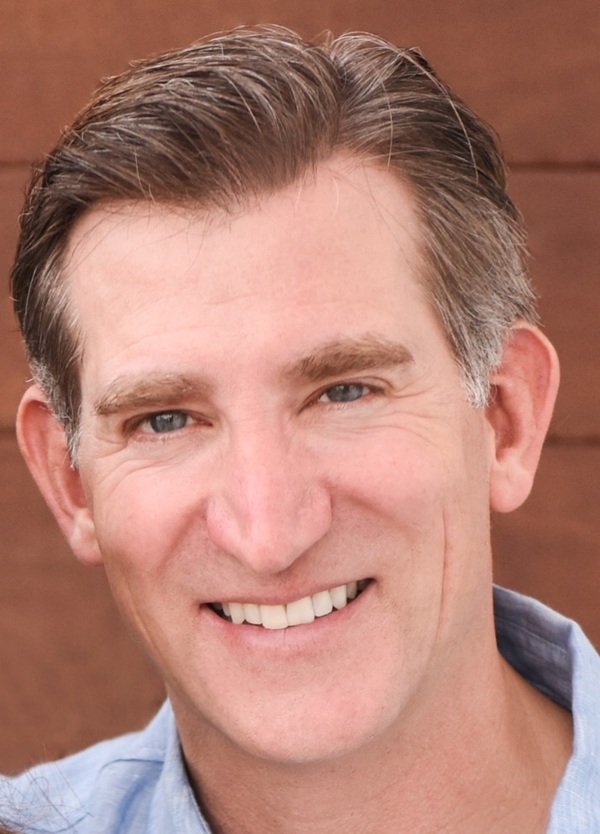
Rosenberg said that Keywords, which has thousands of external developers who make games, acquired Gnet in 2020. In the case of FreeAnimal, a creative agency is a partner to clients that need to go to market with a game with big ideas for a creative marketing campaign.
“We do everything in the way you market a game or product, but different clients need different things. Some want that entirety of a creative campaign, and others have very specific needs. They know what their product is. They know what the audience wants. They need an asset to satisfy that, so you have to think about what does that asset look like and then produce it. So it’s a it’s a broad definition to a single term,” Rosenberg said.
Keywords has acquired various creative agencies over time, and now it is combining seven of them into one entity that can deal with clients in the gaming space.
“It made a lot of sense to be able to harness all of that creative energy and talent into a single entity, as opposed to having it as small individual entities,” said Rosenberg, who previously ran Gnet. “So, the idea of merging Gnet and Itchy and KWM and Maverick and Trailer Farm and Big Pharma and Fire Without Smoke was that you would be able to get that creative powerhouse from all these companies that have been around for upwards of 25 years. And then service the market in a way that no one else really can.”
For every brief, FreeAnimal curates a bespoke team of specialists matched to the specific IP and creative challenge. By leveraging world-class expertise across its global network, the agency delivers custom, bold campaigns that turn audience awareness into belief.
FreeAnimal’s collective works have earned the trust of many of the world’s leading publishers, developers, entertainment companies, franchises, and brands. By unifying these diverse perspectives, FreeAnimal provides game-native expertise, cultural fluency, strategic depth, production excellence and Keyword’s technology, AI and data platform that no other agency can provide.
With studios in Los Angeles, London, Montreal, Quebec City, Brighton, and beyond, FreeAnimal unites the award-winning teams into one creative organization.
Rosenberg said, “You’ve got all that creative juice and experience and those big portfolios. You can actually go out to the market and service a broad spectrum of (gaming) clients. You can go to the biggest game publishers, and and give them exactly what they need. You can go to those who are self-publishing and need the full gamut of your go-to-market expertise. And you can partner in both ways now.”
Some of the engagements can last a long time throughout a game’s production and creative beginnings, or they can be last-minute campaigns that need to be done quickly while still maintaining a boutique service, he said.
“We are very tight and come from the the boutique agency world, so that’s our approach,” Rosenberg said. “That ultimately becomes the way we’ll be able to engage. We’ll actually be able to find the bespoke team to handle each customer’s needs, and that’s really hard to do when you’re just a small agency. And so it’s a unique opportunity, and that’s why we decided to go ahead and put everyone into FreeAnimal.”
The point of aggregating all of the agencies into one isn’t to create a way to carve up the territories of the world and service them. That is a feature, but the main reason was to concentrate resources in the parts of the world where the clients are and then serve them.
The combined agencies can produce everything from the first piece of art that the public sees about a game to the final video or art asset that represents the culmination of the campaign.
“Video games are a video-based medium, so a big portion of of what we do in in creating the assets and the campaigns is video-based,” Rosenberg said. “We make the trailers and the social assets. We’re able to bring analytics and market insights to what informs the creative strategy, and what’s the best idea out there that the audience is looking for.”
The aim is to be sincere, honest and transparent about how you depict any given game. In the past, the sister agencies occasionally worked with each other, but they had their own cultures and clients. Now, it will be possible to combine the efforts better.
“We are able to see real synergy, real opportunity to get people who think creatively into the same room, working on the same problems. Because the creative agency world is really about problem solving,” Rosenberg said. “Your clients have a message we have to get out, or here’s something that our audience is really demanding from us. How do we do that? We come up with the says to solve those problems. It makes a whole lot of sense to bring all of that under one roof.”
As a conglomerate, Keywords will provide resources that the individual agencies can’t amass on their own.
Working with game studios for a lifecycle — or last minute
Rosenberg said that, under Keywords, the marketing agency can come in after the research team engages earlier with the developers and gives them audience guidance. But there are benefits to getting the marketing agency in early, like creating the first image of a game that the public will ever see.
He said it is important that “very early, from the earliest code, before you have a vertical slice, you’re thinking about how is this going to present to the marketplace. What makes this unique? And why are we making this game? We can get involved that early.”
Or, he noted, “You might have someone that says, “Look, we’re coming up on launch. We’ve got to develop code, but we really need a big splash to to get the audience excited on on the day that it’s available. Help us with that strategy and give us the creative assets that can really carry that message.”
The marketing agency has to be flexible enough to do that too.
“So it really comes at any point in that lifecycle,” said Rosenberg.