
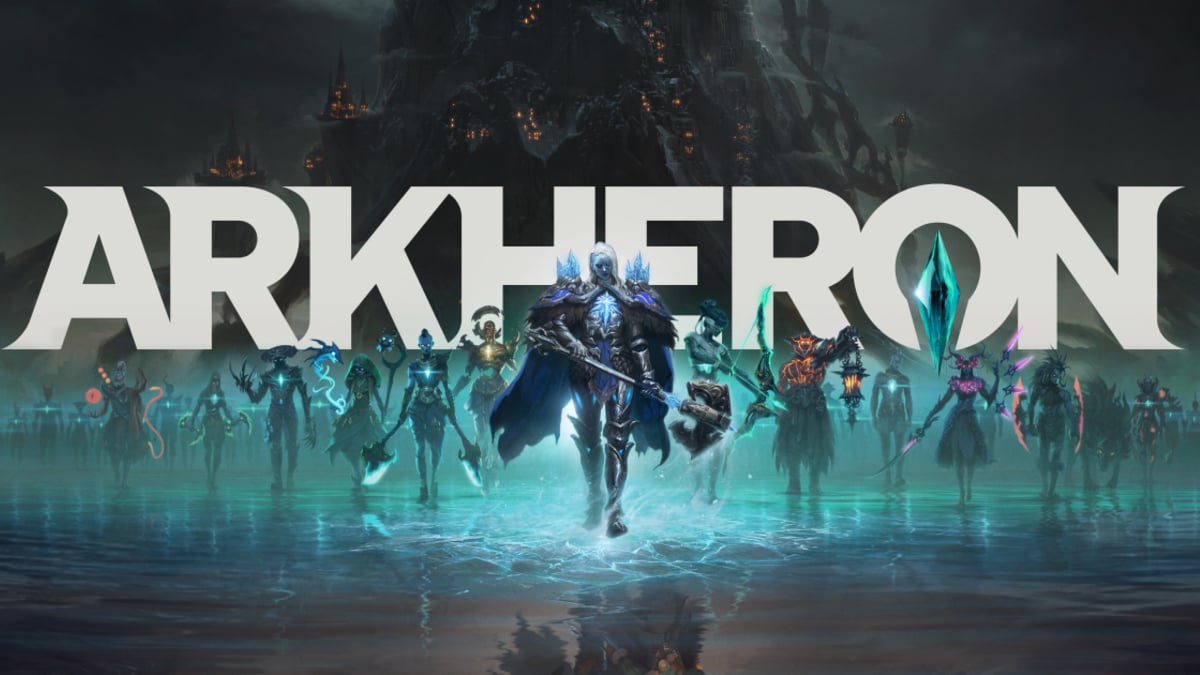
Bonfire Studios, the game developer founded by Blizzard veteran Rob Pardo, started 10 years ago. After a couple of years of hiring and prototyping, the company started making Arkheron, a multiplayer fantasy action game that is nearing early access.
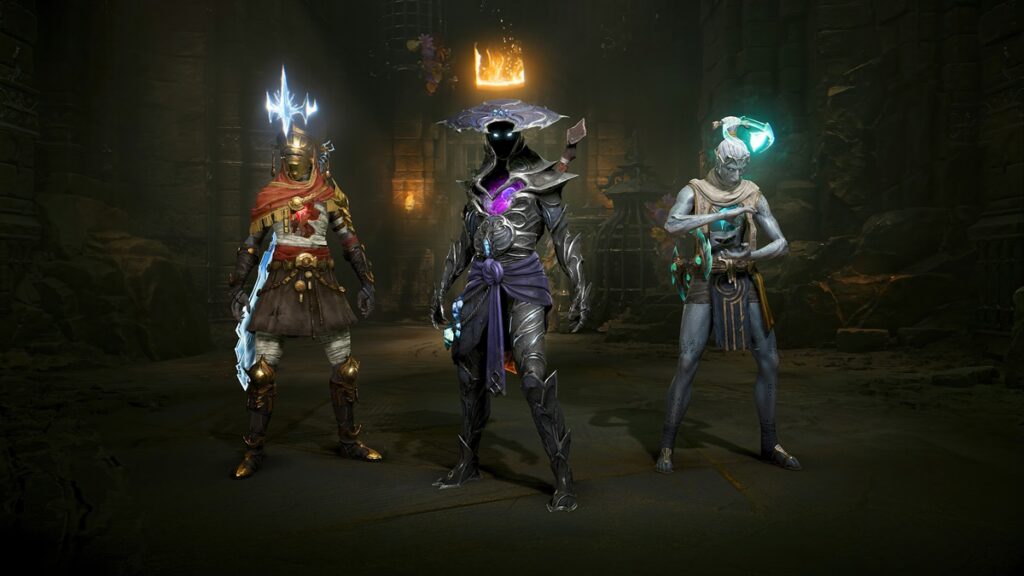
It’s been a marathon mission, but Pardo is excited about progress. Arkheron is a fast‑paced, team‑based player-vs-player (PvP) action game built around “items as heroes.” It is set in a surreal dark‑fantasy world where players fight their way up a mysterious tower. Bonfire raised about $80 million across multiple rounds, making the team one of the best financed among game startups.
I met with Pardo at Gamescom to talk about an update on the game’s progress, and he noted how the team is nearing a cross-play test so players will be able to play each other on the consoles and PC. In addition, he is hopeful the game will hit early access this year. The team released a new gameplay trailer at Gamescom to show off combat.
The most recent beta test was in July, where the team tested its new Spires mode. During the road to early access, the team has learned that it needs to educate the audience about exactly what kind of gameplay Arkheron will offer. Some fans of Overwatch and Apex Legends have an affinity for the game, whereas others wish it were a player-vs-environment game.
So far, the solution is to focus on combat and conveying what it’s like for players and what’s unique about the game, Pardo told me. And to get more players into playtests. After all the time and effort, it will be good to see this original intellectual property find its home.
Here’s an edited transcript of our interview.
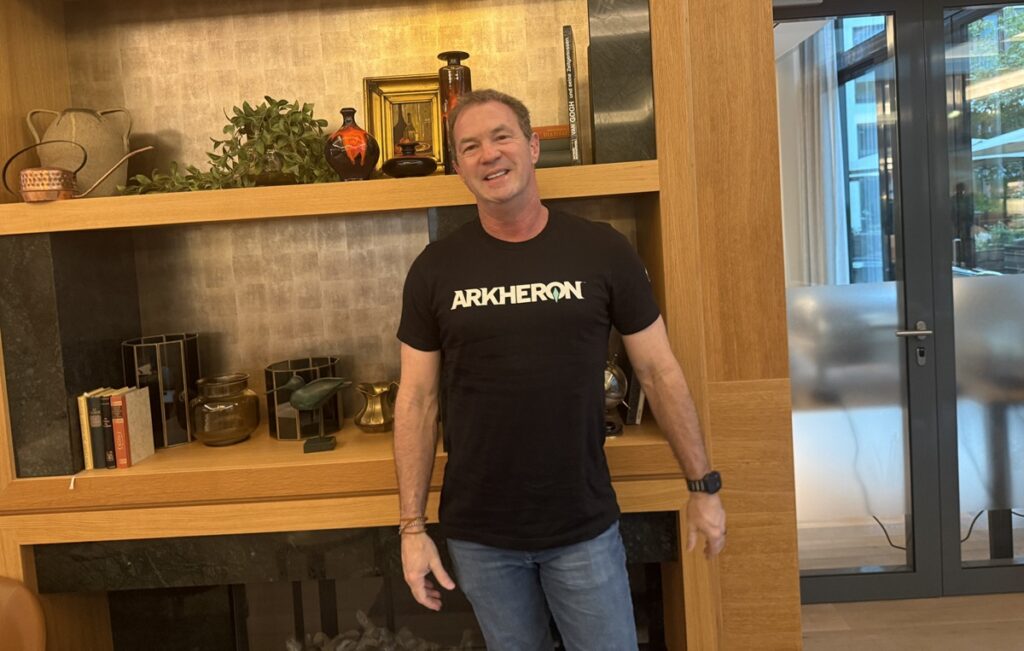
GamesBeat: What’s the first thing coming up?
Rob Pardo: The big thing for us, which we’ve been talking a lot about, is the cross-play beta. We had a video in the Xbox showcase yesterday. We designed the game originally with a controller in mind. We feel like it’s going to be pretty intuitive for players. We’re excited to see console players play it. We’ve always developed it to be cross-playable, but you don’t generally do the hard work with the technology to put it on Xbox and PlayStation until closer to the end. We’re ready for those players to come in.
GamesBeat: Is there a way to leave a window open for mobile cross-play?
Pardo: I don’t know. Mobile is a far future concept. I don’t even know if our team is going to want to take that on. It might be something if the game does really well.
GamesBeat: You almost never see that. Activision tried it once with Warzone and it didn’t work.
Pardo: Our game is isometric, so it’s possible. I haven’t put much mindshare into thinking about the control scheme for mobile, what that would be. That’s something that helps us quite a bit, because it’s isometric. In a lot of ways we have the advantage of top-down, so you get spatial awareness, but the way we swivel the camera gives a new combat paradigm. It feels like a shooter, but without having to point the reticle.
GamesBeat: Is there still some responsiveness delay when you’re playing with a controller versus a mouse and keyboard?
Pardo: I don’t think there is.
GamesBeat: It’s not like a shooter that way.
Pardo: There will be some nuance. On the stick you have more fine control, obviously. But a mouse, you can probably swivel a bit faster. There are minute differences. We’re hoping it doesn’t really affect things to the point where there’s a difference with competitive integrity. Some of our best players internally play on controllers exclusively.
GamesBeat: How long has it been since your last test?
Pardo: We did a small closed beta in July. That was the first time we brought up our new game mode, Spires. We wanted to see how that worked. It’s the first time we had two modes. We kept Spires up most of the time, and then we did Ascension on weekends. We wanted to try that model before we got to the cross-play beta.
GamesBeat: What kind of response did you absorb from all of the interaction with the players?
Pardo: We got a lot of responses. We’ve talked about it before, but I’m such a big believer in playtesting with the community to get feedback and improve the game. So much of our goal with that closed beta–it was our first one since Next Fest. Next Fest, we got a lot of feedback, especially on stability and performance, and also on onboarding. We did a bunch of changes and we wanted to see if the community saw those changes. We got a lot of positive validation, and then as always we got a lot of feedback on things we still need to work on.
GamesBeat: There are some new ways to do that now. Have you been on any of these new platforms like FirstLook?
Pardo: We’ve been on FirstLook for a while. FirstLook is primarily a way to distribute your beta keys and playtest entitlements. That’s what we’ve been using it for from the beginning. I know they’ve been starting to try to turn it into a bit of a CRM system. There’s also Player.gg, where you can start advertising to get playtesters to sign up. But those are both newer things. Most of our feedback, we’re either getting it on Discord, forums, or this time we did a couple of surveys. That got us some really good feedback from players too.
GamesBeat: What kind of changes did you make from the July feedback that turned out well?
Pardo: There’s more stuff on onboarding. What we did back at Next Fest–we’ve always known that there’s a big learning curve to get into the game. Next Fest really showed that we need to think about a lot of ways to help bridge the gap between when a player starts playing and getting into Ascension. But now that we’ve gotten to see how that plays, a lot of our tutorials and how learning works for that Spires mode is a little fragmented. We’re doing a bunch of work around onboarding again to try to make that more seamless.
There’s also just a whole bunch of things around helping people learn the game through playing the game. An example is, our game is a fast-paced ability-based game. But most of the way you know what’s happening is through the audio and the visual effects. We realized that a lot of players still don’t really know why they’re dying or how they’re getting hit. We put a lot more work into the UI and the UX, trying to make it more obvious. Damage numbers and abilities on screen to help people understand what’s happening to them in combat.
If you’re making an FPS, generally everything is just guns, so you don’t have to worry too much about dealing with feedback for stuns, or pushback, or, “Oh, that person is immune to stun.” That’s the problem with a battle arena game. We’re having to think about that, how we make that stuff a lot more understandable and obvious.
GamesBeat: Do you have something like a kill cam, where you see who killed you?
Pardo: We have some of that too. But we also want to make sure that within the actual combat itself, you’re getting a lot more understanding. Jeremy, our game director, said, “I think we’re more of a UI game. A little more like WoW is.” WoW gives you so much more information about what all the different spells and abilities are doing.
GamesBeat: Do you have a sense of how close you are to moving up to the next step toward release?
Pardo: If things go well with the cross-play beta, we’re hoping to get into early access before the end of the year. That’s our plan. Our plan until the plan has to change.
GamesBeat: Do you have contingencies in place in order to keep going until you’re ready?
Pardo: At some point we definitely have to launch. There is a financial reality to that. I think from a game standpoint we feel pretty good. The big learning in this market is how much you really need to be building your community before you launch. That’s probably the area we’re behind on, and with the marketing. This is always a challenge. Any time you see a screenshot, or even a video, it resembles other games, but that’s not it. It’s always been a big marketing challenge. If we put our game in a trailer show, then we tend to get a lot of ARPG players that want to join. Then they’re very disappointed because it’s a competitive game. Conversely, some of the players that enjoy it the most come from games like Overwatch or Apex Legends. When they see videos or screenshots, they don’t think it’s for them.
That’s one of the things we also learned in the most recent playtest. We surveyed this. We asked people. Hey, when you came to this game, did you expect it to be PvP first or the other way? Something like 40% of our audience came in thinking it was more of a PvE game than it is. That’s been a big challenge for us.
GamesBeat: Sometimes that can turn out to be advantageous. If you look at ARC Raiders, they have two completely different kinds of players. They have peaceful players and then they have player killers.
Pardo: That game is interesting, because I’d characterize it as a PvE-first game with PvP. You can have both audiences, fine. WoW is a PvE-first game with PvP. There’s lots of PvP in WoW. But no one treats it like an esport.
GamesBeat: The hard thing for something like that, too, is that then–it’s hard to please different factions, or all the factions at once.
Pardo: For sure. That’s why you have to be clear in your messaging about who the game is for, primarily. That’s where we’ve struggled, to be completely honest.
GamesBeat: What is the answer so far for how to do that?
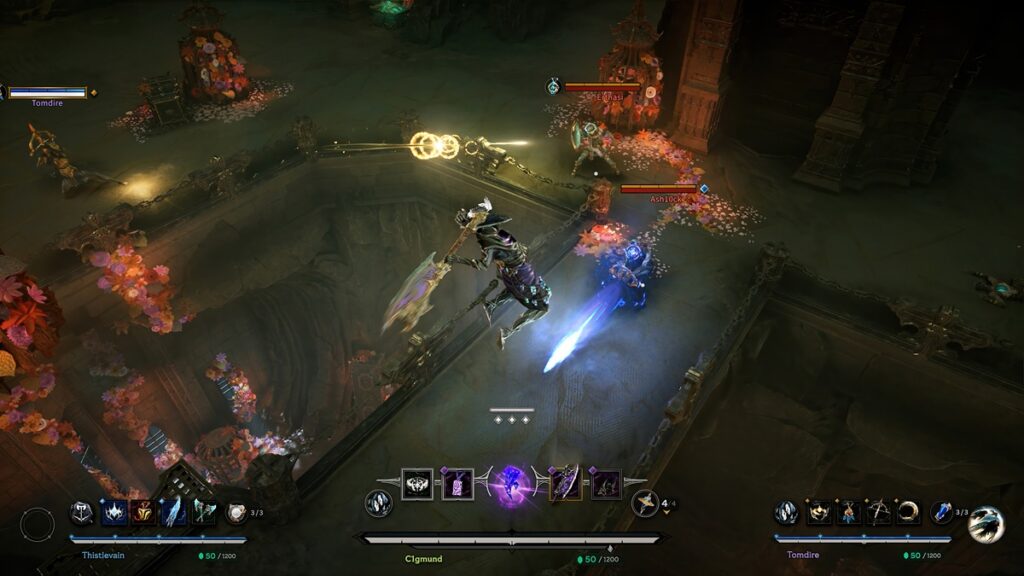
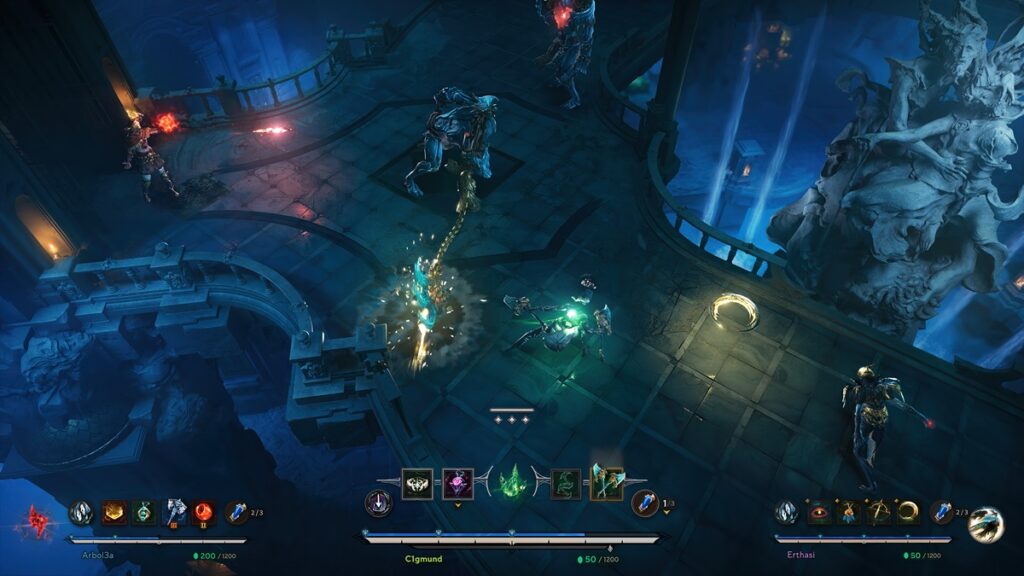
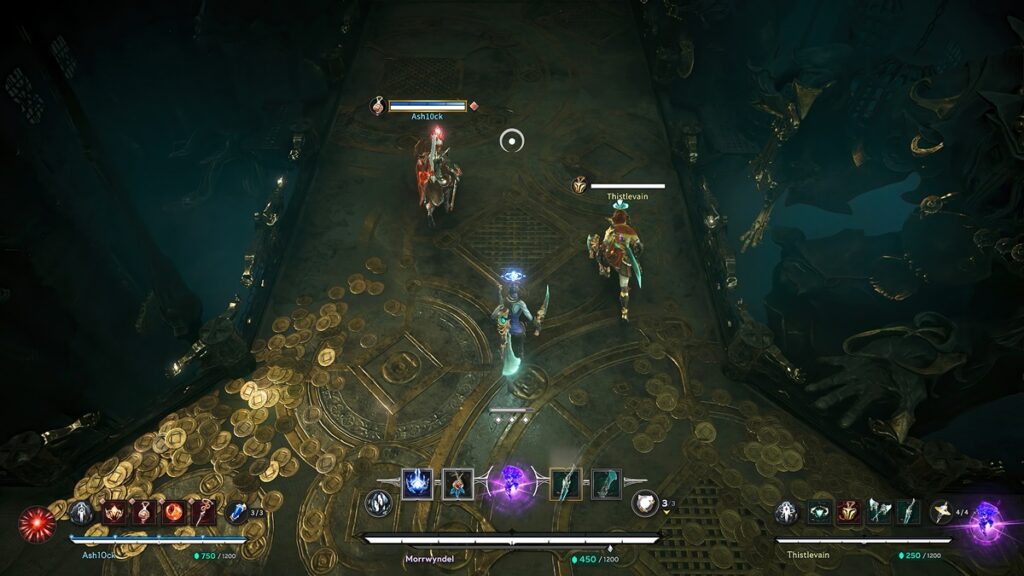
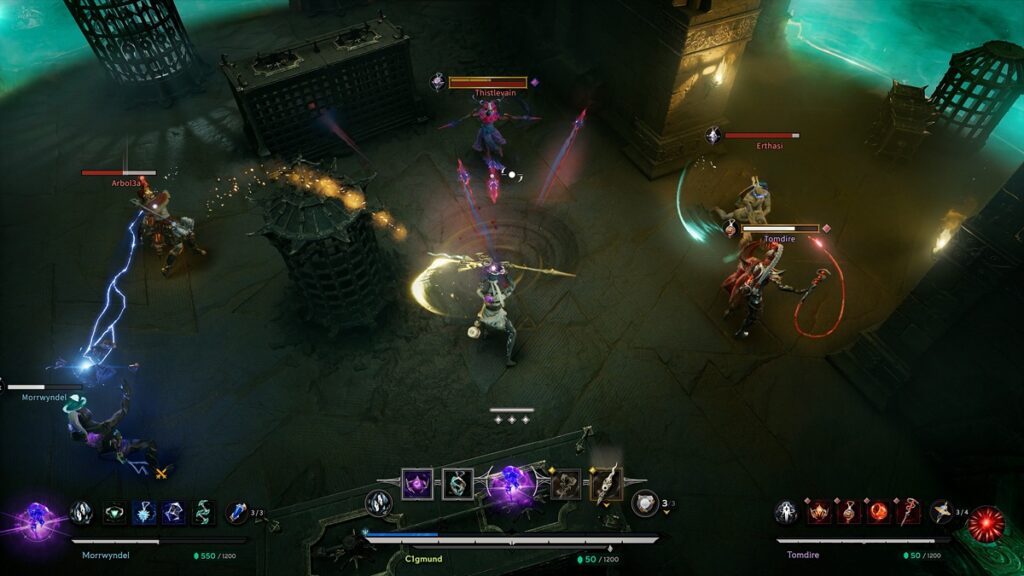
Pardo: We’re trying to emphasize the combat way more than we have in the past. In the past we focused more on Ascension, which is our primary mode. It’s awesome. But we don’t talk enough about combat, I think. Combat is really a new control paradigm. It has the isometric camera, but most people come in expecting either a Diablo sort of control or a MOBA one, and it’s neither. The way it works, you still control your character with the WASD. You control their movement side to side or forward and back. Then the mouse swivels the camera. It’s almost like how you control a shooter without the Y axis. You can swivel it pretty fast, and you’re always aiming at the top of the screen. You can swivel the camera and then aim shots and land them, whether it’s your sword ability, a leap attack, or your crossbow with a sniper bolt or whatever weapons you have.
It gives you the spatial awareness of an isometric game, but the shooter gameplay of landing shots, really having to land combos within the game. Then we also added a lot of movement within the game. Dodging and being able to strafe from side to side. It feels a bit more like a top-down fighting and shooting game than it does a MOBA. What ends up happening, MOBA players will come in and have this allergic reaction to the control scheme. But that’s because it’s a new control paradigm. That’s why we’re trying to talk about that a lot more, about what you get from the combat.
It’s not that often in the industry that you see a totally new control paradigm like this. I wish we had spent way more time talking about that a year ago, rather than focusing too much on Ascension and fighting the monsters and getting to the top floor. The cross-play beta gives us a big opportunity. We did a big survey of this last beta, and we asked questions about the camera and things like that. We looked through all the answers, and that’s when we had the realization that the people who complained the most about the camera generally come from ARPGs and MOBAs. When I segmented it to look at people who played with controllers, they didn’t complain about the camera. It’s going to be interesting when we bring in the Xbox and PlayStation audience and see how well they adapt. I have a feeling it’s going to be way more intuitive and natural for them.
GamesBeat: How has it been holding the team together for such a long time?
Pardo: It’s been a marathon. I’ve always had the development philosophy where you want it to be a collaboration with the team. They have that shared ownership over the game. The other important piece is getting to the point where the team legitimately loves their own game. What that means, because we’ve gotten there–while the team wants to get the game out as much as anyone, they’re really dedicated and motivated to make this the best possible game for players. It hasn’t really been a struggle keeping them motivated, because I think they’re very intrinsically motivated around the game itself. We still play every day. We have a lot of devs playing with the community in custom games. There’s a lot of excitement in the studio. We’re finally getting to share it with players.
GamesBeat: Is there an event like a BlizzCon where you’ll have a chance to make a splash?
Pardo: We’re doing it a bit here. We actually just decided we’re going to do an in-studio event the week after BlizzCon, since we have so many people going to BlizzCon anyway. If people want to extend their trips, they can swing by. The devs are going to play with everybody. It’s a chance to finally get hands on the controls.
Going back to the challenges, people want to read the headline, and it’s always shortcuts. Describing Arkheron through a couple of genre shortcuts, you’re just never going to get it right. But as soon as someone comes in and play it, you see them light up. They start having a ton of fun. Then everyone blows off their next appointment to stay longer. We’ve been kicking people out of the room.
GamesBeat: How do you feel about the climate for launch? The game industry has changed a lot since you started. Launching into this environment is going to be different.
Pardo: It is. I wear different hats here. If I’m wearing my player hat, I think it’s the best time ever for players. There’s so much content, so many games out there. If anything, as a player–it used to be maybe you were looking forward to six or seven games across the year. Now it’s all about the pile of shame you can’t get through. It’s great from a player point of view.
From a developer and publishing point of view, that creates a challenge. It’s harder than ever to get attention. Back when I was at Blizzard, say, we built our community over time. We’d already aggregated the community. We had our own platform in Battle.net. Each launch, we got to benefit from all these built-in advantages that we’re built up over the years. Now, being outside of that, I see–the number one important thing if you’re an independent studio is you have to build that momentum and build your community way before launch. That’s been the challenging thing. We might be learning too late.
We tried to do a bit too much of a traditional campaign. Maybe that works if you’re an Electronic Arts where you can throw a massive budget against it. If you’re an independent studio–now that I’m watching who’s successful and where the challenges are, usually the successful studios, they’ve spent a lot of time building that community. Even Valve, they have all these advantages, but you look at what they’re doing with Deadlock. Building that with the community in the background. Or Larian and what they did with Baldur’s Gate 3. That’s the best way to be successful as an independent studio now.
It means you can’t just make a game. You can’t just make a game and then make some trailers. You really have to be building with the community way before you launch. I wish that as an industry, we would stop trying to segment players by genre, and instead really talk about player motivation more. There might be a game in a genre I like, but I may not like the whole genre. If you look at games within a genre, they can still be quite different. A genre is often just a play pattern or a map. It doesn’t get to the motivation that the players have for picking a particular game in a genre.
Blizzard made games that were across many different genres. We often had our Blizzard community play them. I think there are these underlying motivations that are similar. I remember one time having an argument with somebody over at Riot. They came up with a different phrase, which was–players loved socially competitive games that were expressed through action and strategy. Something like that. I thought that made more sense. That maps to more of the games that I’ve built than saying I’m an RTS designer or an MMORPG designer.
GamesBeat: This is an interesting time for audience targeting. It’s what Highguard did nothing on. “Here’s the game. Go for launch.”
Pardo: That’s why we’ve been so dedicated to playtesting. Each time we do one of those, we learn. “Oh, we should make some changes.” I feel so bad for the Highguard team. I’m sure they would have benefited a lot if they’d had a couple of tries with players from the community before they came out for real.
GamesBeat: It seems like you still have good agency in this environment. You can control your fate.
Pardo: We’re crossing our fingers. We believe in the game, for sure. The thing I feel like we’re learning more and more, we need to spend a lot of time educating people about what the game actually is. Helping everyone understand how to play it and how to bring in their friends. That’s a lot of what League of Legends did back in the day, which is very different than just making some trailers and launching.
GamesBeat: The thing that was too bad about MOBAs is it turned out there could only be two of them. Everyone tried to make a MOBA to go after League and DOTA and it turned out League and DOTA are the only ones [that succeeded.]
Pardo: You know what it is? I think it’s more the expectation of success. I think there’s a market for a lot of different games. But once you have, let’s say, a genre leader like that, a game that’s had that big moment where it became genre-defining, after that it just feels like when everyone is building one, their expectation is to topple that game. That’s probably not the right approach. The right approach is, how do we build a different audience within that play pattern? Trying to topple whoever the genre leader is, that’s always a challenge. When we had WoW, people tried to do that all the time. What’s the next MMO? It’s hard to compete with a game that’s already aggregated a huge audience and has been developing in live service for many years. If you come out after that and you’re trying to compete head to head, it’s extremely challenging.
GamesBeat: The shooter market is encouraging in this way. More competition is emerging. You have things like Escape from Tarkov and Battlefield 6. You have Hell Let Loose with 50 vs. 50 multiplayer. Aliens: Fireteam is doing its own thing. It’s nice to see that variety happening. It’s almost the opposite of MOBAs.
Pardo: This is where I think sometimes our terminology fails us. I wouldn’t call shooters a genre. Let me use Deadlock as an example. Deadlock is a MOBA, but with more of a shooter paradigm. So is it competing directly with League of Legends? You can talk about tactical shooters, hero shooters, military shooters. They all use a similar control paradigm, but they’re pretty different games. I feel like the genre is a constraining definition. You can talk about tactical shooters. Valorant and Counter-Strike are more the same, even if Counter-Strike is more military shooter. The fantasy is pretty different.
MOBA is a pretty constrained play pattern genre. That’s a little different. RTS is more like that as well. But shooters, to me, is a much more open field. You have so many different genres that exist with a shooting paradigm.
GamesBeat: Do you think you’ll go back out to look for more funding?
Pardo: We haven’t really talked about that stuff publicly. It’s obviously a challenging investment market. We’re hoping to self-sustain through early access, which should be our next big beat.
GamesBeat: The encouraging thing I see on that side is there’s still funds being created. Makers Fund just announced a $250 million fund. At Denmu a couple of Chinese guys have a $50 million fund. There’s lots of stuff for AI, of course.
Pardo: When we talked to Andreessen, they told us that AI is sucking all the oxygen out of the room in the investment world. But yeah, it’s cool to see that there are still some game funds. It seems like they’re more at the seed level now. You don’t really see it through all the different phases now.
GamesBeat: Some have converted into indie project financing. The user acquisition funds as well. As long as that stays in place and doesn’t swing too far into a desert, I think it’ll be healthy for the industry. When does your next phase of testing start?
Pardo: We talked about the cross-play beta. That’s the number one thing. It opens September 25. We’re encouraging everyone to go to the website and sign up. We’re taking signups for PlayStation, Xbox, and PC players. That week we’ll start letting people in.
Disclosure: Gamescom paid my way to Germany for the event. The content of this story is solely the responsibility of GamesBeat.