
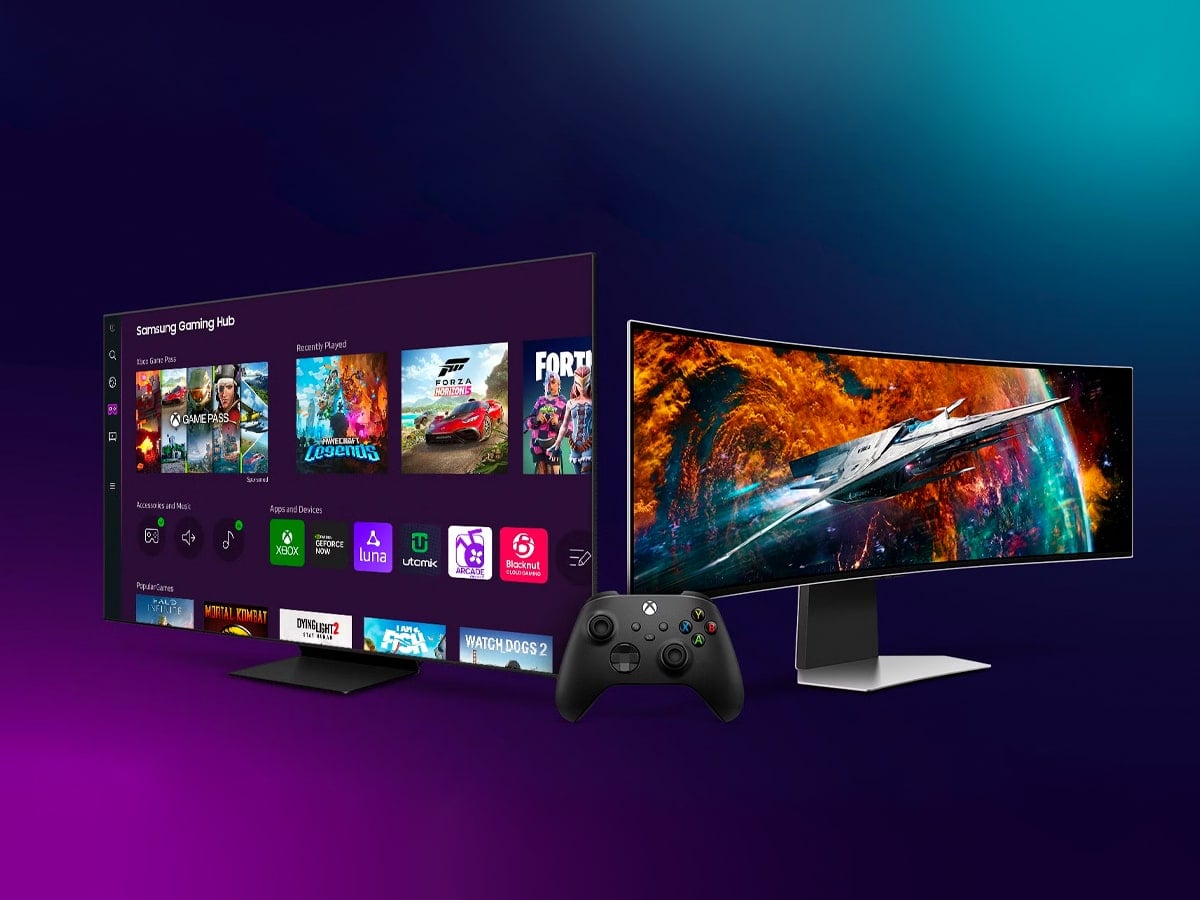
Samsung wants to reclaim the living room with smart TV gaming. In 2026, the company’s efforts appear to be paying off.
Samsung announced its Gaming Hub — a centralized platform allowing Samsung users to access and play games on their smart TVs — in January 2022, launching the product in June of that year. Since then, Samsung’s gaming platform has expanded considerably, with Gaming Hub currently offering access to over 4,000 games. In the last two years, the Samsung Gaming Hub’s global unique and active user count nearly doubled, according to numbers shared exclusively with GamesBeat by a company representative.
“Netflix is now offering games on their service, and Amazon is offering games to their subscribers, which is great, because we have a lot of users on our TVs that are subscribing to Netflix or Amazon, or both,” said Samsung vice president of product development Avner Ronen in an interview with GamesBeat. “And then we have partners like Play.Works, that offer casual games, and partners like Weekend that offer family game nights. So, it’s a much more diverse universe now, and much more accessible — and that helps drive a lot of the adoption.”
Ronen credited casual and party gaming in particular for bolstering the growth of the Samsung Gaming Hub between 2025 and 2026, flagging that the number of unique users playing games in these categories on Samsung smart TVs grew by more than 90 percent year-over-year in North America between June 2025 and June 2026, and by over 200 percent globally.
“The U.S. is extremely strong in terms of usage, so the fact that it’s growing in that region, at that pace, is actually very encouraging for us, because it’s not starting from a very small base,” Ronen said. “And then, we have places like Brazil, that are going gangbusters, and some countries in Europe do very well.”
Play.Works, whose library includes classic titles like Pac-Man, saw a fivefold increase in North American monthly active users and an elevenfold increase in global monthly active users between June 2025 and June 2026. Ronen said Play.Works’ success was powered by its strong portfolio of popular gaming IPs. Recognizable properties have become a hallmark of Samsung’s Gaming Hub partners, with Netflix providing gamers access to Tetris and Jackbox and Weekend featuring prominent IPs like Jeopardy.
So far, Samsung’s gaming growth strategy has largely focused on converting non-gamers into gamers, an approach that Ronen said was tied to the platform’s current limitations around control devices. Although Samsung allows users to connect most standard Bluetooth gaming controllers to its smart TVs, the majority of Samsung Gaming Hub users still don’t have easy access to controllers beyond their smartphones, per Ronen.
“For certain types of games, that’s really the only viable control mechanism, and that’s fine. For the people that want to do that, we just need to make sure that they’re aware that they can connect any controller that they have, and that latency works well,” Ronen said. “So, we hope that that is going to continue to grow in parallel to people getting comfortable with other modes of control.”
Another point of friction around the development of Samsung’s Gaming Hub is the fact that most CTV gamers play free-to-play titles, and that much of the highest-quality gaming content currently sits behind a paywall. During the dawn of smart TVs, platforms like YouTube filled consumers’ screens with a never-ending stream of free content. Ronen pointed out that gaming does not yet have its own equivalent, which he said had been a challenge amid Samsung’s push to grow its gaming audience.
“Gaming still needs to get over that hurdle, and make gaming more affordable and more accessible to consumers,” he said.
Samsung is actively working to improve smartphone game controls and encourage gamers to engage using non-controller technologies like voice control, taking advantage of its role as both the software and hardware manufacturer to bolster these efforts. Discovery for games on Samsung smart TVs is not confined to the Gaming Hub, with games showing up alongside more traditional shows and movies in Samsung’s “continue watching/continue playing” row. As the home screen of Samsung smart TVs becomes more personalized, the company is pushing to give games equal footing with video recommendations.
“We think gaming could be a great reason for families to come together,” Ronen said. “Even if it’s just five minutes, it’s five minutes that you’re spending together with your kids, rather than having your kids running to their room and just doing something on their phone.”