
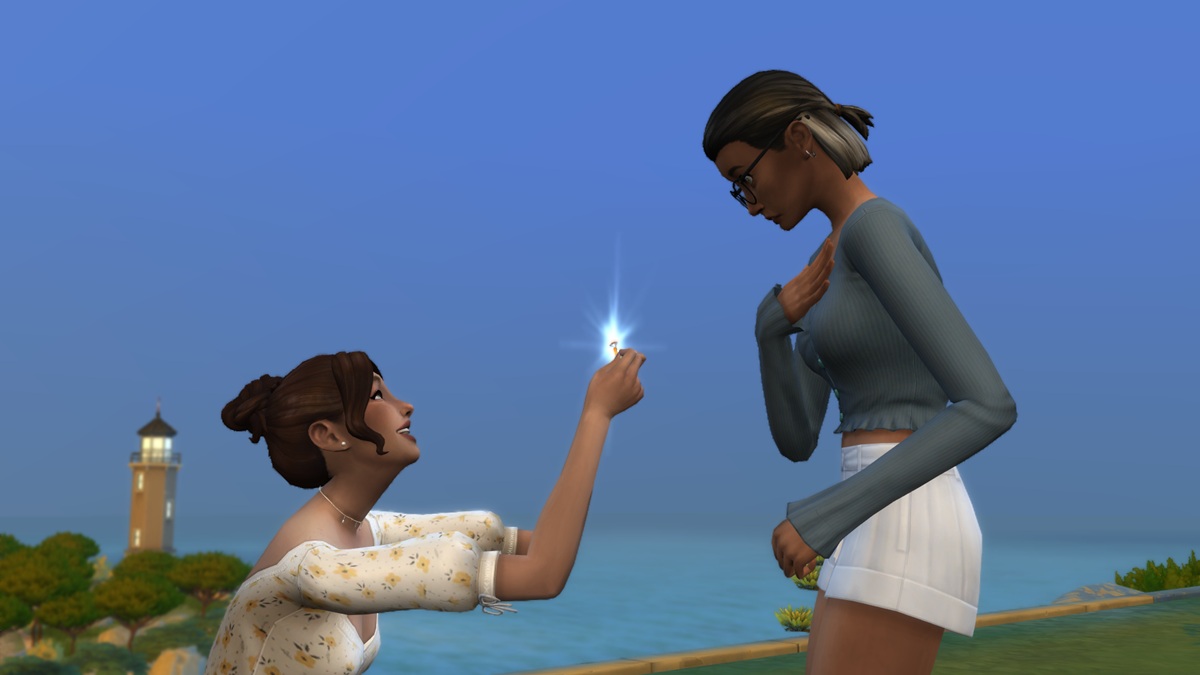
LGBTQ+ people have been a part of The Sims community over time, and as a Saudi-led group nears the $55 billion acquisition of Electronic Arts, the owner of The Sims franchise, concern is on the rise.
The group leading the deal includes Public Investment Fund (PIF), Saudi Arabia’s sovereign wealth fund; Silver Lake, the U.S. private‑equity firm specializing in technology; and Affinity Partners, Jared Kushner’s global investment firm (led by the son-in-law of Donald Trump).
Two of those owners are of concern to the LGBTQ+ community. Saudi Arabia is one of the most restrictive countries in the world when it comes to LGBTQ+ people. Same-sex relations are forbidden under [Saudi Arabian] law, discrimination is not prohibited, and penalties include imprisonment, flogging and even the death penalty. Advocacy for LGBTQ+ rights is also illegal. And U.S. president Donald Trump has not been support of the LGBTQ+ community and has actively campaigned against transgender rights.
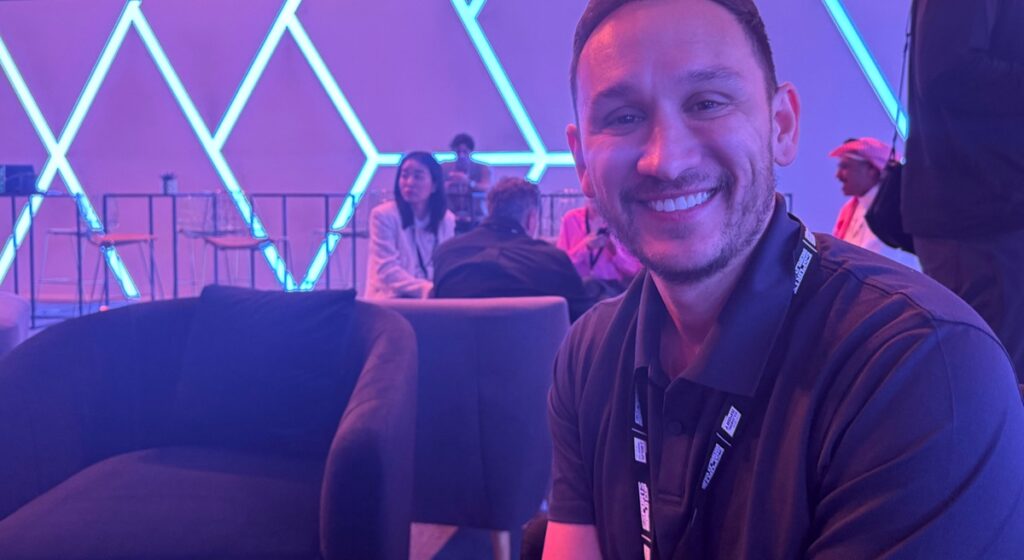
I spoke with Chris Nunn, a player of The Sims 4 and one of the organizers of the Player Alliance HQ, which is an advocate for The Sims community. The group opposes the $55 billion deal because of the Saudi history on LGBTQ+ rights over time. The group does not represent EA or any EA employees, though presumably there are LGBTQ+ people working for EA. And it has made its concern known. There’s are threads on Reddit where the issue is discussed in EA games, including The Sims 4 and BioWare games like Dragon Age and Mass Effect. The conversation isn’t limited to only EA games as well, as there are concerns over Saudi ownership of other game properties as well and deals like the Paramount/Warner Bros. deal.
I asked Nunn about the nature of the concerns, including relating to other EA games that are part of the Saudi-led Esports World Cup, which is going on in Paris now. I’ve also asked EA for comment. Nunn also talked to me about the history of The Sims when it comes to LGBTQ+ rights. He hopes to use the “power of engagement” to influence what the company and its pending new owners do when it comes to recognition of the LGBTQ+ inside games.
Under the new Crown Prince Mohammed bin Salman, the enforcement of existing laws has not changed, and advocacy remains illegal. Symbolically, however, the regime did nothing at the Esports World Cup when members of Team Liquid, which has a LGBTQ+ co-owner Steve Arhancet, wore Pride logos on their uniforms during the competition in the past. Nunn does not think this goes far enough, and he believes the acquisition should be blocked.
Asked for comment about this story, EA did not offer any, but it did direct us to its page about the “values” for The Sims games. It also noted in January 2026 that the “values” of The Sims have not changed. It also reiterated that “The Sims is for everyone.”
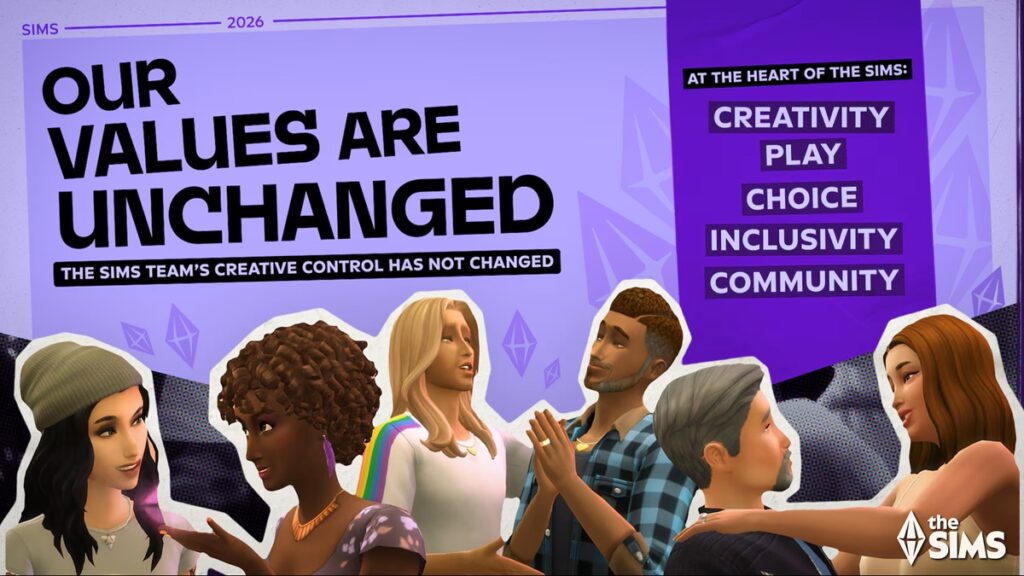
The Sims is stronger when more perspectives shape the work. We partner with people and organizations who bring expertise, lived experience, cultural perspectives, and honest feedback around identity, culture, representation, and community.
They help us catch what we might miss, think more carefully, and make the work better. Not just bigger. Better, together.
Under a section entitled, “It Gets Better,” EA said in its statement of values for The Sims that it is “a longtime partner supporting LGBTQIA+ visibility, affirmation, and belong beyond a single moment or campaign. EA said, “You may have seen this work in: The Sims 4 Customizable Pronoun update and our Pride update.” It also noted that GLAAD is a “trusted collaborator helping us think more carefully about identity, self-expression and inclusive representation.” It added, “You may have seen this work in: Pronoun and sexual orientation feature updates,top surgery scars, binders and shapewear and Pride content.”
Here’s an edited transcript of our interview.
GamesBeat: There’s a Reddit thread out there. A lot of the [LGBTQ+] community has voiced concerns over time. How closely have you been following the situation since the announcement of the acquisition?
Chris Nunn: I was following pretty closely when they announced it. I’ve been pretty deeply involved in the Sims community for 20-ish years. This hits home to me.
GamesBeat: Did you form your own group that speaks for a lot of the community? What’s the nature of that group?
Nunn: Some of us describe it as a video game union, in a way. Kind of like a workers’ union, but we have the power of our dollar rather than our labor. We have the power of engagement rather than labor. You’re weighing the power that we have against the corporations that are overtaking the industry and bastardizing the work of people who have put their lives into building these video games.
GamesBeat: Is the interest in the community’s ownership of user-generated content a big issue for you as well?
Nunn: The current campaign we have right now is for EA, but there are various different areas of concern in the video game industry. When the film and television industries got big and popular, we notice that’s when you had the rise of censorship. That’s when you had the rise of monopolization and things like that. This is the same thing that’s happening in the video game industry, because the video game industry is so powerful. It’s more powerful than people think it is. Because people don’t see the video game industry as powerful, that means it’s ripe for manipulation by these entities that would do that. That’s the big concern we have.
GamesBeat: Are there specific parties that you’re very concerned about? I take it it’s not only the Saudis here, but also Jared Kushner.
Nunn: You have media consolidation under the Trump family and allies of the Trump family. The Ellisons have purchased various different media companies. They’re closely tied with the Trump administration. Paramount and now WB. You have that. But then we also have a federal government that is openly willing to put friends and family–video games are also an opportunity for a propaganda machine that they could co-opt if they so choose. We’ve heard that these acquisitions–oh, they’re not going to result in any kind of change in voice or performance. But there’s no mechanism to enforce that. That could just be a lie. They’ve lied before. Why do we have to trust them?
GamesBeat: In that sense, you see some similarity with 60 Minutes and CNN and concerns about corporate ownership there. Switching over, then, to the history of the LGBTQ+ following behind the Sims, it was there almost from the start, or at the start?
Nunn: The understanding we have–we also have an NPR piece that we worked with. Two different episodes came out last week and the week before. In that piece they explain that initially, the coding that allowed for same-sex relationships was not intended. But if you think about it, if you’re creating a video game, you have to intentionally code different things for male and female. A computer is not really going to care or understand that. The romance aspect of it, from what I understand, was not fully functional. I believe it was at E3 where there was a kiss between two female Sims that really caused this movement. They decided to leave that representation in where they could have removed it. Which was a brave and bold move. That set the stage for games to represent queer people.
GamesBeat: Reacting to that, did the community embrace the game from the beginning because of this?
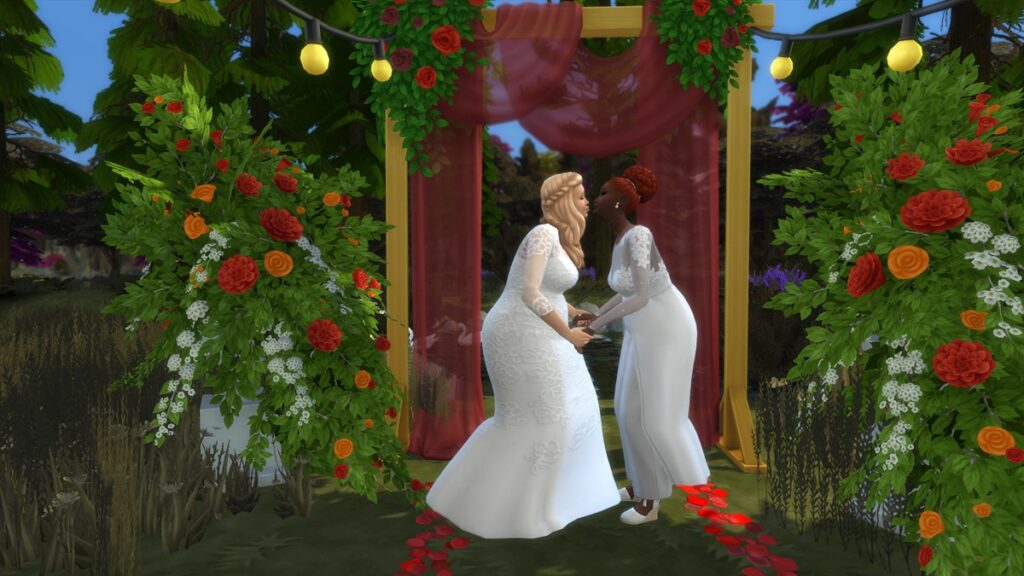
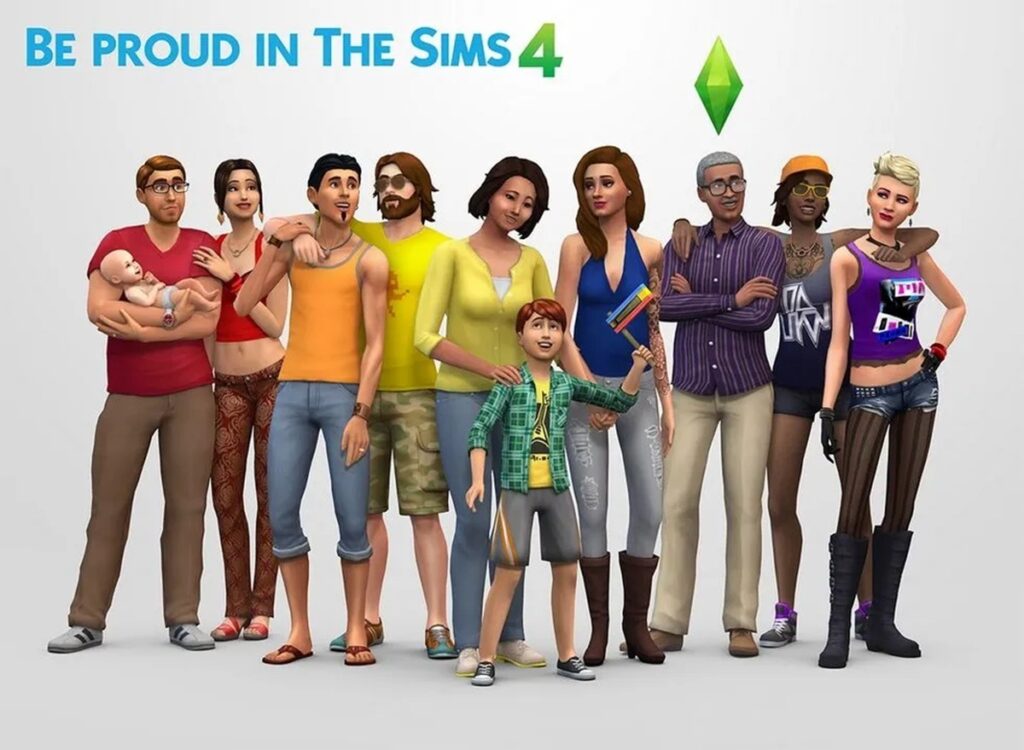
Nunn: It was very interesting, because that was the first game that very explicitly and specifically called out two queer people in some kind of way. Where queer people were able to see that and think, “I can make myself in that.” At least gay people were able to. Trans people did come later. Trans people were represented in Sims 4. There’s an option to change gender. There are non-binary options. All of the clothing can be worn on both male and female frames, which they call masculine and feminine frames. There are different pronouns and so on.
The Sims has been this beacon of representation, because it’s a life simulation game. You can’t simulate life if you don’t have a broad range of different types of lives to simulate. Otherwise you’re just simulating one specific type of person. That’s not a life simulation game. That’s a role-playing game.
GamesBeat: How did the community grow or thrive? Did it have support from EA along the way, letting players do what they wanted?
Nunn: I would say The Sims one, not really. There, it was a “don’t talk about it” situation. Let it happen, but don’t talk about it. We’re going to up the rating to Teen and then just not talk about it. The Sims 2 was different because they implemented specific characters. There was a character called Nervous Subject who is specifically coded in the system to be gay. The Sims 2 had sims who were specifically coded where they were not attracted to sims of the opposite gender. But that was less EA and more The Sims team. EA is just the publisher. They really only care about what’s going to make the most money. Maxis is the studio that makes it. They were the ones who really embraced the queer community.
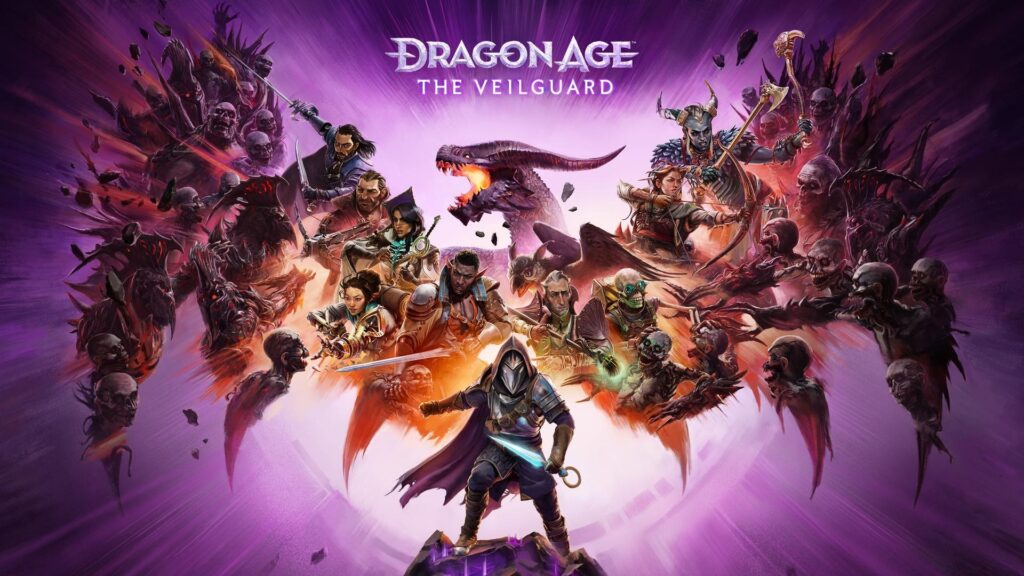
GamesBeat: Along the way, were there objections from outside the community that turned into any kind of flashpoints around The Sims games? Was there criticism of the game featuring this kind of inclusion?
Nunn: There were pretty minor pushbacks. It was extremely minor. The amount of people who were upset was so much smaller than the amount of people who were represented. If you think about it, the people who would be upset by representation are not the people that are drawn to the Sims typically. They just wouldn’t play it. They see themselves in other video games. They don’t need to see themselves in the Sims, because they see themselves everywhere.
GamesBeat: To what extent did this kind of thinking make its way into other kinds of games? Mass Effect was more supportive of different gender choices. BioWare’s games generally, like Dragon Age. Did you feel like this had an influence on other games or other game companies?
Nunn: The Sims is the original life simulator game. Life simulator games are very hard to make, because there’s a lot of moving parts. But the games that have come out that simulate life elsewhere have really taken note of that. I think of things like Stardew Valley, like Coral Island. Video games where you are able to romance the characters in some way, to have relationships with other characters. It really spoke to them, especially games that we would call “cozy” games. Games that aren’t FPS kinds of intense.
It was also very prevalent in games like Baldur’s Gate III, for instance. Baldur’s Gate has also been very open about sexuality and gender fluidity and everything like that. Baldur’s Gate III especially. I don’t know if that would exist if not for the Sims. That type of breadth and depth of representation might not exist if not for video games like the Sims.
GamesBeat: How important was this to you personally, as a recognition of your identity?
Nunn: It was extremely important, and really formative for me. When I was young–this is the early 2000s. If there was a same-sex kiss on television it was national news. I did not see queer people represented in media at all in the early ‘90s. I came from a rural, pretty religious household. This was a way for me to see that I wasn’t alone in the feelings I felt. When you don’t see any queer people at all, the feelings that you have inside, you think something has to be wrong. Something has to be broken. When you see it, you think, “Wait a second. Other people feel this way? This is a thing that other people experience? It’s not actually a problem? It’s just a fact of life?” It makes you hate yourself less when you see that it’s not just you.

GamesBeat: Did Pride celebrations come into the game or the community in some way?
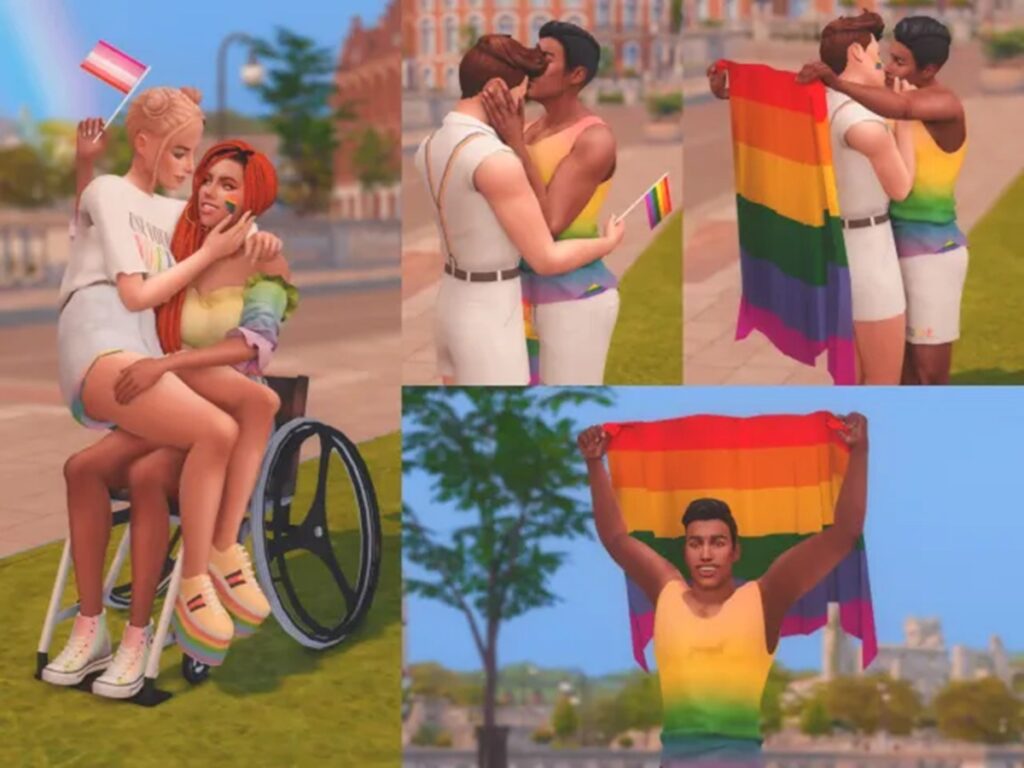
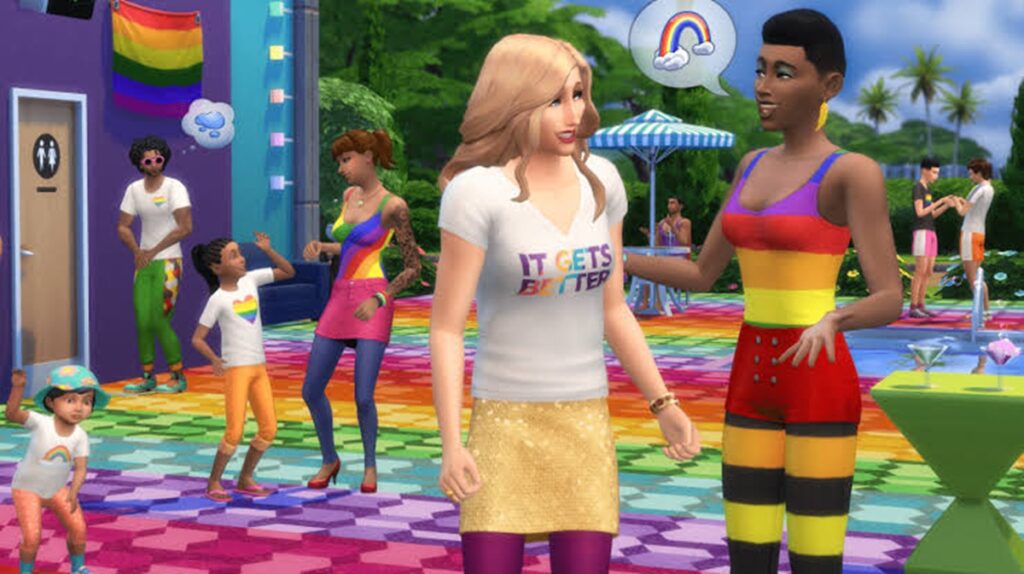
Nunn: The Sims 4 specifically has various–most kinds of pride flags are in the Sims 4 as decorations. Some of them are outfits. There are different kinds of statues, things like that. It was very important. There’s a wedding pack, the wedding stories pack, and the primary couple on the front of the pack was a lesbian couple. They pioneered this representation. They had some, I would say, maybe kind of cheesy outfits that were pride themed, wedding dresses and stuff like that. Kind of corny, but also charming.
It seems like the representation in The Sims is earnest. It’s not really pandering. It’s a genuine desire to see queer people represented as fully as they can. There’s a breadth of human experience. You can’t represent everything in one game. But as much as you can, it seems like they tried to do it.
GamesBeat: If we come around to the Saudis, what evidence do we see of their stance on LGBTQ+ recognition in any kind of media?
Nunn: It’s very hidden. It’s very underground. I would say that if you were going to find a lot of media from Saudi Arabia, it would be pretty underground media. It would be the type of media we had to search for in the 1970s and 1980s. Being in a same-sex relationship is not recognized in Saudi Arabia. Engaging in sex with somebody under certain circumstances can be considered illegal to the point of death. This is very integrated into the governance of Saudi Arabia, as it is an absolute monarchy. There are very few absolute monarchies in the world. Saudi Arabia is one of them, and it is by far the most powerful.
GamesBeat: With Mohammed bin Salman in charge over the last seven years, they have loosened up some things. Women can drive, join the work force and so on. Have they addressed this topic in any form over those seven years?
Nunn: Not in any meaningful way. There’s some pandering. There’s some lip service. But there’s no meaningful change. You’ve heard the term “sportswashing.” When it was brought up to them, are you using sports to cover your human rights violations? This was in a conversation with, if not the crown prince, then an official from the government. He said, “What? If it makes them forget about it, sure, we’re sportswashing. Why not?” This is not news. This is not hidden. They’re open about it. If it means people will still let the Saudis have capital, fine.
What’s going to happen when they own one of the largest publishers in the entire game industry? This is a media company. This isn’t just the oil that their current economy is built on. This is something influential, something that drives opportunities for propaganda.
GamesBeat: I did an interview with one of the esports teams that has LGBTQ+ ownership, Steve Arhancet of Team Liquid. They participated in the Esports World Cup, almost because they had to. If you’re a team and you’re not part of this competition, your chances of making enough money to continue on is pretty low. It’s the biggest prize pool in esports. What was interesting about that conversation–he had to think about whether to participate or not. The choice was the team’s, and they chose to participate. But they chose to wear Pride jerseys during the competitions. They made that signal of support. I think they saw that as a small victory, at least. But on the other hand, there was censorship in the local media around it. They would mosaic those jerseys on the local broadcast. It’s a compromise, but I think they viewed it as an opportunity to take a step. How do you feel about that kind of situation?
Nunn: I think progress is progress, but I also think we can’t be satisfied with increments. If you say, “Well, I was able to wear my shirt, so we’re all free,” I think you know that’s not the case. I think you know there’s work to be done. Sometimes this kind of placating theater–I think it can sometimes put people in a mindset where they have power when in actuality, they don’t. You thought you made a statement? We’ll let you wear your jerseys, but we’ll blur you out. You can write the most eloquent essay, but if it doesn’t get published anywhere, it does nothing.
GamesBeat: Some of EA’s own employees are nervous about the change in ownership, I think. Have you seen any evidence that they’re also worried about what changes might happen to the company after the Saudis take over?
Nunn: I don’t want to put words directly in the mouths of EA employees, because I know that comes with a lot of risk. It’s not up to me to put people in that place. But I do know that in the space, they’re already starting layoffs. They’re already anticipating that. They’ve already said they’re going to make strides toward AI. Some of these people have been there for decades. They’ve put so much work into this. It’s pretty clear that their work is going to be used to train AI models, and then ultimately replace them.
It’s a different kind of work than if you’re replaced by a mechanical device on an automotive assembly line. This is something people put their hearts into, their personalities into, which is why I think the sincerity of representation for queer people is so important in this context. This isn’t just, “We decided to slap a feature in to sell more DLC.” This is dignity that a portion of the population deserves, and the company is coming in to say, “That dignity looks like it could come with a hefty price tag, so we’re going to go ahead and take that out.” It’s not even just about the jobs at this point. It’s about an amount of commodification that’s dystopian.
GamesBeat: I imagine if they offered buyouts to people in the LGBTQ+ community, they might strongly consider taking that buyout. There’s the question of whether you’d want to work for this ownership.
Nunn: The vibe that I have–the PR that they’ve released and the air that I sense around it, it seems like they’re going to try. It seems like they’re going to see how things go at first. I think we’re all at this level where we see the writing on the wall, but we’re hoping that there will be different words than we expect. When it comes to the Maxis team, they are more–if you’re building expansion packs and you’re told, “We’re not releasing expansion packs, and we’re not creating items anymore, we’re just repurposing items we’ve already made, and also we’re not hiring new 3D designers in favor of publishing user-generated content,” you can see how your job is becoming obsolete. You can see it happening over time. That’s what they can see right now.
GamesBeat: How far did EA go on user-generated content? Giving the community the ability to create things that are important to the community, even if EA staff isn’t making it.
Nunn: Going all the way back to Sims one, you have been able to modify the game. Around The Sims 3, they made it a bit easier to modify the game. They didn’t put as much IP protection behind it. But then in The Sims 4 they embraced the community and created a mods folder. If you wanted to put mods in your game, if you wanted to put custom content in your game, you could easily do that by just adding it to the mods folder.
Now they’ve gone a step further and had collaborations with custom content creators to create packs. Then they released the marketplace. People who created custom content were able to submit that content to EA. EA would publish it officially, and then the content creator would get 30% of the sales. Which, to be clear, this is all the content creator’s work. It’s just their work. All EA is doing is publishing it and putting a price tag on it, and EA is taking 70% of the proceeds.
Many content creators fully refused it. They said, “This looks like a scam. This seems like a scam. It looks like you’re trying to have content creators scab while you fire your modeling and texture artists.” From the community standpoint, that’s what it looks like. Now, it’s complicated, because they set up this marketplace and started reaching out to creators and collaborating with creators before they announced the sale. Some of the people who were part of the marketplace said, “We did not know this was what was going to happen. We did not know about the sale.”
It created a rift in the community. You see people who were really hurt right now. Sometimes it turns into infighting. We as a player alliance want to communicate, “Don’t let them do that. That’s on purpose.” The reason you hire a scab is so the striking employees are angry at the scabs. That way the company that isn’t paying people proportionately, paying people fairly, gets to get away with it while you point at the scabs. That’s not how this is working. The scabs were tricked as well.
It’s one of these very complicated relationships where–we embrace custom content, but as soon as you start putting corporate money behind custom content, then the manipulation starts. Then the abuse starts. Underpaying for work and rip-offs and scams, all of that starts. Then you lose power over your own creativity and it kills the community.
GamesBeat: What’s their counter-argument? Do they say they’ve generated a lot of revenue for the community by enabling UGC and the marketplace?
Nunn: They’ll say that. But these are people who have their own Patreons. These are people who were making money with custom content before. You could promote them in a way that wasn’t exploitative. “Aren’t you glad that we gave these children jobs so they could earn money?” No, because you’re exploiting children for money.
GamesBeat: If you have an opportunity now to speak up and influence this situation, what do you think you can do? What is the approach on the part of EA’s new ownership that you’d favor?
Nunn: I think they need to focus on their geopolitics, what they have going on right now. There’s a war in Iran going off and on and off and on, seemingly every single day. It seems like they have more important things to do than buy video game companies and sports companies. If you’re working on PR while you’re in the midst of a war between various nations, I think you need to reassess your priorities.
The fact is they had to shut down the golf courses related to Trump because they were running out of money. This buyout is so unpopular that–this is $55 billion. The golf courses were less than $10 billion. You could lose $55 billion. It is not wise. JPMorgan could lose money too. This is deeply unpopular, and we’re seeing a rise of people who feel like they have a voice in their country for the first time in decades. Now is not the time to piss off the public.
GamesBeat: They could choose not to execute on the pledge to buy EA. If they still buy the company, is there a hands-off approach that you’d prefer to see them take with regard to things that exist, like The Sims 4?
Nunn: Sell the IP. Let go of the IP that you seem to hate so much. If you hate queer people so much, if you feel that queer people need to be murdered in your country, then sell the IP to the people who made the game. Reach out to the people whose passion was poured into this game. Reach out to people like Will Wright, the creator of The Sims. Reach out to these people and sell this IP. If you think that our lifestyle, our existence is so incompatible with your worldview, then why are you purchasing it?
GamesBeat: I assume their answer to why they’re purchasing these things is because they know oil is going to run out someday. They need to create ownership in diverse ways and move into a world where they’re not dependent on a physical resource. I can’t speak for them, but I think that’s why they’re doing all of this in the first place.
Nunn: I just think that when it comes to the Sims, it’s a losing strategy. You’re going to spend all this money and your name is going to taint the reputation of the property so much that it won’t turn out the way you want it to. Let it go.
GamesBeat: In this case, their possession of this property is going to decrease the value of the property.
Nunn: I firmly believe that. Not only that, there are–one of the biggest reasons the Sims has such a large community now is the work of the community. That community will divest. All of the PR that’s done for the Sims is not done by The Sims. The PR for The Sims is done by the community. If you’re severing that community-product relationship, you’re killing your product.
GamesBeat: Is there something that EA employees or EA leaders themselves can do, even if they get bought?
Nunn: If they get bought–the first thing is, you have the power to say no to things. You have the power to retain lawyers. You have the power to speak. You have the power to be honest and open. You have the power to decide whether a risk related to an NDA is worth taking. That’s a decision that you as an individual–that’s a risk you can take. But don’t do it alone.
My biggest thing is, don’t do it alone. Reach out to people like Players Alliance. Reach out to people like Communication Workers of America. Reach out to places. Do not lone-wolf this. The only way we can fight these types of forces is together. Don’t feel like you have to take the world on yourself. You have to join in community with other people who feel the same way and move accordingly. We have to start moving as one. This attempt to divide us, that is the original strategy to conquer somebody. Don’t let them do that.
GamesBeat: Have you seen the community succeed in any other campaigns that might be similar to this in other industries?
Nunn: I think there’s a close relationship with queer people and sports that doesn’t get talked about a lot. We’re kind of starting to see it when it comes to hockey and Heated Rivalry. We’re starting to inch a bit toward the possibility of kind of seeing it. Queer people exist everywhere. Queer people exist in your sports teams and in your stadiums. They just do. Deny it all you want, but it’s the truth. We’re starting to see that.
But I think it really comes in the form of looking back at, once again, television and film and the strides that queer people have made in television and film. This mirrors the strides we’ve made–right now, when it comes to video games, I think we’re in the ‘60s to ‘70s time frame. I wrote something that talked about the Smothers Brothers and the censorship of their show. I think we’re in that time frame. The video game industry is in that space. We need to start channeling the moves of people like the UVW (United Videogame Workers) and SAG-AFTRA and other unions that came together to reshape the landscape. We need to move accordingly.
GamesBeat: Are there other organizations lending support right now?
Nunn: We’re closely tied with the Stop Killing Games movement, which has bills going though not only in the U.K. but here in California. They had some votes and it’s looking positive. We’re also involved with the VWA, the Videogame Workers of America. We’re closely tied to them. There are some other organizations that we’re tentatively tied with, but not at the public level currently.