
How do you come up with great entertainment and gaming intellectual properties, one after another? It helps to have Robert Kirkman, the creative mind behind The Walking Dead and other comic-born franchises like Invincible.
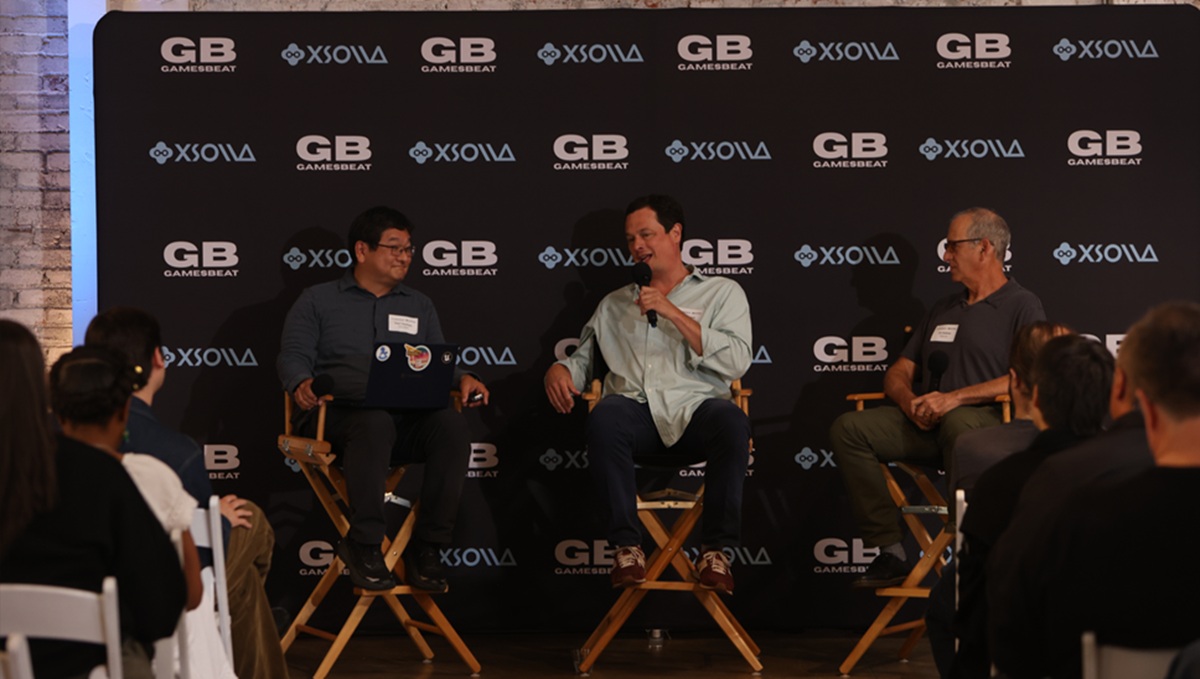
It also helps to have a game and entertainment company built around Kirkman in the form of Skybound Entertainment, which was started in 2010 and is run by CEO David Alpert and co-chair Jon Goldman. We tapped them to get advice for brands in gaming for our recent GamesBeat Engage event during the recent Summer Game Fest week in Los Angeles.
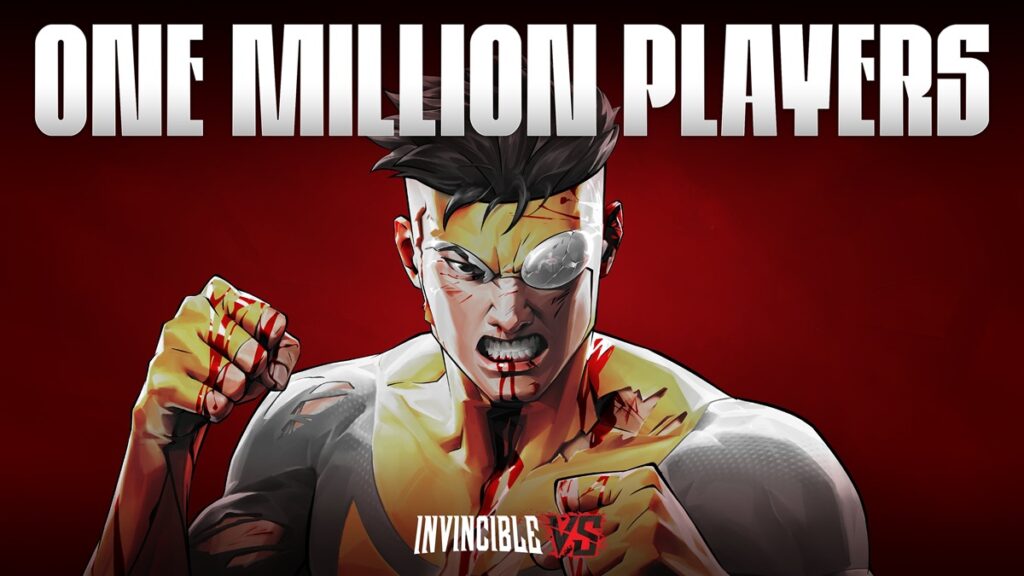
The fascinating thing about Skybound is that it’s not a one-hit wonder. Alpert mentioned the company has more than 300 intellectual properties, many of them starting out as comic books. Once they prove themselves as comics, they can graduate to other media like animated shows, TV, movies and games. Invincible made it through those hoops and Skybound launched it as a triple-A fighting game dubbed Invincible VS on April 30. More than a million people have played that game on the PC and consoles.
Invincible VS is just as old as The Walking Dead as a comic book — 23 years — but it’s earlier in its evolution into transmedia properties like games. And Invincible is now going down the same road, with the No. 1-rated show on Amazon’s Prime Video. Alpert and Goldman talked with me about the strategy and their views on how this business model has evolved, and their view of the game industry and how to get attention in today’s world. (You can watch the video version here).
I started out by noting there has been a lot of gloomy news about the game industry in the past four years of layoffs, and California has had a big share of those troubles. But we were there to remind everyone that gaming is positive in so many ways, and Skybound represents some of that goodness. I asked them to explain some of the power of the company’s brands.
How big are Skybound’s brands?
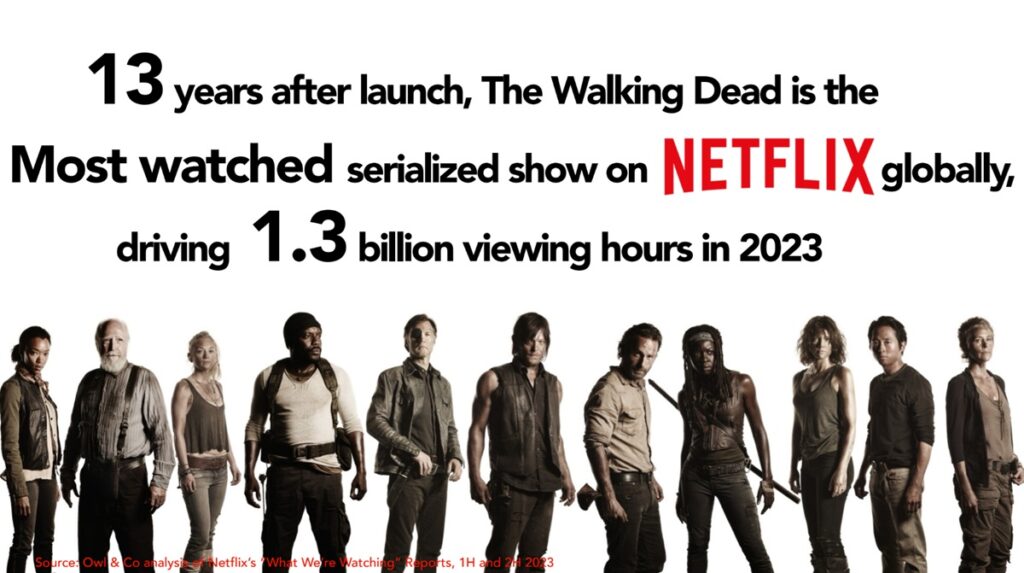
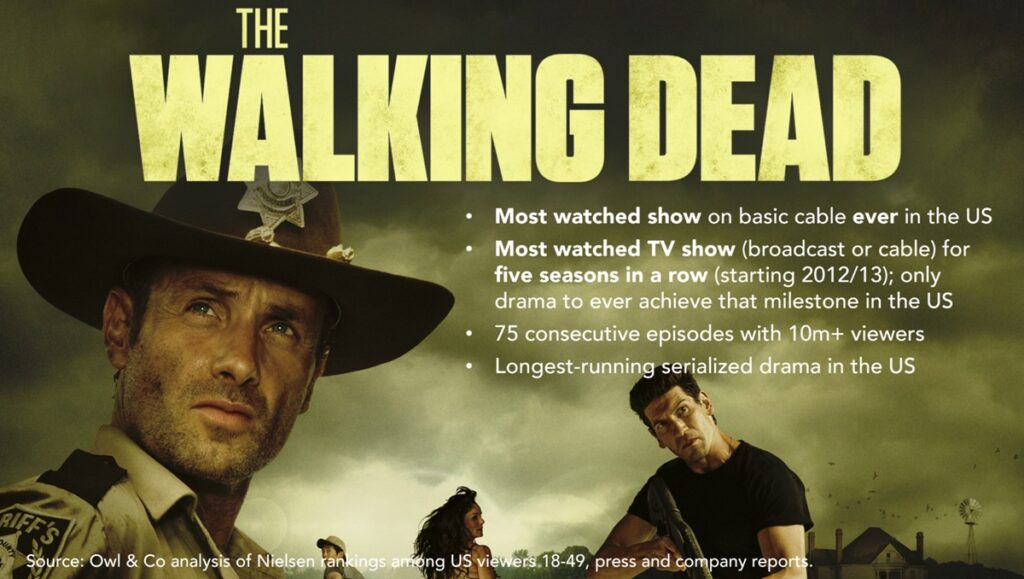
Alpert noted that The Walking Dead is the No. 1 independent comic book of all time and it ran for almost 20 years, starting in 2003. The show based on the comic was the NO. 1 cable TV show of all time, and it was the No. 1 TV show in 168 countries.
And those numbers aren’t old. Goldman said it’s still the No. 1 show on Netflix for the past few years, and the show in all of its different spinoffs had more than 300 episodes. It was the No. 1 serialized TV show globally on Netflix, and it is in top three in all dramas globally on Netflix.
“So, The Walking Dead, despite having Dead in the title, is still very much alive,” Goldman said.
I noted that Skybound set a very high bar for Invincible to follow in the footsteps of The Walking Dead. Goldman pointed out that there are still a lot of plans moving forward with The Walking Dead. And he said that while Invincible is out there for now, “There are more kids in the family.”
“One of things we look for in all content that we’re doing is that there’s white space in the marketplace,” Alpert said. “The Walking Dead really succeeded because it was the first serialized horror TV show to be on American television. That was a big deal. And for Invincible, we’re looking at a serialized dramatic hour-long TV show that looks like an after-school cartoon from the 80s, and though that combination has never been done, there have been pieces of it, but we’ve never seen that done before.”
So Skybound looks for those white spaces in television, and it’s great that both shows are able to get really deep and rich character development. In the video games, players understand the emotion that goes with the characters, and it’s not just a beat ’em up or shoot ’em up, Alpert said.
“You actually able to say, ‘Hey, I remember where this character is coming from or where this storyline is going.’ So that’s a big deal. And so, Invincible, while starting later — we just finished season four, and season four actually doubled the viewership of season one. Most TV shows today decrease in terms of viewership, like a melting ice cube. We’re actually increasing year over year. We have 100% on Rotten Tomatoes for all four seasons, and according to Parrot Analytics, we are the No. 1 show on Prime and No. 1 revenue show on Prime, generating $450 million in revenue .”
Invincible is also the cheapest show to produce in the top 10. So that’s “massive ROI” for Prime, Alpert said.
The rise of gaming revenue
I noted that Skybound has evolved from licensing its IP to co-developing and now fully developing and publishing games now. And I noted The Walking Dead games have crossed $1 billion in revenue to date across Telltale, mobile games with Scopely and virtual reality.
Goldman said they’re not changing the structure. Rather, they’re adding to it, adding a successful mobile licensed game for Invincible with Ubisoft.
“We’re also developing our own game internally. We still have a pretty robust package software business, particularly in Europe, so we’re expanding, not substituting, and it’s responding to a lot of different things,” Goldman said.
He added, “So there are market forces. There are some challenges in the video game industry, and we want to take as much control over what we’re doing, not only to get all of the benefits, but also to control the quality of what we’re doing and to deliver for our fans. So those are the top two reasons that we want to really get closer to the metal.”
Making games internally
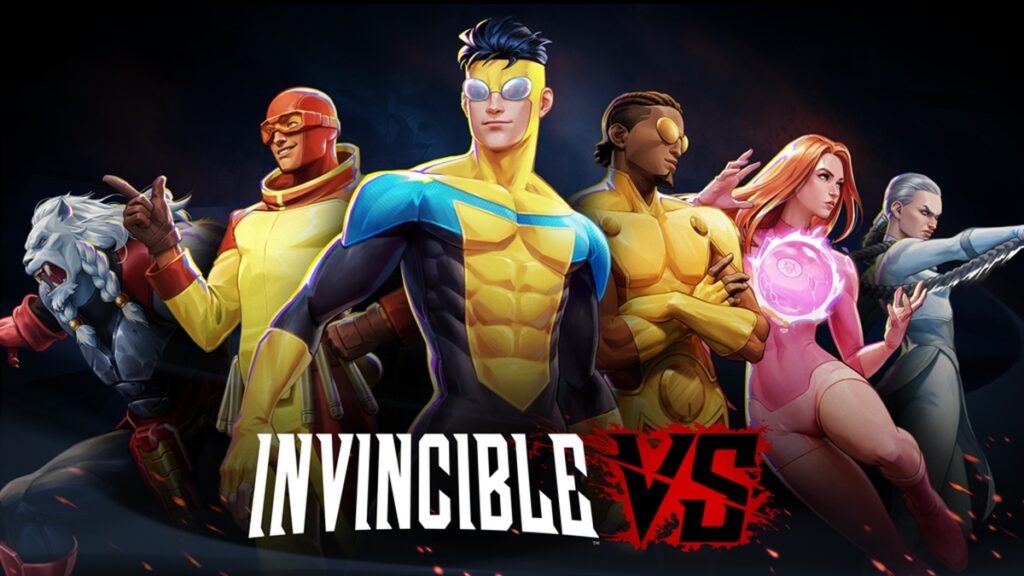
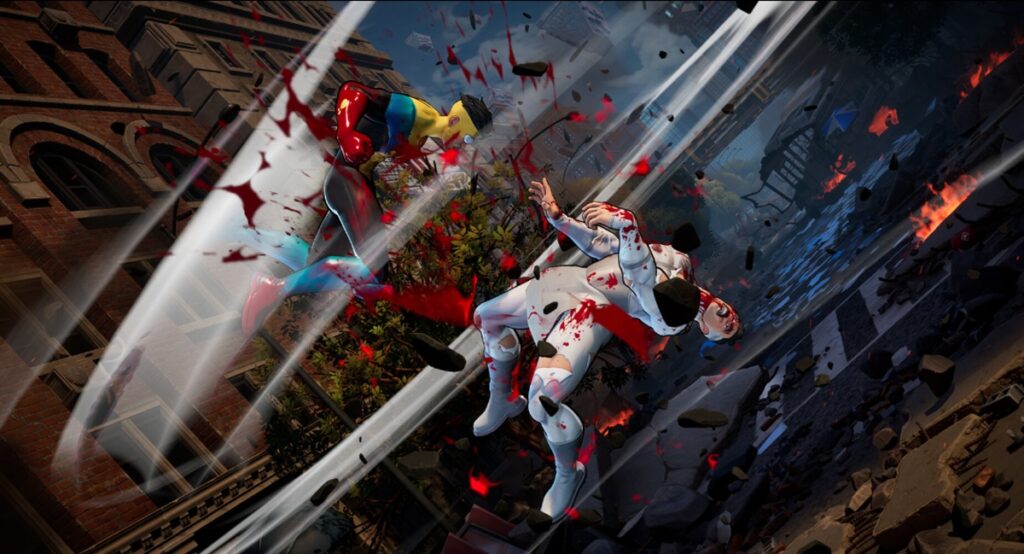
I noted they may be one of the last companies in California to start a triple-A studio here and it’s interesting to see that kind of opportunity still exists in the state. The Quarter Up studio created the Invincible VS game.
Goldman said the game had a tremendous start with tens of thousands of matches every day and being busy 24 hours a day. The timing was good as it came out at the end of Season 4.
“The team’s busy working on new features for this active community, so really pumped to be able to execute this 360 model: the comic books, TV shows, and now we have this video game and we’ve got the Ubisoft video game as well. So we’re really delivering to our fans,” Goldman said.
Alpert said that by the end of the second week, more than a million players had come in to play the game.
“That was really an amazing testament to what the team had built. We were really excited about the team that we’re able to bring in at Quarter Up. They’re an amazing development team, very much steeped in the California-based fighting game community. They really know it inside and out, so they approach it from player, fan, and developer, right? So they have the passion of a fan, but they execute like professionals, which we think is critical to our mission,” Alpert said.
He added, “I think that separates out Invincible VS. The approach we’re taking is that the creator of the comic is our business partner, is an active participant in the business. The comic book publishing is done in house. The animation for the show we make in house, so when there’s a time to make the game, the team that’s making the game is sitting down with the animation studio from the TV show and sitting down with the publishing team and the creators, so there’s not a massive licensing approvals process.”
He said the teams can talk to their coworkers, trying to figure out what is the best way to get this character to make it come alive.
“It’s a real promise to the fans that they’re not just getting something that’s put together as a licensing opportunity,” Goldman said.
The attention span is smaller
The difference now is the demand on people’s time. When The Walking Dead became the biggest show on TV, streaming had yet to take off. The marketplaces for content were much less saturated, Alpert said. There were small numbers of games on Steam, but last year there were about 22,000 games that launched on Steam.
“The amount of content available to consumers today is much, much more deep and rich. Social media ecosystem has expanded, so there’s a lot more challenges, and connecting with your audience is harder today than it was then,” Alpert said.
I noted that noise was the problem, like the noise at our event at the moment. The Walking Dead at its peak was beating out American football broadcasts.
Why move deeper into games
“I look at that and say, okay, great, we’re engaging with the fans, but now we’re looking at and say, ‘Hey, we’ve made so many billions of dollars for our partners, which was probably great, great partners,” Alpert said. “But we want to make sure that we’re rewarding not just our creators and ourselves, but we also want to make sure we’re taking care of our investors and that they’re getting a big piece of that as well.”
I asked why so many brands are moving into games, like Toei Animation and Sanrio. Many of them are piling into Roblox.
Goldman said brands are realizing that the landscape for other forms of entertainment and merchandise have business models that are changing.
“It’s actually harder to make money in television, movies, merchandise, and these other things, and as challenging as an environment as we’re facing in video games, it’s still one of the unconstrained business models and entertainment people can pay up to their excitement and desire, as opposed to a fixed fee for Netflix that gets split across everybody,” Goldman said. “Or, a fixed ticket price, no matter how expensive a movie is.”
That’s one part of it. The other side is that the environment for video games is constrained. The largest publishers, who did a lot of licensing before, are not doing licensing as much. It makes it a little bit harder for a lot of players, Goldman said.
“We’re lucky we have an interest still in Invincible and Walking Dead certainly as successful licenses, but you can’t count on that as the only business model, given the number of publishers who are doing licensing,” Goldman said.
Growing original IP
Alpert noted that Skybound has over 300 IPs that it owns and operates, and each one of them is in a different phase of its life cycle.
“One of the great things about owning the IP and being able to be partners with our creators is that we can wait for the right time for opportunities,” he said.
While Invincible was out at the same time as The Walking Dead, the world wasn’t ready for it 15 years ago, he said.
“We’re looking at where we’re creating new content all the time, and what we do is we first create it in a low cost but high quality environment,” Alpert said. “Whether it’s podcasting, comic books, board games — anywhere where we can find an opportunity to create something, test it with an audience, see if there’s signal, and once that works, we then use film and television as an opportunity to put it out to the audience.”
He added, “We get our platform partners to put tens of millions of dollars to promote it, really make it popular, use that as a virtuous marketing cycle, and then once we have that engagement successful, we then go into the game, which is where we think it’s not just the highest monetization opportunity, but actually the highest number of hours fans will actually spend with content.”
You have to make sure you have something that’s worthy of the time — many hours of gameplay a world that’s rich enough — by the time you take a property to gaming, he said.
“That’s really the critical thing for us that we think differentiates Skybound from other companies,” Alpert said.
A long road for IP
I noted that the process can take a long time, going from comic book to a game — perhaps 20 years in some cases. I noted that Dan Houser left behind Rockstar and Grand Theft Auto and he is just coming out of the comic book stage.
Goldman noted that it was a yes-no situation. The Skybound way is to wait on the TV side to get exactly what the team wants. Alpert turned down offers to make a TV show for The Walking Dead for around five years, and the same was true for Invincible, where Kirkman wanted the right conditions without compromise.
“I would phrase to say things slightly differently, which is that it’s not about speed. Speed is obviously a variable, but it’s not like, ‘Hey, can your child get married faster,’ right? It’s about finding the right opportunity,” Alpert said.
Alpert said the leadership has been working on the brands since before Skybound.
“This is now 23 years of my life I’ve been living with these brands, so if we handle these things right, these are generational IPs,” Alpert said. “This could be something that Robert’s kids and our kids could be working on in the next generation. If we handle it wrong, everyone will forget those titles ever existed. So, we have to treat these things like our children. People say to me, what’s your favorite IP, and I’m like, ‘Who’s your favorite child, right? So, you can’t really do that. You have to make sure you’re putting your IP in the position to succeed. So, yes, we could speed these things through the curve, but we’d be wasting our shots.”
The attention war
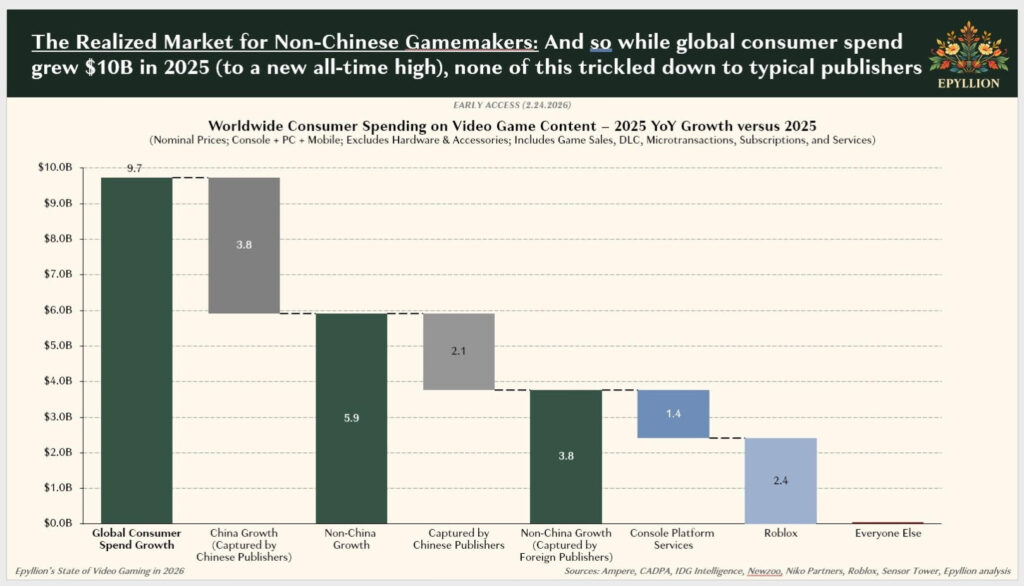
That’s the long game. Then I asked about the “short game,” which is what Matthew Ball called the “attention war.” He pointed out that while gaming is doing great, rising from a subculture to mass culture, that’s good. But Ball pointed out that the game industry growth has stalled in the last few years, if you back out the growth of Roblox, the growth of the Chinese game industry and the growth of platform fees. The resulting net growth for Western game publishers and developers is zero, Ball said.
Goldman said he believes the consumption side of games is very positive. Alpert said that the belief that games will be an ever-growing ecosystem, where each year is bigger and better than the year before, may not be the case.
“One of the cold equations is that the alternative to entertainment products could be nothing,” Alpert said. “It’s not like food or shelter or clothing. You don’t have to do it, so it’s incumbent upon the great creatives that we work with to come up with really compelling ideas and really compelling marketing approaches and angles to engage our fans and consumers.”
He added, “You can make a great game and people won’t play it because they won’t know about it, and you can have a great marketing campaign, and you have a bad game. People will see it but [they won’t play it]. You have to have a great idea, great game, and a great go-to market approach. And then this is where the new part is, you have to have great engagement and respect what the fans are telling you. And those are all hard things. But if you do that, you’re seeing people will show up, and they show up for years. There is a short game. We have to do this. We have to make money, so that we can pay our great creatives. But if you don’t do that, if you don’t take care of those things, no one owes you that living that you want.”
I noted that the worry from Ball’s deck is that he was pointing out that the addiction markets are growing so faster than games. These are the prediction markets, sports betting, online casinos, OnlyFans, porn, AI companions, YouTube and TikTok. These are things that you can get addicted to, mostly as adults.
Will gaming be tempted toward addiction?
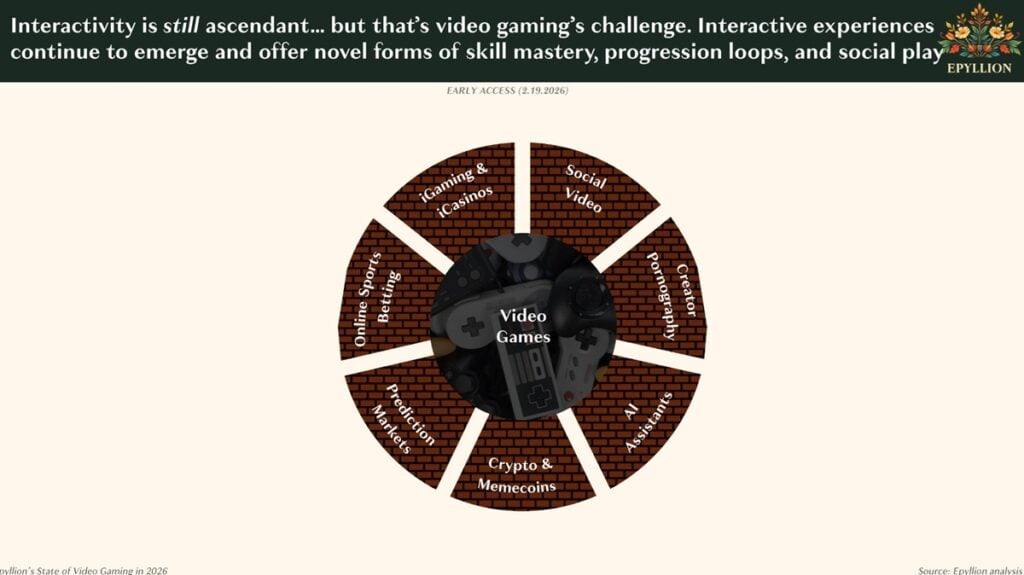
To me, gaming is on the side of fun. It’s stalled. There are winners and losers still. I said I worry that there’s a temptation to head towards addiction inside gaming instead of staying in the lane of fun.
Goldman responded, “We’ll interview you now. What’s an example of what you’re thinking about? People have tried real money gaming.
I noted an example of the loot box. If your market is not growing, and if it is shrinking, Ball pointed out that the only way to grow is to monetize existing players more. That means you’re going to extract more money from people who are already customers, and your job becomes extraction and addiction, not making fun.
“I think those sort of like gimmicks have not worked traditionally with games. So I think mobile games, in particular, or mobile free to play, did sort of prove out what you were saying,” Goldman said. “Is that the way to succeed? [Do you] hyper monetize people who like it the most. And originally it was criticized as having only an addiction loop and trying to trick people over the paywall. But ultimately, the consumer smarted up, and mobile game companies are now doing better and better games that are deeper and richer. So we could be wrong.
Goldman added, “I’d say we’re probably both purists in the sense that the best way to make money in entertainment is actually to entertain people, and you can’t make money by a lot of money by making them watch ads, or do sweepstakes or do other things. If that’s how you want to [win], I would rather just do a straight sweepstakes rather than have to play a shitty game in order to do a sweepstakes.”
Alpert jumped in. “I would say that sin being profitable is not a new invention, right? The oldest profession is the oldest profession for a reason. For reasons, we have no interest in playing in those areas. I believe in the power of story. I came to LA, and I’ve been here 26 years, so I believe the power of narrative and emotion to move people.”
Alpert added, “I believe that people are willing to pay money for a great story and a great entertainment experience, whether it’s playing a horror game, whether it’s reading a book, whether it’s playing a video game, and I think that’s still them. And I would say, this is a fervent belief. And yes, there are some people that cheat, they’re going to be people that do embrace vice as a way to sort of shortcut to get there, just like there’s gonna be people who take steroids when they’re playing sports. That’s not the path we’re going to do. We’re going to work harder, and we’re going to find great, creative folks to work with who are going to make better games.”
Goldman said, “You look at the actual data. The games that are succeeding and making a lot of money are good games. Remember that whole spate of NFT games? That was a gimmick that didn’t work out. I liked a lot of Matthew’s slides, but maybe that one I don’t believe so much.”
Why games will win
So then I staged a retreat. I said I agreed with them. I said I think that gaming has all these advantages. I said the regulators are going to go after the addiction industries. I brought this up in an interview I had with Ball.
Regulators don’t have to go after games in the same way. I think that you catch them while you’re young in gaming. Roblox is making a lot of the brands of the world panic because all of their customers are old, but the kids can be found on places like Fortnite and Roblox.
Goldman joined in. He said, “I started my career in sort of, as you remember, in edutainment and educational games, and I think for the most part Roblox is great. It is a high-quality offering where kids use their brains, and it’s pretty amazing. Those kids that start there, none of them are going to want to crave whatever that next level is of interactive entertainment. So, I’ve got much older kids than you do, but they’re completely bored by a lot of traditional stuff, and they, they like games. They like parlor games when we travel, and they play the New York Times games. I think people like games, and that’s not going to stop.”
Will gaming abandon California?
Then I switched gears. I noted that they had invested in Los Angeles, creating a brand new game studio in LA, a triple-A studio, where nobody else was doing that. Others are going offshore. That reminds me of Hollywood, which still exists as a concept, but has almost no production in Los Angeles anymore. I asked if games would go the same way as film production. Amir Satvat, the game jobs champion, found that in the last four years, North America has seen an 11% drop in its game jobs, while the whole world saw an uptick of 0.6%. That means the rest of the world is growing game jobs faster than North America now. Satvat also reported that in 2025, California also had 47% of all gaming layoffs in the world. So I asked if California was going the way of Hollywood.
“I wouldn’t panic completely yet,” Goldman said. “Let’s remember that we had quite a bump from COVID, and I’ve been involved in various forms of venture capital for a while. I’m a fan of it, but let’s just say that maybe there was an oversupply, and we maybe had a bit of a bubble going into the industry. Things will level up, but there’s no question that production, creativity, cost factors around the world, have an effect.”
He said, “Skybound has this studio here in California, but we’ve got employees in Canada, in Europe, all over the place. So we’re also participating globally. When you’re trying to compete at the highest level, really great talent can trump cost advantages.”
Alpert also piped in with the last word.
“I would say it a little bit differently. I think that we have the version of the resource curse, which is that California is blessed with unbelievably creative people, and people that are creative like to come to California to be with like-minded communities. I think that’s a massive good. But I think for so long, people have taken that for granted. That coming to California, which is something you had to do.”
Alpert continued, “I think COVID really did disrupt that. It changed the way that people were thinking about it, and the fact that we don’t have an infrastructure that really supports gaming the way that it is supported in other countries, from government and subsidy level taxation, and honestly, the cost of living, make it very difficult to start something up here.”
He said, “The people we hired, we hired because they were the best, and we try to hire the best, your daughter included. And we think that that’s a major, major win for us. But they’re much more expensive because living here is more expensive when we compare them at a certain point. There is a dollar to dollar advantage that comes from working elsewhere. So I would love to see more support from our state government and our national government of creative industries. We could [do that] the way that other countries do, and the way that other countries been able to eat some of our lunch.”
Disclosure: I have family working for Skybound.